Kinetic energy
The energy every moving thing carries, from a rolling ball to a rocket.
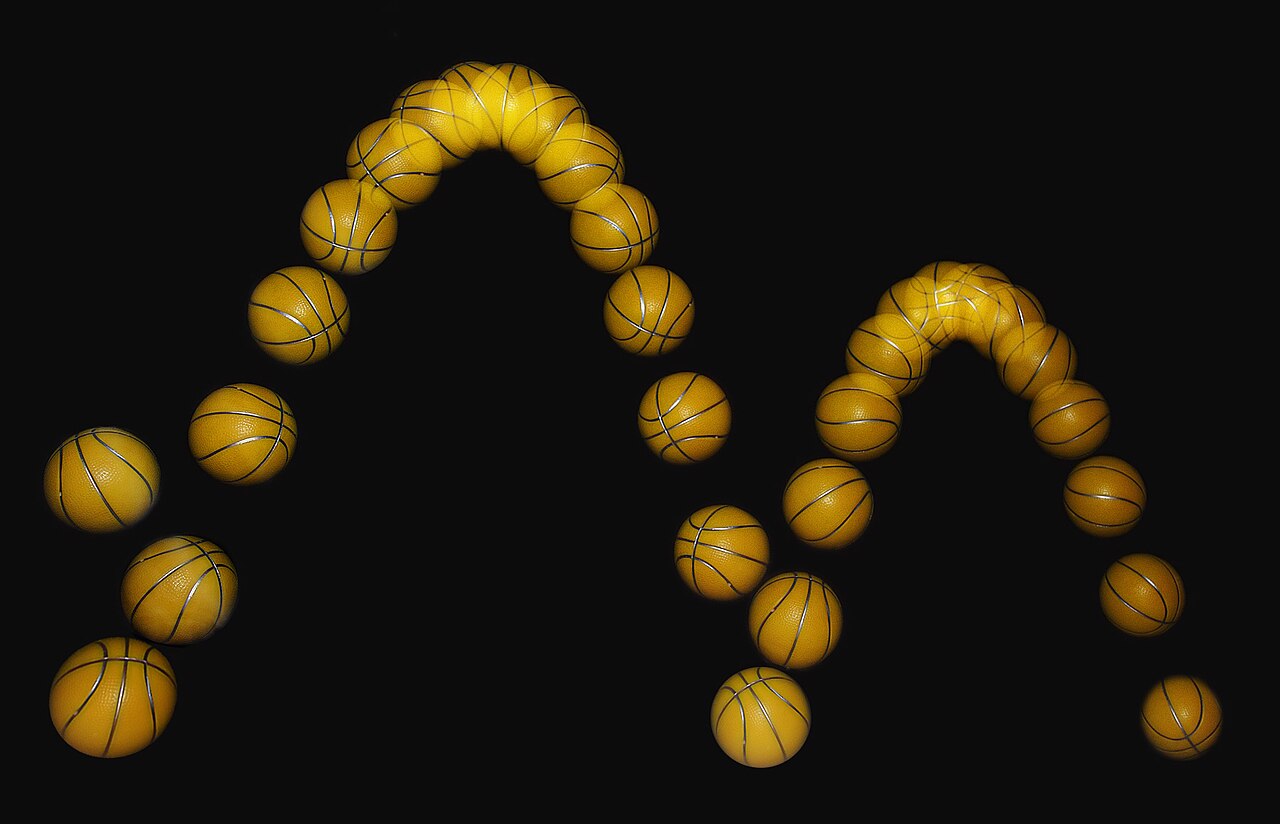
Everything that moves has kinetic energy. A rolling ball has it, a sprinting dog has it, and so does a spacecraft racing around Earth. Kinetic energy is the energy of motion, and it depends on two things: how heavy an object is and how fast it goes. Speed matters far more than most people expect, because doubling it makes the energy four times bigger. That is why fast cars are so much harder to stop. Kinetic energy can be passed from one object to another, stored in a spinning wheel, or turned into heat, sound and electricity. Scientists worked out how it behaves, and engineers put it to work.
What does it mean to have energy of motion?
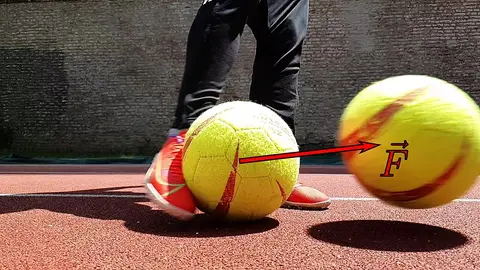
Energy is the ability to make things change, and is the kind that belongs to moving objects. A football lying on the grass has none. Kick it, and your foot gives it speed, so it now carries kinetic energy. When it hits a net, it pushes the net outwards. In other words, the moving ball can do on whatever it meets.
Physicists measure energy in . One joule is a small amount, about the energy needed to lift a small apple up by one metre.
Kinetic energy is only one of two big families of energy. The other family is , which is energy stored because of position or shape. Many kinds of energy fit into one family or the other, including chemical, electrical, nuclear and thermal energy. Hot gas is a good example, because its heat is partly the movement of its tiny particles.
The best thing about kinetic energy is that it can move around. It can pass from one object to another, and it can change into other forms. A skateboarder rolling along has it. A raindrop falling has it. Even a gas has it, because its molecules whizz about in every direction. Add up all the movement in a system and you have its kinetic energy.
How do you work out kinetic energy?
The rule is short. equals half of the multiplied by the speed squared. Squared means the speed times itself. Mass goes in as kilograms and speed as metres per second, and the answer comes out in .
Here is a worked example. Take a person of 80 kg moving at 18 metres per second, which is about 65 km/h. Square the speed to get 324. Multiply by 80 to get 25,920. Half of that is 12,960 joules. That is roughly the energy needed to lift 1,300 kg, a small car, by one metre.
Where does the rule come from? Think about what it takes to get something moving. You have to push it with a force over some distance, and that push is . The work you do to speed an object up from rest is exactly the kinetic energy it ends up with. The reverse is also true. A moving object can do the same amount of work on something else while it slows to a stop.
The rule only works well for ordinary speeds. Very fast particles need a different version, based on Albert Einstein's theory of relativity. But for balls, bikes, cars and even jet planes, half the mass times the speed squared is accurate enough.
Why does speed matter so much?
Look again at the rule. appears once, but speed appears twice, because it is squared. So if you double an object's mass, you double its energy. If you double its speed, you get four times the energy. Triple the speed and the energy is nine times bigger.
This has serious effects on the road. A car travelling twice as fast as another needs four times as much distance to stop, if the brakes push back with the same force. The brakes have to remove four times as much energy, and removing energy takes distance. That is why speed limits near schools are low.
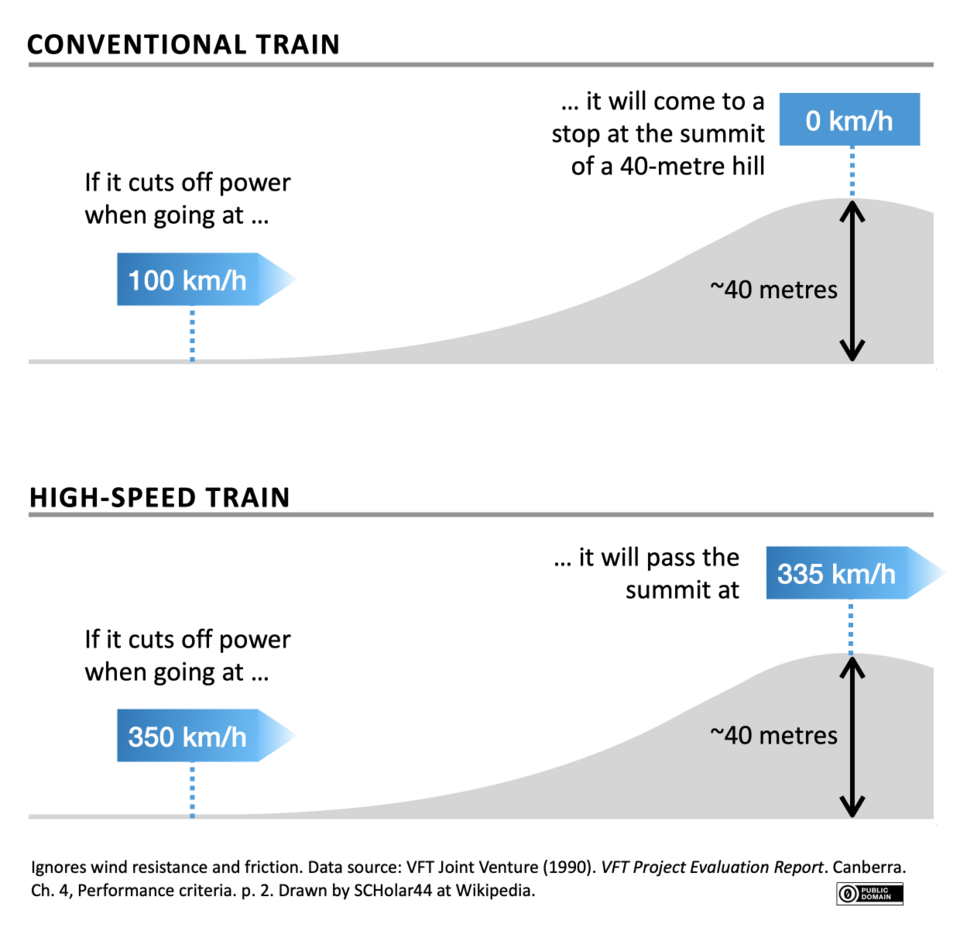
Speed also explains why fast trains behave so differently. A conventional train going at 100 km/h that switches off its power at the foot of a hill can coast up about 40 metres before it stops. Its has all been traded for height. A high-speed train going at 350 km/h has so much more energy that it could pass the top of the same hill at about 335 km/h. It loses very little speed, because the climb takes only a small part of its energy.
The same idea explains why a tiny bullet can be dangerous. It has little mass, but it moves so fast that the squared speed makes up for it.
Who figured out the rule?

The idea took more than a century to settle. In the late 1600s and early 1700s, the German thinker Gottfried Leibniz and the Swiss mathematician Johann Bernoulli argued that the quantity to watch was times speed squared. They called it , Latin for living force.
Then came an experiment. In 1722, the Dutch scientist Willem 's Gravesande dropped metal weights from different heights into a block of soft clay. A weight dropped from twice the height hit the clay faster, and he measured how deep it sank. The depth grew with the square of the impact speed, which matched the squared speed in vis viva.
The French physicist Émilie du Châtelet saw what the experiment meant. She wrote an explanation of it and backed the idea that this energy depends on speed squared.
The modern words came later. In 1802, Thomas Young gave a lecture to the Royal Society in London and used the word energy in something close to its modern sense. In 1829, the French engineer Gaspard-Gustave Coriolis published the mathematics of the idea. Around 1849 to 1851, William Thomson, later Lord Kelvin, gave us the name . William Rankine added in 1853, and the two terms have been partners ever since.
Where does kinetic energy come from and where does it go?
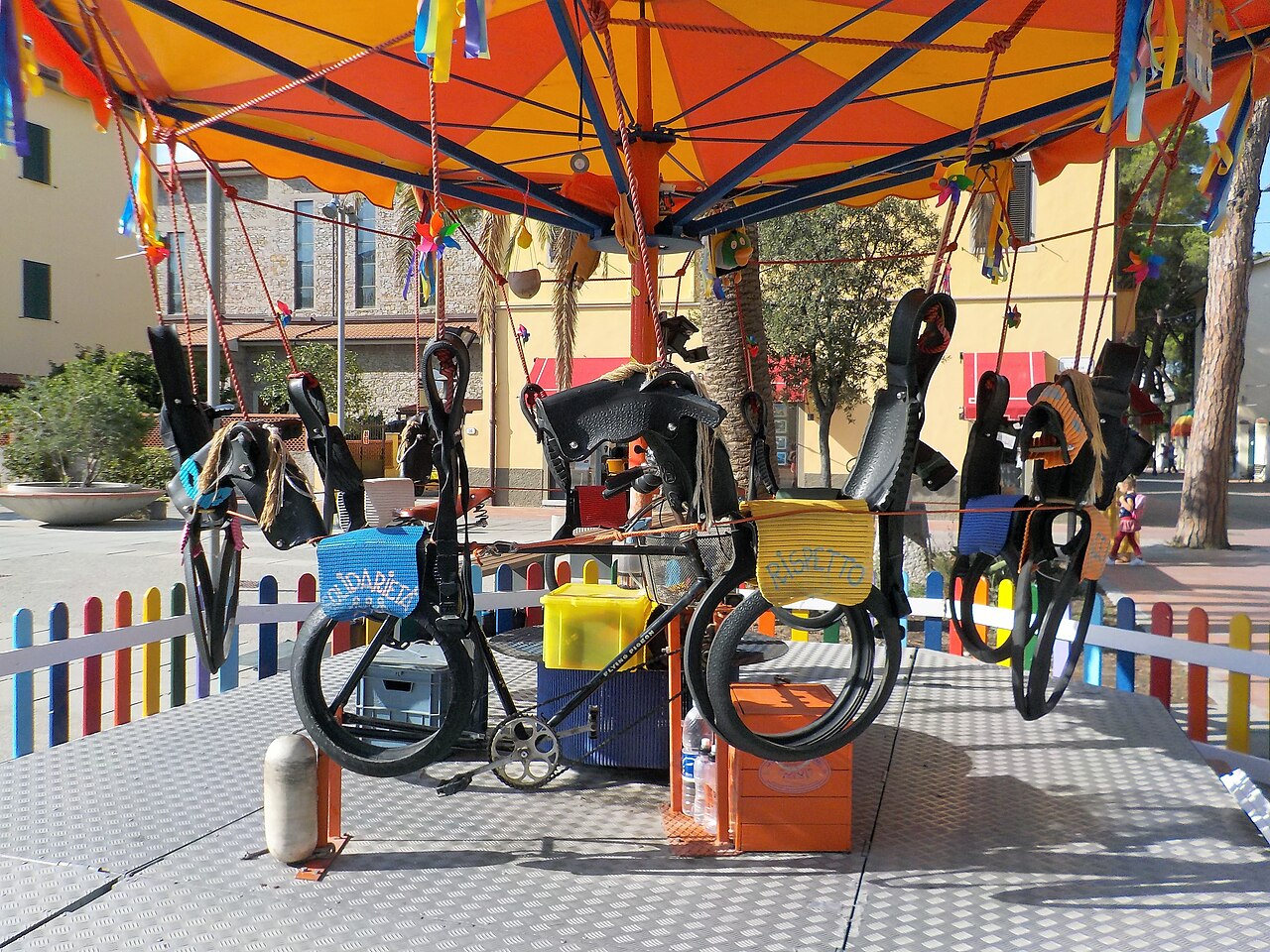
Energy is never made from nothing, and it never vanishes. It changes form. always has a source, and it always ends up somewhere.
A cyclist shows the whole story. Food gives the rider chemical energy. The muscles turn some of it into motion, so the bike and rider gain kinetic energy as they speed up. Muscles are not perfect, so a good part of the food energy also becomes heat inside the body.
On flat ground, the cyclist can keep a steady speed with little effort, because the only things taking energy away are air resistance and friction. Now add a hill. If the rider stops pedalling at the foot of a hill, the bike slows as it climbs. The kinetic energy becomes gravitational , which is stored energy of height. Roll down the other side and it changes back.
But the trade is never perfect, because friction takes a share and turns it into heat. If the cyclist uses the brakes, almost all the kinetic energy turns into heat in the brakes. If the bike has a dynamo, which is a small generator, some of the energy turns into electricity for the lamp.
The energy is never destroyed. It only changes into other forms, and some of those forms are harder to use again.
How do kinetic and potential energy trade places?
has a partner. is energy stored by position, such as a ball held high above the ground. Whenever something moves under gravity, the two trade places.
Drop a ball. At the top it is still, so all its energy is potential. As it falls, it loses height and speeds up, so potential energy turns into kinetic energy. Moments before it hits the ground, almost all the energy is kinetic. Throw it upwards and the trade runs backwards. The ball slows as it climbs, and its kinetic energy turns into potential energy.
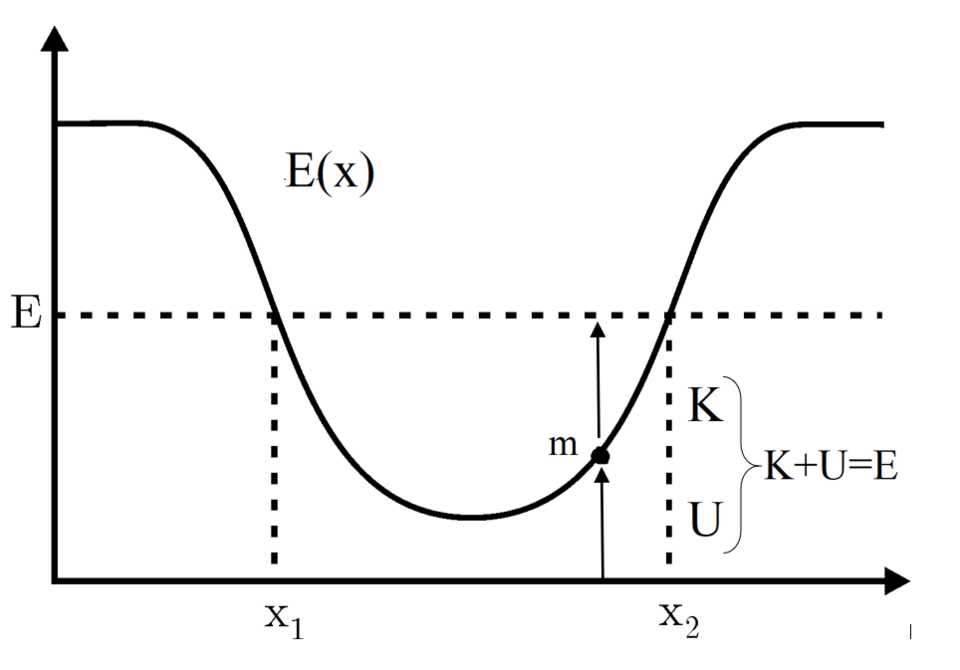
If we ignore friction, the sum of the two never changes. Physicists write this as K plus U equals E, where K is kinetic energy, U is potential energy and E is the total. Drawn as a graph, this idea becomes a curve. As one part rises, the other falls by exactly the same amount.
Planets and spacecraft follow the same rule. A spacecraft on a stretched-out, oval orbit moves fastest when it is closest to Earth. There its kinetic energy is greatest and its potential energy is lowest. At the far end of the orbit it slows down, and the balance flips. The total stays the same all the way round.
A spacecraft in a perfectly circular orbit keeps a steady speed, so its kinetic energy does not change at all.
What happens when moving things crash and spin?
can jump from one object to another. In billiards, a player hits the cue ball with the cue, which gives the ball kinetic energy. When the cue ball strikes another ball, it slows sharply and the other ball speeds away. The kinetic energy has been passed on. Billiard balls are hard and bouncy, so very little energy is wasted. Physicists call this kind of crash an .
Most crashes are not like that. In an , some kinetic energy turns into other things. Two cars that crumple together lose energy as heat and sound, and some goes into bending and breaking the metal. The total energy is still the same, but less of it is movement.
Motion does not have to be in a straight line. A spinning object has rotational kinetic energy, which is the total of the energy of all its moving parts. A tennis ball in flight has both kinds at once. It moves forward and it spins.
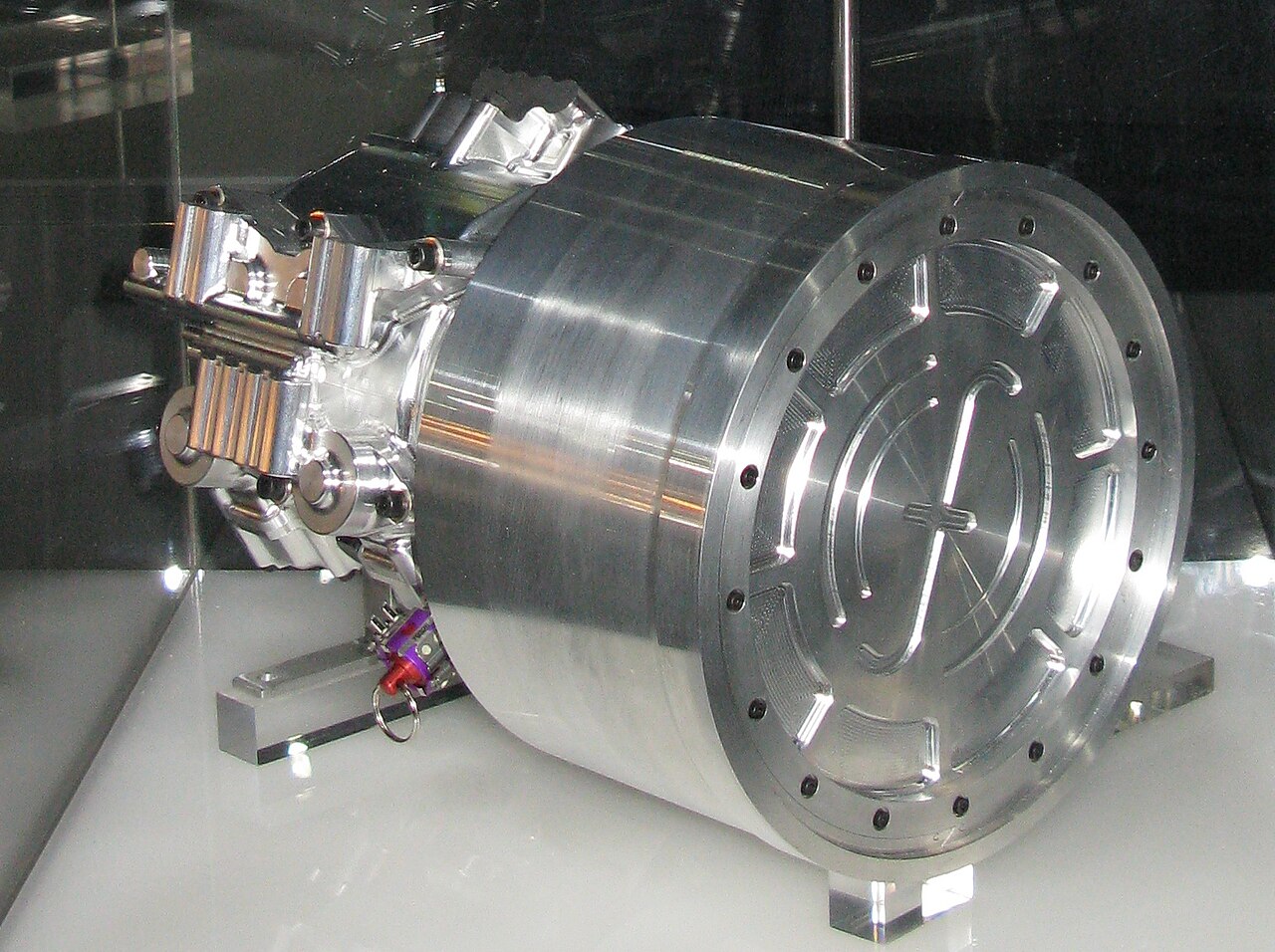
Engineers use spinning to store energy. A is a heavy wheel that spins very fast. Engineers built flywheel units for Formula 1 cars that store energy when the driver brakes, then hand it back to speed the car up again. The F1 cars that raced used batteries instead, but a flywheel system did race at Le Mans in Audi's R18 e-tron, which won the 24-hour race in 2012. The idea is to recycle energy instead of wasting it as heat.
Does everyone agree on how much kinetic energy something has?
Surprisingly, no. Speed is always measured against something, and that something is called a . If your frame changes, the speed changes, and so does the .
A bullet flying past you has plenty of kinetic energy in your frame of reference. But to someone moving alongside it at the same speed, the bullet looks still, so it has none. Both people are correct. The same is true for a passenger on a train. Compared with the seat, the passenger is not moving. Compared with the ground, the passenger is moving fast.
What observers do agree on is the total energy of a closed system, where nothing can enter or leave. They may disagree on the number, but each one finds that it stays the same over time.
There are two extremes where the simple rule needs help. When something moves at a speed close to the speed of light, we need Albert Einstein's relativity. The rule still as a very good approximation at everyday speeds, but it fails near light speed. This same maths also leads to the famous idea that and energy are linked. At the other extreme, atoms and electrons need quantum mechanics, where kinetic energy is described with different mathematical tools.
Explore Next
Your audio story keeps playing while you look around.

Words to Know
- elastic collision
- A crash in which the objects keep all their kinetic energy.
- flywheel
- A heavy wheel that stores energy by spinning.
- frame of reference
- The viewpoint from which speed and motion are measured.
- inelastic collision
- A crash in which some kinetic energy turns into heat, sound or damage.
- joule
- The standard unit of energy, named after the physicist James Joule.
- kinetic energy
- The energy an object has because it is moving.
- mass
- The amount of matter in an object, measured in kilograms.
- potential energy
- Energy stored in an object because of its position or shape.
- vis viva
- An old Latin name for the energy of motion, meaning living force.
- work
- Energy transferred when a force moves something over a distance.