Potential energy
Stored energy, waiting in a lifted weight, a bent bow or a charged particle.
A rock balanced on a cliff edge is not moving, yet it holds a lot of energy. A stretched rubber band does too. Potential energy is energy stored because of where an object is or how it is shaped. It is the energy of what could happen next. Lift a book, and you store energy in it. Let go, and that stored energy becomes movement. Potential energy comes in many kinds, including gravitational, elastic, chemical and electric. It fills reservoirs behind dams, powers archers' arrows and holds atoms together in the food we eat. So what is it, how do we measure it, and why do we depend on it?
How can a still object hold energy?
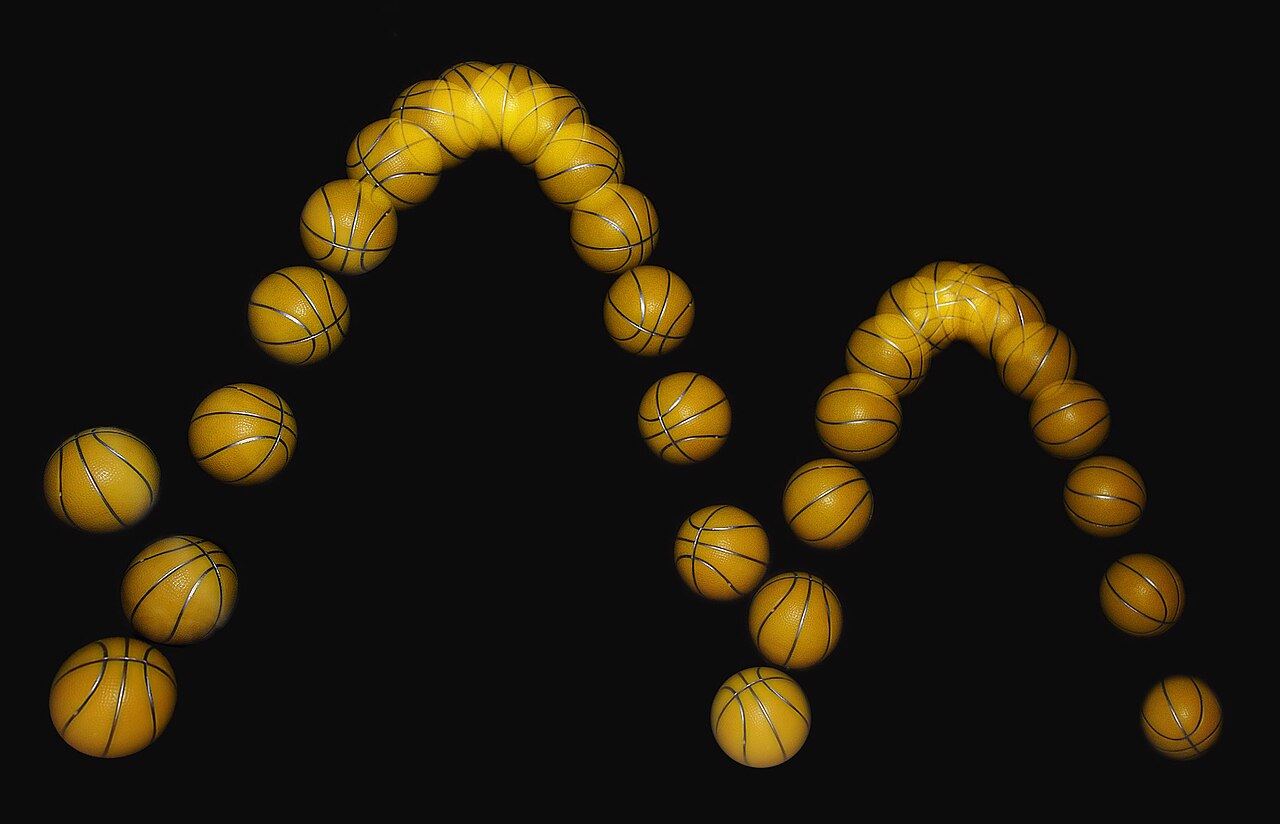
Energy does not always show itself as motion. Sometimes it waits. A ball held at the top of a staircase is not moving, but it can be made to move. The energy it holds is called , because it has the potential to turn into something else.
Scientists define potential energy as the energy a thing has because of its position compared with other objects, or because of the way its parts are arranged. Pull a spring and its coils are arranged differently. Lift a weight and it sits at a different distance from Earth. In both cases, a force had to do work to change the arrangement, and that work was stored.
The idea is very old. The ancient Greek philosopher Aristotle wrote about actuality and potentiality, which means what a thing is now compared with what it could become. The science came much later. From around 1840, scientists were working hard to define energy and work. In 1853, the Scottish engineer William Rankine gave the stored kind its name, potential energy. Later he described it as energy of configuration, which means energy of arrangement, set against energy of activity.
William Thomson, later Lord Kelvin, coined the term around 1849 to 1851. In 1867 his textbook with Peter Guthrie Tait set it beside potential energy as its partner.
What happens to energy when you lift something?
Lifting takes effort because you push against gravity. The work you do does not disappear. It is stored as .
Three things decide how much is stored. The first is height. A book on a high cupboard holds more than the same book on a table. The second is mass. A heavy book holds more than a light one at the same height. The third is the strength of gravity. Because the Moon's gravity is weaker than Earth's, an object a metre above the Moon's surface holds less stored energy than the same object a metre above Earth.
Near Earth's surface, there is a handy rule. Multiply the mass in kilograms by 9.8 and by the height in metres, and you get the energy in . The 9.8 is the strength of gravity on Earth, measured in metres per second squared. So a 2 kg book lifted 1.5 metres stores about 29 joules.
There is one more point. Height has to be measured from somewhere, and scientists can choose that starting point, called the . It could be the floor, the table or sea level. What matters is the difference in energy between two positions. That difference does not change, whichever starting point you choose.
How does a spring store energy?
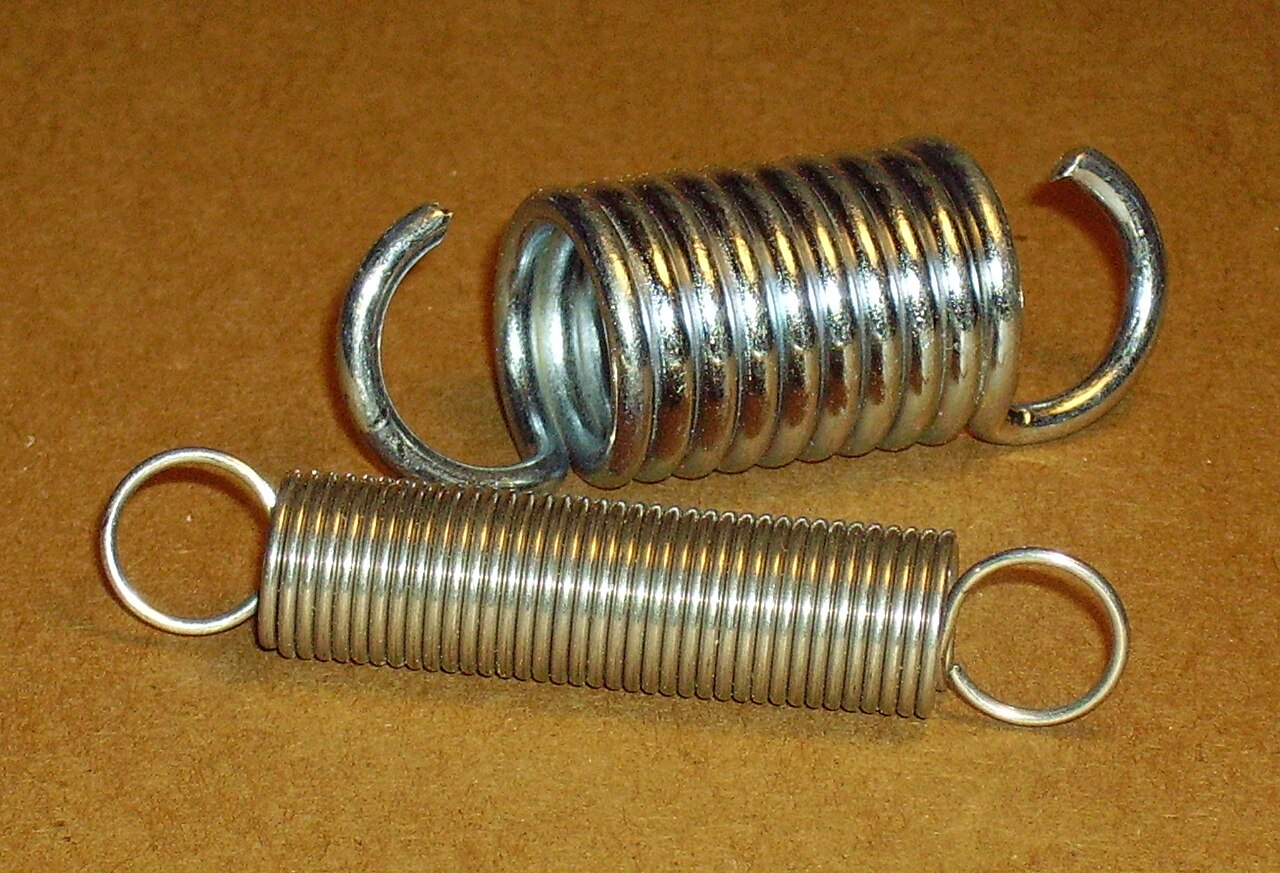
Squash a spring, and you feel it push back. Stretch it, and it pulls. A spring tries to return to its normal shape, and the force it uses to do so is called a restoring force. Because you have to work against that force to bend or stretch the spring, the energy you put in gets stored. This is .
The more you stretch the spring, the more energy it stores. The rule for an ideal spring is that the energy depends on the square of the stretch. So stretching a spring twice as far stores four times as much energy. follows the same pattern, because doubling an object's speed gives it four times the energy.
Where does the force come from? Inside the spring, the atoms are held together by electromagnetic forces. When you pull the atoms slightly out of position, those forces try to pull them back. Elastic energy is really the stored work of these tiny forces, added up over billions of atoms.
Let the spring go, and the stored energy turns into kinetic energy. The spring snaps back, and anything attached to it starts to move. This is how a trampoline launches a jumper, a pogo stick springs, and a mechanical toy winds up and runs. Springs are also found in car suspensions, pens and mattresses.
Why does a bent bow fire an arrow so fast?
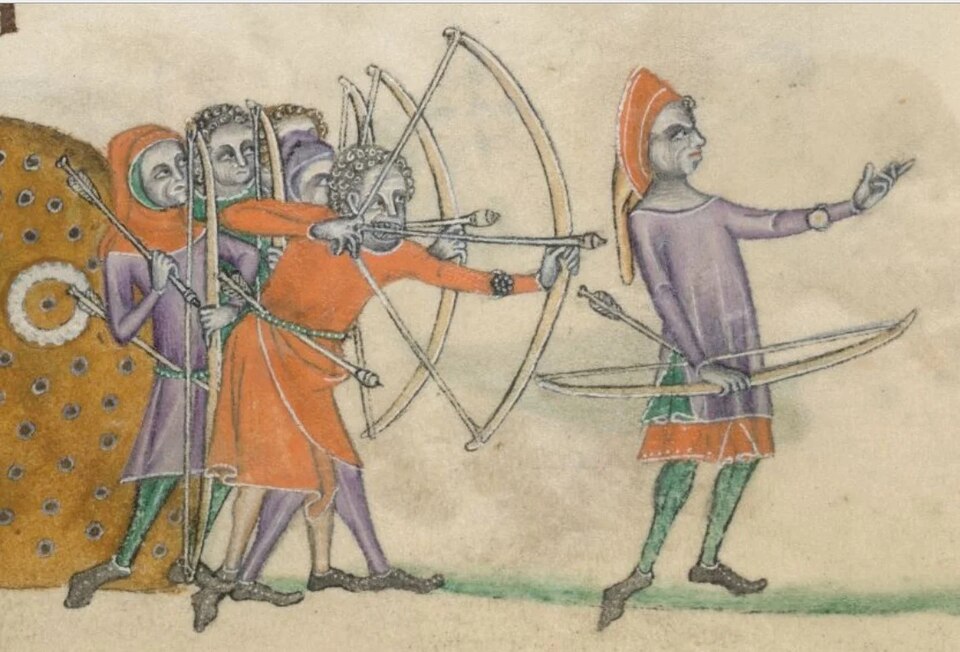
Archery is one of the oldest ways people have used . An archer pulls the string back, and the bow bends. Muscle energy goes into the bent wood. When the archer lets go, the bow straightens and the stored energy moves the arrow forwards. In a moment, the energy changes from stored form to .
A bow works well because it collects energy slowly and releases it quickly. The archer's arm does work over a long pull, perhaps half a metre or more. The arrow then takes all that energy in a fraction of a second. That is how a person can send a light arrow far faster than they could ever throw it.
The catapult follows the same plan. It is a machine that stores energy in a stretched or twisted material, and then lets it go all at once. Medieval armies used large catapults and ballistae in this way. A slingshot is a small modern version.
The shape of the bow matters too. A longbow is a tall, strong piece of wood, often taller than the archer. It takes great strength to pull back, which means it can store a large amount of energy. Skilled archers trained for years to use one well.
Is there stored energy in food, fuel and electric charge?
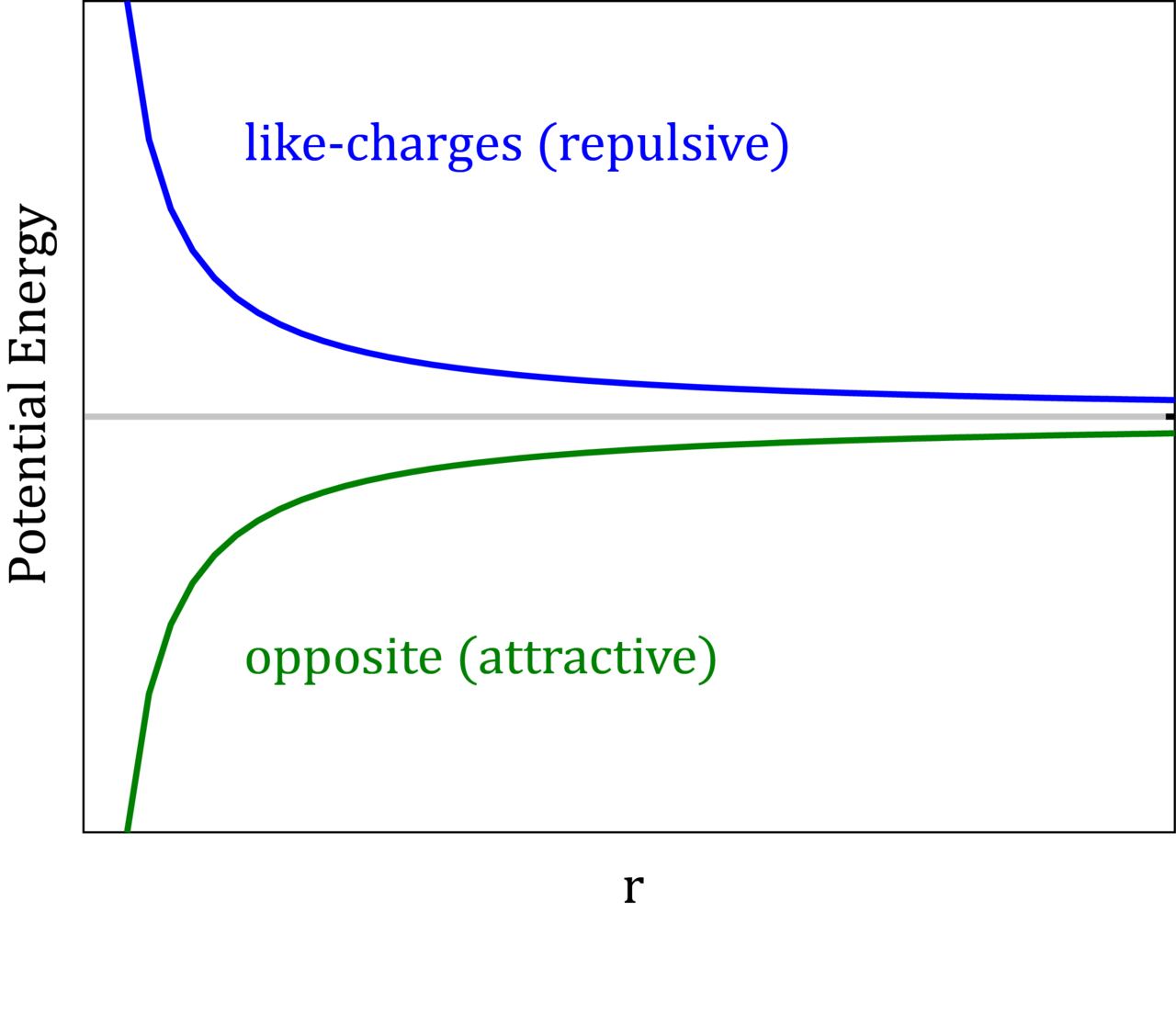
There is, and it is arranged at a much smaller scale. Atoms and molecules are held together by , and the way they are arranged stores energy. This is chemical . When a chemical reaction rearranges the atoms, some of that energy comes out.
Burn petrol or coal, and the stored energy changes into heat. Eat a meal, and your body releases energy from the food in much the same way, although more slowly and gently. Plants work in the other direction. In photosynthesis, they take in sunlight and store its energy in chemical form, which is where the energy in food and fossil fuels first comes from. A battery also stores energy in chemical form, ready to turn it into electricity.
can store energy too. Two charges feel a force on each other. Like charges push apart and opposite charges pull together. If you move charges against that force, you store electric potential energy, in much the same way as lifting a weight against gravity. The stored energy rises as like charges are forced closer together, and it falls as opposite charges are allowed to come together.
A related idea is voltage. The electric potential, which we call voltage, is the stored energy for each unit of charge. Other kinds of potential energy exist in the nucleus of an atom, where the nuclear force acts, and between molecules.
How does stored energy turn into movement?
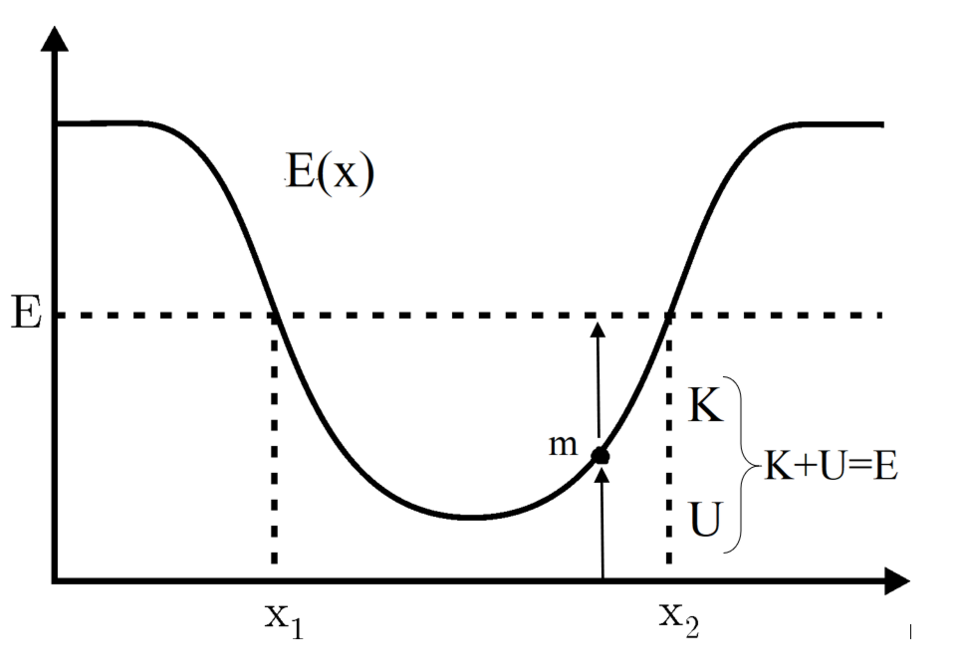
Stored energy is only useful when it changes into something else. The most common change is from into .
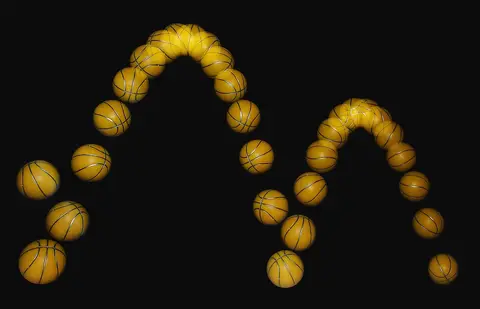
Put a book at the edge of a table and give it a push. As it falls, gravity does work on it. Its height drops, so its potential energy drops. At the same time, its speed rises, so its kinetic energy grows. The energy the book loses as potential, it gains as kinetic. When it hits the floor, the kinetic energy turns into heat, sound and a small dent in the floor.
If friction and air resistance can be ignored, the total never changes. Physicists write this as K plus U equals E. K is the kinetic energy, U is the potential energy and E is the total. This idea is called the , and it is one of the most important rules in all of science.
A roller coaster is a perfect example. A chain pulls the cars slowly up the first hill, which fills them with potential energy. After that, the ride has no engine pushing it. It runs on the energy stored at the top. Each drop turns height into speed, and each climb turns speed back into height. That is why the first hill is always the tallest.
How do we put stored energy to work?
People have used for centuries. Clocks once ran on falling weights, which slowly pulled the mechanism along. Lifts use counterweights, which store energy as they rise and help to lift the car. Cranes and sash windows use the same trick.
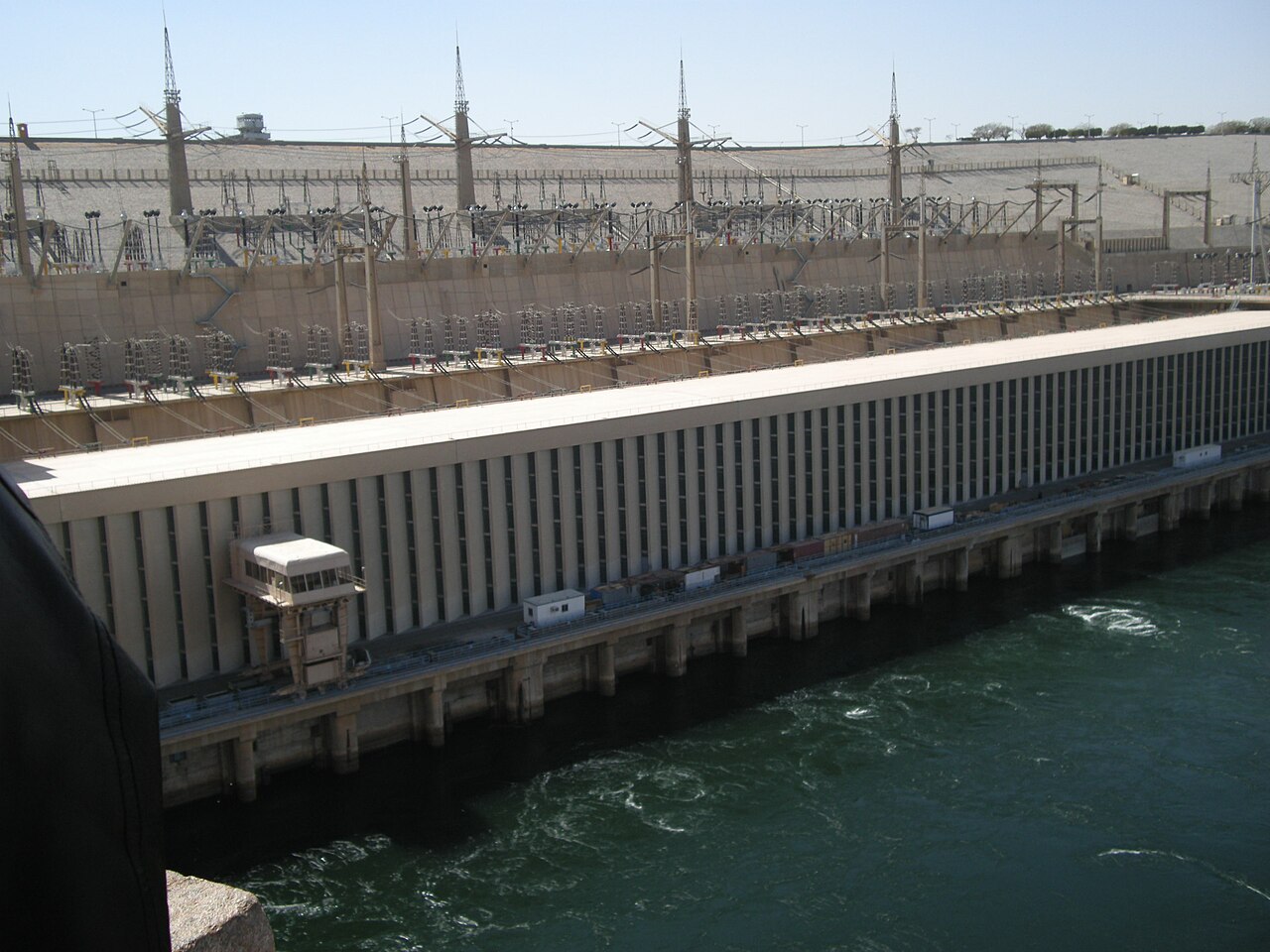
The biggest use is in water power. Water held high up behind a dam has a great deal of potential energy. When it is released, it rushes down through pipes and spins , which are wheels that drive electric generators. The Aswan High Dam in Egypt holds back the Nile in this way.
Some power stations also store energy for later. Take Dinorwig in Wales, which has two lakes at different heights. When there is extra electricity, which is cheap, pumps lift water to the upper lake. When people need more power, the water flows back down through turbines and makes electricity again. This is called pumped storage. It is not perfectly efficient, because friction wastes some energy.
Engineers are also trying new ideas. In Nevada, in the United States, a company called Advanced Rail Energy Storage has built a test site where motors haul heavy rail cars up a steep slope to store energy. When power is needed, the cars roll back down and their motors work as generators.
Even coasting a bike or a lorry down a hill is using stored energy.
What about potential energy in space?
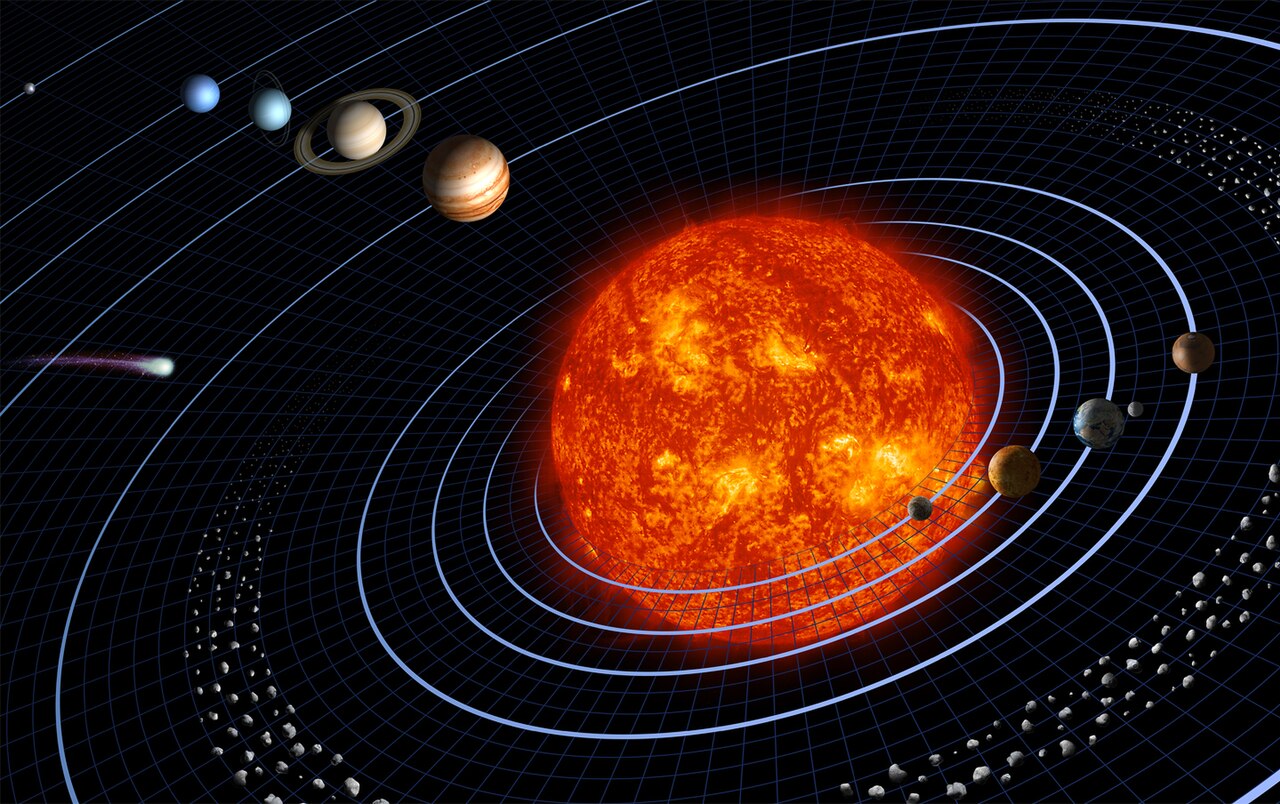
The simple rule of mass times 9.8 times height works only near the ground, where gravity is almost the same everywhere. Far from Earth, gravity gets weaker with distance, so we need a better rule. Isaac Newton's law of gravitation gives it. The stored energy between two bodies depends on both of their masses and on how far apart they are.
Here is the odd part. Scientists usually set the zero point of this energy at an infinite distance, where the two bodies feel no pull at all. Any closer than that, the energy is below zero. So in space is a negative number. This sounds strange, but it makes the maths clean. It also matches an idea that makes sense. A negative value means you would need to add energy to pull the two bodies apart.
This stored energy controls orbits. Gravity keeps the planets going around the Sun. A planet or a spacecraft on an oval orbit swaps kinetic and potential energy as it goes. It speeds up as it drops closer to the body it circles and slows down as it climbs away, but the total stays the same.
So the same idea that explains a falling book also explains the motion of the planets.
Explore Next
Your audio story keeps playing while you look around.
Words to Know
- chemical bond
- The attraction that holds atoms together in a molecule.
- conservation of energy
- The rule that energy is never created or destroyed, only changed from one form to another.
- elastic
- Able to return to its original shape after being stretched or squashed.
- electric charge
- A property of matter that causes it to feel electric forces.
- gravitational
- To do with gravity, the pull between objects that have mass.
- joule
- The standard unit of energy.
- kinetic energy
- The energy an object has because it is moving.
- potential energy
- Energy stored in an object because of its position or arrangement.
- reference level
- The starting point from which height or energy is measured.
- turbine
- A wheel that is spun by water, steam or wind to drive a generator.