Mixture
Stir two substances together and each one stays exactly what it was.
Sea water, air, milk, a bowl of muesli and the soil in a garden all have one thing in common. Each one is a mixture, which means two or more substances share the same space without joining up chemically. Salt in the sea is still salt. Oxygen in the air is still oxygen. Because nothing new is made, we can often get the parts back out again, using tools as simple as a sieve or as clever as a distillation column. Understanding mixtures explains how we clean water, make medicines, recycle metal and even why fog looks the way it does.
What counts as a mixture?
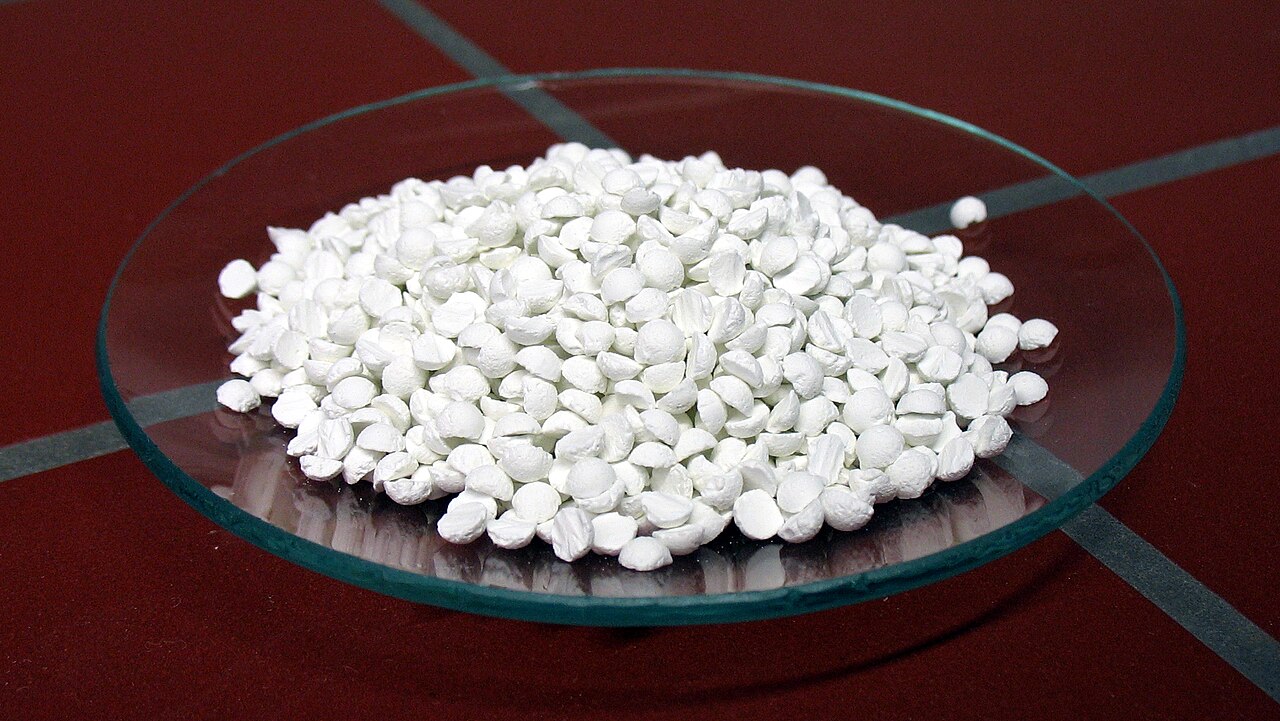
A is a material made from two or more different substances that have been mixed together without any chemical change. The substances might be elements, such as iron and sulphur, or , such as salt and water. Each one keeps its own chemical identity.
Think about sand stirred into water. The sand does not change, and neither does the water. If you let the sand settle and pour the water through a filter, you get back exactly what you started with. That is the key test. If a material can be separated again by physical means, it is a mixture.
Mixtures also have no fixed recipe. You can add a spoonful of sugar to a cup of tea or five spoonfuls, and it is still sweet tea. A compound is different. Water always has 2 hydrogen atoms for every 1 oxygen atom, and it never changes.
The parts of a mixture keep their own properties, such as colour, taste and how heavy they are. The mixture as a whole can behave a little differently, though. Salt water freezes at a lower temperature than pure water, which is why councils spread salt on icy roads.
There is also very little energy change when a mixture forms. Dropping salt into water does not give out the big burst of heat or light that you see when chemicals react.
Why does the salt seem to vanish?
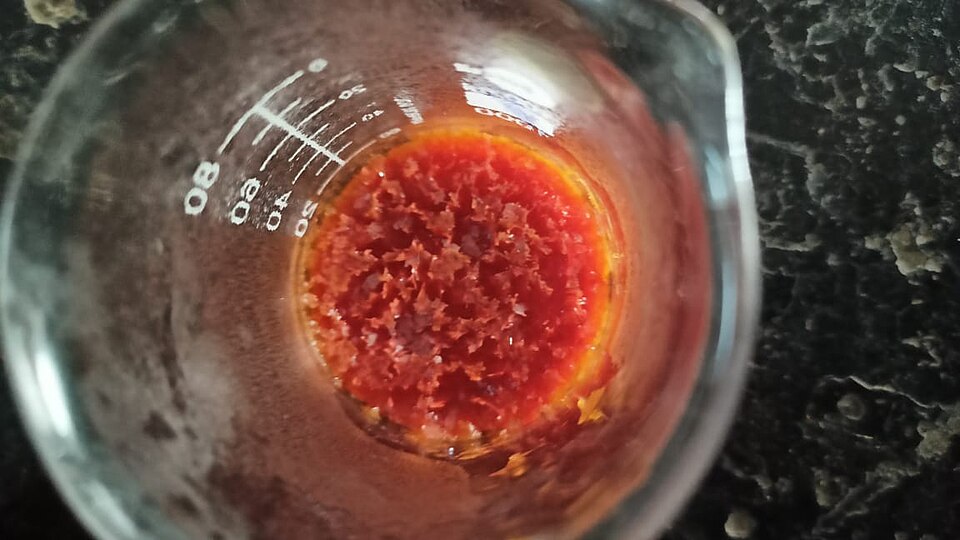
Stir salt into a glass of water and the crystals disappear. Yet the salt has not gone anywhere. It has spread out into tiny pieces, far too small to see, and these pieces are now mixed evenly through the water. Chemists call this kind of a .
In a solution, the substance that dissolves is called the . The liquid doing the dissolving is called the . Here, salt is the solute and water is the solvent. A solution is , which means it looks the same everywhere. Take a sip from the top or the bottom of the glass and it tastes equally salty.
You cannot filter a solution to get the solute back, because the pieces are smaller than the holes in any filter. They also never settle out, however long you wait. To get the salt back you have to let the water evaporate, and then white crystals are left behind.
Solutions do not have to be liquids. Air is a solution of gases. Most of it is nitrogen, with about one fifth oxygen and small amounts of other gases dissolved in it. Gas particles are so far apart that they mix easily.
There is a limit, though. If you keep adding sugar to a cup of water, a point comes when no more will dissolve. The extra sugar sinks to the bottom, and the mixture is no longer uniform.
What about mixtures you can see into?
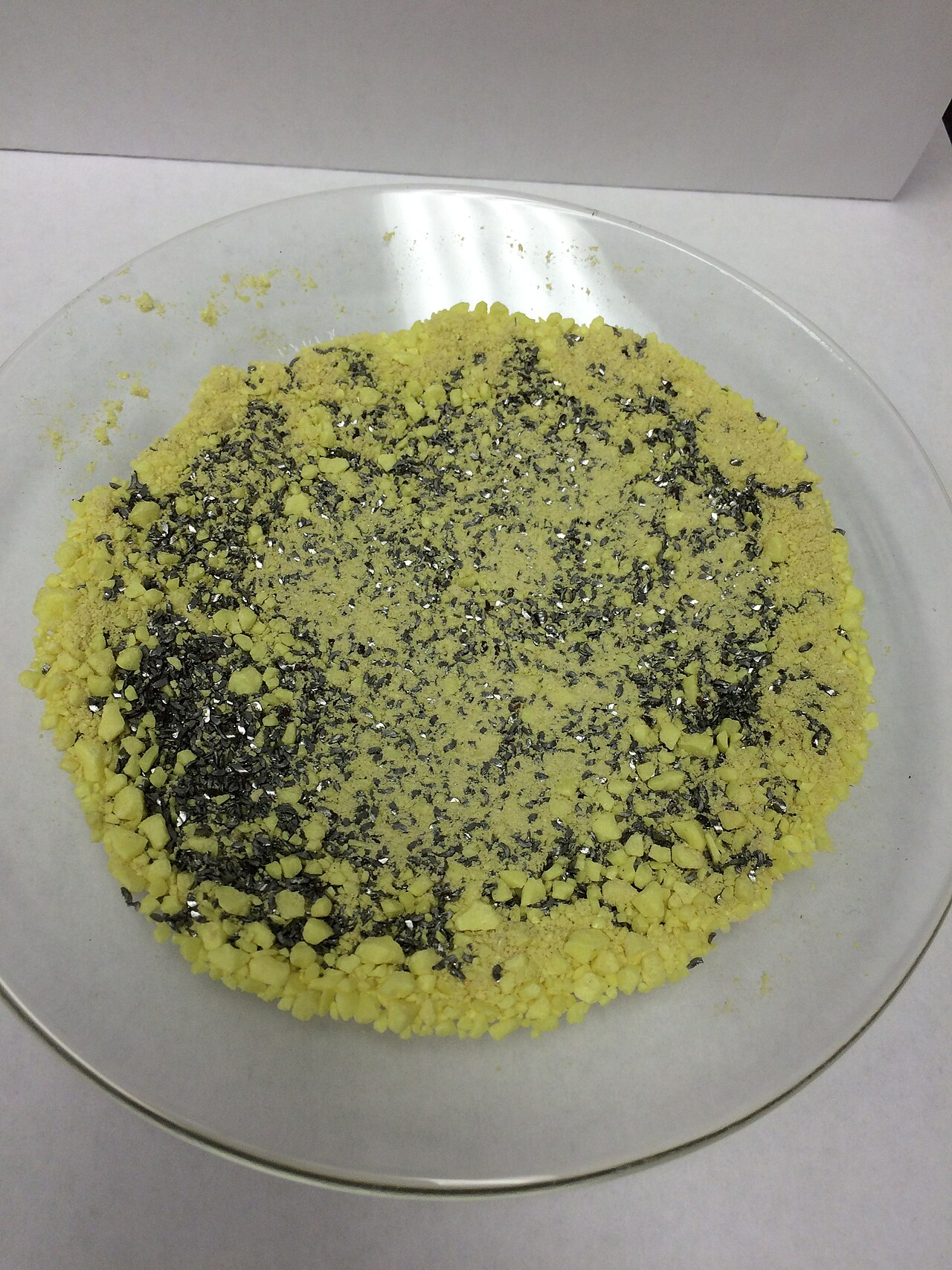
Some are easy to pick apart by eye. A bowl of muesli has oats, raisins and nuts, and you can point at each one. Sand stirred into water is the same. These are mixtures, which means the make-up is not the same all the way through.
In a heterogeneous mixture, the parts are often in different phases. A phase is a state of matter, such as solid, liquid or gas. In sand and water, the sand is a solid and the water is a liquid. Take a spoonful from one place and you may get mostly sand. Take a spoonful from somewhere else and you may get mostly water.
An ordinary pencil is a heterogeneous mixture too. Graphite and clay are pressed together inside wood, and each part has its own job.
If you leave some of these mixtures alone, they separate on their own. Muddy water slowly clears as the soil sinks to the bottom. This is called settling, and it happens because the bits of soil are heavier than the water around them. A mixture like this, with solid pieces spread through a liquid, is called a .
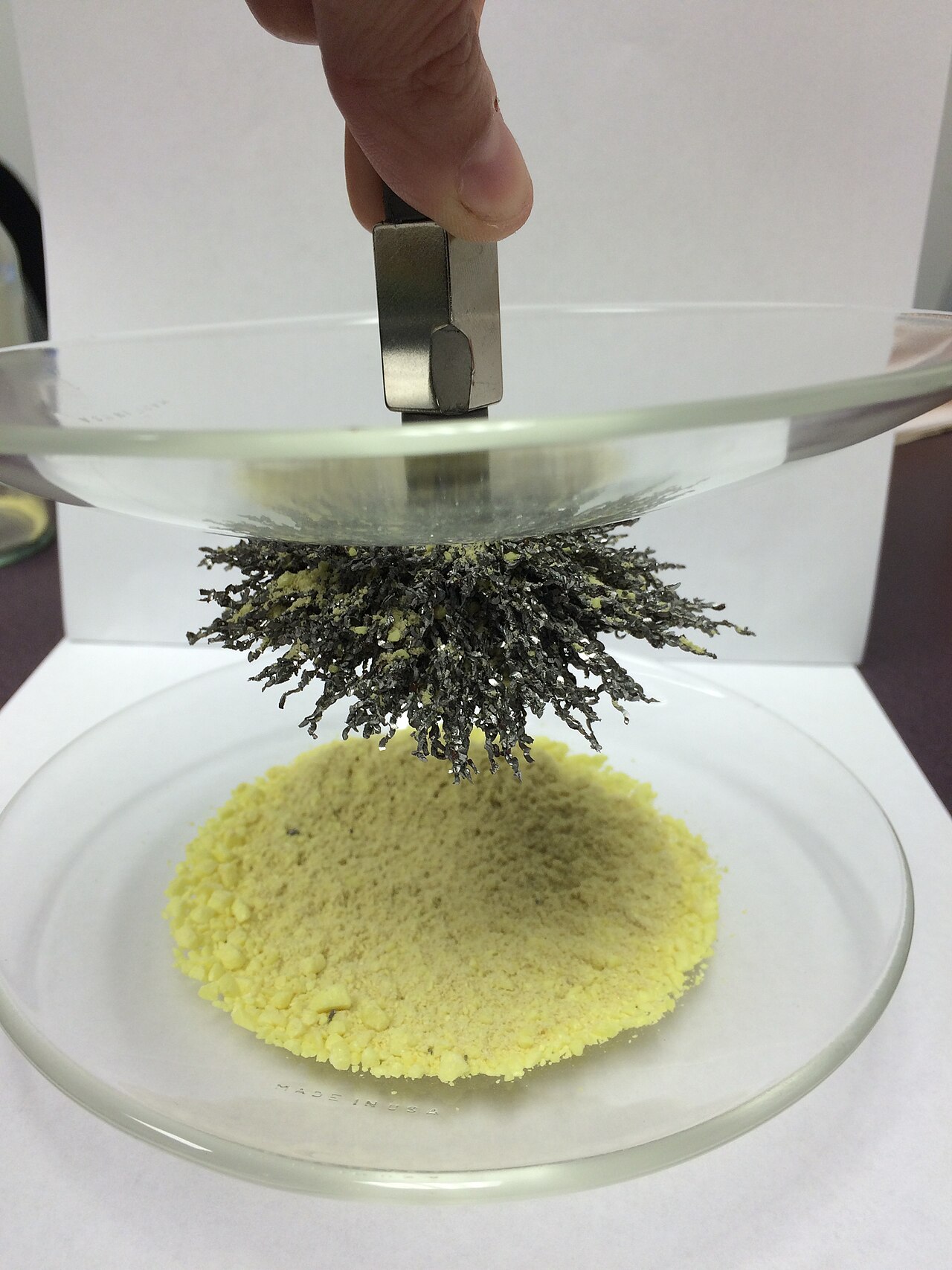
Iron filings stirred into yellow sulphur powder make a good example. You can see the dark grey and yellow grains side by side, and they stay different from each other.
Why is milk in between?
Some sit between the two groups. Milk looks smooth and uniform, yet it is not a true . It contains tiny droplets of fat spread through water, and these droplets are big enough to scatter light, which is why milk looks white. A mixture like this is called an .
An emulsion forms when two liquids that do not blend, such as oil and water, are broken into droplets. Shake oil and vinegar together and you make a salad dressing, but it soon splits into layers. Mayonnaise stays mixed because egg yolk helps hold the droplets apart. Substances that do this job are called emulsifiers.
A foam is a mixture of gas bubbles in a liquid or a solid. Whipped cream is air trapped in cream. A bath sponge is a foam too, with air trapped in a solid. Some foams have closed cells, where every bubble has walls, and others have open networks that liquid can flow through.
Emulsions and foams are examples of . In a colloid, the particles are bigger than the pieces in a solution but small enough that they do not sink. Fog is a colloid of water droplets in air. Because the particles stay spread out, a colloid can look uniform even though it is not a true solution.
So mixtures come in three main families. These are solutions, and colloids, and the main difference between them is the size of their particles.
How do we get the parts back out?
Because nothing changes chemically, we can unmix a using physical methods. The right method depends on how the parts differ.
Filtering works when one part is solid and the other is liquid. Pour muddy water through paper and the soil stays on the paper. Decanting means pouring off the liquid once the solid has settled. A centrifuge spins a sample very fast so that heavier parts are flung to the bottom, which is how a lab separates blood into its parts.
A magnet can lift out anything magnetic. Pass a magnet over iron filings mixed with sulphur and the iron jumps out, leaving the yellow powder behind. Recycling plants use huge magnets to pull steel cans away from other rubbish.
Evaporation drives off a liquid and leaves a dissolved solid behind. Sea salt is made this way in shallow pools in sunny places. goes further. It boils a liquid, then cools the vapour so that it turns back into liquid in a clean container. That is how drinking water can be made from sea water.
Chromatography separates coloured substances. A spot of ink on paper spreads as water creeps upwards, and different colours travel at different speeds.
Some mixtures are very stubborn. Azeotropes are mixtures of liquids that boil together, so ordinary distillation cannot fully split them. Chemists need cleverer tricks to separate these.
How is a mixture different from a compound?
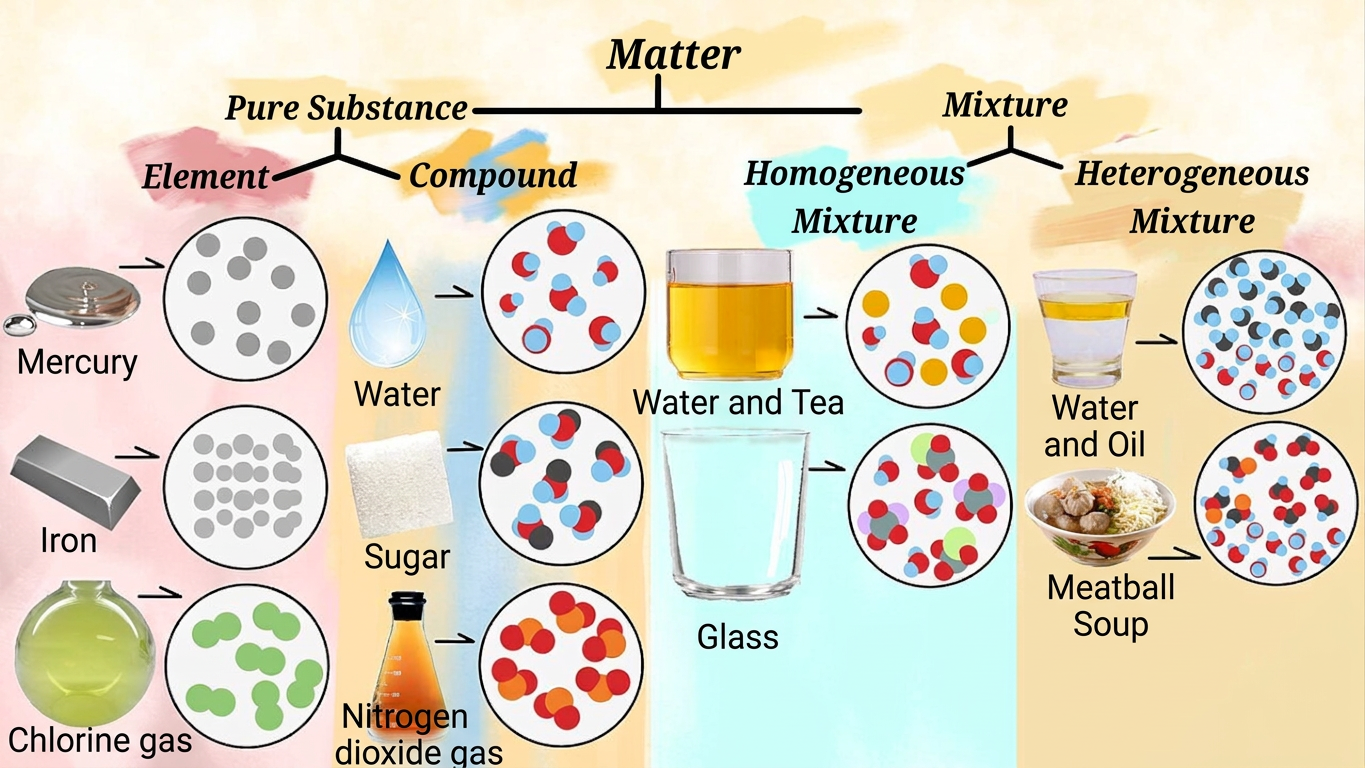
It is easy to mix up and , but they are very different. In a compound, atoms of different elements are joined together by chemical bonds, and the result has its own new properties. In a mixture, the parts are only mingled together.
Iron and sulphur show the difference well. Stir the two powders together and you have a mixture. You can pull the iron out with a magnet, and each powder keeps its own colour. Now heat the mixture strongly. The two elements react and make iron sulphide, a new compound. It is dark and it is not drawn out by a magnet in the same way. The only way to get iron back is another chemical reaction.
There are several ways to tell the two apart. A mixture can be separated by physical means. A compound cannot. A mixture can have any proportions, while a compound has a fixed formula. A mixture keeps the properties of its parts, while a compound has new ones. Forming a mixture takes little or no energy change, while forming a compound often gives out or takes in a lot.
This matters because it tells chemists what tool to use. To separate a mixture, a filter or a heater might be enough. To split a compound, they need a chemical reaction such as electrolysis, which uses electricity.
Is it uniform or not? It depends how closely you look
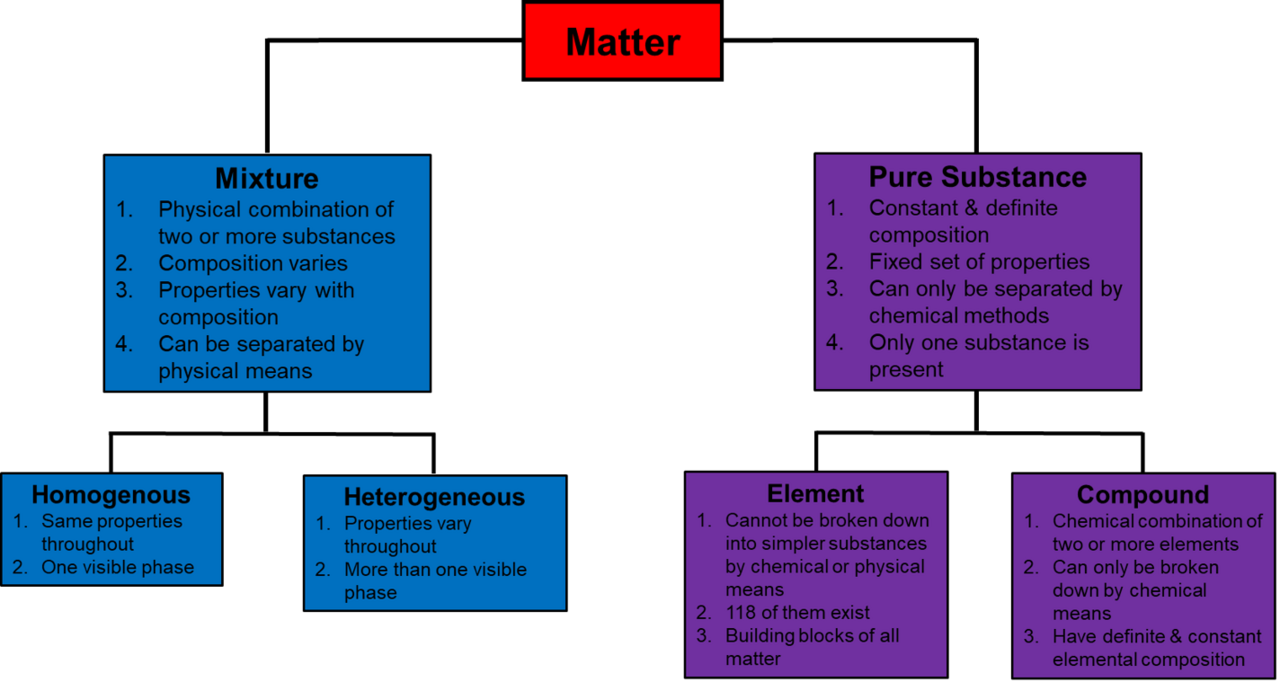
Sorting into uniform and uneven groups sounds neat, but it depends on the size of the sample. Zoom out far enough and almost any mixture looks the same all through. Zoom in far enough and every mixture looks uneven, because a tiny enough sample could hold a single molecule of one substance.
Chemists solve this with a practical rule. If the property you care about is the same no matter which sample you test, then the mixture counts as . If different samples give different results, it is .
This idea matters in real jobs. A mining company testing a pile of crushed rock for gold cannot test every grain. It takes small samples, and each one may hold more or less gold. A French scientist named Pierre Gy built a whole theory of sampling to work out how big and how many samples are needed to get a fair answer.
Chemists sort all matter into a kind of family tree. It splits first into pure substances and mixtures. Pure substances are either elements or . Mixtures are either homogeneous or heterogeneous. Seeing how the groups nest together makes it easier to decide where something belongs. Is it one substance or several, and are the parts spread evenly or not?
Where do mixtures matter in real life?
are everywhere, and many are made on purpose. Metal alloys such as brass, which combines copper and zinc, are mixtures of metals blended to make something stronger or easier to shape. Cooks make mixtures every day, from cake batter to soup. Pharmacists mix medicines in carefully measured amounts.
The air around us is the mixture we depend on most. It is mostly nitrogen with some oxygen, and every breath you take draws on both. Because air is a mixture, we can separate it by cooling it until it becomes liquid and then boiling off its gases one at a time. This is how factories make the pure oxygen used in hospitals.
Mixtures can also cause problems. Air pollution is a mixture of gases, soot and tiny particles. Research has found that breathing the whole mixture can harm the body more than the individual parts would on their own. That is one reason scientists study the combined effect rather than each pollutant alone.
The oceans, rivers and rain are mixtures too, and so is blood. Almost every natural material is a blend of many substances. Learning how to spot mixtures, and how to separate them, is one of the first and most useful skills in chemistry.
Explore Next
Your audio story keeps playing while you look around.
Words to Know
- colloid
- A mixture with tiny particles that stay spread out and do not sink.
- compound
- A substance made of different elements joined by chemical bonds.
- distillation
- Boiling a liquid and cooling the vapour to collect it again.
- emulsion
- A mixture of tiny droplets of one liquid spread through another.
- heterogeneous
- Uneven, with parts you can tell apart.
- homogeneous
- The same all the way through.
- mixture
- Two or more substances mixed together without a chemical change.
- solute
- The substance that dissolves in a solution.
- solution
- A mixture in which one substance is dissolved evenly in another.
- solvent
- The substance that does the dissolving, such as water.
- suspension
- A mixture with solid pieces that slowly sink in a liquid.