Matter
Everything you can touch, and a surprising amount you never can.
Matter is anything that has mass and takes up space. Rocks, water, air, trees and your own body are all matter. Everyday matter is built from atoms, and atoms are built from even smaller particles such as electrons and quarks. Matter comes in forms we know well, like ice, water and steam, and in strange forms such as plasma and antimatter. It also hides a huge mystery. The matter we understand makes up only about 5 per cent of the universe. The rest is dark matter and dark energy, and nobody yet knows what they are.
What is matter?
is anything that has mass and takes up space. A rock, a glass of water, the air in a balloon and your own body are all matter. Mass is the amount of stuff in an object. Volume is the space it fills. Everyday matter is made of , and atoms are built from smaller pieces called subatomic particles.
Light and heat are not matter. Light is made of particles called photons, which have no rest mass. Scientists treat light and heat as energy and waves, not as matter.
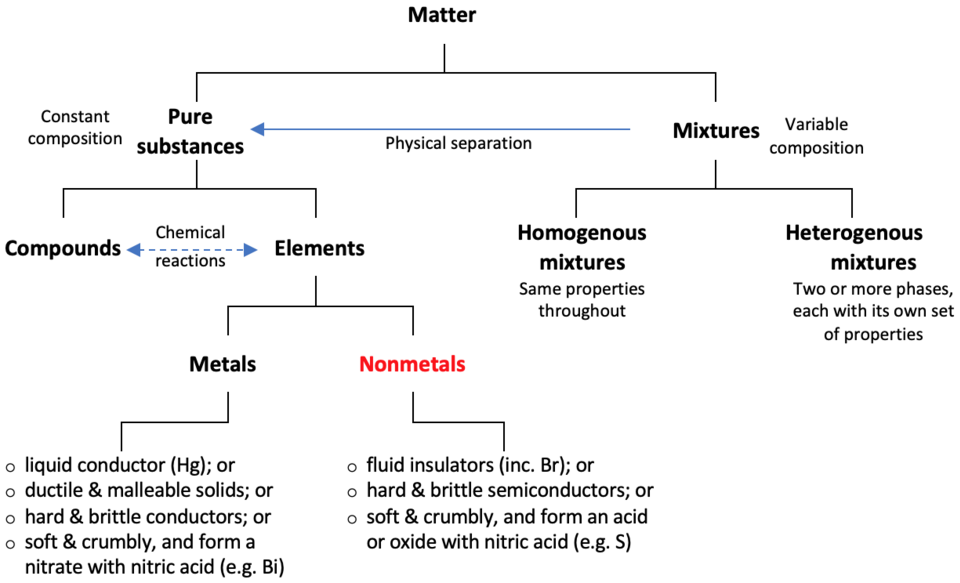
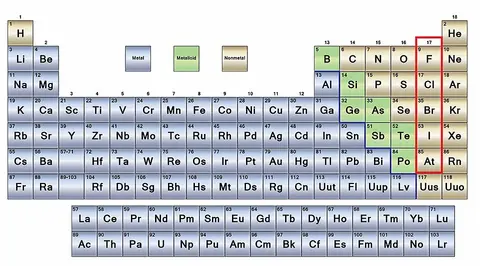
Chemists sort matter into groups. A pure substance is the same all the way through. It may be an , such as gold or oxygen, which has only one kind of atom. Or it may be a compound, such as water, where atoms of different kinds are joined together. A mixture holds two or more substances that are not joined chemically. Salt dissolved in water looks the same everywhere, so it is an even mixture. A bowl of cereal and fruit is a mixture where you can see the different parts.
Even physicists admit that matter is hard to pin down. They use slightly different meanings for different jobs. For this reason they often name the exact kind they mean, such as or .
Who first thought matter was made of atoms?
For most of history, nobody could see , so thinkers had to reason about them. They asked a big question. If you keep cutting something in half, does it ever stop?
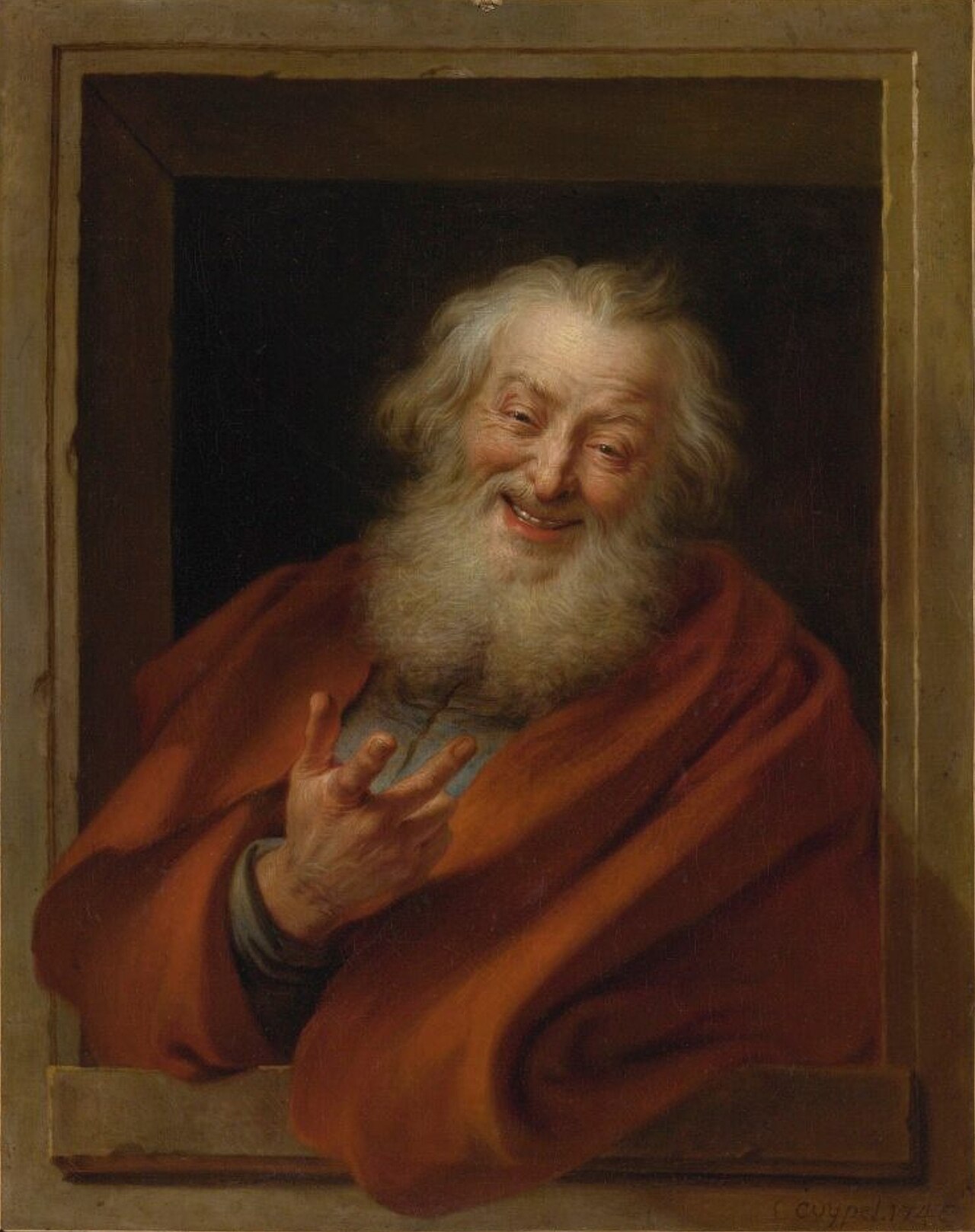
In India, a philosopher named Kanada taught, sometime between the 6th and 2nd centuries BC, that was made of tiny, eternal pieces. Buddhist and Jain thinkers also built atom theories. In Greece, Leucippus and Democritus said much the same thing. Democritus lived from about 470 to 380 BC. He argued that everything is made of tiny, solid bodies of many shapes, with empty space between them. He called them atoms, from a Greek word meaning uncuttable.
Other Greek thinkers disagreed. Thales thought water was the basic stuff of the world. Anaximenes chose air and Heraclitus chose fire. Empedocles said there were four : earth, water, air and fire. Aristotle, who lived from 384 to 322 BC, kept the four elements and added a fifth, aether. He argued that matter is whatever carries on through a change. When a horse eats grass, the grass becomes horse, and matter is what persists.
Real evidence arrived much later. In the early 1800s John Dalton showed that chemistry made sense if each element had its own kind of atom. In 1897 J. J. Thomson found the electron, which proved that atoms have smaller parts. In 1911 Ernest Rutherford showed that an atom's mass sits in a tiny nucleus. James Chadwick found the neutron in 1932.
What is matter made of?
Every has a tiny centre called the nucleus. It is made of protons, which carry a positive electric charge, and neutrons, which carry none. Around the nucleus is a cloud of electrons, which carry a negative charge. A carbon atom has 6 protons, 6 electrons and usually 6 neutrons.
This model is only partly right. Electrons do not circle like planets. They behave like waves as well as particles, so they have no exact size or position. The rules for this tiny world are called quantum mechanics.
Go deeper and protons and neutrons turn out to have parts too. They are made of . The two kinds in ordinary are called up and down. A proton has two up quarks and one down quark. A neutron has one up and two down. Up quarks have an electric charge of plus two thirds and down quarks have minus one third. Strong forces carried by particles called gluons bind quarks together.
Electrons belong to a second family, the . The other everyday lepton is the neutrino, which has no charge and passes through almost everything. Physicists define ordinary matter as quarks and leptons.
The Standard Model, the best theory of particles, groups them into three generations. The first, with up and down quarks, the electron and its neutrino, makes up everything around you. Heavier generations decay quickly, so we meet them only in accelerators and cosmic rays.
Why does matter take up space, and where does its mass come from?
are mostly empty space, so why can you not walk through a wall? The answer comes from a rule called the Pauli exclusion principle. and electrons belong to a group of particles called fermions. Two fermions cannot share the same state. So when atoms are pushed close, their electrons are forced to keep apart. That resistance is what makes feel solid and take up room.
Mass has a surprising origin. You might guess that the mass of a proton is the mass of its three quarks added together. It is not. The three quarks weigh only about 1 per cent of the proton. Almost all the rest comes from energy, from the motion of the quarks and the fields of gluons that hold them together. Einstein's famous equation, E equals mc squared, says that energy has mass. So most of the mass of everyday objects comes from the energy of binding.
This also explains nuclear energy. In a nuclear reaction no protons or neutrons are destroyed. The same number exist before and after. But they are packed into nuclei with less binding energy per particle, and the difference is released as heat and light. Physicists say the amount of matter, counted in quarks and , is conserved. Mass is not. A nucleus can end up weighing a little less than the parts it started with.
What are the states of matter?
can take different forms called , or states. The three you meet every day are solid, liquid and gas. Water shows all three. It is solid as ice, liquid in a glass and gas as steam. A phase is a form of matter with the same makeup and properties throughout. Temperature and pressure decide which phase matter is in. When conditions change, matter can switch from one phase to another. This is called a phase transition. Melting and boiling are two examples.
There are more phases than three. In , a gas is so hot that lose electrons and become charged particles called ions. Stars are mostly plasma, and so is lightning. Liquids, gases and plasmas are all fluids, because they can flow.
Very strange phases appear at the extremes. Close to absolute zero, the coldest temperature possible, some gases become a Bose-Einstein condensate. In this state the atoms act together like one giant wave. Other liquids become superfluids, which flow with no friction. At the other extreme, particle collisions at tremendous energies make a -gluon plasma. In it the quarks are no longer locked inside protons and neutrons.
Tiny pieces of matter can also behave differently. In nanomaterials, the surface area is huge compared with the volume. They can have properties that the same material shows nowhere else.
What is antimatter?
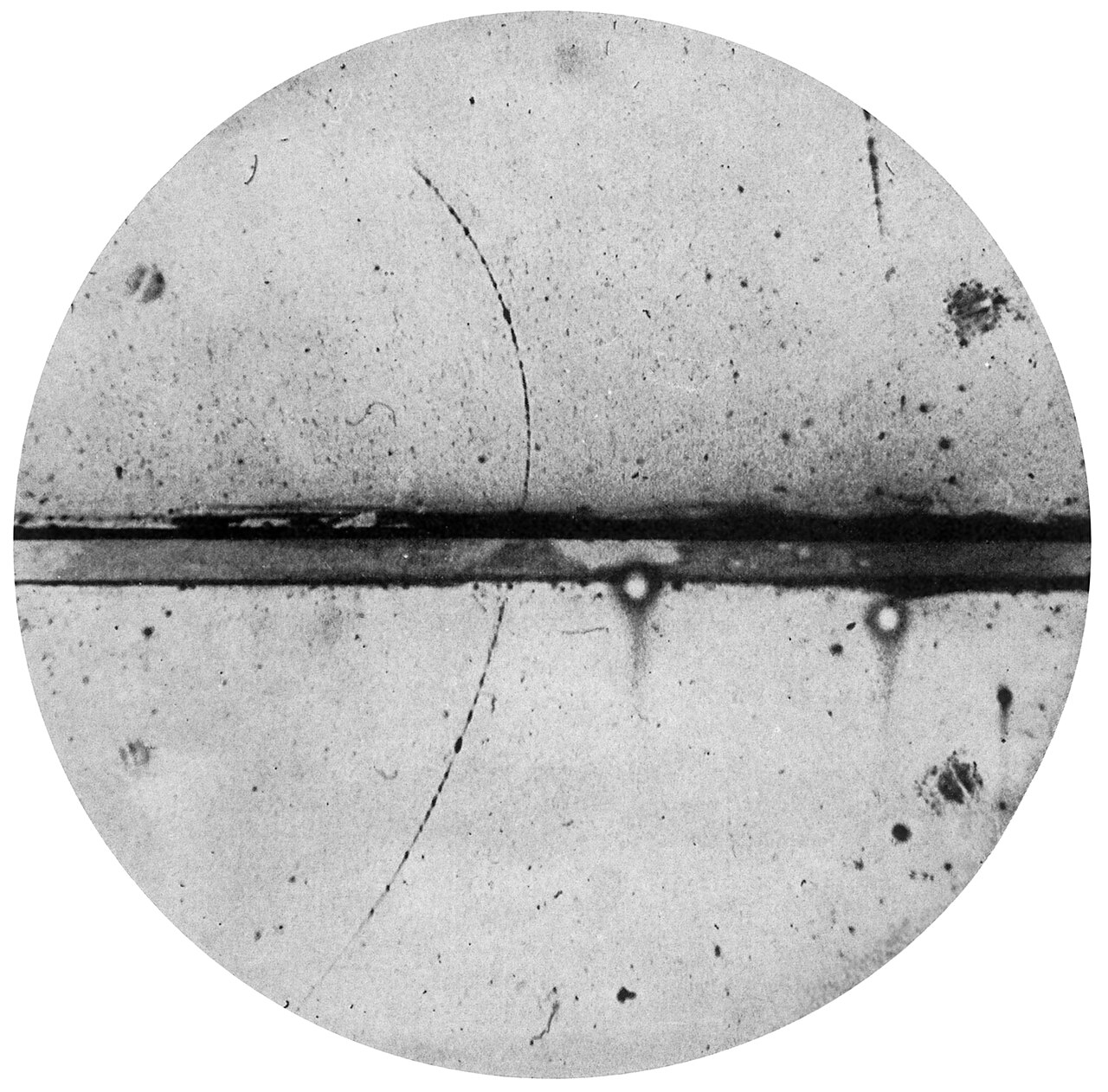
Every particle of has an antiparticle. It has the same mass but the opposite charge. The antiparticle of the electron is the positron, which has a positive charge. The antiparticle of the proton is the antiproton. is matter built from these antiparticles.
Physicist Paul Dirac predicted antimatter in 1928, and Carl Anderson spotted the positron in a cloud chamber in 1932. When a particle meets its antiparticle, both vanish. This is called . Their mass turns into energy, as Einstein's equation E equals mc squared allows, often as gamma rays, which are very energetic light. Positrons are used in hospital PET scanners.
Antimatter is almost absent from nature. Tiny amounts appear in radioactive decay, lightning and cosmic rays, but they disappear almost at once. Any antimatter on Earth would meet ordinary matter and annihilate. Scientists can make antiparticles and even antihydrogen in laboratories, but only tiny amounts.
This leads to a deep puzzle. In the early universe, matter and antimatter are thought to have been made in equal amounts. If so, they should have wiped each other out, leaving only light. Yet the visible universe is made almost entirely of matter. Something must have tipped the balance. Physicists have not worked out what. It is one of the great unsolved problems in science.
What happens to matter in dying stars?
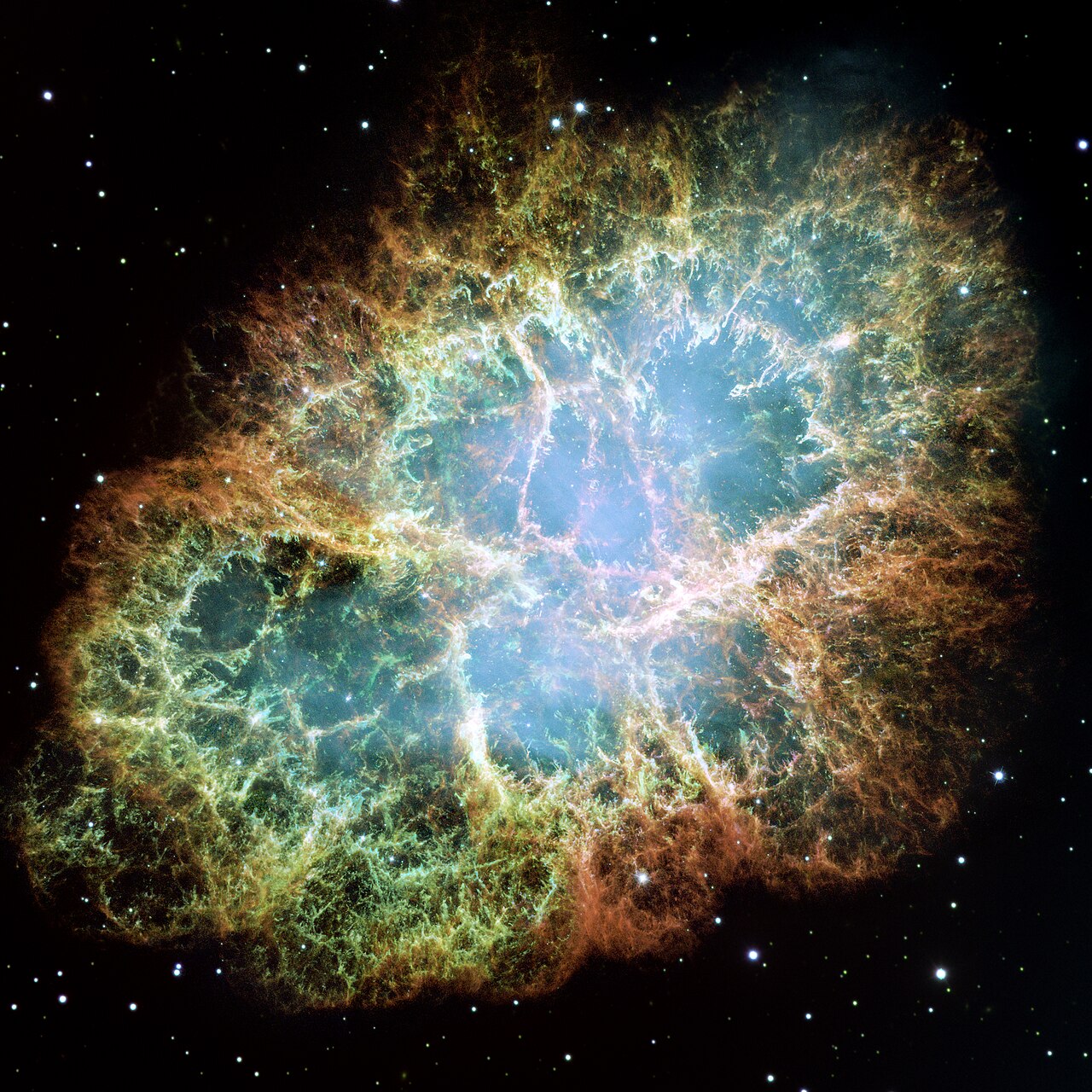
can be squeezed far beyond anything on Earth. When a star runs out of fuel, gravity crushes its core. What happens next depends on the star's mass, and the exclusion principle is the key.
In a white dwarf, a leftover core about the size of Earth, carbon and oxygen nuclei float in a sea of electrons. The electrons are squeezed so tightly that they cannot get closer. Their resistance, called degeneracy pressure, holds the star up. In the 1930s Subrahmanyan Chandrasekhar showed that this support has a limit. If a white dwarf is too heavy, the electrons cannot hold it up and it collapses further. This changed the way astronomers think about how stars die.
Matter that has collapsed like this is called . A bigger collapse makes a neutron star. A neutron star holds more mass than the Sun in a ball about 20 kilometres across. Most of its matter is packed neutrons, and a teaspoon of it would weigh billions of tonnes. A neutron star is left behind when a massive star explodes as a supernova. The Crab Nebula is the glowing remains of one.
Physicists wonder if matter squeezed harder still could turn into a liquid of , called strange matter. It may sit in the cores of neutron stars. This is a hypothesis, and nobody has seen it yet.
How much of the universe is ordinary matter?
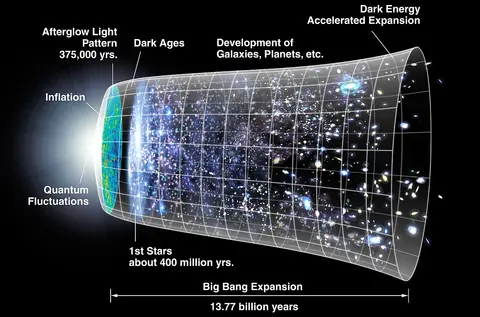
Here is a shock. The in stars, planets, gas clouds and people make up only about 5 per cent of the universe. Measurements of the afterglow of the Big Bang, made by space telescopes such as WMAP, point to about 27 per cent and about 68 per cent .
Even that 5 per cent is mostly out of sight. Visible stars and gas inside galaxies are less than 10 per cent of the ordinary . Much of the rest is thin gas between galaxies that is very hard to detect.
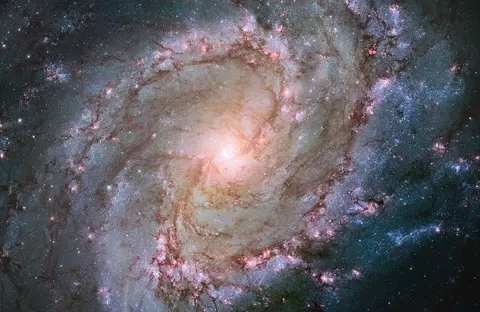
The universe is not scattered evenly. On the very largest scales, galaxies gather along long threads and walls, with huge empty voids between them, like a cosmic web. Computer models show that dark matter forms this web first. Its gravity pulls ordinary gas into the threads, and galaxies grow where the threads cross.
Astronomers sometimes say the universe is made of three things. Ordinary matter is the stuff we know. Dark matter is an unseen kind of matter that adds to gravity. Dark energy is a different thing, a mysterious effect that is pushing the universe to expand faster and faster. The numbers come from several different measurements that agree, but the nature of both dark ingredients is unknown.
How do we know dark matter is there?
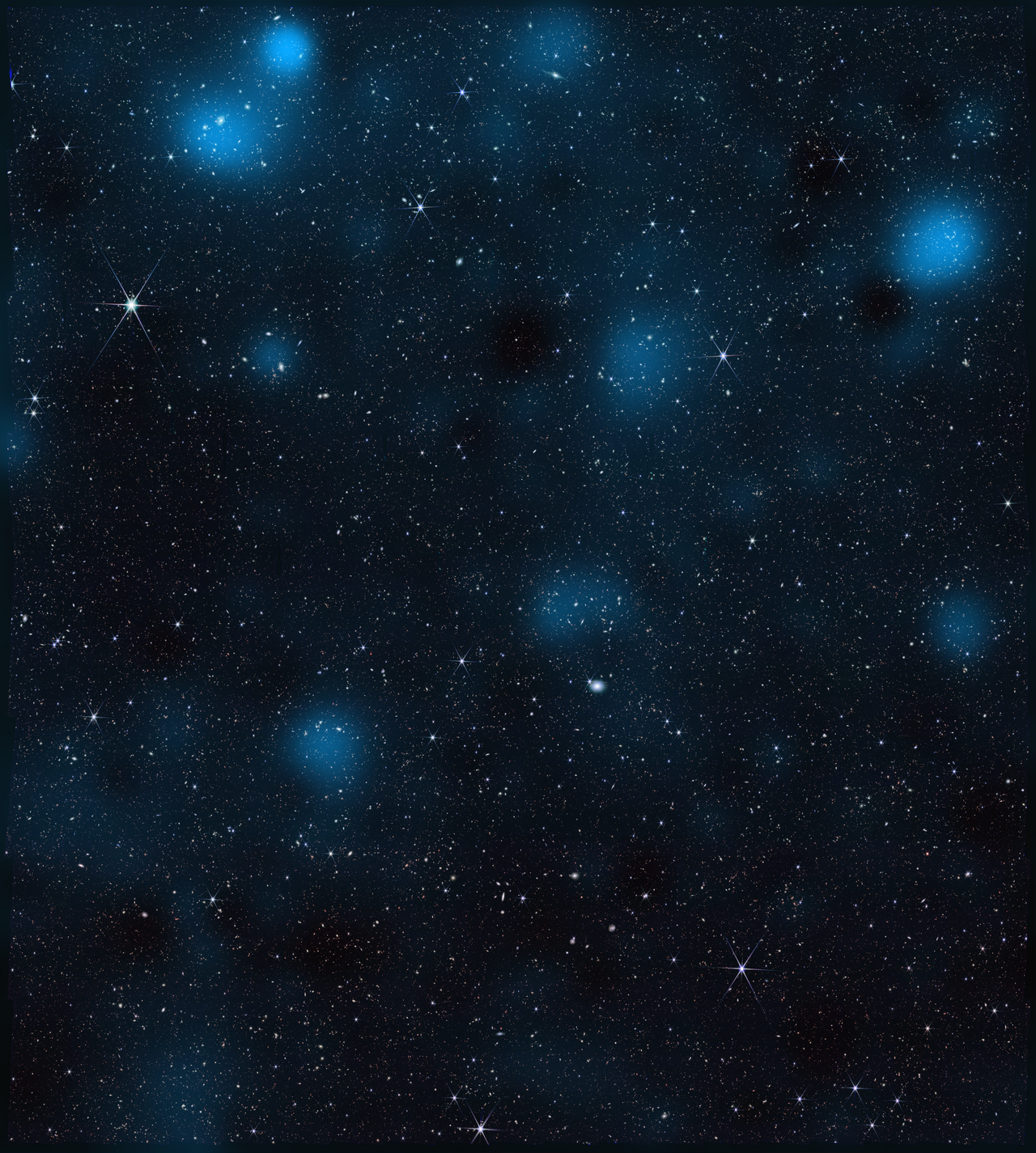
gives off no light and reflects none. So how can scientists know it exists? They see its gravity.
In the 1970s, astronomers including Vera Rubin measured how fast stars orbit inside spiral galaxies. The outer stars moved far too quickly. The gas, dust and stars we can see do not have enough gravity to keep them in orbit. Something unseen must add the pull. Since then, other clues have appeared. Heavy clumps bend light from faraway galaxies, an effect called gravitational lensing. By measuring the bending, astronomers can map where mass is, even when nothing glows there. Maps made with the James Webb Space Telescope show dark spread across galaxy fields.
What dark matter is made of is still unknown. Most scientists think it is not made of protons and neutrons. It is probably made of particles no laboratory has yet detected. One idea is a family of heavy particles left over from the very early universe. Many experiments, deep underground and in space, are searching for them. As of 2026, none has found one.
is a separate puzzle. It is the name for whatever makes the expansion of the universe speed up. Its nature is also a mystery. In 2025 a huge map of millions of galaxies, made by the DESI instrument in Arizona, hinted that dark energy may be growing weaker over time. If that holds up, it would change ideas about the universe's distant future. Physicists also study exotic matter, a name for any material, still only imagined, that breaks the usual rules, such as having negative mass.
Explore Next
Your audio story keeps playing while you look around.
Words to Know
- annihilation
- What happens when a particle meets its antiparticle and both turn into energy.
- antimatter
- Matter made of antiparticles, which have the opposite charge to ordinary particles.
- atom
- The tiny building block of ordinary matter, made of a nucleus and electrons.
- dark energy
- The unknown cause of the universe's expansion speeding up.
- dark matter
- An unseen kind of matter that shows itself only by its gravity.
- degenerate matter
- Matter packed so tightly that the exclusion principle holds it up, as in a white dwarf.
- element
- A pure substance made of only one kind of atom.
- lepton
- A tiny particle such as the electron that is not made of quarks.
- matter
- Anything that has mass and takes up space.
- phase
- A form of matter with the same makeup and properties throughout, such as solid or liquid.
- plasma
- A very hot gas whose atoms have lost electrons, so it is full of charged particles.
- quark
- A tiny particle that combines with others to make protons and neutrons.