Oxygen
The invisible gas we breathe, which also makes fire burn and iron rust.
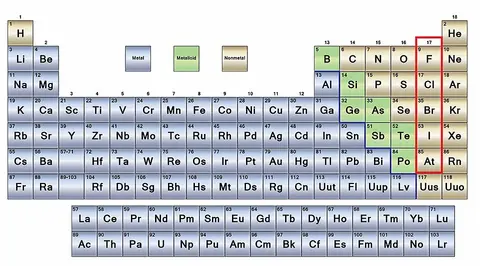
Oxygen is element number 8, with the symbol O. You cannot see it, smell it or taste it, yet you need it every minute. About one-fifth of the air is oxygen, and almost half of the rock under your feet is oxygen locked in other compounds. Water is mostly oxygen by mass. Oxygen is also very reactive. It joins with other elements to make fire, rust and the energy that keeps our bodies running. Our planet is unusual because its air is so rich in oxygen, and the reason is life itself. Plants, algae and bacteria have been making it for billions of years.
What is oxygen, and where is it?
Oxygen is a nonmetal, and one of the most reactive elements. The gas we breathe is made of molecules with two oxygen atoms joined together, written O2. It is colourless, odourless and tasteless. About 21% of the air is oxygen. Most of the rest is nitrogen.
Oxygen is far more common than that, though, because most of it is locked in compounds. It is the most abundant element in Earth's crust, making up about 49% of its mass. It is found in water, in sand and quartz, in rust, in limestone and in most of the minerals in rock. In the oceans, oxygen makes up about 89% of the mass of the water. In the whole universe, it is the third most common element, after hydrogen and helium.
Oxygen is also in nearly everything alive. It is the most common element in your body by mass, mostly because the body is so full of water. Proteins, fats, sugars and DNA all contain oxygen atoms, and so do bones, teeth and shells.
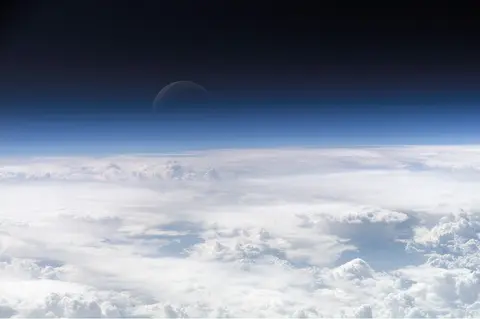
When oxygen is cooled to -183 °C, it becomes a pale blue liquid. At -219 °C it freezes into a pale blue solid. A cousin of oxygen, , is made of three oxygen atoms. High in the sky, the ozone layer shields life from harmful ultraviolet light from the Sun. Near the ground, ozone is a pollutant that harms the lungs.
Who discovered oxygen?
No single person discovered oxygen. The idea was pieced together over many centuries, with small steps and wrong turns.
In the 2nd century BC, the Greek engineer Philo of Byzantium burned a candle in an upturned jar standing in water. As the candle burned, water rose into the jar. Philo wrongly guessed that some of the air had turned into fire and slipped out through the glass.
In the early 1600s, the Polish alchemist Michael Sendivogius described a substance in air he called the 'food of life', and he got it by heating saltpetre. Later, John Mayow, an English chemist, showed that fire and breathing use only a part of the air.
Why did it take so long? In the 1700s most chemists believed in . This was the idea that anything that burns contains a fire-stuff called phlogiston, which escapes into the air in flames. It seemed to fit what people saw, since burning wood loses weight. Several people made oxygen, but fitted it into this theory, so they did not see what they had.
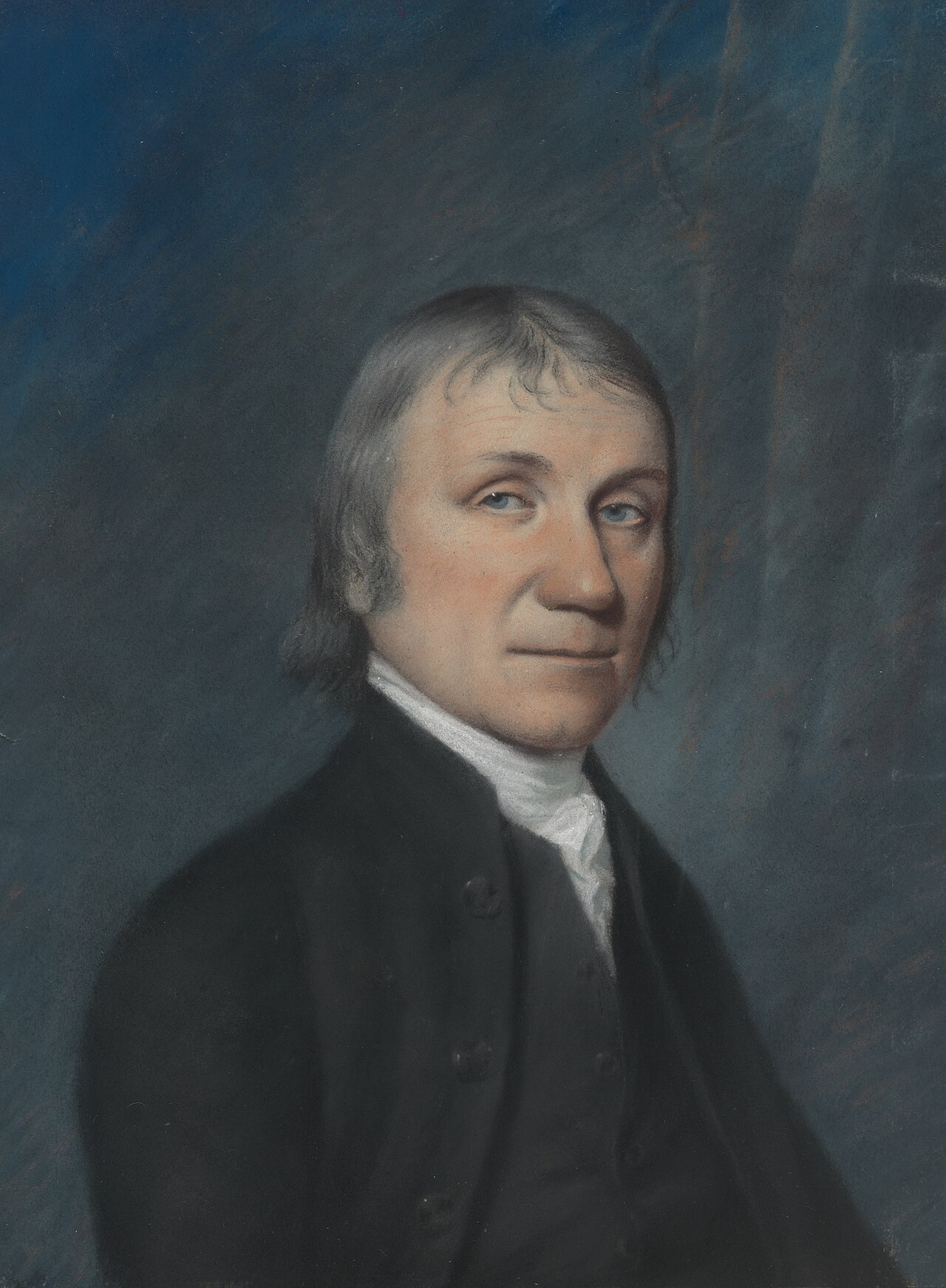
The Swedish pharmacist Carl Wilhelm Scheele made oxygen by heating mercuric and other compounds around 1771. He called it 'fire air'. On 1 August 1774, the English clergyman Joseph Priestley focused sunlight on mercuric oxide and released a gas in which candles burned brighter. A mouse lived longer in it. Priestley tried it himself and said his chest felt 'peculiarly light and easy'. He named it 'dephlogisticated air'. Scheele's work was published later, so Priestley is often given the credit.
The French chemist Antoine Lavoisier then made careful measurements. In 1777, he showed that burning is a reaction with this gas, and not the loss of phlogiston. He named it oxygen, from Greek words meaning 'acid maker', because he wrongly thought all acids contained it.
Why does Earth's air have so much oxygen?
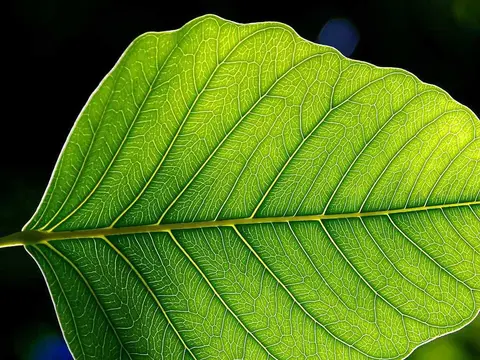
Earth's air has not always been rich in oxygen. For its early history, the atmosphere had very little free oxygen. Then tiny living things called changed the planet. They use sunlight, water and carbon dioxide to make sugar, and oxygen is the waste. This is .
Oxygen began to build up in the air about 2.5 billion years ago, in what scientists call the Great Oxygenation Event. For the earliest life, which did not use oxygen, the gas was harmful. Another rise took place about 500 million years ago, bringing oxygen to about today's level or higher.
Today, oxygen is kept in balance by the oxygen cycle. Photosynthesis puts it in. Breathing, decay and burning take it out. At present the two are about equal. Measurements since 1989 show that oxygen in the air is slowly falling, mainly because burning fossil fuels uses it up. The fall is tiny compared with the amount in the air. Computer models suggest the oxygen in Earth's air may last for about another billion years.
Other planets are different. Mars has about 0.1% oxygen gas in its air, and Venus has very little. Their oxygen comes only from sunlight splitting molecules such as carbon dioxide. So astronomers see oxygen as a possible sign of life on faraway planets, though non-living processes can make it too.
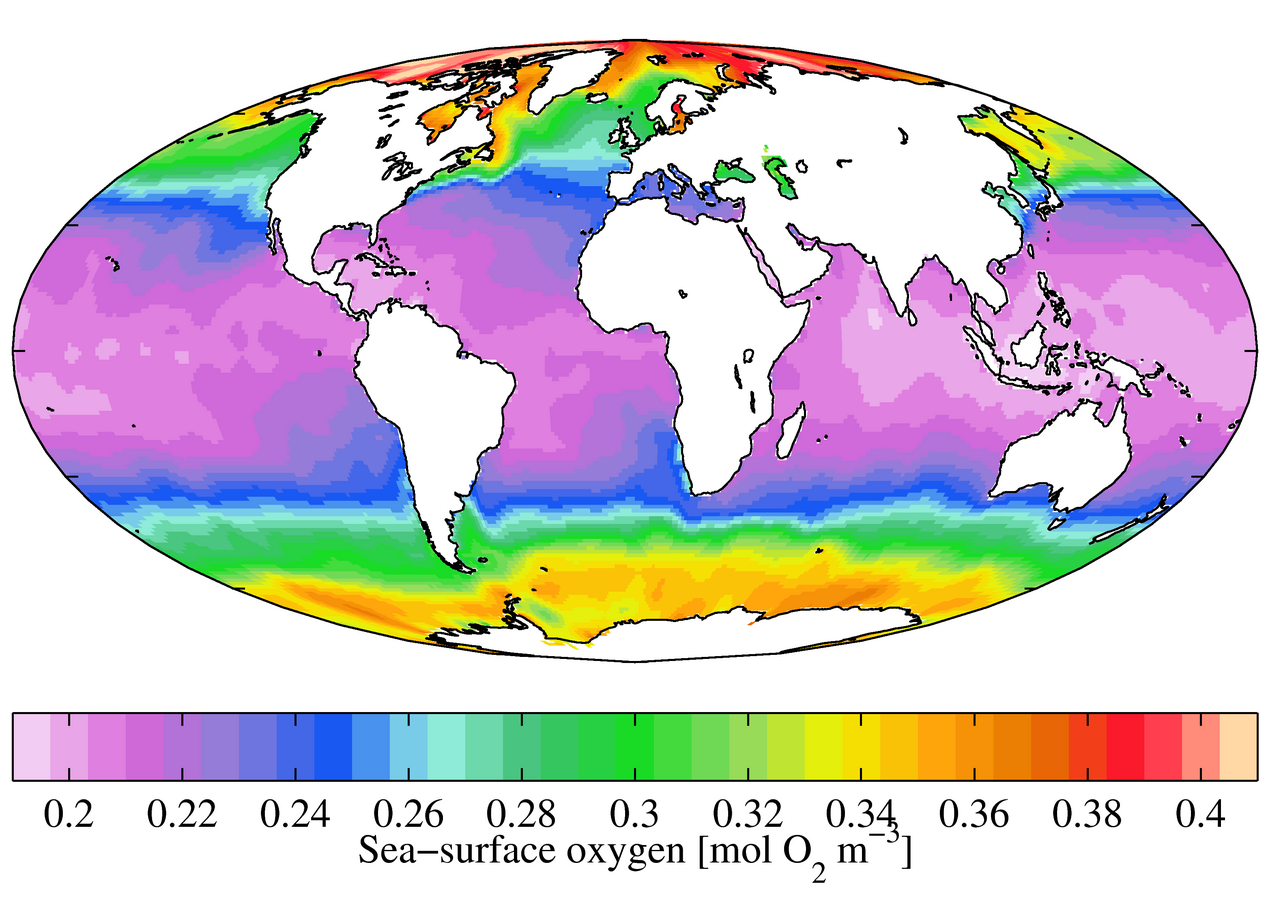
Oxygen also dissolves in the sea, and cold water holds more. That is why the cold polar oceans are rich in life. Warming seas are losing oxygen, and scientists expect the loss to continue.
What does the body do with oxygen?
Every cell in your body needs oxygen. It uses the gas to release energy from food, in a process called cellular . Sugar from food and oxygen go in. Energy, carbon dioxide and water come out. In a sense, this is run backwards. Plants and algae store energy in sugar, and animals unlock it again.
How does the oxygen get there? In land animals, air enters the lungs. There, oxygen passes into the blood and carbon dioxide passes out. In human blood, a protein called in red blood cells holds the oxygen. It turns bright red when it is loaded with oxygen. The heart pumps the blood around the body, and the oxygen is delivered to the cells. A litre of blood can carry up to about 200 cubic centimetres of oxygen.
Fish take dissolved oxygen out of water through their gills. Insects have a network of tiny tubes that carry air straight to their tissues. Some animals, such as snails and some spiders, use other blood proteins instead of haemoglobin.
An adult at rest breathes in about 1.8 to 2.4 grams of oxygen every minute. Across the whole human population, that adds up to more than 6 billion tonnes of oxygen a year.
People have understood the link between blood and air only slowly. Ibn al-Nafis described the blood picking up something from the air in 1250. William Harvey published a scientific account of blood circulation in 1628.
The Earth's oxygen is mostly made by plants and by tiny sea algae and bacteria. Estimates of the sea's share range from about 45% to 70%.
Why does oxygen make fire and rust?
Oxygen is a strong . This means it tears electrons from other substances and joins with them to make compounds called . When this happens quickly and gives off heat and light, we call it burning. When it is slow, we call it rusting.
A fire needs fuel, heat and oxygen. Take away any one of them and the fire goes out. Lavoisier showed this. In one experiment he heated tin in a sealed container. The tin gained weight, and when he opened the container, air rushed in. The weight gained matched the weight of the air that had been used up. The air itself was not lost. Part of it had joined with the metal. This overturned the idea.
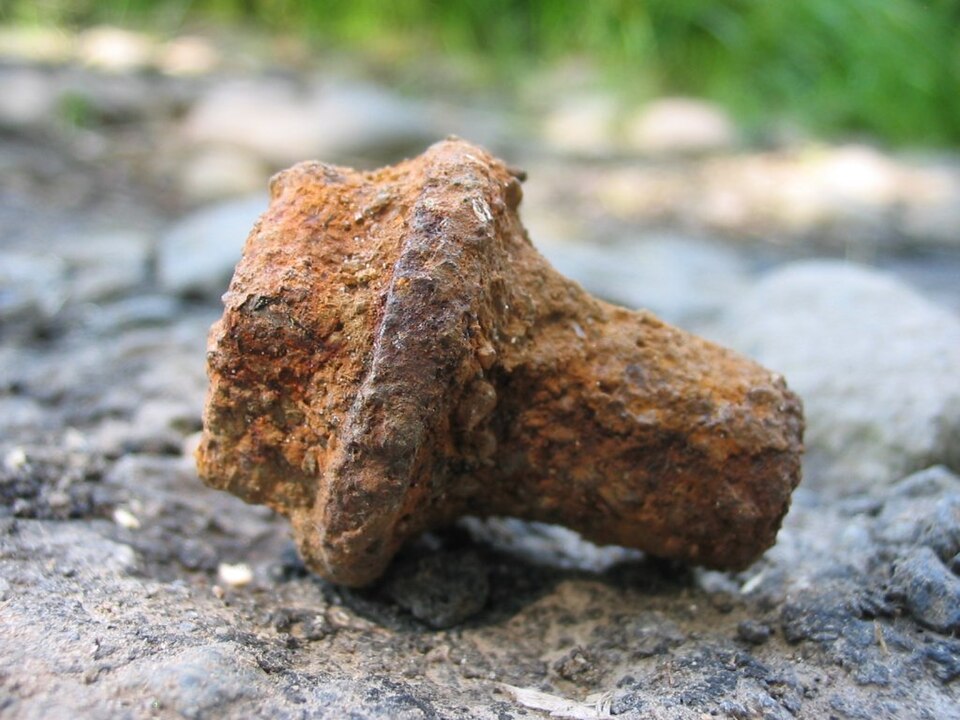
Rust is the same chemistry in slow motion. When iron meets oxygen and water, it forms iron oxide, which is the red-brown flaky material called rust. Some metals, such as aluminium and titanium, also oxidise in air. But their oxide forms a thin, tight skin that protects the metal underneath.
In ordinary air, many things do not burst into flames on their own. The common form of oxygen reacts only slowly with most materials, which is lucky. But if you raise the oxygen level, fires become much fiercer. This is why liquid oxygen and oxygen cylinders must be kept away from fuels, oil and grease.
Breathing and burning are close cousins. Both combine oxygen with carbon compounds to make carbon dioxide and release energy. The body does it slowly and in a more controlled way.
How do we make oxygen?
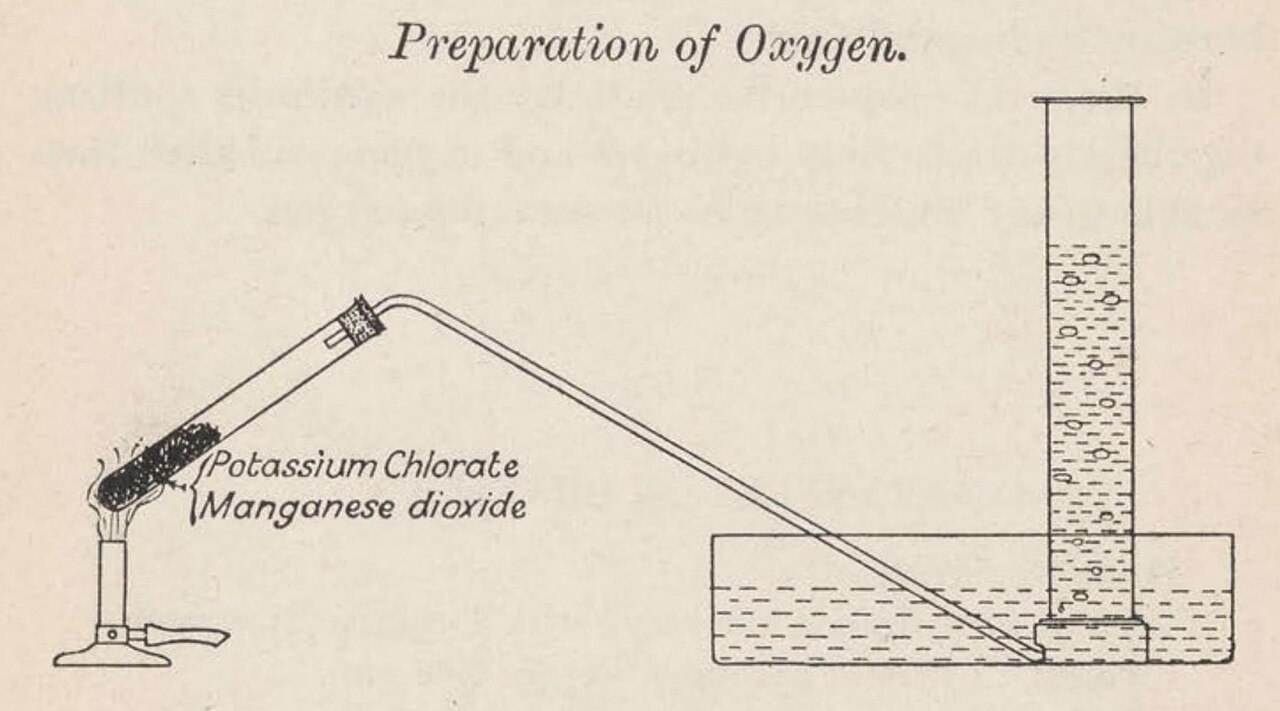
In a school or university laboratory, oxygen can be made by heating potassium chlorate with a little manganese dioxide, which speeds up the reaction. Passing electricity through water splits it into hydrogen and oxygen, a method called .
But industry needs oxygen by the tonne. Every year, about 100 million tonnes of oxygen are taken from the air. Air is mostly nitrogen and oxygen, so the job is to separate them. The main method is to cool air until it becomes a liquid and then let it warm slowly. Nitrogen boils off first at a lower temperature. The oxygen stays behind as a liquid. This is called .
A second method uses a material called zeolite, which acts like a sponge for nitrogen. Air passes through it, and the nitrogen is trapped. What comes out is 90% to 93% oxygen. Two beds work in turns, so the supply never stops.
The first useful ways of making oxygen on a large scale appeared in the 1800s. The French brothers Quentin and Arthur Brin made oxygen from air in 1879, and their company used the process until 1906. Liquid oxygen was first made as a few drops in 1877. A stable amount was made in 1883, by Polish scientists Zygmunt Wróblewski and Karol Olszewski. In 1895, the German engineer Carl von Linde and the British engineer William Hampson separately found the first commercial ways to produce liquid oxygen.
What is all this oxygen for? Steel-making takes about 55% of it. The chemical industry uses about 25%, and the rest goes to medicine, welding, water treatment and rockets.
How does liquid oxygen launch rockets?
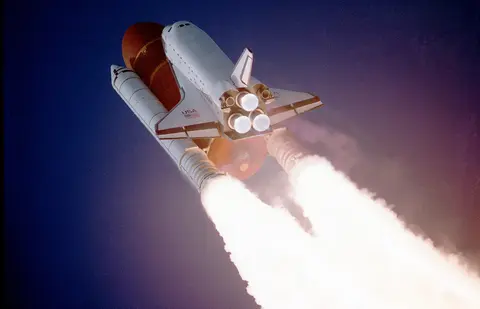
A rocket engine burns fuel, and fuel will not burn without oxygen. In space there is no air. So a rocket must carry its own oxygen, and the easiest way to carry a lot of it is as a liquid. One litre of liquid oxygen holds as much oxygen as about 840 litres of gas at normal air pressure. Liquid oxygen, or LOX, is kept in well-insulated tanks.
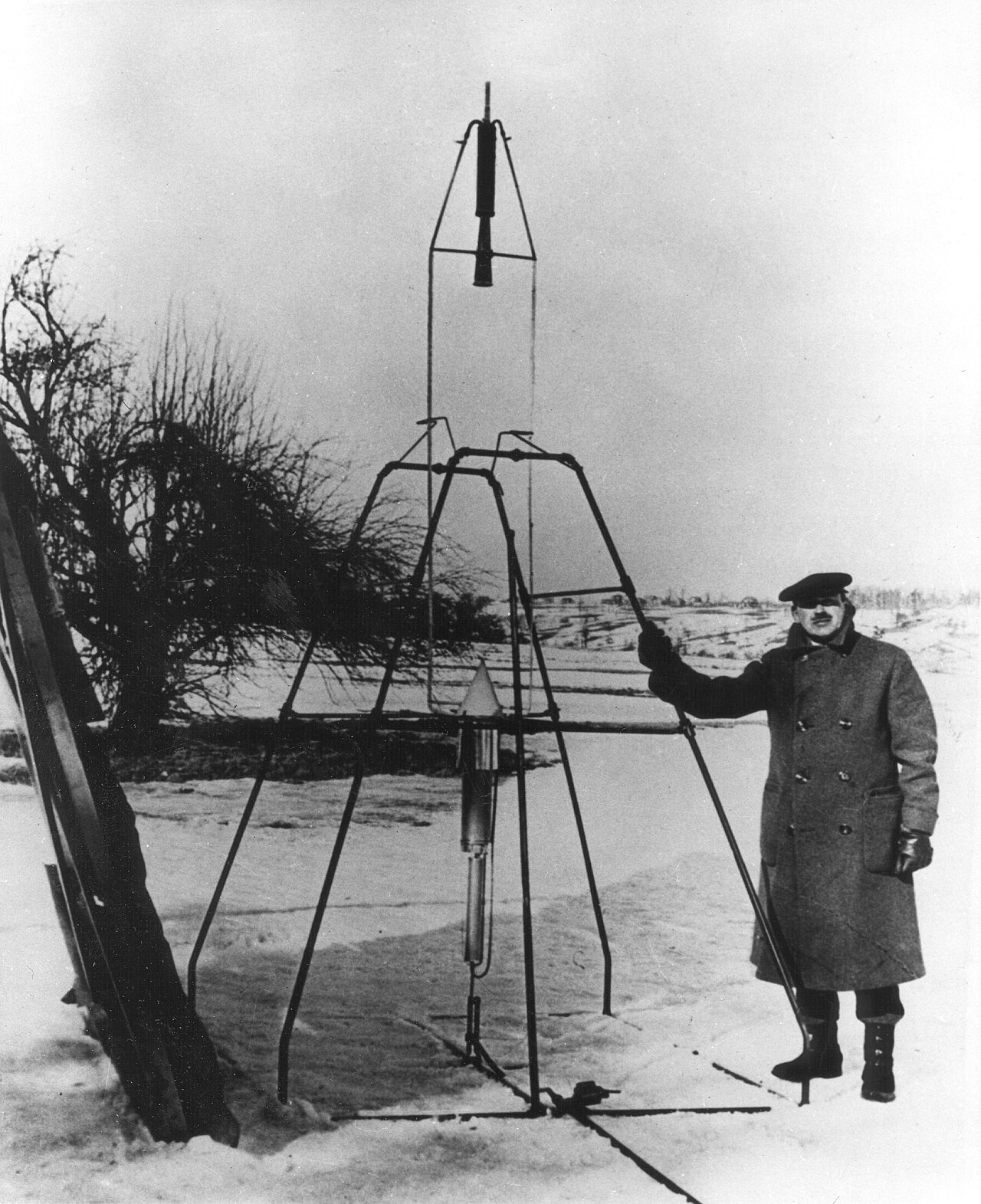
The pioneer was the American scientist Robert Goddard. In 1923, he developed the first rocket engine that burned liquid fuel, using petrol as the fuel and liquid oxygen to burn it. On 16 March 1926, in Auburn, Massachusetts, he flew a small rocket 56 metres at 97 kilometres per hour. That is about the speed of a car on a motorway, over a distance a little more than half a football pitch. It was a short hop, but it was the first of its kind. Liquid oxygen has been used in many rockets since, and the choice is common today.
Metal work uses oxygen too. In 1901, oxyacetylene welding was shown for the first time. A mix of acetylene gas and oxygen burns with a very hot flame. A small flame heats the metal, then a strong jet of oxygen cuts through it. Metal up to 60 centimetres thick can be cut this way.
In steel-making, a high-pressure jet of oxygen is blown into molten iron. It burns away extra carbon and sulphur. The reactions give off heat that raises the temperature to about 1,700 °C.
How does oxygen help in medicine?
Some illnesses make it hard for the lungs to take oxygen from the air. These include pneumonia, emphysema and some heart problems. A doctor can give extra oxygen through a mask or a thin tube under the nose, called a nasal cannula. This raises the oxygen in the blood and also eases the work of the heart.
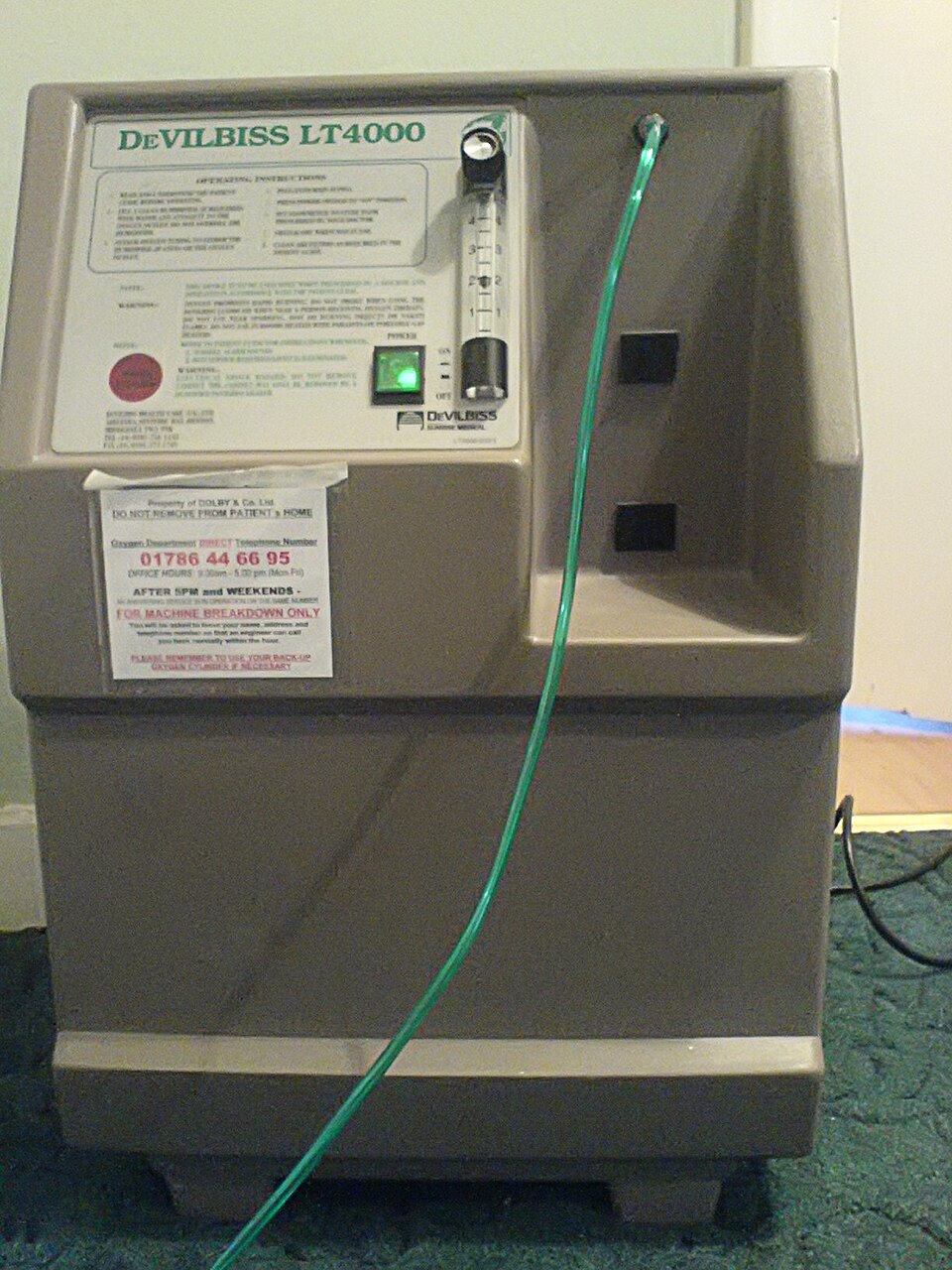
Oxygen therapy is used in hospitals and at home. A home oxygen concentrator is a machine that pulls in room air, removes most of the nitrogen and gives the patient air rich in oxygen. Portable versions let people move around. In the past, oxygen tents were common, but masks have largely replaced them. Hospitals store large amounts of liquid oxygen in tanks outside the building and turn it into gas before it is piped in.
Some treatments use pure oxygen at high pressure inside a special chamber. This oxygen can help in carbon monoxide poisoning, because it pushes the poison out of the blood. It is also used to treat gas gangrene, a serious infection caused by bacteria that cannot live in oxygen. And it helps divers who get decompression sickness, or 'the bends', which happens when bubbles of gas form in the blood after rising too fast. The extra oxygen helps the bubbles dissolve again.
In an aircraft, if cabin pressure suddenly drops, masks fall from above each seat. Pulling a mask starts a chemical reaction in a small canister that makes oxygen for several minutes. Oxygen is also supplied to some climbers at high altitude.
Can you have too much oxygen?
Yes. Oxygen is essential, but at high concentrations it is harmful. When the pressure of oxygen is more than about two and a half times its normal level at sea level, it can poison the body. The signs include convulsions and damage to the lungs and nervous system. This is called oxygen toxicity. Hospital oxygen masks usually give 30% to 50% oxygen, which is safe for treatment. The risk matters most for divers and for patients on breathing machines.
The deeper a diver goes, the higher the pressure of the gas they breathe. So deep divers breathe a mix in which oxygen is diluted with nitrogen or helium. Pure oxygen is used only at shallow depths, or in a recompression chamber where doctors can manage the risk.
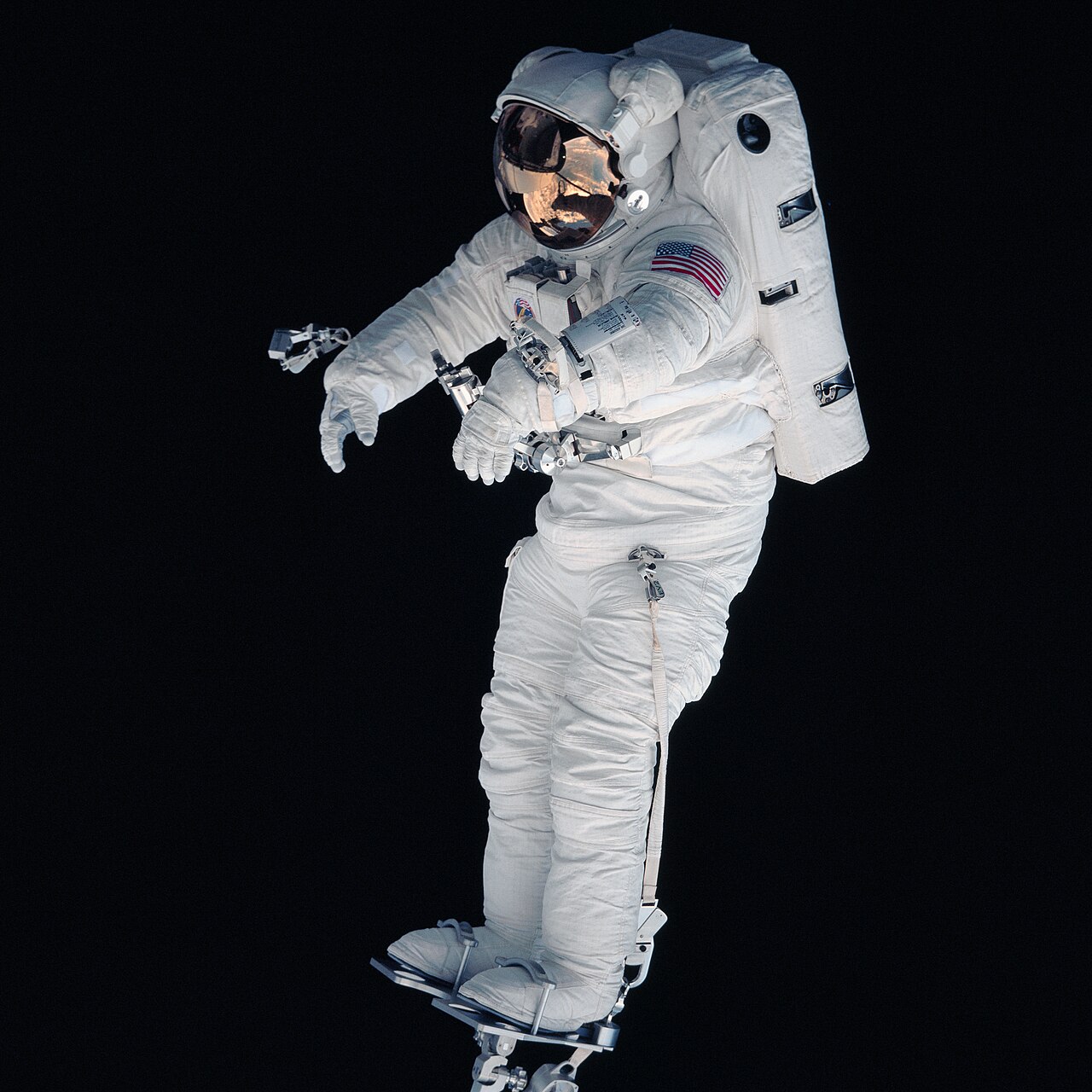
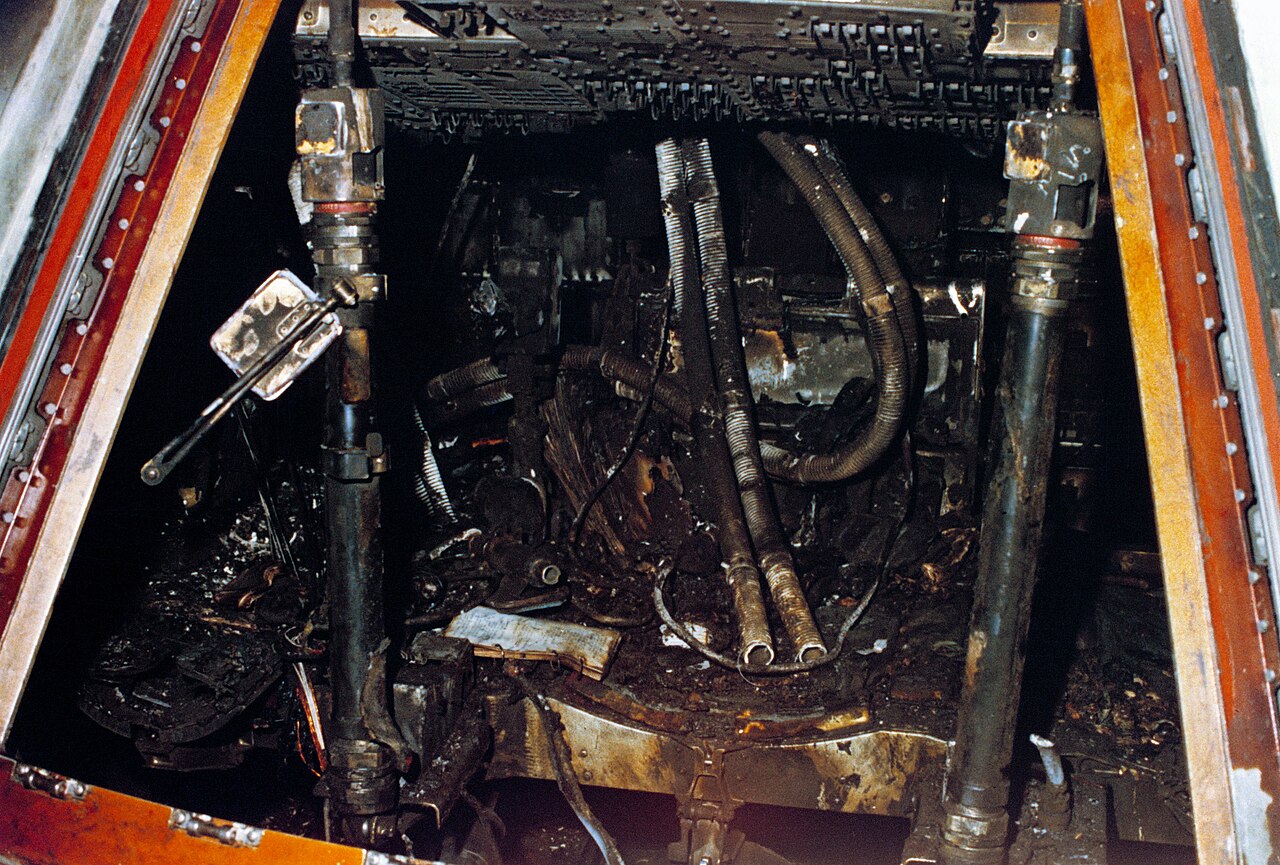
Fire is the other danger. In an oxygen-rich place, things that normally burn slowly can burn very fast. Space suits use almost pure oxygen, but at only about one-third of normal air pressure. This keeps the amount of oxygen the body gets about normal, and it also keeps the suit flexible. In 1967, a fire broke out in the oxygen-filled cabin of the Apollo 1 spacecraft during a ground test. The three astronauts on board, Gus Grissom, Ed White and Roger Chaffee, died. After that, designers changed the cabin materials and the air mix.
Submarines and spacecraft control their air carefully. They remove carbon dioxide, add oxygen and check the levels all the time. Chemical oxygen candles are kept on submarines and airliners as emergency supplies.
Explore Next
Your audio story keeps playing while you look around.
Words to Know
- cyanobacteria
- Tiny bacteria that make oxygen by photosynthesis.
- electrolysis
- Using electricity to split a compound, such as water, into its elements.
- fractional distillation
- Separating a mix by letting its parts boil off at different temperatures.
- haemoglobin
- The protein in red blood cells that carries oxygen.
- hyperbaric
- At a pressure higher than normal air pressure.
- oxide
- A compound made when oxygen joins with another element.
- oxidiser
- A substance that helps other things burn or rust by taking their electrons.
- ozone
- A form of oxygen with three atoms, O3.
- phlogiston
- An old, wrong idea of a fire-stuff that was thought to escape from things when they burn.
- photosynthesis
- How plants, algae and some bacteria use sunlight to make sugar and release oxygen.
- respiration
- How cells use oxygen to release energy from food.