Constellation
Pictures drawn in the stars by people across thousands of years.
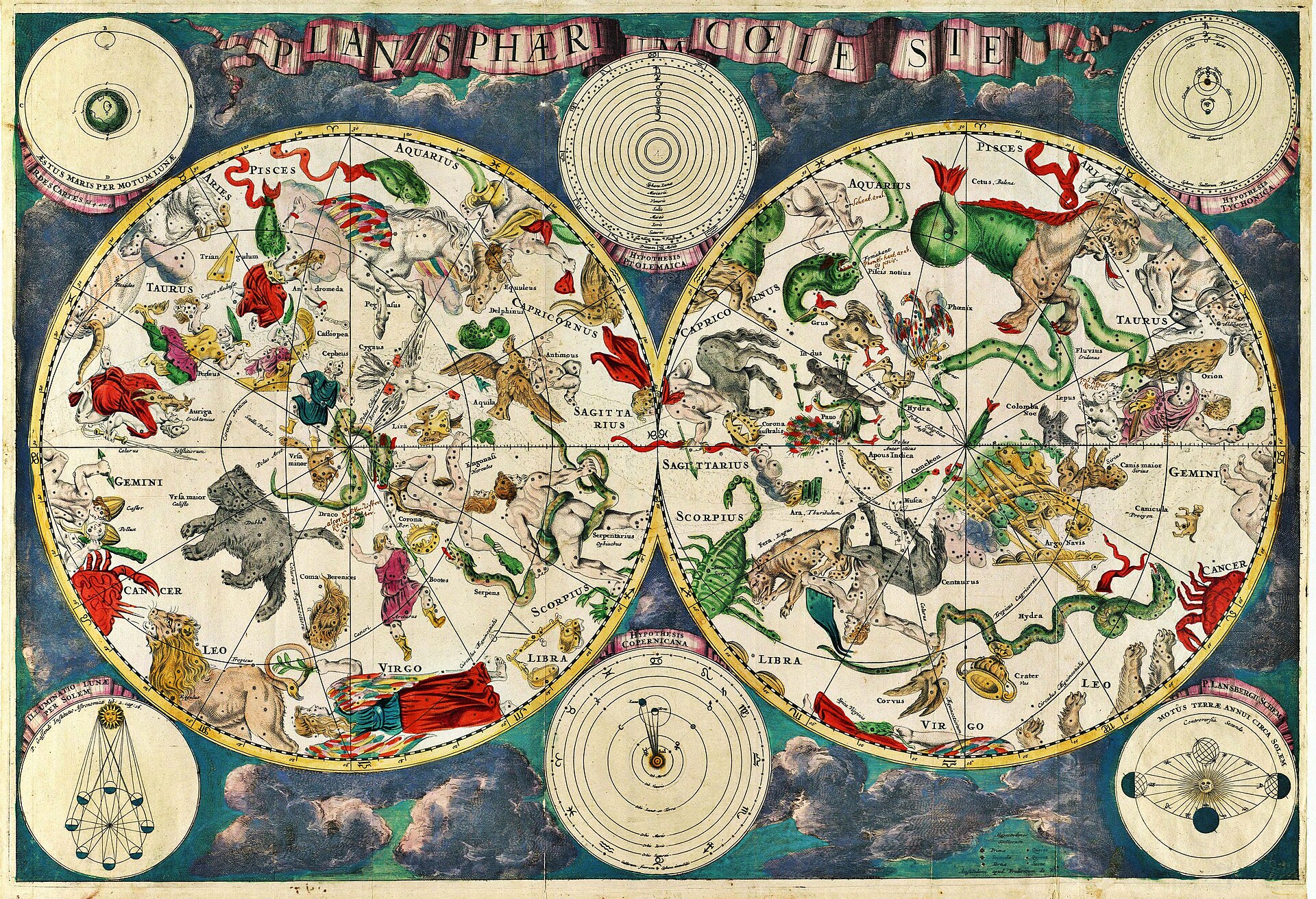
Look up on a clear night and you will see stars that seem to form shapes. Hunters, bears, scorpions and ladles all hang in the dark. These patterns are constellations, and people have made them for thousands of years. They helped farmers know when to plant, helped sailors cross oceans and gave storytellers a place to keep their tales. Today astronomers use 88 official constellations to divide the whole sky into areas, a bit like countries on a map. The stars in a pattern are usually nowhere near each other.
What is a constellation?
A constellation is a group of stars that people see as a pattern in the night sky. The pattern might look like an animal, a hero from a story, or an everyday object such as a ladle or a set of scales. The stars are not really joined together. Our minds link them with imaginary lines, the way you can find a face in a cloud.
Astronomers also use the word in a more exact way. Today a constellation is a named area of the sky, with fixed borders, like a country on a map. Every star and galaxy lies inside one of these areas. That is why astronomers say a star is "in Orion" or "in Leo", even when it is not part of the famous pattern. The word itself comes from a Late Latin phrase meaning "set of stars".
There are 88 official constellations. Together they cover the whole sky, with no gaps. The International Astronomical Union, or IAU, the group of astronomers that agrees on names and rules, accepted this list in 1922 and added the borders in 1928.
Some star patterns are not constellations at all. They are called . The Big Dipper, the shape of a large ladle, is an asterism inside the constellation Ursa Major. The Teapot is an asterism inside Sagittarius. Observers use asterisms like signposts to find their way around the sky.
Are the stars in a constellation close together?
No. This surprises most people. Stars in a constellation look close because we see them all against the same dark background. In truth they are at very different distances from us. One star in a pattern might be a few dozen away while its neighbour in the pattern lies hundreds of light-years further. A light-year is the distance light travels in one year, which is about 9.5 trillion kilometres.
So a constellation is a view from one place only. If you could fly to another star system, the shapes would break apart and form new ones. Seen from Earth, the stars are lined up by chance.
The stars also move. Each one drifts through space in its own direction and at its own speed. The movement is far too slow to notice in a human lifetime. Over tens or hundreds of thousands of years, though, familiar outlines will stretch and twist until we would no longer recognise them. The Big Dipper of the far future will look different from today's.
How do we know? Astronomers measure the exact positions of stars very carefully, a task called . They also use spectroscopy, which splits starlight into colours, to learn how fast a star moves towards or away from us. With both measurements, they can work out where stars used to be and where they will go.
Why do different constellations appear at different times?
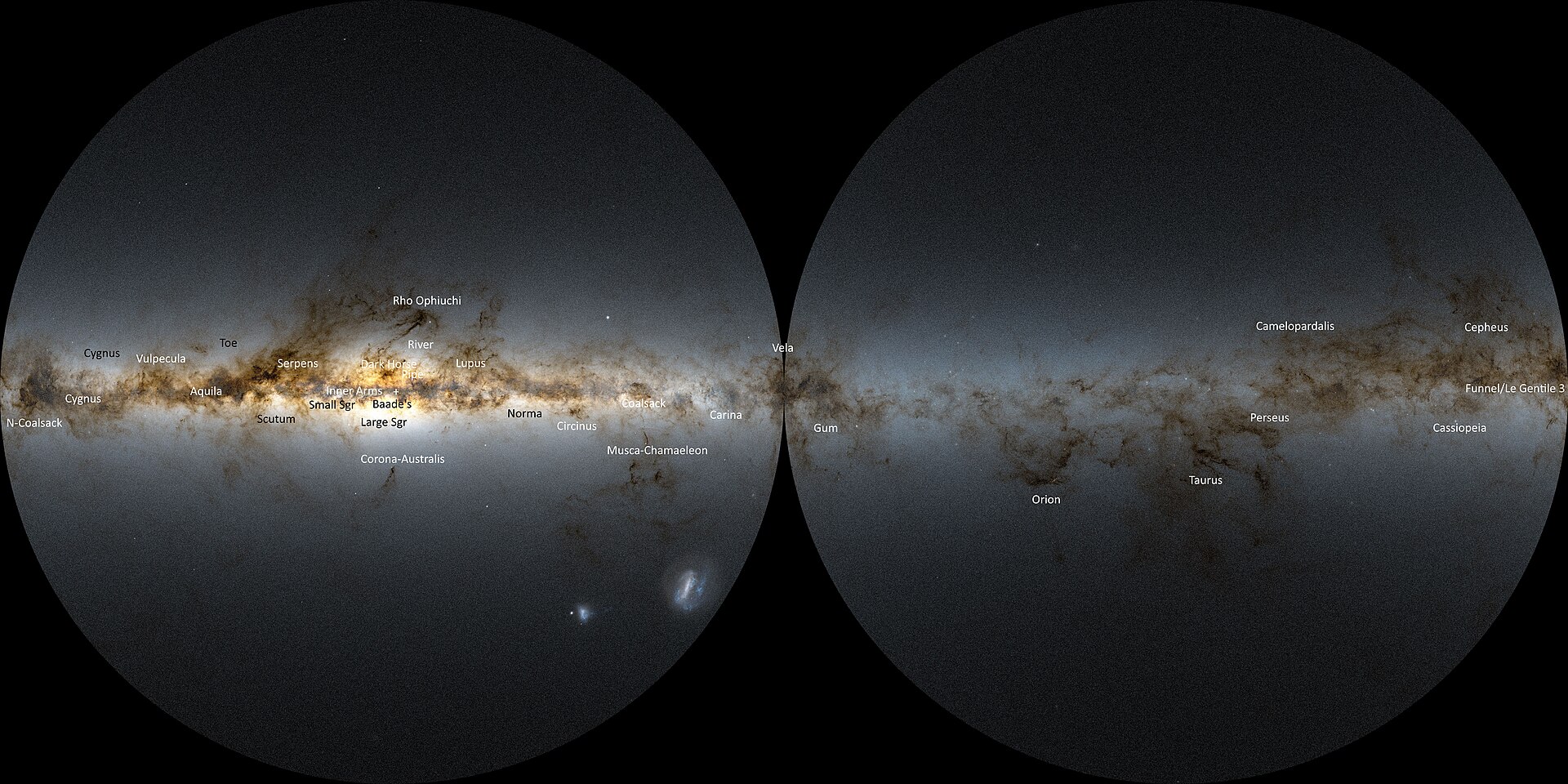
If you step outside on a January night and again in July, you will see different stars. The reason is Earth's orbit. Earth circles the Sun once a year. The side of Earth that faces away from the Sun is the night side, and as the year goes on that side faces a different part of space. So each season brings its own constellations into view.
Over a single night, the sky seems to turn. This is really Earth spinning towards the east, which makes the stars appear to move west. In the north they circle around Polaris, the North Star, which sits almost exactly above Earth's northern axis. Polaris is the tip of the handle of the Little Dipper, in Ursa Minor. In the south, no bright star marks the pole. Sigma Octantis is the nearest, but it is faint. Instead, people use the Southern Cross, known as Crux, with the bright stars Alpha and Beta Centauri, to find south.
Where you stand matters too. Some constellations never set below the horizon from your home. These are called . At the poles of Earth, half of the sky is circumpolar. At the equator you can see nearly every constellation at some time of the year.
The band of the Milky Way, our own galaxy, also runs through many constellations, including Cygnus, Orion, Scorpius and Sagittarius.
Who first saw pictures in the stars?
Nobody knows for sure, because the first constellations were probably invented long before writing. Some people have suggested that cave paintings at Lascaux in southern France, made about 17,000 years ago, show the Pleiades, Orion's Belt and the bull of Taurus. Most scientists do not accept this idea.
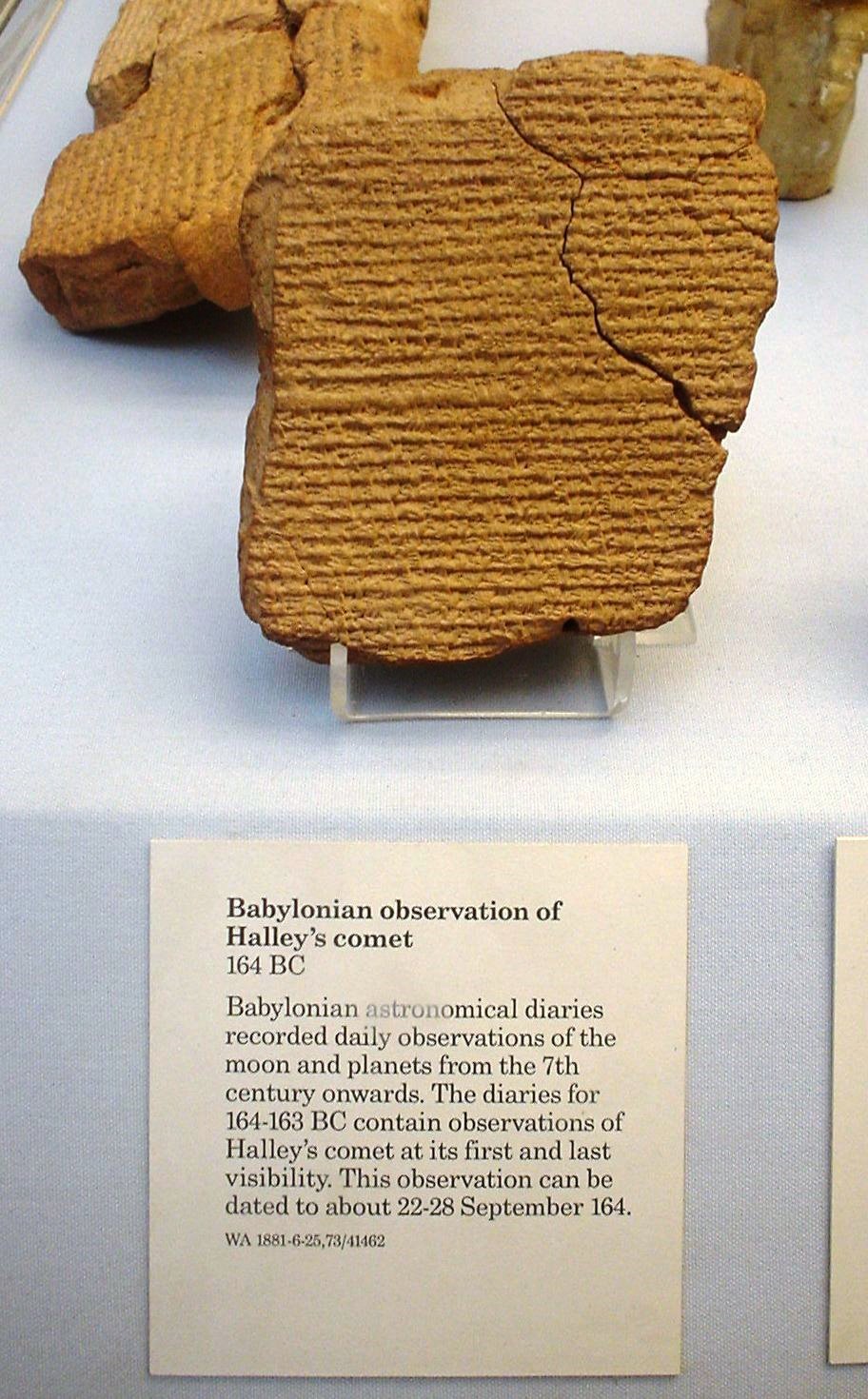
The earliest evidence we can trust comes from Mesopotamia, the land between two rivers in what is now Iraq. Stones and clay tablets from about 3000 BC show that people there already named patterns in the stars. Most Mesopotamian constellations seem to have been created in a short time, between about 1300 and 1000 BC.
Why did they look up so closely? The stars helped them mark the seasons, plan farming and set the dates of festivals. Priests kept careful records. Two famous star lists are the Three Stars Each texts and MUL.APIN, written around 1000 BC. Many of the names in them are in the Sumerian language, which suggests they were copied from even older lists.
Many Mesopotamian star patterns later appeared in the Greek sky. Twenty of Ptolemy's constellations came from the ancient Near East, and ten more used the same stars with different names. So a story about a lion or a scorpion may be thousands of years older than the Greek myths that we tell today.
How did the Greeks and Egyptians shape the sky?
The Greeks took the Babylonian system and made it their own. In the 4th century BC, a scholar named Eudoxus of Cnidus brought it into Greek science. His book is lost, but a poem by Aratus from the 3rd century BC retells it. Greek writers also linked the star patterns to myths. The Roman poet Ovid told many of these tales in his Metamorphoses. One story says the hunter Orion was killed by a scorpion. It fits the sky in a clever way, because Orion and Scorpius never appear together. When one rises, the other sets.
The biggest name is Ptolemy, a Greco-Roman astronomer who worked in Alexandria, Egypt, in the 2nd century AD. His book, the Almagest, listed 48 constellations. For about 1,400 years it was the standard guide in both Europe and the Islamic world. Astronomers later split one huge pattern, the ship Argo Navis, into three parts. That is why 50 of today's constellations come from his list.
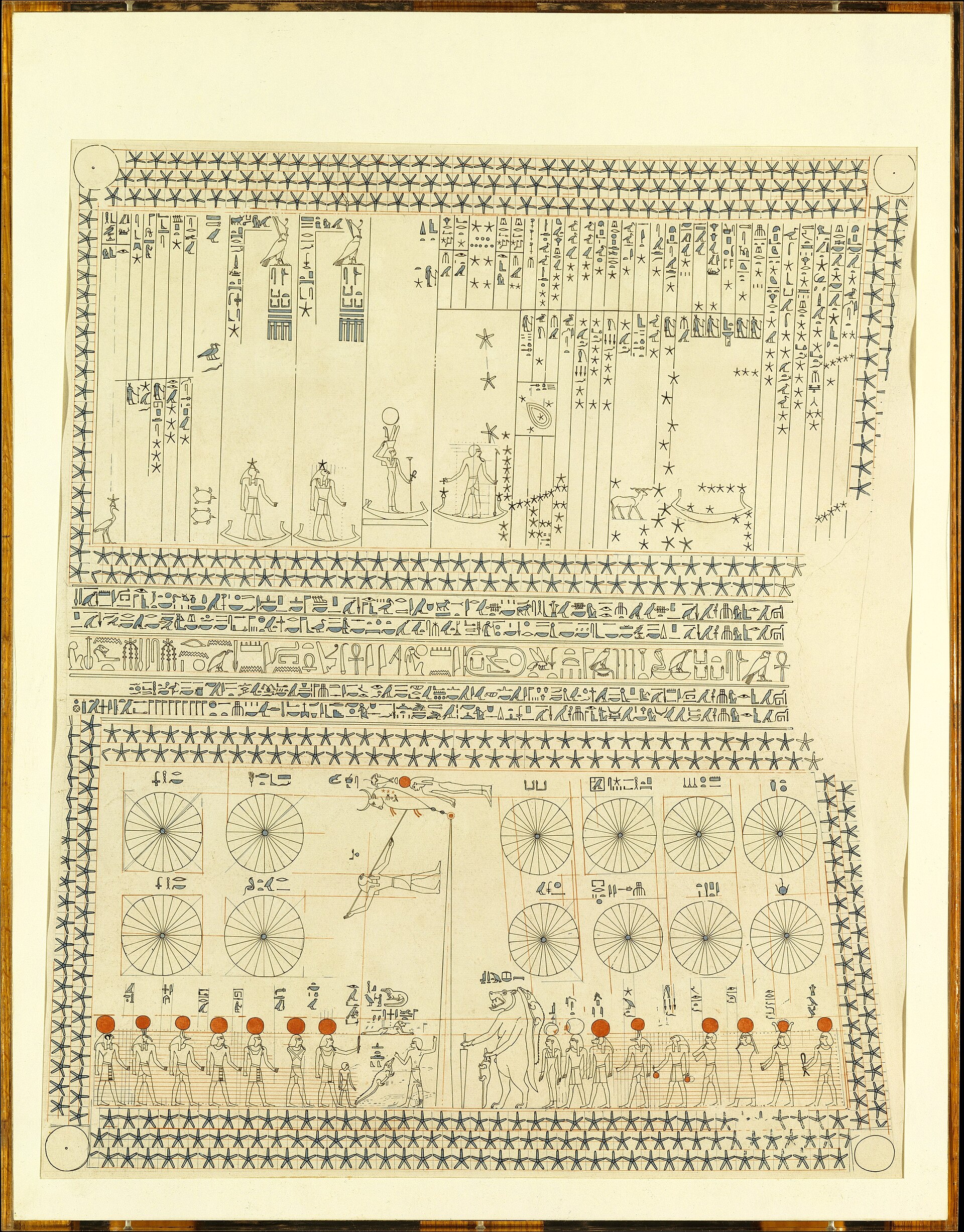
Egypt had its own sky. Egyptians pictured stars and planets as human and animal figures. They also used groups of stars called decans, which rose one after another through the night and worked like a clock. Later, during Roman rule, Egyptian ideas mixed with Greek and Babylonian ones. The result is the of Dendera, a famous carving of the sky.
What is the zodiac?
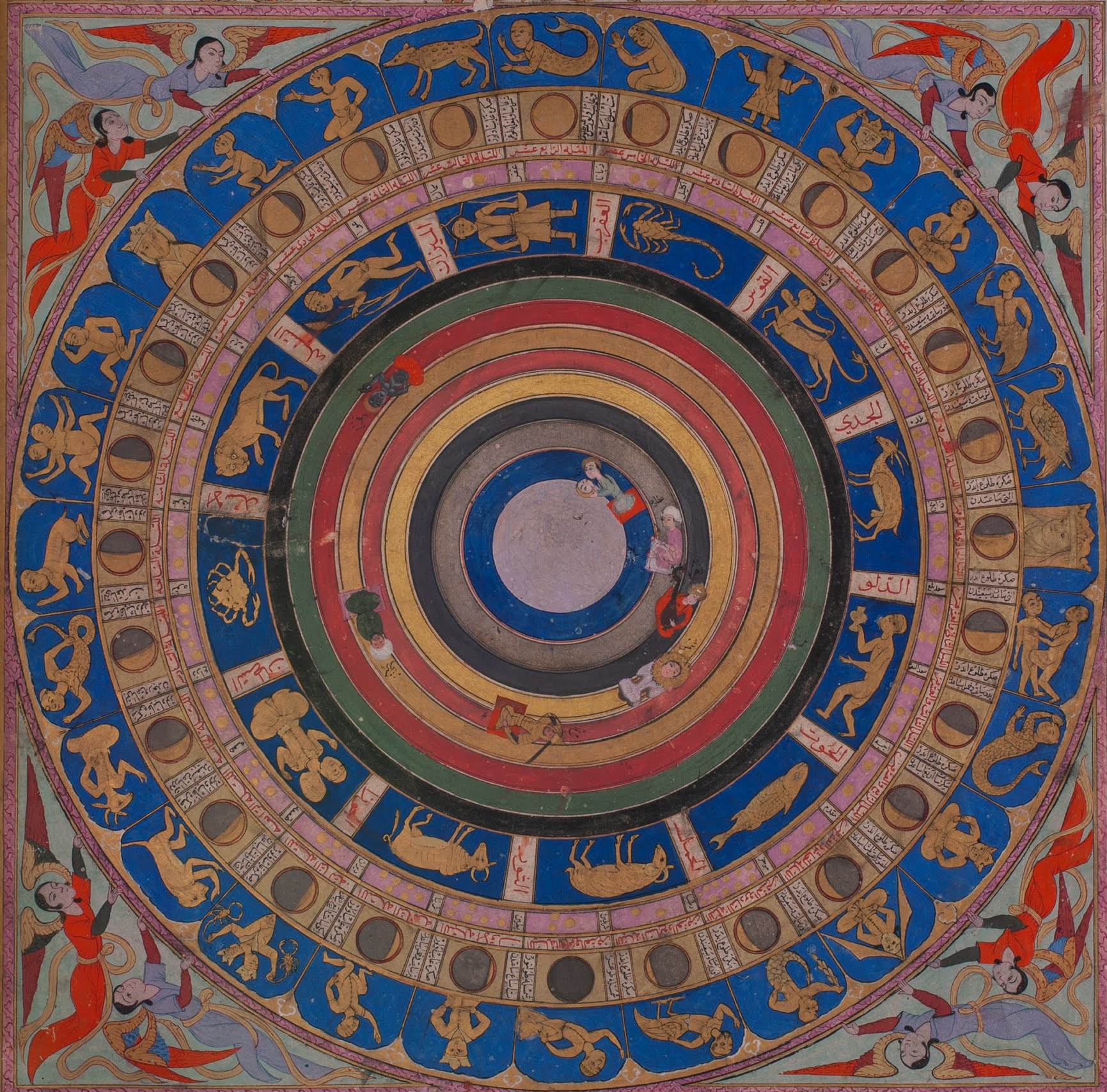
The is a band of constellations that the Sun, the Moon and the planets all seem to pass through. The path they follow across the sky is called the . It exists because the planets orbit in nearly the same flat plane as Earth. We look along that plane, so we see them travel along one line.
The classical zodiac has twelve constellations. They are Aries, Taurus, Gemini, Cancer, Leo, Virgo, Libra, Scorpius, Sagittarius, Capricornus, Aquarius and Pisces. Over a year, the Sun seems to move through them one by one. Some people count a thirteenth, Ophiuchus, because the Sun passes through part of it too.
Its history is not fully clear. The zodiac we know was shaped from Neo-Babylonian constellations around the 6th century BC. The Greeks adopted it in the 4th century BC. The oldest picture showing all of the familiar signs together is the Zodiac of Dendera in Egypt.
Astrology uses the zodiac to claim that the stars shape people's lives. Astronomers have found no evidence for this. Astronomy and astrology share some old words, but they are different things. Astronomy tests ideas about the sky. Astrology does not.
The zodiac also helps with finding planets. Because they always travel through it, it tells you where to look for them.
What did Chinese astronomers see?
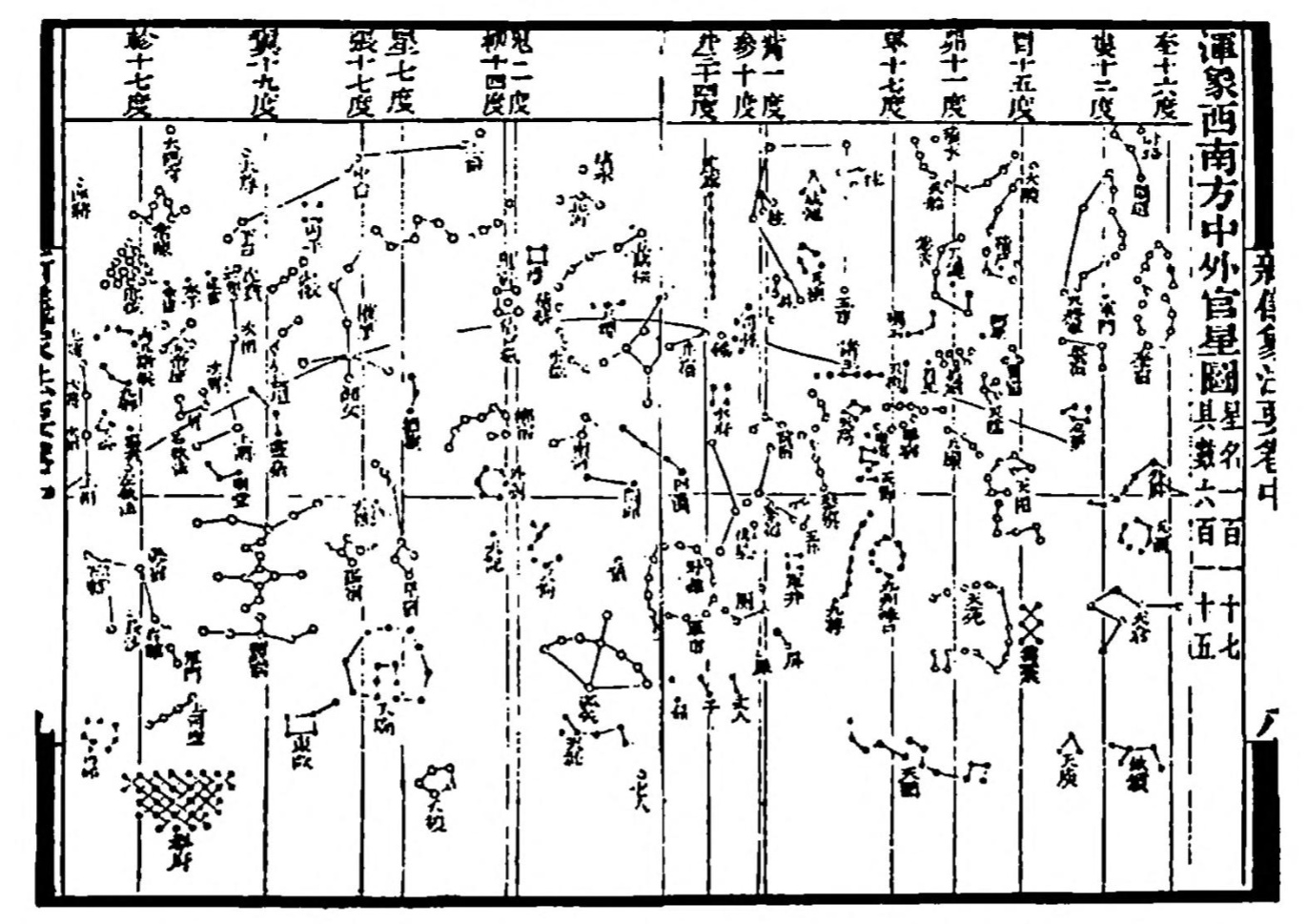
China developed its own sky, mostly separate from the Greek one. Chinese people recorded the stars for a very long time. Star names found on oracle bones, which are animal bones used for telling the future, come from the Shang dynasty. The constellations themselves are known from about the 5th century BC.
Instead of animals and gods, many Chinese star groups stand for the imperial court, with an emperor, officials, palaces and gates. The sky was divided into the Twenty-Eight Mansions, which are regions along the path of the Moon. During the Han period there were three schools of astronomy, each with its own star groups. In the 3rd century AD, an astronomer called Chen Zhuo joined them into one system.
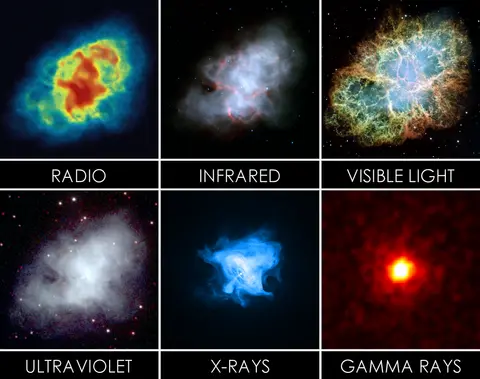
Chinese astronomers were careful observers. In 1054, they recorded a "guest star" in Taurus. We now know it was a , the explosion of a dying star. Its remains are the Crab Nebula. The Suzhou Astronomical Chart, a stone carving from the Song dynasty, shows this event. In 1092 the scientist Su Song published a book with star maps for a celestial globe.
Later, in the 1600s, Chinese astronomers worked with European Jesuit scholars, such as Johann Adam Schall von Bell. They added 23 new constellations, with 125 stars of the southern sky, to the traditional maps.
Where do the 88 modern constellations come from?
The 88 constellations came from two very different sources. Most northern ones date to ancient times and are based on Greek stories. The southern ones are much newer.
Ancient astronomers lived in the north, so the far southern sky was only partly mapped. Then European sailors began to explore the south, from the 15th century. Ships had no landmarks at sea, so sailors steered by the stars. Italian explorers such as Amerigo Vespucci and Antonio Pigafetta noted new southern stars. Two Dutch navigators, Pieter Dirkszoon Keyser and Frederick de Houtman, measured many stars on a voyage. The mapmaker Petrus Plancius used their work on globes in the late 1500s. Many of the new figures were animals and tools, such as the Chameleon, the Telescope and the Air Pump.
In 1603 Johann Bayer published a star atlas, the Uranometria. He gave each star in a constellation a Greek letter. Alpha means brightest, in most cases. These are the Bayer designations. Then, in the 1750s, the French astronomer Nicolas Louis de Lacaille observed the southern sky from the Cape of Good Hope in South Africa. He created fourteen more constellations.
By the 1900s there was a mess. Different maps used different shapes and borders. The IAU fixed this. In 1928 it adopted borders designed by Eugene Delporte, made of straight lines of right ascension and , which are the sky's version of longitude and latitude. Of the 88, 36 lie mostly in the north and 52 in the south.
Can constellations be made from darkness?
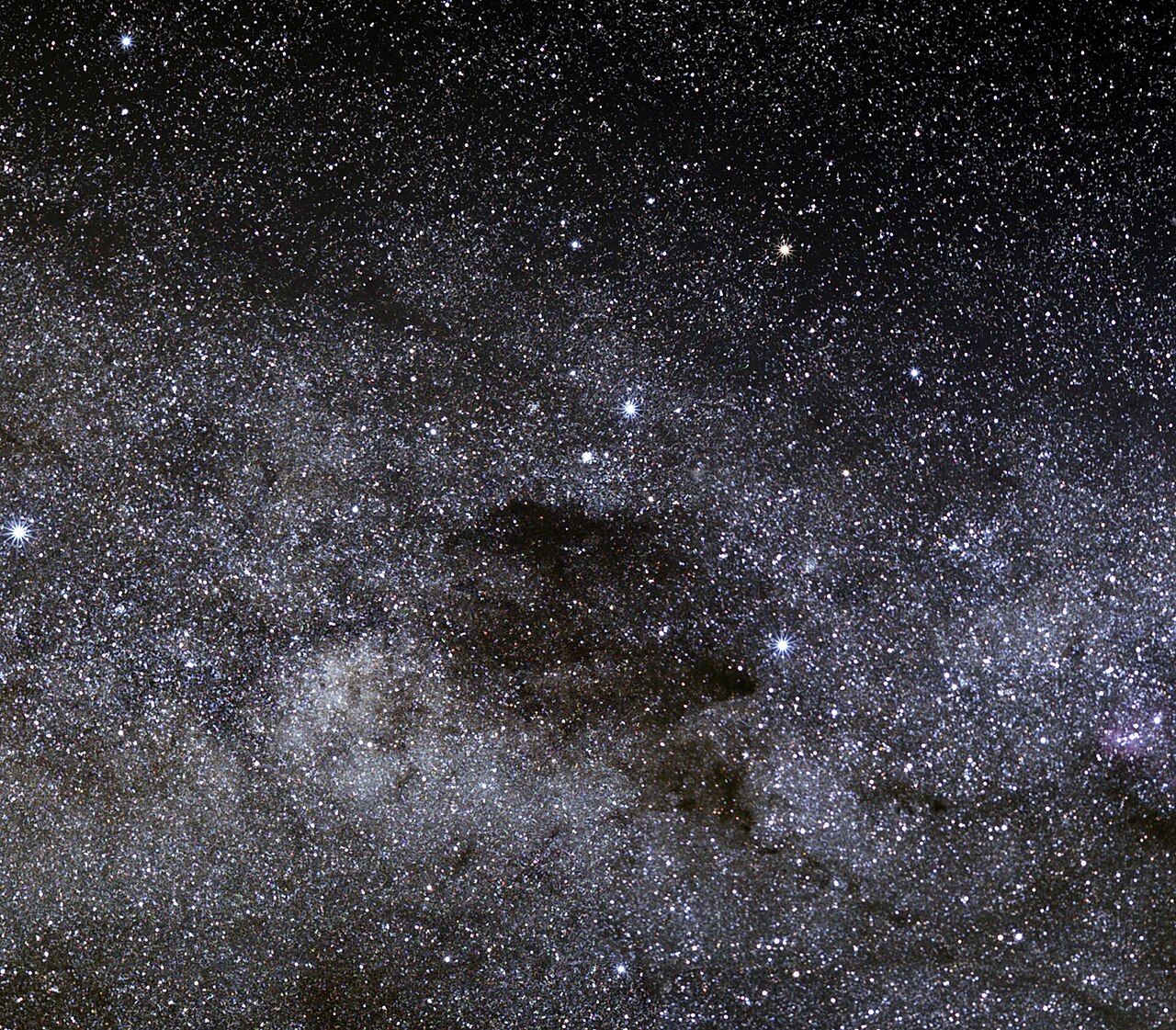
Yes. Some cultures looked not at the bright stars but at the dark gaps between them. The Milky Way is a bright band of stars, but dust clouds cut across it in places. The dust blocks the light from the stars behind it, so it looks like a dark patch. A chain of these dark patches is called the Great Rift. It is easiest to see in the southern sky.
The Inca people of South America saw animals in these dark shapes. They linked the way the shapes appeared to the coming of the seasonal rains.
The most famous dark constellation is the "emu in the sky" in Australian Aboriginal astronomy. The emu's head is the Coalsack, a , which is a cloud of dust and gas. The Coalsack lies near the Southern Cross, about 600 from Earth. The rest of the bird stretches along the Milky Way. Its position in the sky changes through the year, and some Aboriginal communities link it with the time to gather emu eggs.
These constellations show that there is no single "correct" way to read the sky. The IAU map is a tool for astronomers. Every culture has asked the same question for thousands of years, which is how to make sense of the sky.
Explore Next
Your audio story keeps playing while you look around.



Words to Know
- asterism
- A star pattern that is not an official constellation, such as the Big Dipper.
- astrometry
- The careful measuring of the positions and movements of stars.
- celestial sphere
- The imaginary ball of sky around Earth on which the stars seem to sit.
- circumpolar
- Describes stars that never set below the horizon from a certain place.
- dark nebula
- A cloud of dust and gas that blocks the light of stars behind it.
- declination
- A star's position north or south on the sky, like latitude on Earth.
- ecliptic
- The path the Sun appears to follow through the sky over a year.
- light-year
- The distance light travels in one year, almost 9.5 trillion kilometres.
- supernova
- The huge explosion of a star at the end of its life.
- zodiac
- The band of twelve constellations along the ecliptic.