Solar flare
A sudden blast of energy that lights up the Sun in minutes.
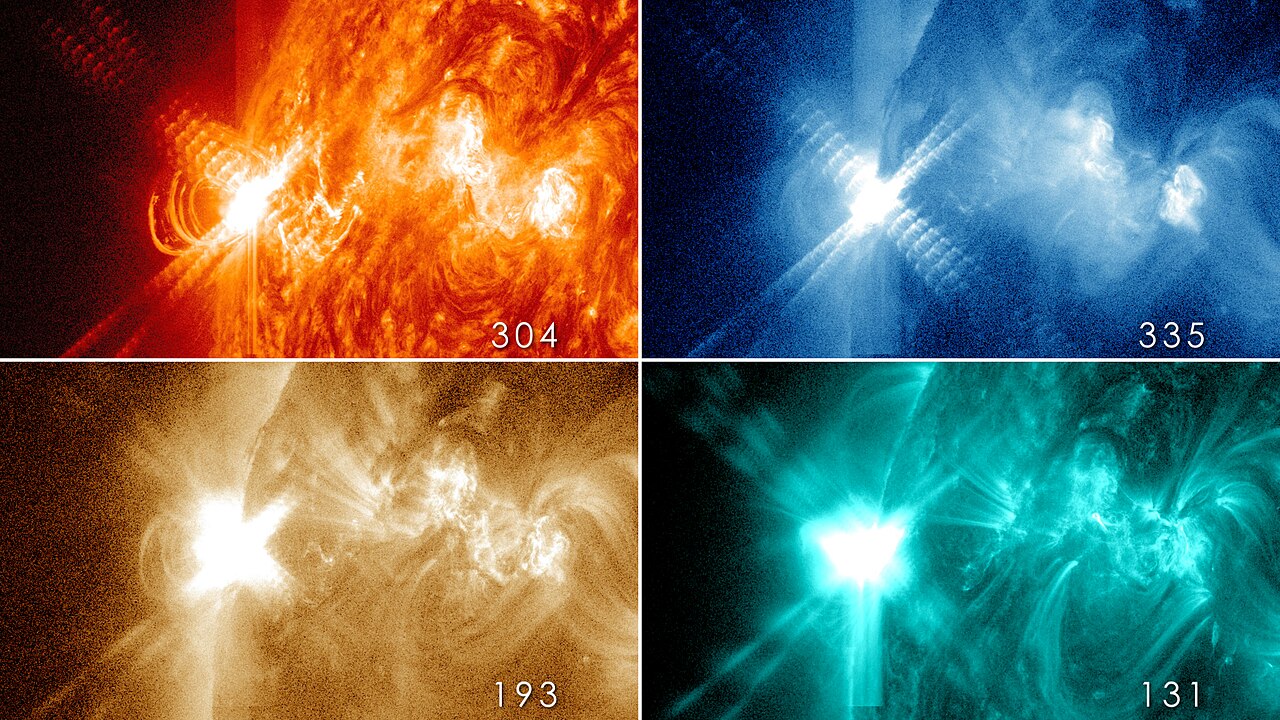
A solar flare is one of the biggest explosions in the Solar System. In a few minutes, a patch of the Sun's atmosphere flashes brilliantly and floods space with light, X-rays and fast-moving particles. Flares are powered by magnetic fields that twist and snap above sunspots. They happen most often when the Sun is at its busiest, in an 11-year cycle. The light reaches Earth in about 8 minutes. It cannot harm us on the ground, but it can disturb radio signals, satellites and navigation. The first one ever recorded was seen in 1859 by an astronomer who was drawing sunspots.
What is a solar flare?
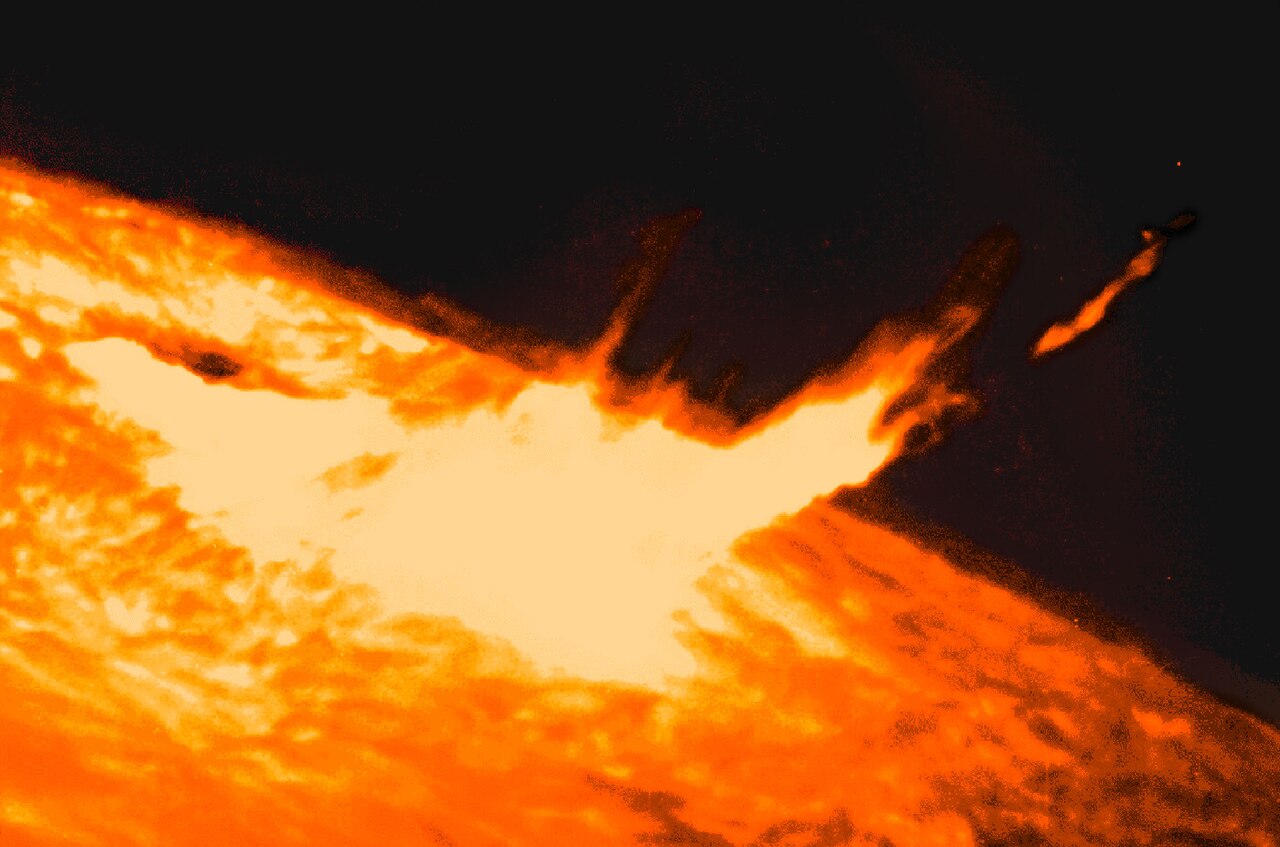
A is a sudden, powerful flash of energy in the Sun's atmosphere. In a few minutes, a patch of the Sun can brighten fiercely and pour out light and other radiation. Flares are among the biggest explosions in the Solar System.
The Sun's atmosphere has three main layers. The photosphere is the bright surface we see. Above it sits the chromosphere, and above that is the , a thin and very hot outer layer. A flare affects all three.
Inside a flare, the gas is heated to more than 10 million kelvin. That is far hotter than the Sun's surface, which is about 5,800 kelvin. The gas is a , which means it is so hot that its atoms have been torn apart into charged particles. Electrons, protons and heavier particles are flung out at close to the speed of light.
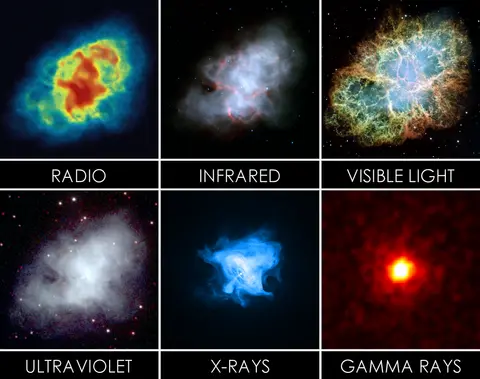
A flare gives off energy across the whole electromagnetic spectrum. That range runs from radio waves, through visible light and , to gamma rays. Much of a flare's visible light is faint, so flares are easiest to spot in other kinds of light.
Flares are not the same as , or CMEs. A CME is a huge cloud of gas thrown into space. The two often happen together, but not always.
What sets off a flare?
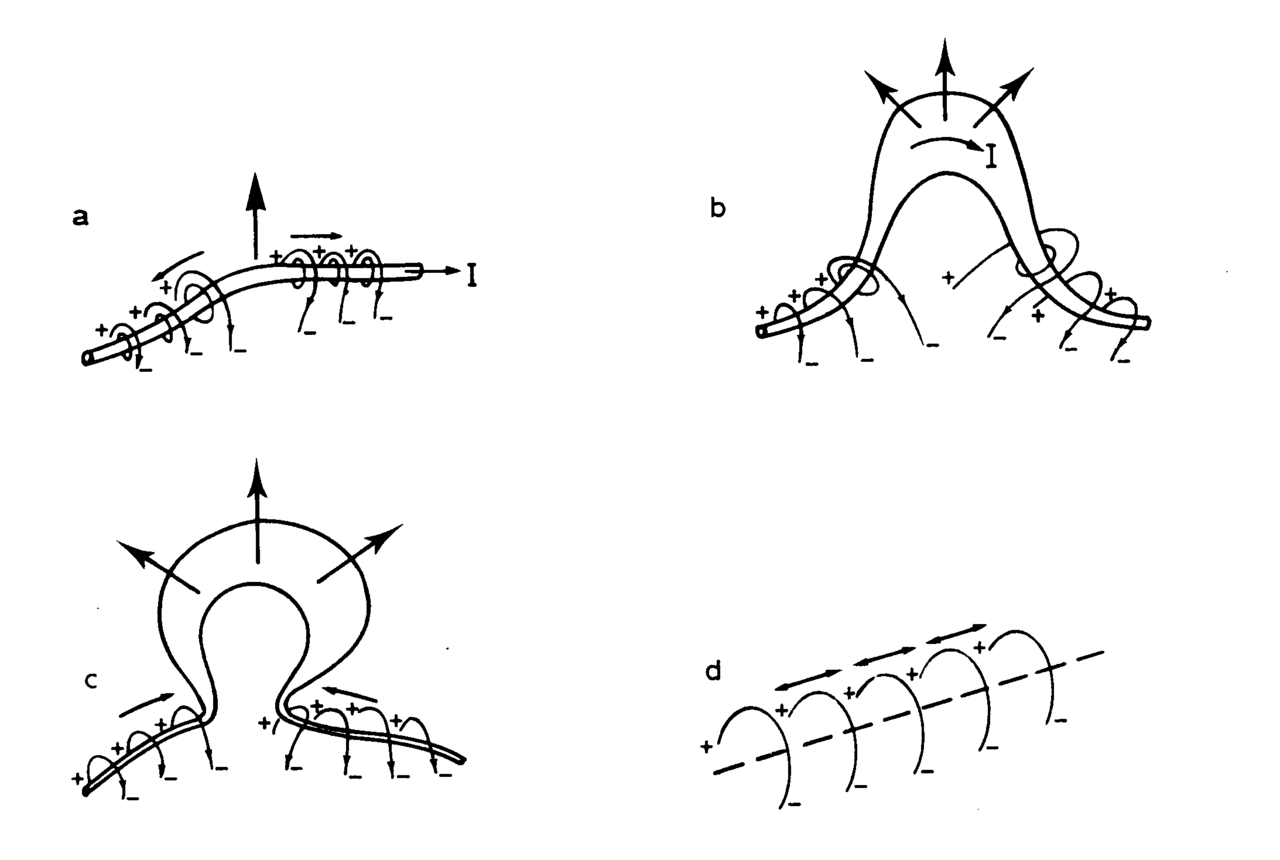
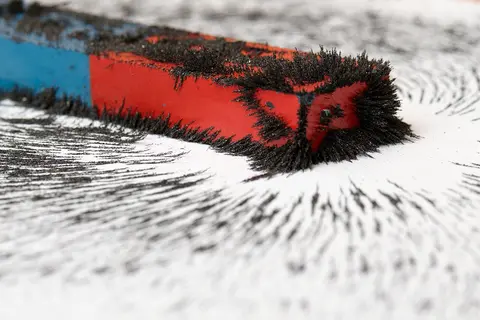
The answer is magnetism. The Sun is a ball of moving , and moving plasma makes magnetic fields. In some places the fields grow very strong and burst up through the Sun's surface. These places are called , and they often have sunspots in them. Sunspots are darker, cooler patches where the magnetic field is especially strong.
Above an active region, the magnetic field forms great loops that arch through the . As the plasma at the base of the loops keeps moving, the loops get twisted and stretched. This stores up energy, a bit like winding up a rubber band.
Eventually the magnetic lines can snap and join up again in a new shape. Scientists call this . It happens in minutes and releases the stored energy all at once. Charged particles, mostly electrons, are hurled along the field and crash into the gas around them. That heats the gas and makes the flash we see.
This is also why flares come from active regions. Everywhere else, the magnetic field is too weak to store much energy.
Scientists agree that reconnection is the main idea. Yet they still do not fully understand how the magnetic energy is turned into fast-moving particles. Some particles reach enormous energies, and nobody can yet explain exactly how.
How do scientists measure a flare's strength?
Astronomers sort flares into classes using one letter. The letters are A, B, C, M and X, from weakest to strongest. The class depends on how strong the flare's are at their peak. The X-rays are measured by GOES satellites, which orbit Earth very high up, at the same speed as Earth turns. That keeps them watching the Sun all the time.
Each letter is 10 times stronger than the one before it. A number after the letter gives more detail. An M5 flare is five times stronger than an M1 flare. An X2 flare is twice as strong as an X1 and 10 times stronger than an M2. That makes an X2 flare four times as strong as an M5.
The system was devised in 1970 with only C, M and X. Later, in the 1990s, A and B were added, because better instruments could detect much weaker flares. Around then, people began to say that M stands for moderate and X for extreme.
The X class has no upper limit. A flare above X9 carries a bigger number, such as X28.
Flares can also be sorted by how long they last. Most fade in minutes and some last several hours. A typical flare takes roughly 6 to 11 minutes to fall to half its peak brightness.
How often do flares happen?
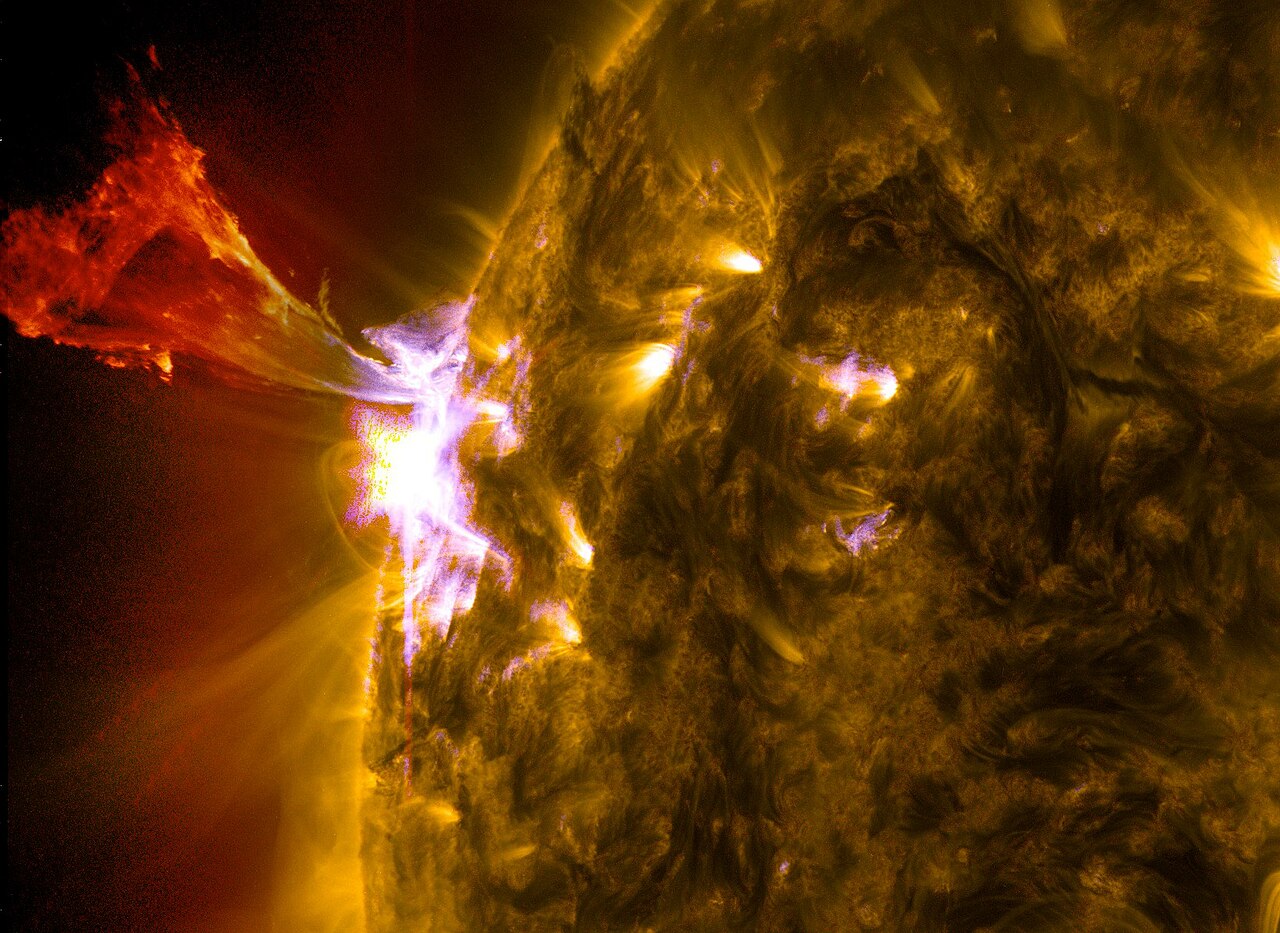
It depends on where the Sun is in its 11-year cycle. Over each cycle, the Sun's magnetic activity rises and falls. When activity is at its peak, called solar maximum, there can be several flares in a single day. At solar minimum there may be less than one a week.
Strong flares are much rarer than weak ones. In a typical cycle, there are about 2,000 flares of class M1. But there are only about eight flares as strong as X10. So for every giant flare, hundreds of milder ones occur.
Flares often come in groups from the same . A fast-growing sunspot can crackle with flare after flare over a few days, as its magnetic field grows more tangled.
Can we predict them? Only partly. No one can say for certain that a sunspot group will flare. But some clues help. Sunspot groups with a messy, twisted magnetic field, known as delta spots, often make the biggest flares. Forecasters at the US National Oceanic and Atmospheric Administration use this to give odds. They state the chance of an M-class or X-class flare in the next 24 or 48 hours, much like a rain forecast.
Prediction is still an active area of research. Scientists want better warnings, because large flares can disturb our technology.
Who saw the first flare?
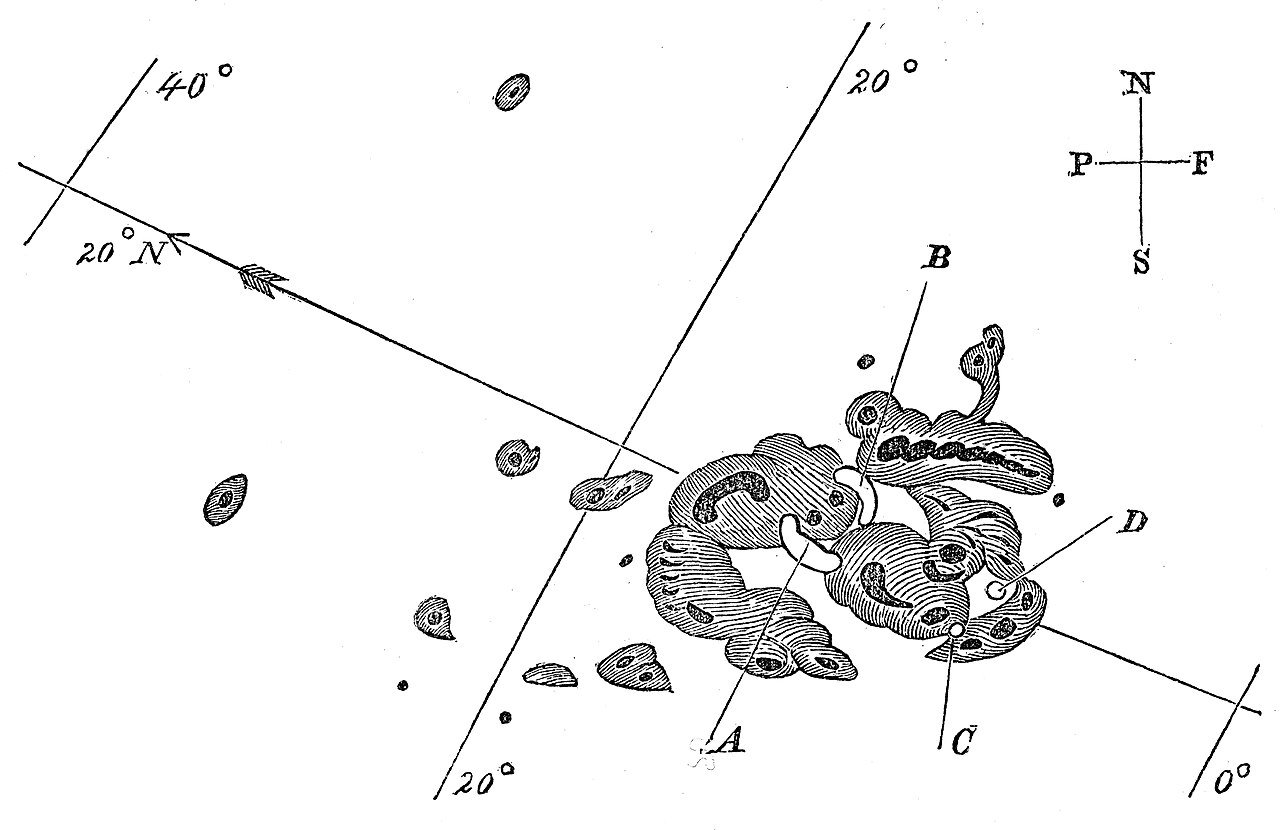
On 1 September 1859, an English astronomer named Richard Carrington was studying sunspots. He was projecting an image of the Sun through a telescope and sketching what he saw. Suddenly a patch of the Sun flared up with dazzling white light. Another English astronomer, Richard Hodgson, saw it separately. These are the first observations on record.
Carrington could see it because the flare was extraordinarily bright in ordinary visible light. Most flares are not, so this was unusual.
Then came the aftermath. Within about a day, a huge struck Earth. Telegraph systems failed in places, and bright auroras lit up skies far from the poles. This is known as the Carrington Event.
How do we know how powerful that flare was? Nobody had satellites in 1859. But magnetometers on the ground recorded a jump in Earth's magnetic field as the flare struck. Scientists used those old readings to estimate the flare's strength. Their estimate is above X10 and around X45, give or take 5. That puts it among the most powerful flares ever observed, although the estimate is rough.
A storm of that size today could cause serious trouble for power grids and satellites.
How do we watch flares today?
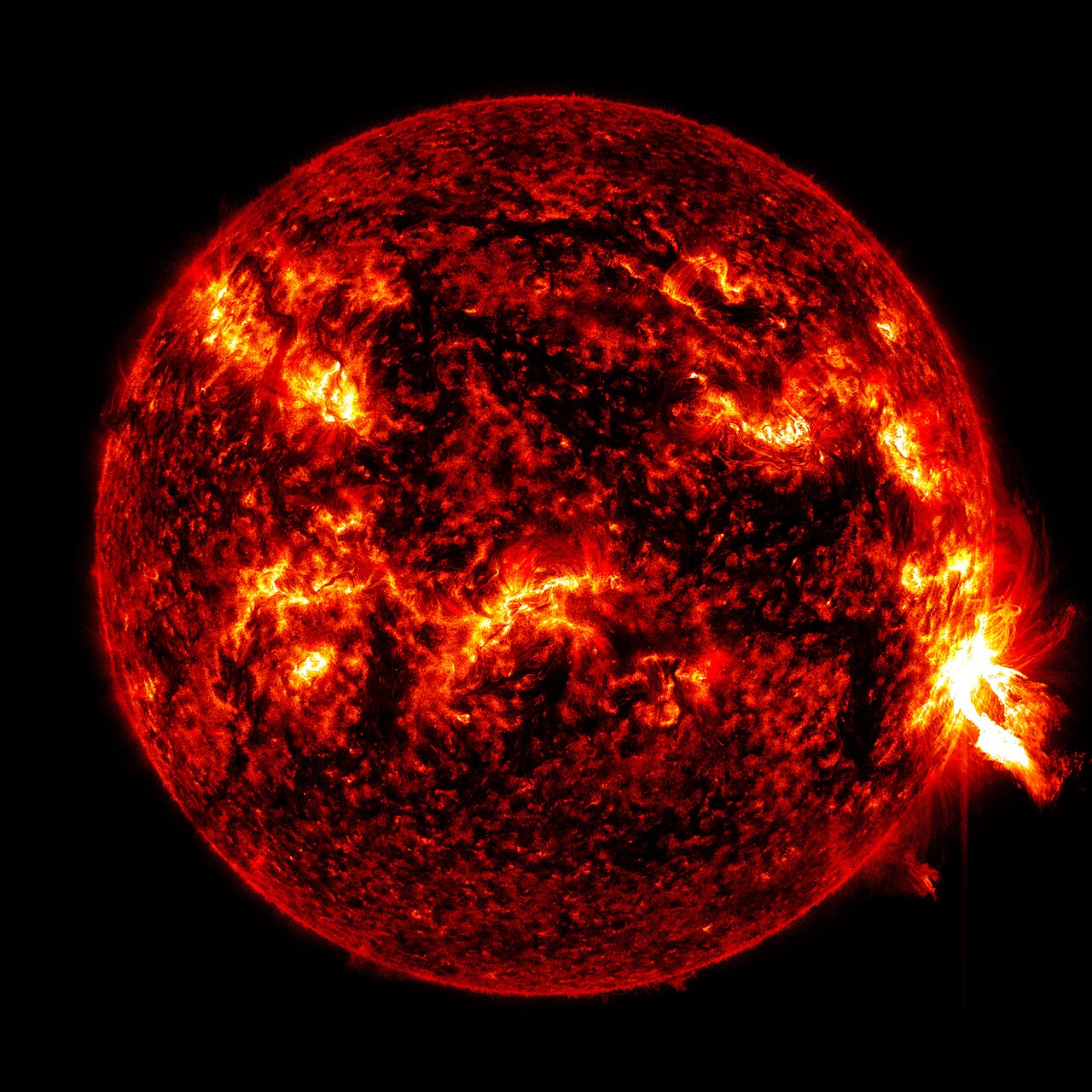
Watching flares needs more than an ordinary telescope. For years, astronomers used a special filter that lets through only the red glow of hydrogen, called H-alpha. With it, even small telescopes could spot flares that were not very bright.
Radio astronomy came next. In February 1942, British radar operators picked up strange noise coming from the direction of the Sun. A scientist named Stanley Hey worked out that it came from the Sun itself. It was wartime, so the discovery stayed secret until the war ended. In 1943 Grote Reber reported radio observations of the Sun. Today, radio telescopes on the ground watch the Sun at many frequencies.
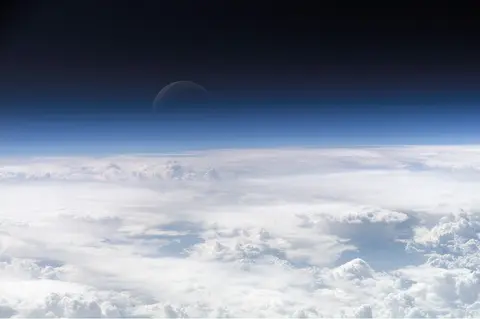
The biggest advance came from space. Earth's atmosphere blocks most of the Sun's short-wavelength light, including and much of the ultraviolet. So telescopes in orbit see flares that ground telescopes cannot. Since the 1970s, GOES satellites have watched the Sun in X-rays all the time. Their readings are now the standard way to rate a flare.
NASA's Solar Dynamics Observatory films the Sun in many kinds of ultraviolet light. Its images are in false colour, because we cannot see ultraviolet, so each wavelength is given a colour that people can see.
The largest flare measured by instruments came on 4 November 2003. It overloaded the GOES detectors, so its strength is a rough estimate, first about X28 and later raised to about X45.
What can a flare do to Earth?
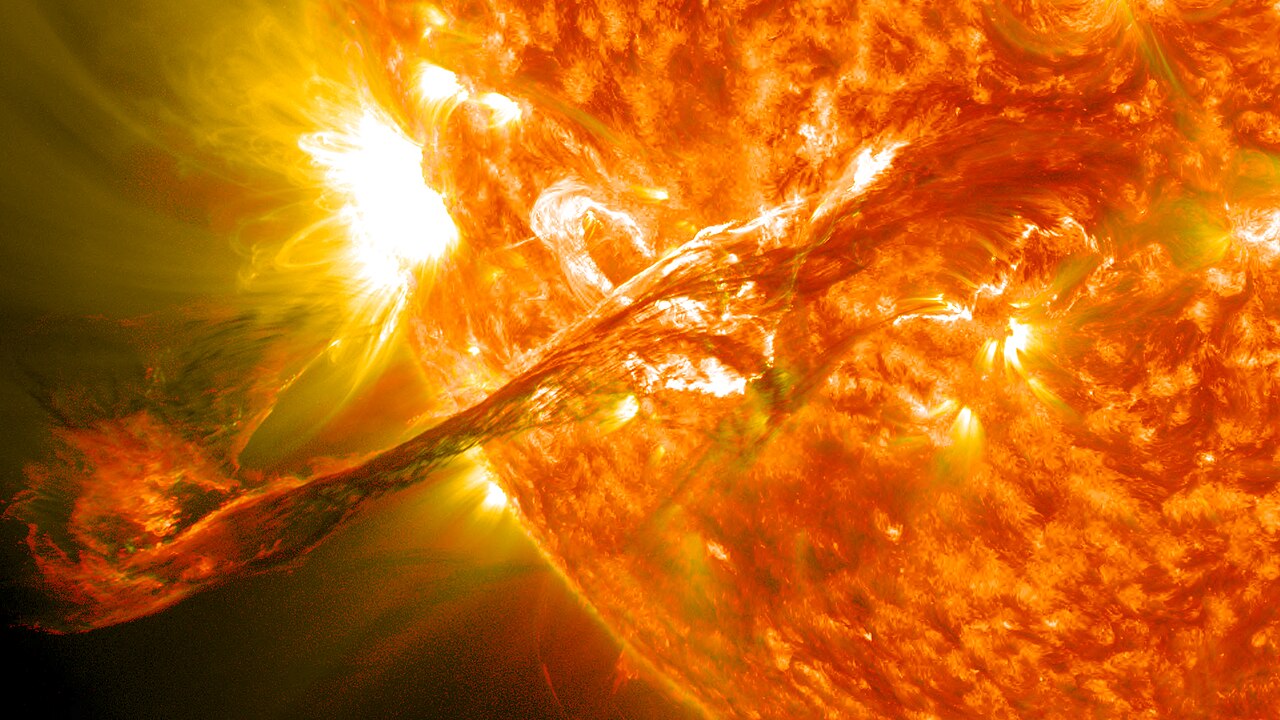
Flare radiation travels at the speed of light, so it reaches Earth in about 8 minutes. It cannot hurt us on the ground. Earth's upper atmosphere absorbs the and extreme ultraviolet light on the side of the planet facing the Sun.
But that absorption has effects. The energy knocks electrons off atoms in a layer called the . This layer, high above us, normally bounces short-wave radio signals around the world. After a flare, extra free electrons soak up those signals instead. The result is a radio blackout on the sunlit side of Earth. Aircraft, ships and amateur radio users can lose contact for a while. Navigation by satellites, such as GPS, can also be disturbed.
The flare also heats the upper atmosphere, and it swells outwards. That adds drag to satellites in low orbits, and over time they can sink lower.
The flare's own effect on Earth's magnetic field is small and lasts a few minutes. Much bigger disturbances, called , come from . These arrive a day or more later, because the cloud of gas travels far slower than light.
Space weather forecasters watch for both. Their warnings let satellite operators and power companies prepare.
Are flares dangerous to astronauts and other worlds?
Astronauts in low Earth orbit are partly shielded by the planet's atmosphere and magnetic field. The radiation from a flare itself would give them a dose of about 0.05 gray. That is not deadly on its own. The bigger worry is a solar particle event, when streams of fast particles come from the Sun, often along with a flare. These can be much more harmful to people in space.
The risk is greater beyond Earth's protection. Future crews travelling to the Moon or Mars will need warning systems and shelters. Mars has a thin atmosphere and no global magnetic field. Computer models suggest that the strongest flares on record could have given radiation doses on the surface of Mars that harmed or nearly killed mammals.
Flares affect other planets too, though they are far less studied. Most research has looked at Mars, with some on Venus. Scientists have only modelled Mercury's response, and have studied Jupiter and Saturn mainly through bouncing off their upper atmospheres.
Other stars have flares as well, and those are called stellar flares. Some Sun-like stars produce flares far stronger than any seen on our Sun. Studying them helps us ask what might be possible for our own star, and whether planets around other stars could support life.
Explore Next
Your audio story keeps playing while you look around.


Words to Know
- active region
- An area of strong magnetic field on the Sun, often with sunspots.
- corona
- The Sun's thin, very hot outer atmosphere.
- coronal mass ejection
- A huge cloud of gas and magnetic field thrown out from the Sun.
- geomagnetic storm
- A disturbance of Earth's magnetic field, often caused by a coronal mass ejection.
- ionosphere
- A layer of Earth's upper atmosphere full of electrically charged particles.
- magnetic reconnection
- When magnetic field lines break and join up again, releasing stored energy.
- plasma
- A gas so hot that its atoms are split into charged particles.
- solar cycle
- The 11-year rise and fall in the Sun's magnetic activity.
- solar flare
- A sudden burst of light, X-rays and fast particles from the Sun's atmosphere.
- X-ray
- A very energetic kind of light that we cannot see.