Spacecraft
Machines built to fly where there is no air, from Sputnik to Starship.
A spacecraft is a vehicle made to travel and work beyond Earth's air. Some carry astronauts to space stations. Some take pictures of far-off planets. Others bounce phone calls and television across the world. None of them can launch alone, so each one rides a rocket into space first. The first one to circle Earth, Sputnik 1, was a metal ball the size of a beach ball, launched in 1957. Since then, people have built capsules, aeroplane-like shuttles, robot explorers and giant telescopes. Voyager 1, launched in 1977, is now the most distant of them all. How do they work, and why do we build so many kinds?
What counts as a spacecraft?
A spacecraft is a vehicle built to fly and work in outer space. That sounds simple, but spacecraft come in many shapes and do very different jobs. Some carry people. Some carry cargo. Some pass on radio signals, watch the weather, help ships and phones find their way, or study planets from far away.
Most spacecraft have one thing in common. They cannot lift themselves off the ground. They ride into space on top of a , which is the rocket that does the heavy pushing. Only a rocket that reaches in one piece, called a single-stage-to-orbit vehicle, can count as a spacecraft by itself.
Spacecraft fall into two big families. Crewed spacecraft carry people, either for the whole trip or only once they are in orbit, like a space station. Uncrewed spacecraft have nobody on board. They follow pre-programmed instructions, or engineers on Earth steer them by radio.
Robotic spacecraft that study other worlds are called . Robotic spacecraft that stay in orbit around a planet or moon are called artificial satellites. Only a few spacecraft are on paths that will take them right out of the Solar System. They are Pioneer 10, Pioneer 11, Voyager 1, Voyager 2 and New Horizons.
How does a spacecraft get into space?
A carries the spacecraft up through the air and gives it a huge amount of speed. The launch vehicle can be thrown away after use or used again. Its exact job depends on the mission. It might place a satellite in a low close to Earth, or send a probe off towards another planet.
Not every spaceflight goes into orbit. On a flight, the vehicle climbs into space and then falls back to the ground. It never gains enough speed to circle the whole planet. On an orbital flight, the spacecraft travels fast enough that it keeps falling around Earth instead of towards it. The path it follows is called an orbit.
Where does space begin? There is no wall in the sky, so people agree on a height. The international group Fédération Aéronautique Internationale counts 100 kilometres above the ground as the start of space. This height is called the Kármán line.
Building a launch vehicle is hard, so only a few countries can send things into orbit. They include Russia, the United States, Japan, China, India and the member states of the European Space Agency. Private companies such as SpaceX and Blue Origin now build orbital rockets too.
Which spacecraft was the first?
The answer depends on what you mean. A German V-2 rocket, designed with the help of engineer Wernher von Braun, reached a height of 176 kilometres on 20 June 1944. That is well above the Kármán line, so it is often called the first spacecraft. It went up and came straight back down. It never went into .
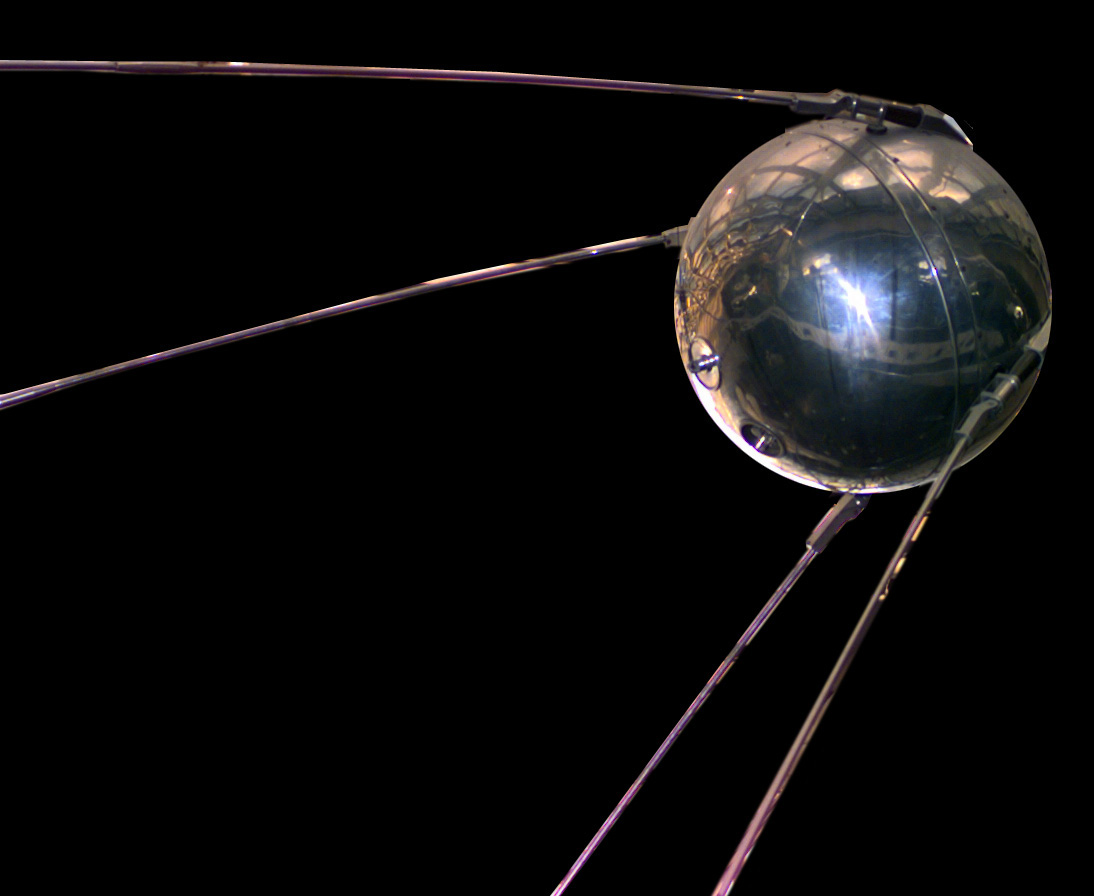
The first object to circle Earth was Sputnik 1. The Soviet Union launched it on 4 October 1957. It was a polished metal ball with four long antennas, and it sent out radio beeps that people could pick up. It took 96.2 minutes to go once around Earth.
Sputnik 1 was more than a stunt. Scientists watched how its orbit slowly changed. That told them how thick the upper air is. Its radio signals also showed how radio waves travel through the ionosphere, a high layer of the atmosphere. It launched during the International Geophysical Year, a period of worldwide science projects.
Sputnik also had a political effect. Its launch sparked new military, technical and scientific efforts in many countries, especially the United States and the Soviet Union. Most historians treat it as the start of the Space Age.
How do spacecraft carry people?
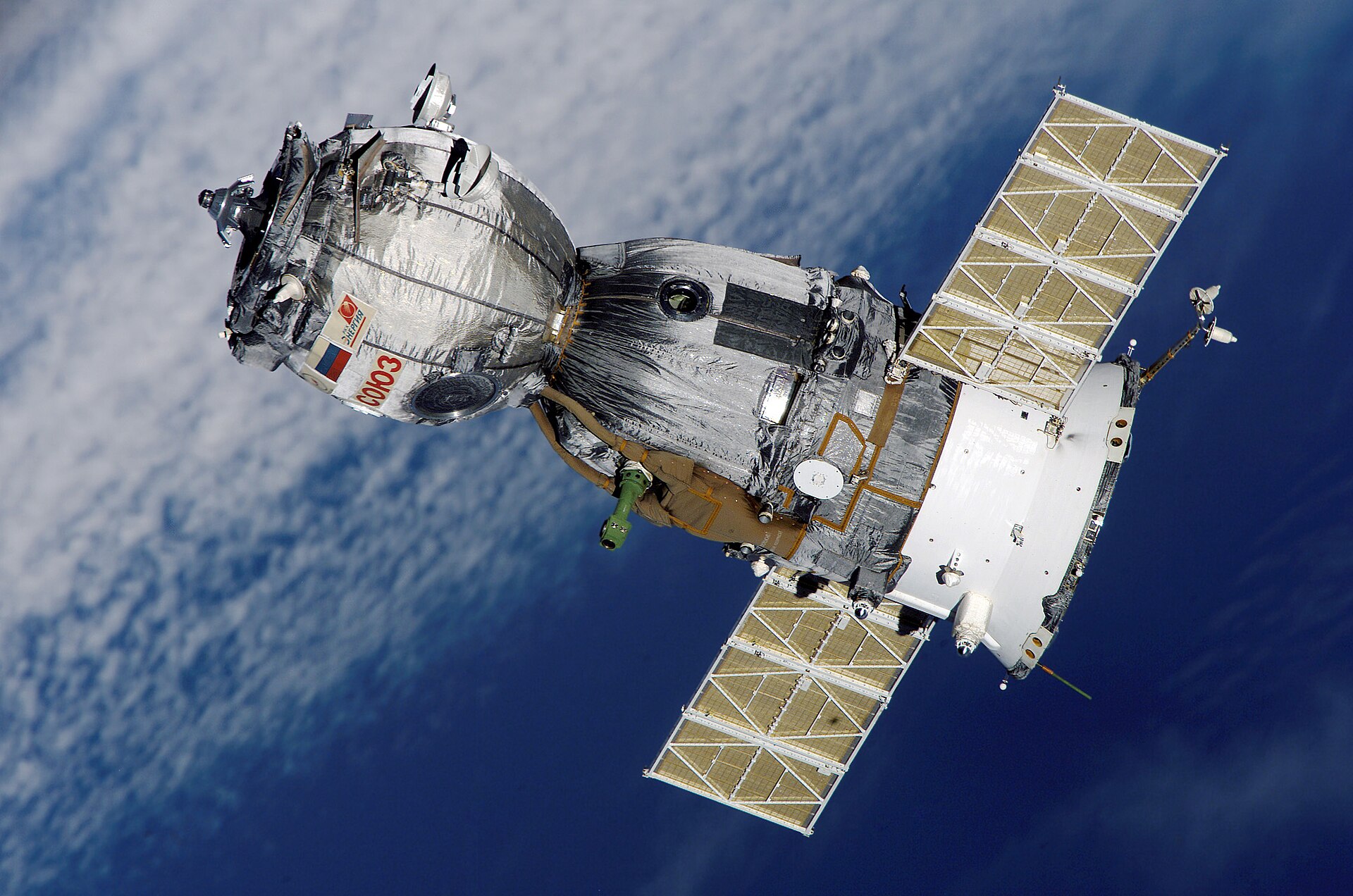
The first crewed spacecraft was Vostok 1. On 12 April 1961, it carried Soviet cosmonaut Yuri Gagarin once around Earth. A few weeks later, American astronaut Alan Shepard flew in a called Freedom 7. His flight was . It went up and came down without circling the planet.
Vostok and Freedom 7 were both space capsules. A capsule has a blunt shape and no wings. It carries only a little more fuel than it needs, and a and parachutes bring it back down. This makes capsules the simplest kind of spacecraft that can return from space, so they are the most common.
Many capsules followed. The United States built Gemini and then Apollo, which took people to the Moon. The Soviet Union built Voskhod and Soyuz. Soyuz is still flying, though each one is used only once. SpaceX's Crew Dragon can fly again. China's Shenzhou flew its first crew in 2003.
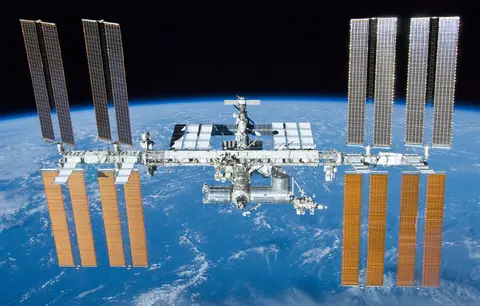
So far, Russia, the United States and China are the only nations that have flown their own crewed spacecraft. Since November 2000, people have lived on the International Space Station. Russia, the United States, Canada and several other countries built it together.
How do we explore worlds we cannot visit?
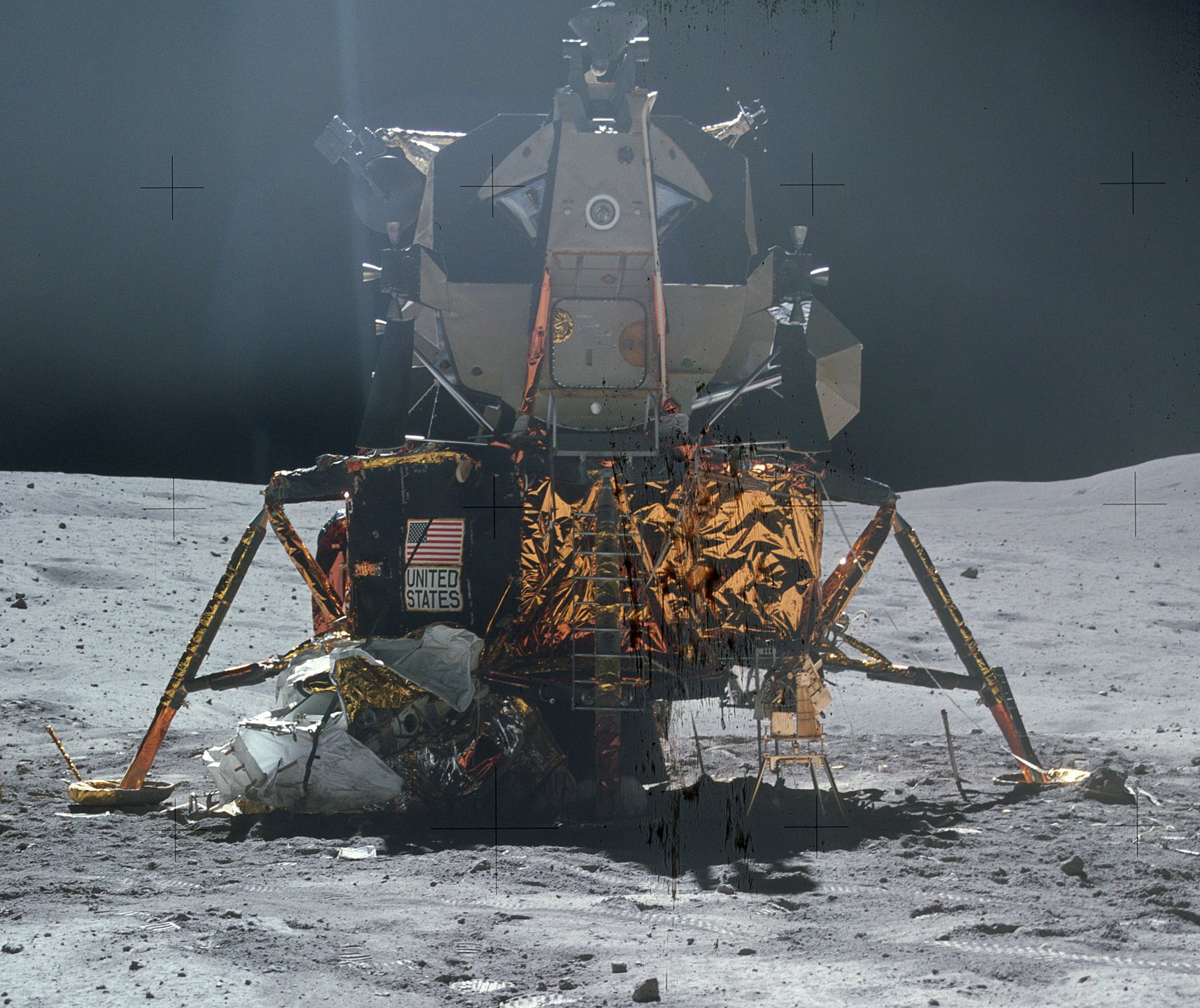
Many places in the Solar System are too dangerous or too far for people. Venus is hot enough to ruin most machines. Saturn, Uranus and Neptune are too distant for any crewed spacecraft we can build today. So robots go instead. They are cheaper and need no life-support equipment. Without a crew, a spacecraft is lighter, and a lighter spacecraft needs a smaller rocket.
Robots have another advantage. A spacecraft can be cleaned of germs before it leaves, but a human body is full of tiny living things. That matters when scientists want to study places where Earth microbes might spoil the results.
have now visited every planet in the Solar System, and Pluto too. The two Voyager probes launched in 1977 to use a rare lining-up of Jupiter, Saturn, Uranus and Neptune. Each planet's gravity gave the probes a speed boost, called a . Voyager 1 left the Sun's bubble of particles, the heliosphere, in 2012. Voyager 2 followed in 2018. Voyager 1 is the most distant spacecraft, over 160 times farther from the Sun than Earth.
A is a spacecraft that makes a soft landing on another world. Some, like the Apollo Lunar Module, land using only their rocket fuel. Others, heading for places with air, slow down by skimming the atmosphere. That creates heat, so they need a .
What do satellites and space telescopes do?
Look up and you will not see most spacecraft, but they affect daily life. Communications satellites pass television, phone, radio and internet signals around the world. The radio waves used for these signals travel in straight lines, and Earth's curved surface gets in the way. A satellite high above can catch a signal and send it on to a place far beyond the horizon.
Many communications satellites sit in , high above the equator. There, a satellite goes around at the same rate as Earth spins, so it seems to hang still in the sky. A dish on the ground can then point at it for good. Other satellites fly in low orbits, in large groups called constellations. Ground antennas must follow them and swap between them often.
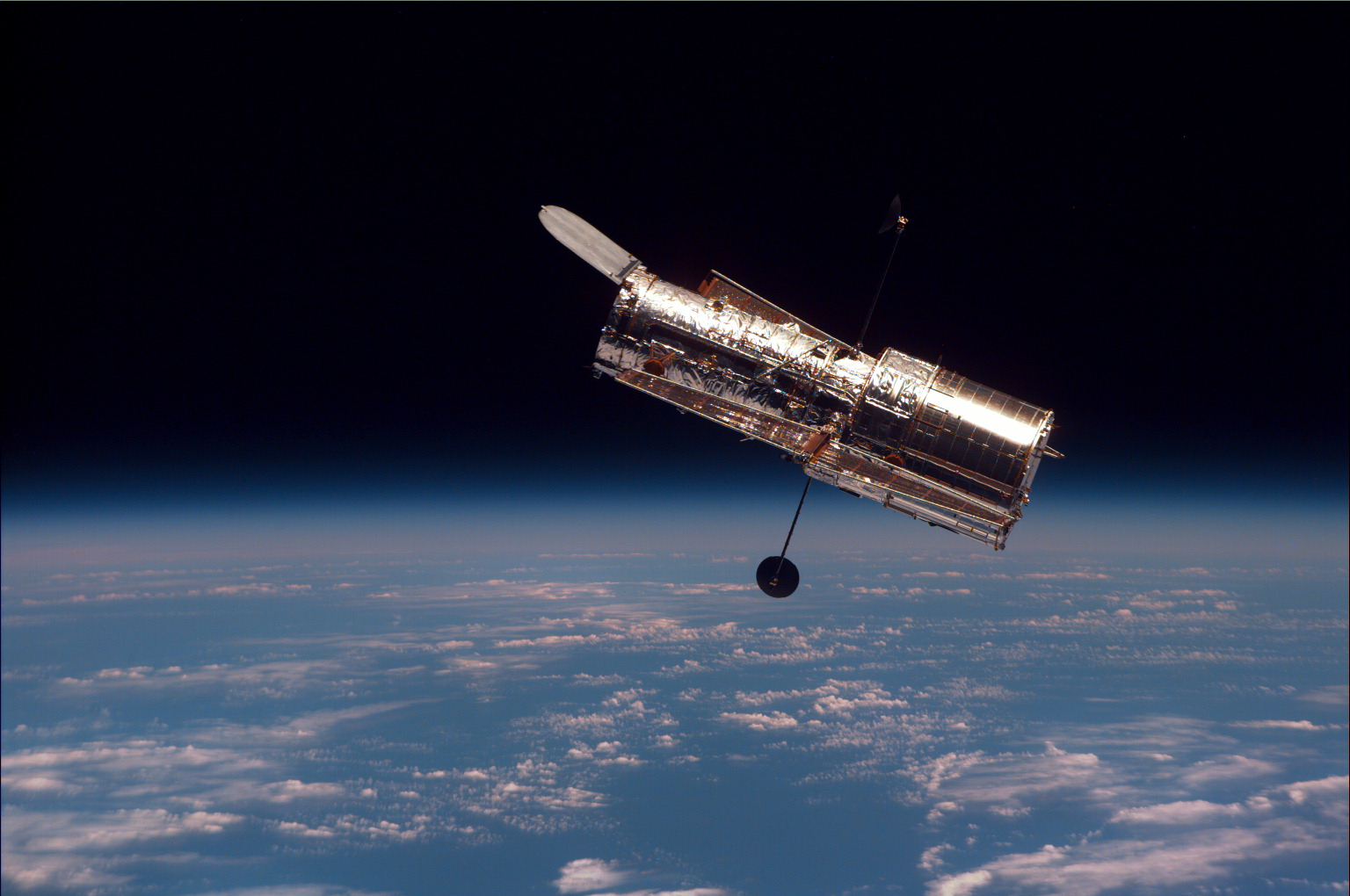
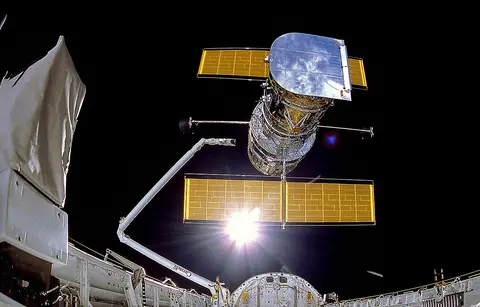
Space telescopes work above the air. Air blurs and blocks some of the light and other radiation from stars, and city lights add glare. The Hubble Space Telescope and the James Webb Space Telescope avoid these problems. The first working space telescopes were OAO-2 in 1968 and the Soviet Orion 1 in 1971.
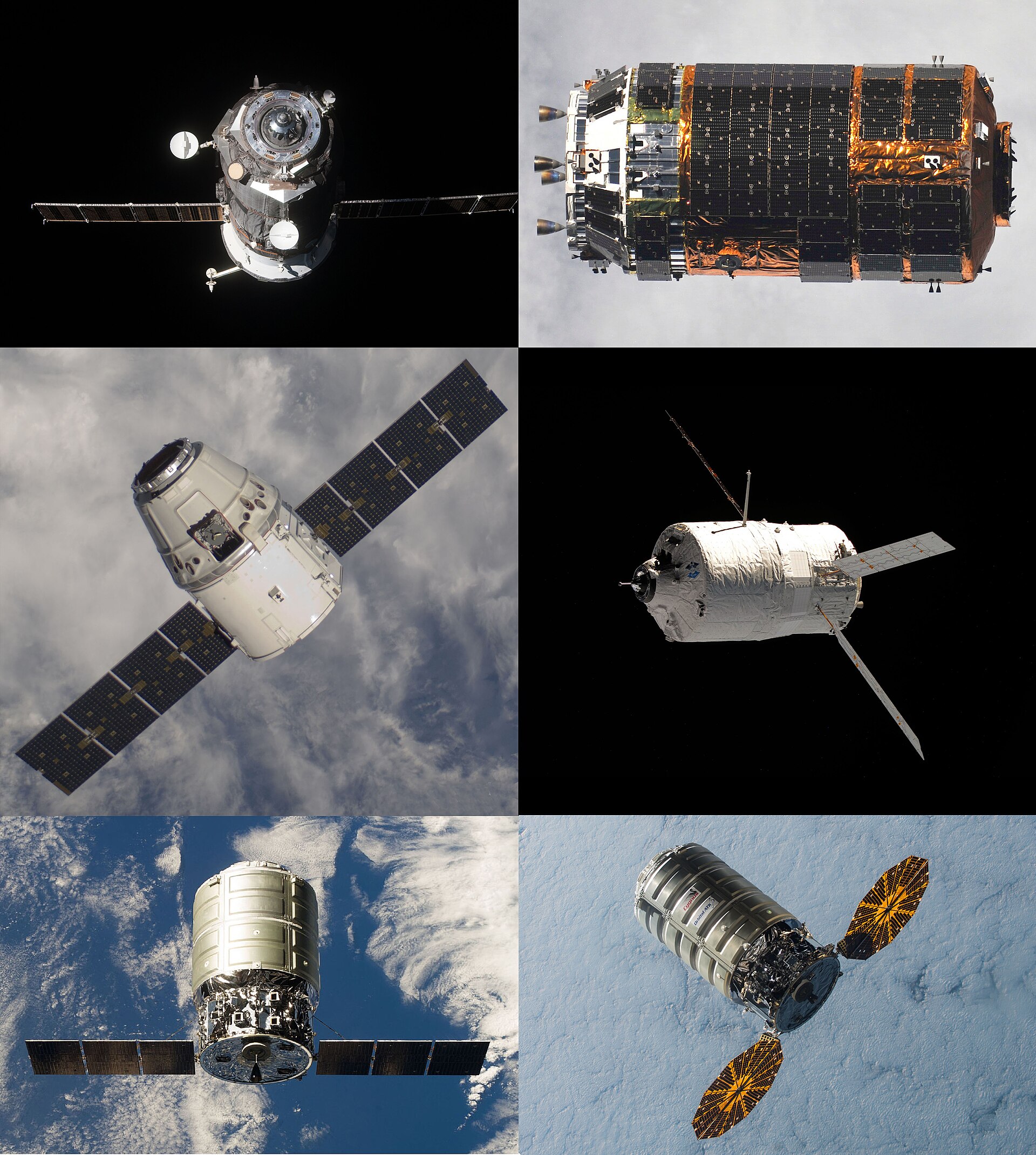
Cargo spacecraft work as delivery trucks. Since 1978, robot ships have carried food, fuel and supplies to space stations. Today Progress, Dragon 2 and Cygnus serve the International Space Station. China's Tianzhou serves its Tiangong station.
What is inside a spacecraft?
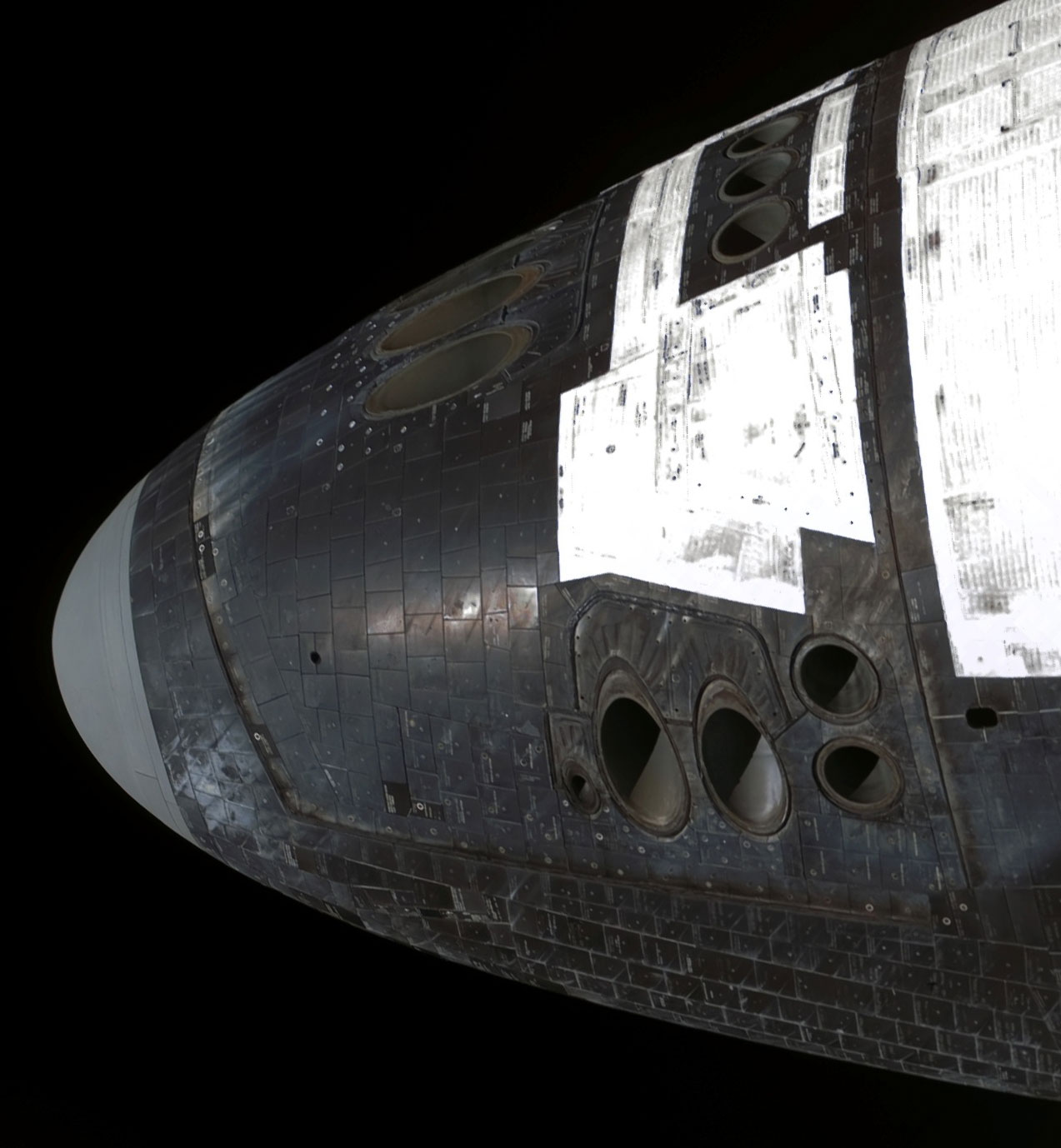
A spacecraft is a set of teams of equipment, called subsystems, that must all work together. They sit in a main frame called the bus. The things the spacecraft is there to carry, such as cameras, telescopes, cargo or a crew, are called the . Engineers say it is the part that pays the bills.
The structure holds everything together and survives the shaking of launch. Power usually comes from solar panels. Far from the Sun, a probe may use a radioisotope thermoelectric generator, which makes electricity from the heat of decaying radioactive material. Batteries cover the times when the Sun is hidden behind Earth.
Space is a harsh place. Temperatures can swing by hundreds of degrees Celsius, so a thermal control system uses special materials and heaters to keep parts at safe temperatures. An attitude control system points the spacecraft in the right direction, using spinning reaction wheels or small thrusters. Guidance and navigation work out where the spacecraft is and where it should go. A command and data system receives orders from Earth and sends back results by radio.
Crewed spacecraft also need life support for their crew. Many spacecraft have engines to correct their . Some, like the Swift telescope, have none.
Nothing flies alone. A , made of mission control rooms, tracking stations and data centres, runs the spacecraft from Earth.
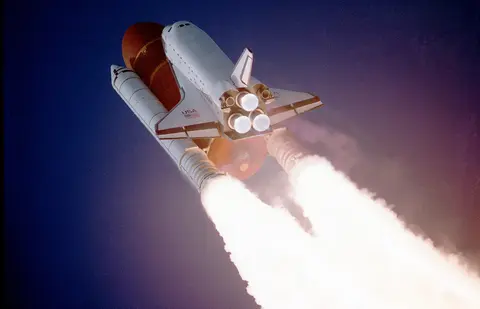
Why did the Space Shuttle fly for 30 years?
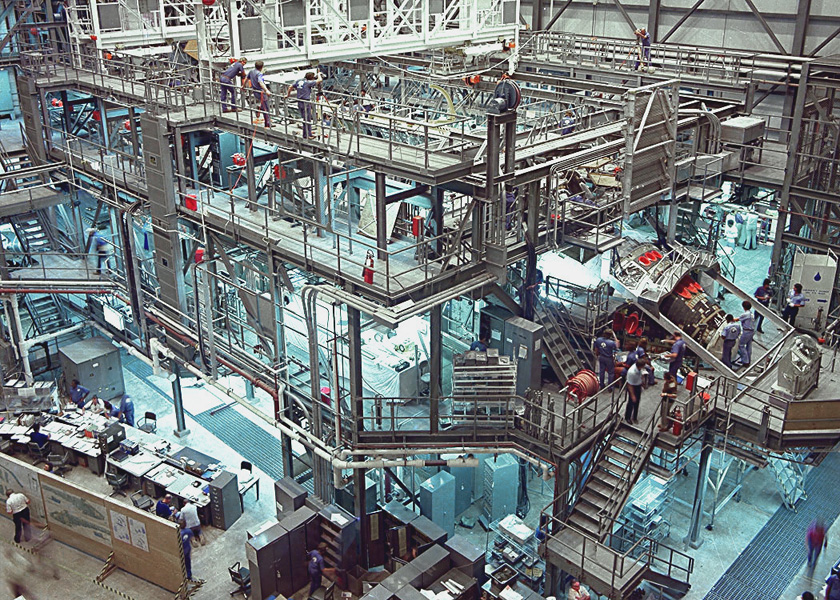
The Space Shuttle was the first reusable spacecraft to Earth, and it looked like an aeroplane. It was a spaceplane. Columbia flew first, on 12 April 1981. Challenger, Discovery, Atlantis and Endeavour followed. Enterprise was only used for glide tests in the air.
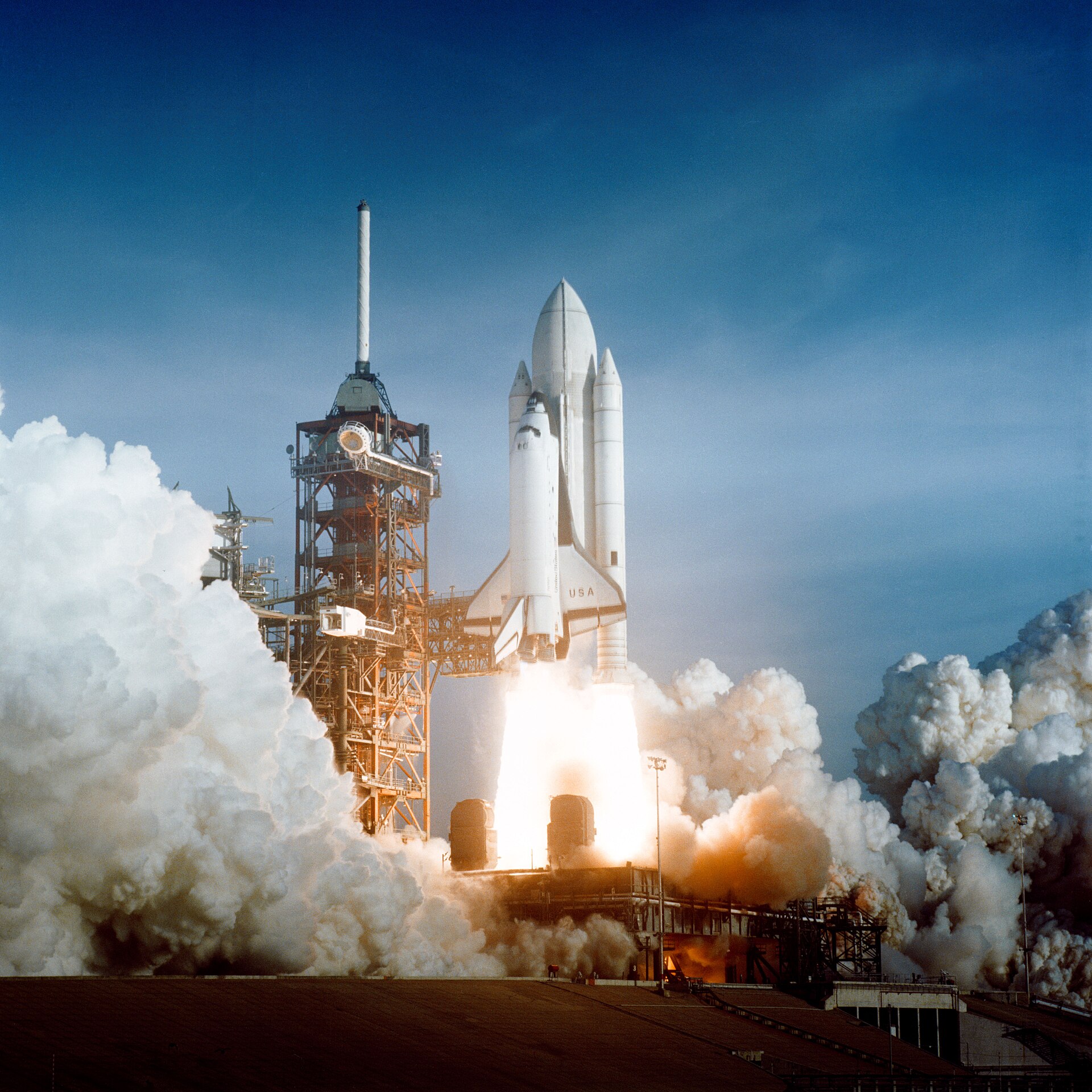
At launch the Shuttle had three parts. The orbiter, which held the crew and cargo, had three main engines. Two solid rocket boosters helped it off the ground and then floated down on parachutes to be recovered at sea. A big orange fuel tank fed the engines, and it was thrown away every time. The orbiter then glided home to a runway. Its of special tiles protected it from the heat of re-entry.
The aim was cheap flights. In practice the Shuttle cost far more than expected. Each time it landed, teams had to take the parts apart to check them. Engines were replaced every few flights, and every tile had to be fitted in its own place.
Two orbiters were lost. Challenger broke up in January 1986 and Columbia in February 2003. The Shuttle made 135 flights between 1981 and 2011, and it then retired. Its old age and high cost, more than a billion dollars a flight, were the reasons. Three orbiters went to museums.
What will spacecraft do next?
More space agencies now want reusable spacecraft. SpaceX's Crew Dragon flew its first astronauts on 30 May 2020. Boeing's Starliner is another crew , built to carry astronauts to the International Space Station. NASA's Orion capsule and Space Launch System rocket were built for trips beyond Earth . In April 2026 they carried the Artemis II crew around the Moon.
Other ideas stretch what a spacecraft can be. SpaceShipOne, a small rocket plane, carried a pilot to space twice within two weeks in 2004 and won the Ansari X Prize. Virgin Galactic planned to carry paying passengers on its successor, SpaceShipTwo, although a crash delayed that.
SpaceX is building Starship, a giant spacecraft planned to carry up to 100 people on long trips and to land on the Moon and Mars. Because it needs a lot of fuel to go far, other Starships would top up its tanks in orbit. Its designers also hope to use it for flights between faraway cities on Earth in under an hour.
Not every new spacecraft is about distance. The Mission Extension Vehicle is a robot that docks with an ageing satellite and uses its own fuel to steer it. It can keep a satellite working for years or rescue one stuck in the wrong orbit.
Explore Next
Your audio story keeps playing while you look around.
Words to Know
- capsule
- A blunt, wingless spacecraft that can return from space.
- geostationary orbit
- An orbit high above the equator where a satellite stays over one spot.
- gravity assist
- A speed boost a spacecraft gets by flying close to a planet.
- ground segment
- The control rooms, stations and networks on Earth that run a spacecraft.
- heat shield
- A layer that protects a spacecraft from the heat of re-entry.
- lander
- A spacecraft that lands softly on another world.
- launch vehicle
- The rocket that lifts a spacecraft off Earth and into space.
- orbit
- The curved path an object follows around a planet or moon.
- payload
- The cargo, crew or instruments a spacecraft is built to carry.
- space probe
- A robot spacecraft sent to explore deep space or other worlds.
- sub-orbital
- A flight that reaches space but falls back before going around Earth.