Invertebrates
Almost every animal on Earth has no backbone at all.
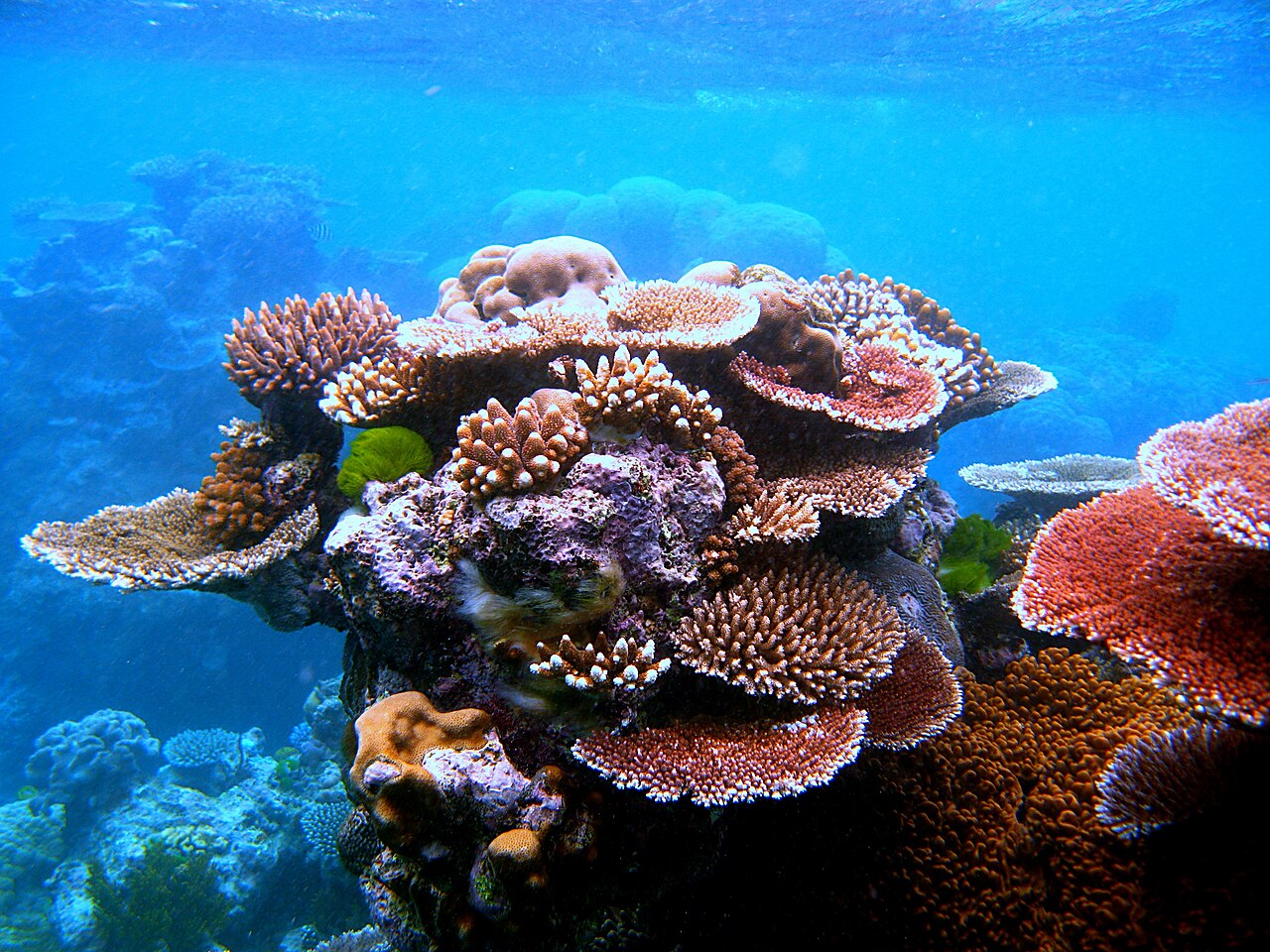
Look under a stone, into a rock pool or at a flower and you will find invertebrates. These are animals with no backbone. They include insects, spiders, crabs, snails, worms, jellyfish, corals and starfish. It sounds like a small club, but it is the opposite. More than 95 per cent of the animal species scientists have described are invertebrates. They can be too small to see, or as long as a bus. They fly, swim, burrow, crawl and float, and they hold up whole ecosystems. Their story runs from the first animals in ancient seas to the fruit flies in modern laboratories.
What makes an animal an invertebrate?
An is any animal that does not have a backbone. A backbone, or spine, is a row of small bones called vertebrae that protects the main nerve cord. Fish, frogs, snakes, birds and mammals all have one. Everything else in the animal kingdom does not.
That makes the word a little odd. It names a group by something its members lack, a bit like calling every non-bicycle vehicle a "non-bike". Invertebrates do not share one body shape or one family tree. A jellyfish and a beetle have far less in common than a beetle and a lobster. Some animals sometimes called invertebrates, such as sea squirts, are actually closer cousins of vertebrates than they are of worms or insects.
Biologists still use the word because it is handy. It lets them talk about everything that is not a vertebrate in one go. The word itself comes from Latin. A is a joint of the spine, and the prefix "in" means "without".
Despite having no backbone, invertebrates have found many ways to stay upright and move. Some have hard outer shells. Some are held firm by fluid pressure inside their bodies. Some grow stony skeletons. This huge variety is why invertebrates live in nearly every place on Earth, from deep oceans to mountain soil.
How many invertebrates are there?
Far more than there are vertebrates. One estimate says about 97 per cent of all animal species are . The International Union for Conservation of Nature, or IUCN, counted about 66,000 described species of vertebrates in 2014. Over 95 per cent of described animal species were invertebrates, and insects alone are the largest share.
So animals with backbones are a small branch on a very big tree. Many single groups of invertebrates have more species than every fish, bird, reptile, amphibian and mammal put together.
The sizes vary as wildly. The smallest, a group called myxozoans, are about 10 micrometres long. That is a hundredth of a millimetre, far too small to see without a microscope. The largest is a squid. The colossal squid can reach about 9 to 10 metres, which is the length of a bus. The giant squid is another contender for the biggest, and scientists name one or the other as the largest known invertebrate.
Scientists sort invertebrates into more than 30 phyla. A is one of the biggest divisions of the animal kingdom, such as the or the molluscs. New species are still being found. Many are tiny, live in the deep sea or hide in rainforest soil, so nobody has counted them all.
How do animals cope without a backbone?
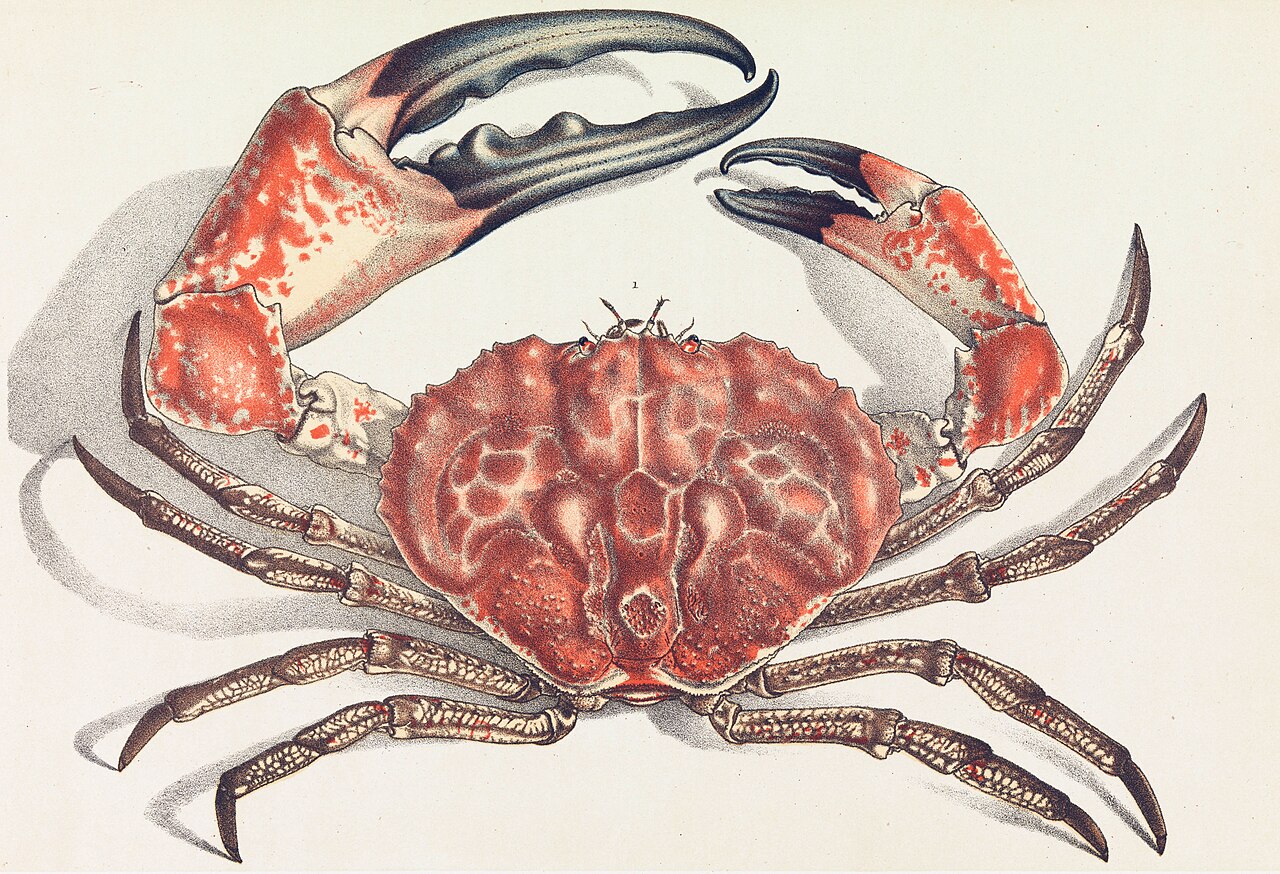
use several clever tricks. The first is a hard outer case called an . Crabs, insects and spiders wear one like a suit of armour. It protects the soft body inside and gives muscles something firm to pull on. The cost is that the animal cannot grow inside it. So it sheds the old case in a process called and swells up before the new one hardens.
The second trick is a fluid skeleton. Jellyfish and worms have no hard parts at all. Instead, water or body fluid is squeezed inside the body, and muscles push against it. Think of a water balloon that can change shape.
Body shape matters too. Jellyfish, sea anemones and starfish are radially symmetric, so they look the same from several sides, like a pizza. This suits animals that drift or sit still and meet the world from every direction. Insects, worms and crabs are bilaterally symmetric, with a left side and a right side like ours. Snails are an odd case because their bodies twist into a spiral. Some crabs are lopsided too. A fiddler crab has one giant claw. If a male loses it, he grows a new big claw on the other side after moulting.
Insects breathe through tiny holes in their sides. The holes lead into branching tubes that carry air to every part of the body.
Why do arthropods rule the animal kingdom?
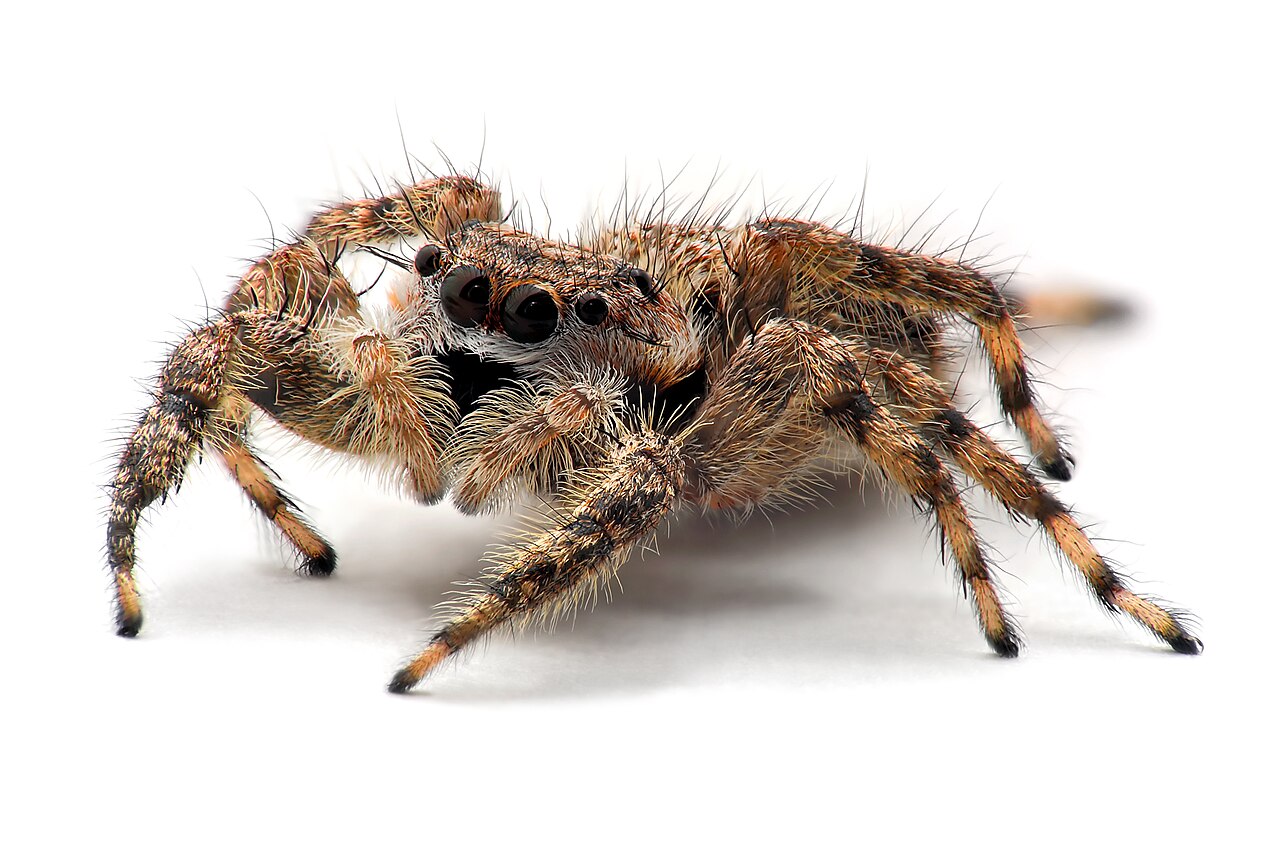
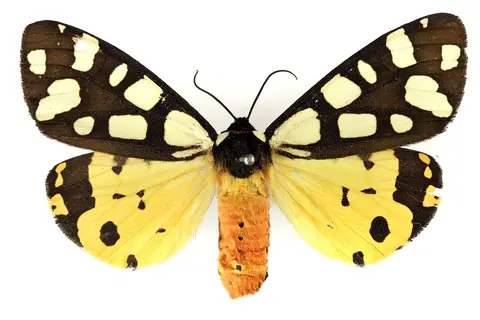
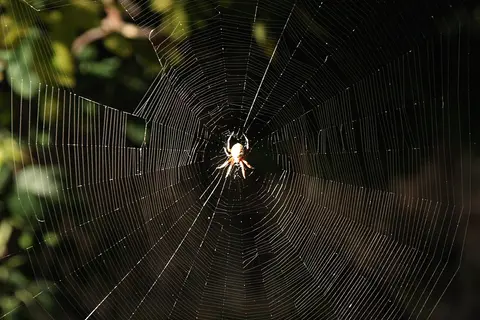
The largest animal is the . It includes insects, spiders, scorpions, crabs, lobsters, shrimps and centipedes. Every arthropod has a body made of repeating segments, jointed legs or limbs in pairs and a hard . The name means "jointed foot".
This design has been a huge success. Segments let an animal change one part of its body without redesigning the rest. One segment can become a leg, another a wing, another a mouthpart. An exoskeleton also helps animals on land, because it stops them drying out. That is one reason insects spread across almost every habitat except the deep sea.
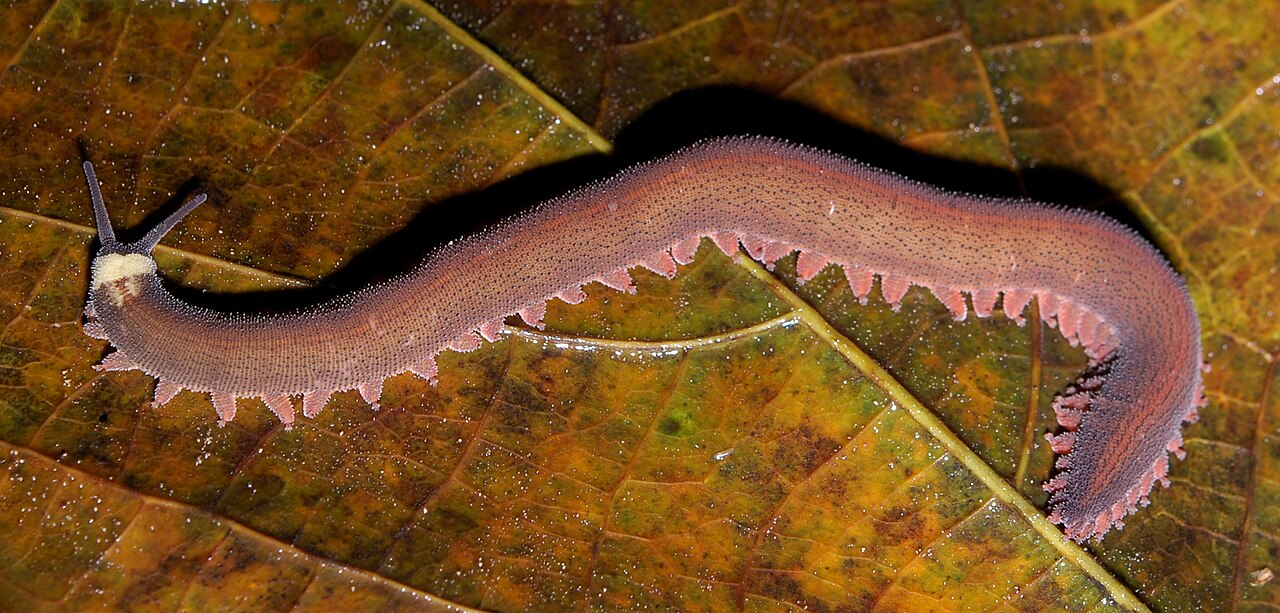
Arthropods have close relatives that share some of their features but not the hard shell. Velvet worms are soft-bodied animals that walk on stubby legs, and they hunt in forest litter. Tardigrades, also known as water bears, are tiny animals that live in moss and water. Both groups are thought of as the arthropods' nearest cousins.
The next largest group is probably the nematodes, or roundworms. Most are too small to see. They live almost anywhere there is water, including soil and the sea floor. Some are that live inside other animals.
What lives in the sea without a backbone?
The oceans hold the greatest range of body plans. Sponges are among the simplest. They are animals that stay fixed in one place. They draw water through tiny pores and filter food from it. Their cells do different jobs, but they are mostly not arranged into organs.
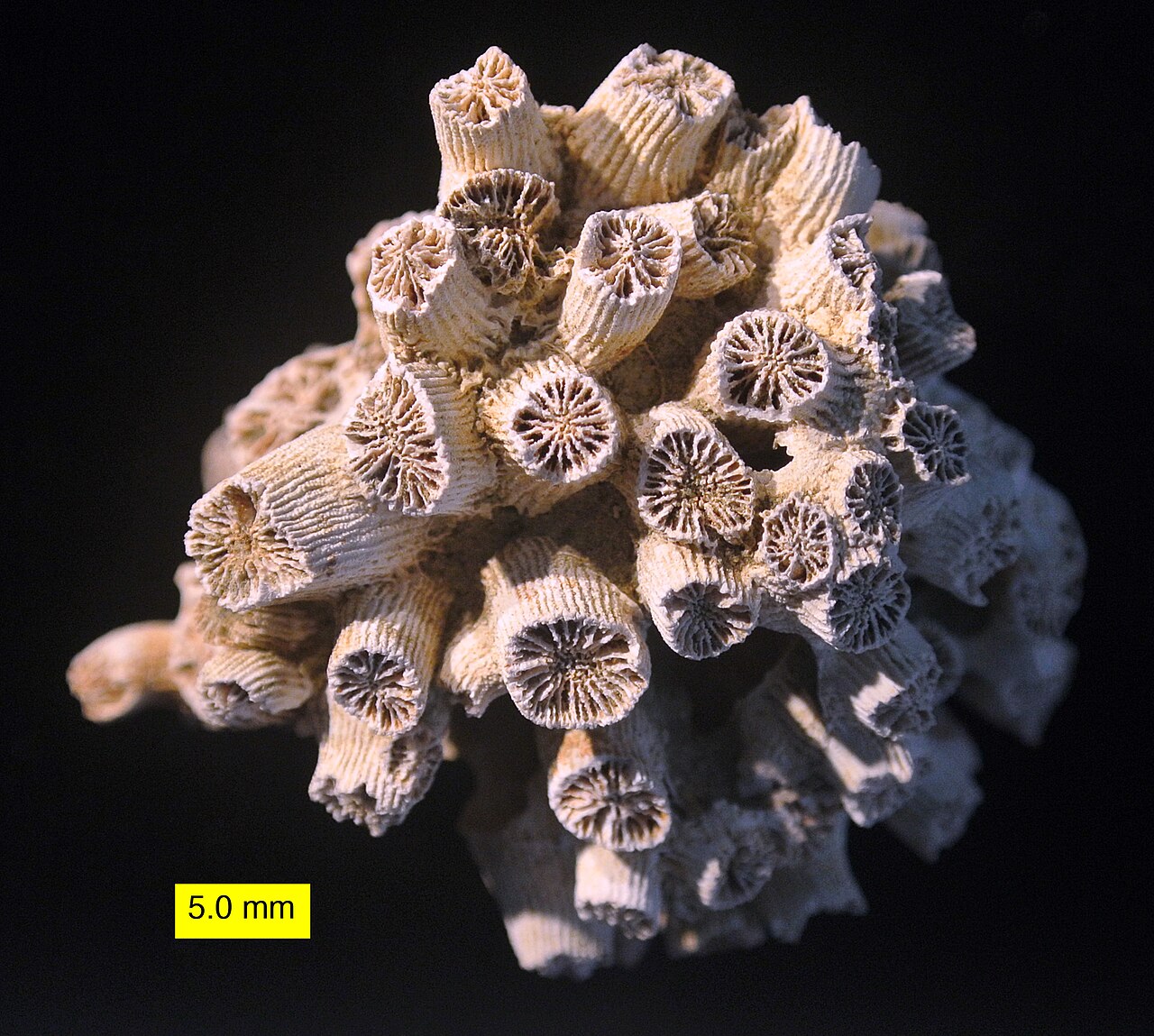
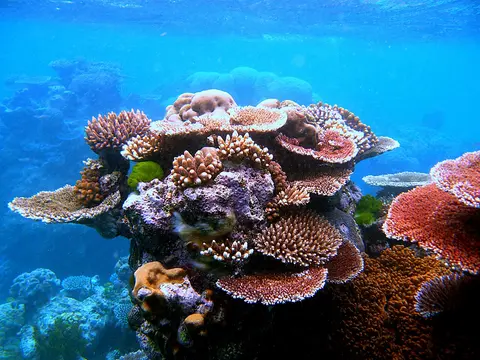
include jellyfish, sea anemones and corals. They are radially symmetric and have a single opening that works as both mouth and exit. They have stinging cells for catching prey. Corals live in colonies, and the stony reefs they build are home to a huge number of other species. Comb jellies look similar, but they belong to their own group.
include starfish, sea urchins, brittle stars, sea cucumbers and feather stars. They are all radially symmetric, and every one of them lives in the sea. None lives in fresh water or on land.
Then there are the segmented worms, or annelids. Earthworms and leeches belong here, and so do many bristleworms that live on the seabed. Their bodies are made of rings, and each ring repeats the same set of parts.
Flatworms, ribbon worms, rotifers and many other small groups fill out the rest of the list. Most people have never heard of them, yet each has its own body plan and its own way of living.
Are snails and octopuses really relatives?
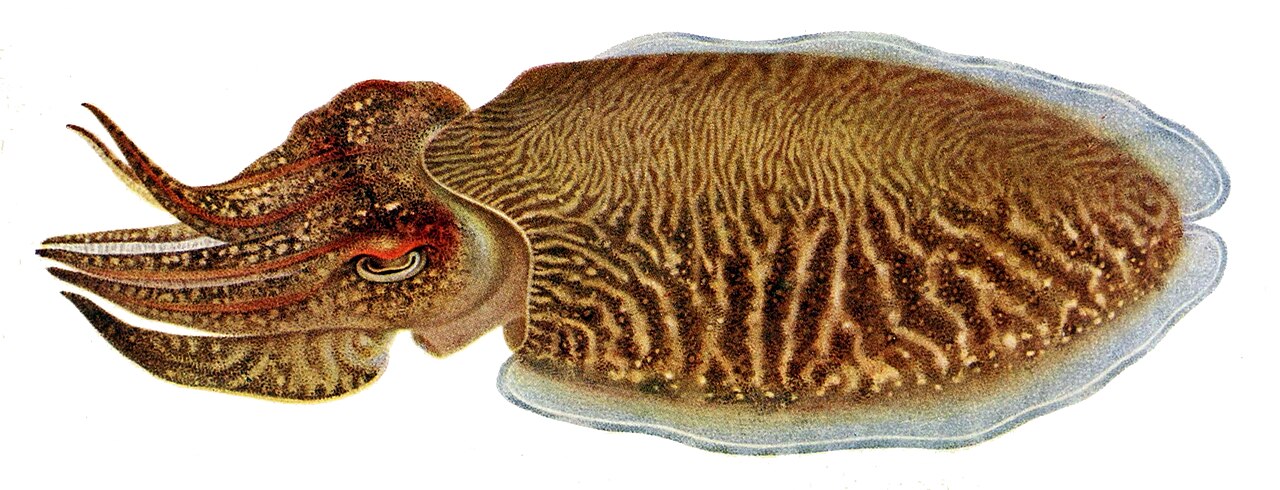
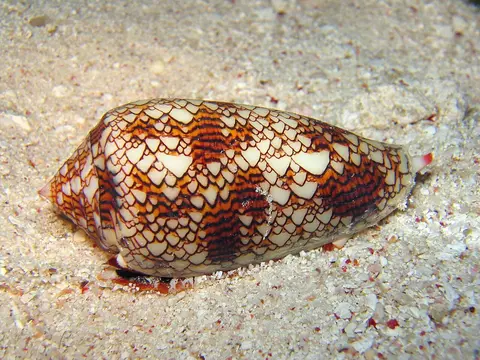
Yes. Both belong to the molluscs, the second-largest animal after the . Molluscs have soft muscular bodies. Many make a shell, but not all do. Snails, slugs, clams, mussels, squid, cuttlefish and octopuses are all molluscs.
The variety is huge. Snails and slugs are the biggest class. Clams and oysters filter food from water. Octopuses, squid and cuttlefish are the cephalopods, and they are among the most advanced of all when it comes to brains and senses. A cuttlefish can change the colour of its skin. An octopus can solve puzzles.
No single feature unites every invertebrate, but molluscs share a few. They have a fold of tissue called the mantle and a muscular foot. Most have a rasping, tongue-like organ called a radula.
Many people assume that all worms are alike, yet earthworms belong to a different phylum. For a long time, scientists thought annelids and molluscs and arthropods were closely linked because of their body plans. Modern studies suggest that segments appeared separately in annelids and arthropods. This is called convergent evolution, when different groups evolve similar solutions on their own.
Molluscs are such a big and important group that they have a story of their own.
When did the first invertebrates appear?

The first animals were . That is how we know that backbones came later. Fossils from the Trezona Formation in South Australia are about 665 million years old. Scientists interpret them as possible early sponges. Some researchers think animals appeared even earlier, perhaps around 1 billion years ago, but those first animals would have left very few traces.
Later in the late Neoproterozoic era, tracks and burrows appear in the rocks. They were made by worm-like animals about 5 millimetres wide, about as big and complex as an earthworm. Then, in the Cambrian explosion that began about 539 million years ago, most of the main invertebrate groups appear in the fossil record within a few tens of millions of years.
How do we know all this? Invertebrates with hard parts, such as shells, leave fossils in layers of rock. Geologists compare the fossils from different layers to work out which rocks are older. The fossil record is one of the best clocks we have for dating the history of life.
Some invertebrates are living reminders of this ancient past. Horseshoe crabs have changed little in a very long time, and they are closer to spiders than to crabs. Corals, sponges and jellyfish still look like some of the earliest animal body plans.
Who named the invertebrates, and why do scientists study them?
In the 1700s, Carl Linnaeus, the father of modern naming, sorted these animals into only two groups. They were insects and "worms", with everything from slugs to jellyfish placed in the second. In 1793, Jean-Baptiste Lamarck became a curator at the Muséum National d'Histoire Naturelle in Paris. He coined the word "" and split the animals into ten groups. Today scientists use over 30.
Lamarck, like many people before him, saw vertebrates as the standard, with other animals as the odd ones out. Modern zoologists point out that this reflected human bias, since we are vertebrates ourselves. For centuries, big and showy animals got most of the attention.
That changed in the 1900s. Invertebrate biology became a major science, with discoveries in medicine, genetics, fossils and ecology. Two of the most studied animals in the world are invertebrates. They are the fruit fly, Drosophila melanogaster, and a tiny roundworm called Caenorhabditis elegans. Both were among the first animals to have their genes read.
Invertebrates also work as pollution detectors. Scientists check which kinds live in a river or the sea to judge how clean the water is. Insects even help police, because forensic scientists can learn useful clues from the insects found at a crime scene.
Explore Next
Your audio story keeps playing while you look around.
Words to Know
- arthropod
- An animal with a segmented body, jointed legs and an exoskeleton.
- cnidarian
- A sea animal with stinging cells, such as a jellyfish or coral.
- echinoderm
- A spiny sea animal with a body in five parts, such as a starfish.
- exoskeleton
- A hard skeleton on the outside of the body.
- invertebrate
- An animal that has no backbone.
- model organism
- A species that scientists study in depth to learn how life works.
- moulting
- Shedding an old outer layer so the animal can grow.
- parasite
- An animal that lives on or inside another and takes food from it.
- phylum
- One of the biggest divisions of the animal kingdom.
- symmetry
- A body shape that looks the same on both sides or all around.
- vertebra
- One of the small bones that make up a backbone.