Spiders
Eight legs, up to eight eyes and silk stronger than you would believe.
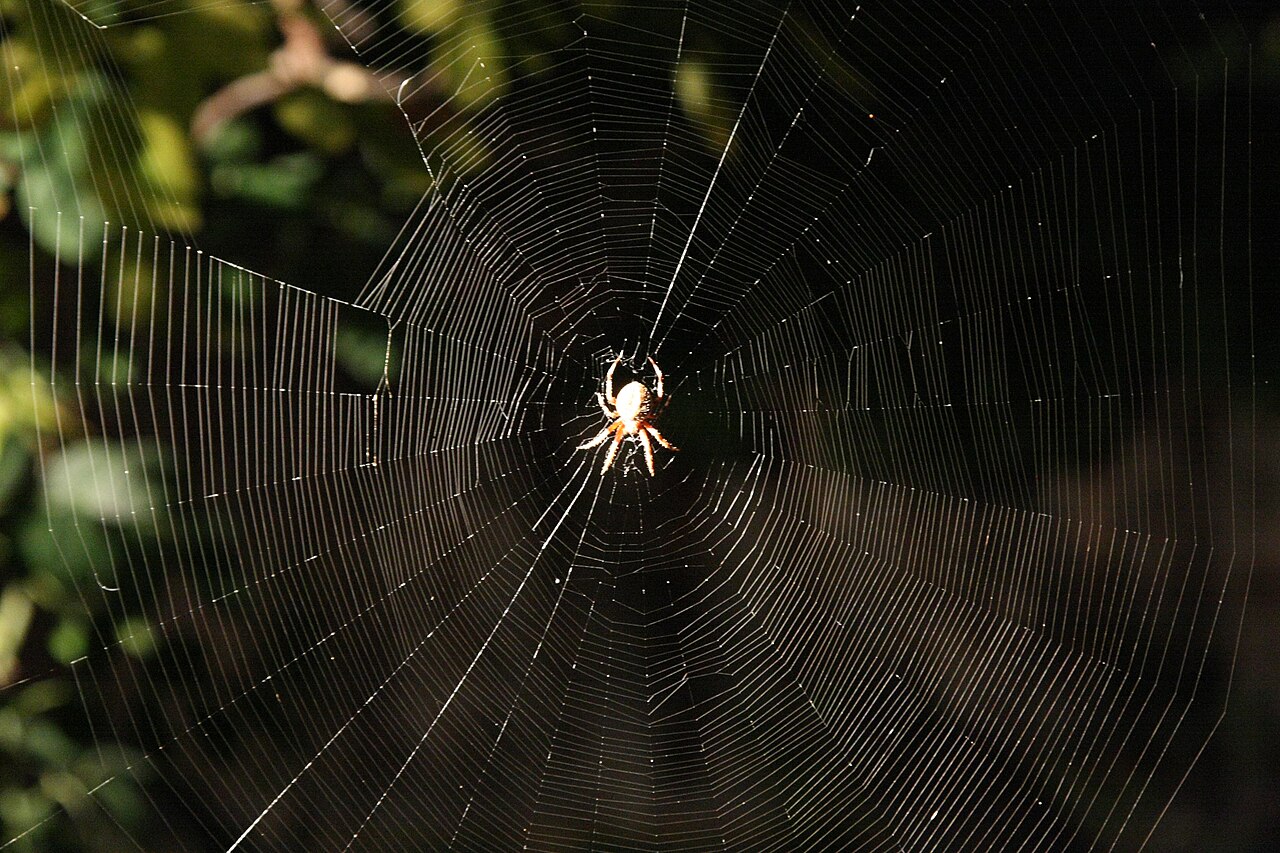
Spiders are some of the most successful hunters on Earth. They live on every continent except Antarctica, in forests, deserts, caves, gardens and even under water. Every spider has eight legs, venomous fangs and a talent for making silk. Some build webs of astonishing beauty, others lie in wait in burrows, and others chase prey down like tiny wolves. As of 2025, taxonomists have recorded 53,034 species in 136 families. Together they eat hundreds of millions of tonnes of insects every year. Their story reaches back more than 300 million years.
What makes a spider a spider?
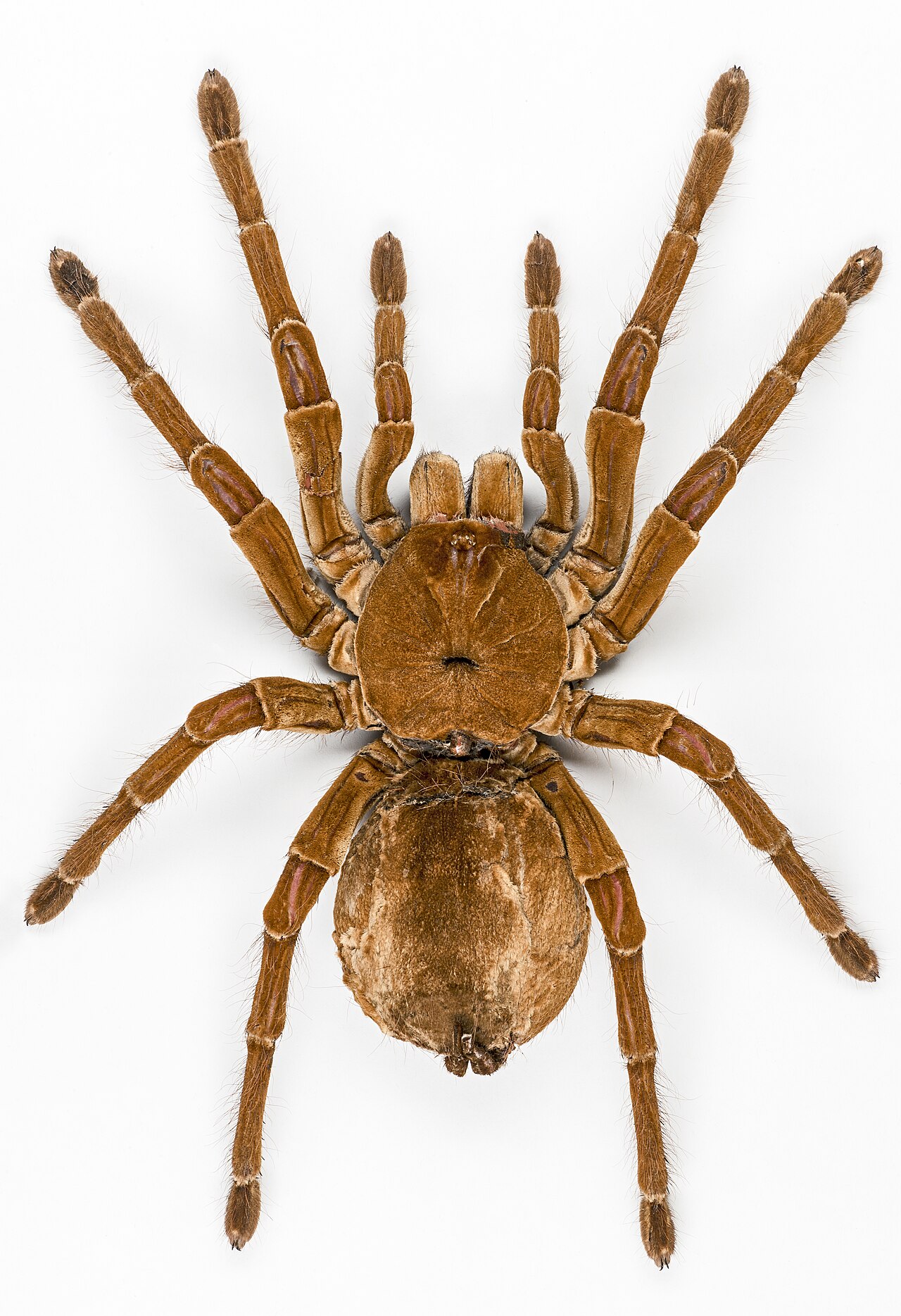
Spiders belong to the arthropods, the animals with jointed legs and a hard outer skeleton. Within that group they are , the same family as scorpions, mites and ticks. Insects have six legs and three body parts. A spider has eight legs and only two body parts.
The front part is called the . It combines the head and chest in one piece, and it carries the eyes, the mouth, the brain and all eight legs. The back part is the . It is soft and egg-shaped, and it holds the heart, the breathing organs, the gut and the silk glands. A thin, tube-like waist called the pedicel joins the two parts. This lets the abdomen swing about freely while the spider spins silk.
Spiders also have no antennae, which insects use to feel and smell. In front of the mouth they have a pair of . Each ends in a fang that can inject . Next to them are two short limbs called . The pedipalps help hold food, and in male spiders they are used for mating.
Spider sizes vary enormously. The smallest, Patu digua from Colombia, is less than 0.37 millimetres long. The biggest are tarantulas, whose bodies can reach 90 millimetres and whose legs can span 250 millimetres, about the width of a dinner plate.
How do spiders see, feel and move?
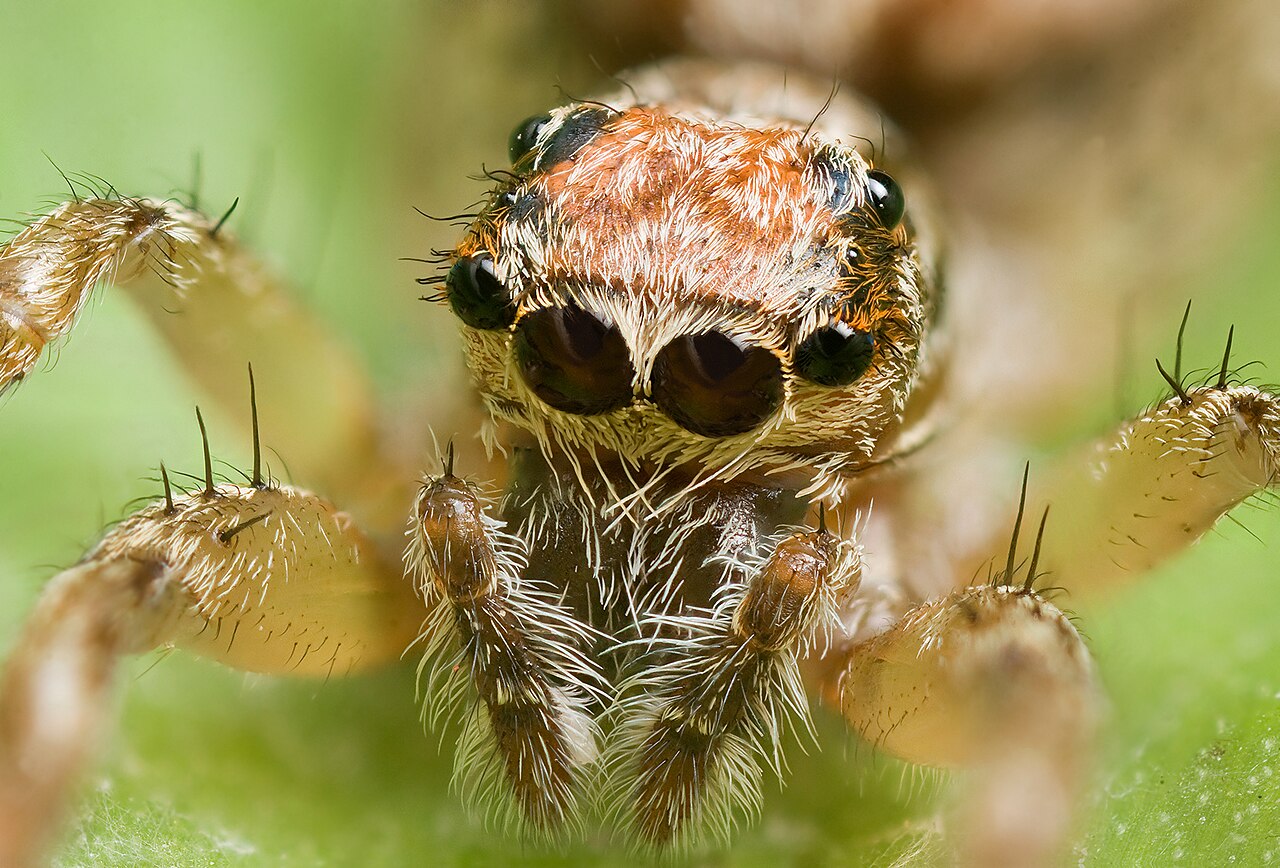
Most spiders have eight eyes arranged in two or three rows on the front of the . The main pair can form real images. The others are better at spotting movement and changes in light. Some spiders have fewer eyes, and cave spiders may have none at all.
Vision matters most for hunters. Jumping spiders have sharp eyesight. Some can see about ten times more clearly than a dragonfly, the insect with the best eyes. Web builders see badly but make up for it by feeling vibrations. Their legs and bodies carry fine hairs and tiny slits that sense touch, tiny air currents and chemicals, which work like taste and smell.
A spider's legs work in a surprising way. Most arthropods push their legs out with muscles. Spiders have no extensor muscles in most of their leg joints. Instead they pump blood into the legs and the pressure straightens them. That is why the legs of a dead spider curl up. Jumping spiders use this trick to leap up to 50 times their own body length.
Some hunting spiders have dense tufts of tiny hairs on their feet. Each hair splits into as many as 1,000 branches. These let them walk up glass and across ceilings. The spiders keep at least four feet on the surface as they move.
How does a spider make silk?
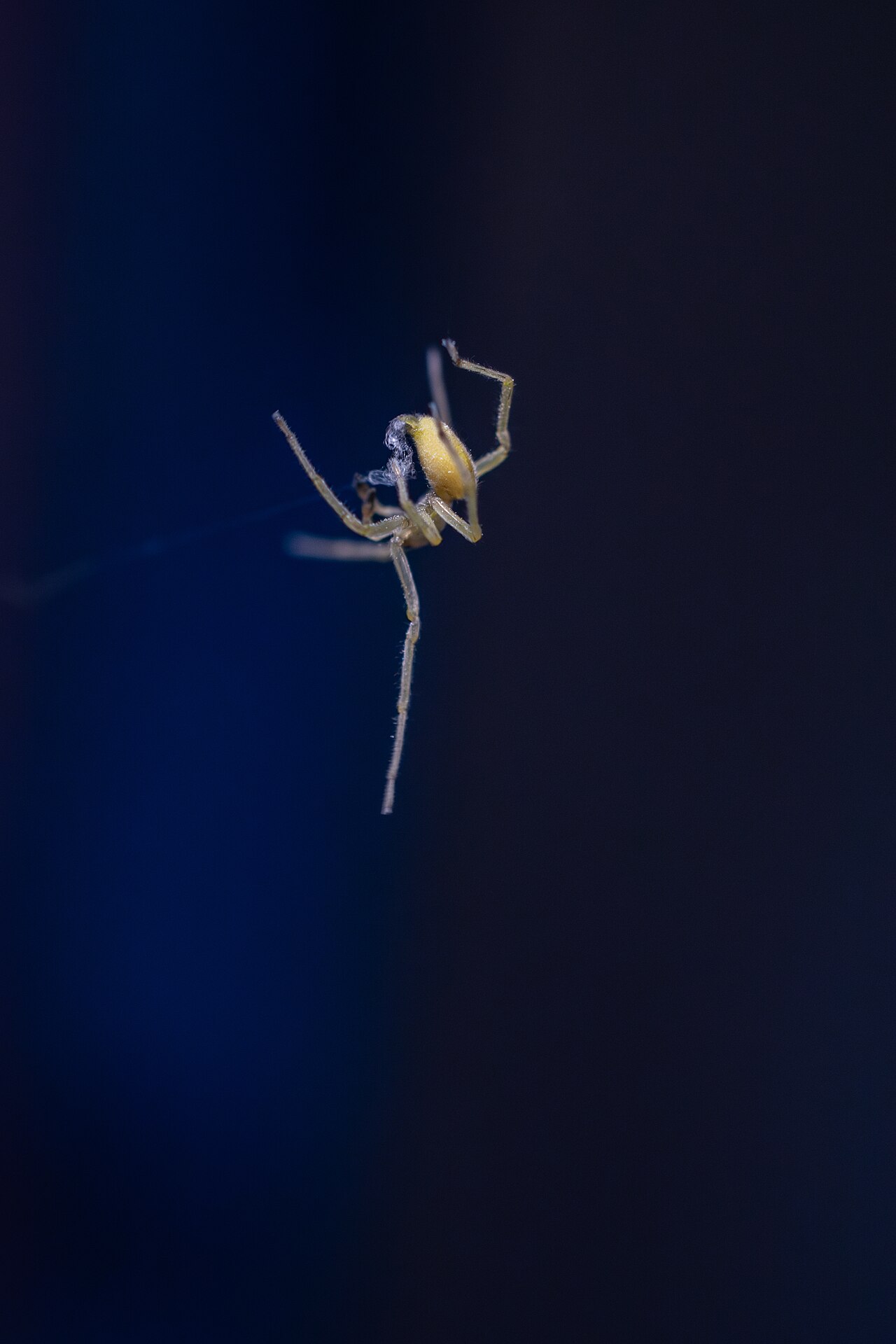
Silk comes from glands in the . A spider has up to six kinds of silk gland, and each makes a different type of silk. The silk leaves the body through small movable organs at the tip of the abdomen called . Most spiders have three pairs. Each spinneret is covered with tiny nozzles called spigots.
Silk starts out as a liquid protein. It does not harden because of the air. It hardens as the spider pulls it out, which rearranges the protein into a strong thread. A strand of spider silk is about as strong as nylon of the same width, but much more stretchy. It can stretch a long way before it breaks.
Spiders use silk for many jobs besides webs. They wrap eggs in it and line their burrows with it. They trail a safety line behind them as they climb or jump. Some baby spiders make a thread that catches the wind and carry themselves away on it, like tiny parachutes.
The first spiders had a special silk-making plate called a cribellum. It made a fluffy, woolly thread that snagged the hairs of insects. Later, spiders evolved silk coated with sticky droplets. Most modern spiders have lost the cribellum.
Engineers are keen on spider silk because it is light, strong and stretchy. Scientists have even put spider silk genes into other living things to see if they can make silk in a factory.
Why do spiders build so many kinds of web?
Webs are traps, and different traps suit different prey. The most famous design is the , a wheel of spokes with a sticky spiral. It has to do three jobs. It must catch a flying insect, absorb its speed without tearing and keep it stuck. Even so, about half the prey that hits an orb web escapes.
Orb weavers usually sit at the hub, a little above the centre, because spiders can run downhill faster than uphill. Some webs have bands of bright silk called stabilimenta. Researchers found that webs with more bands caught more prey, but spiders build fewer when they sense danger.
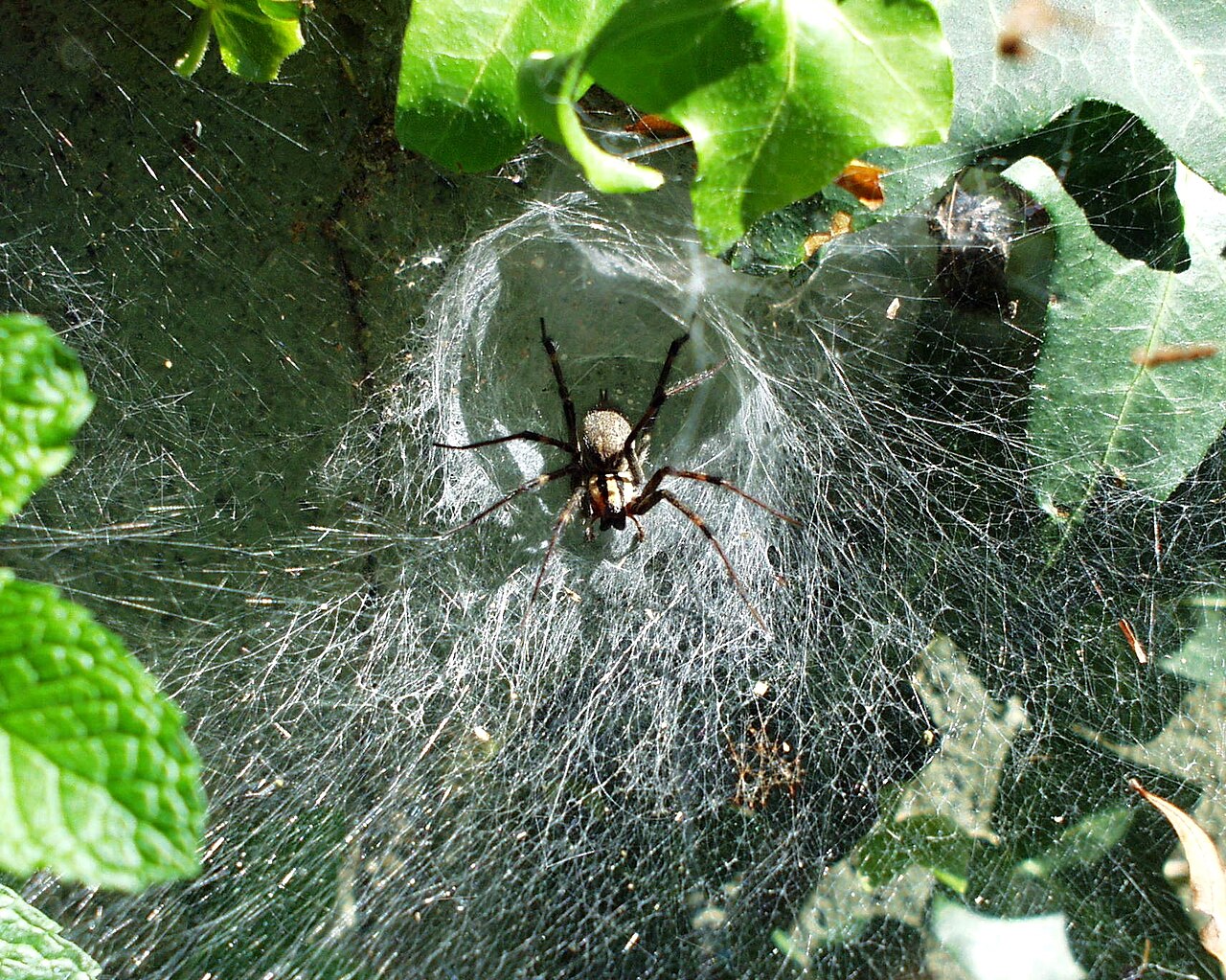
Other spiders make tangled cobwebs, flat sheets or tubes. Funnel weavers spin a sheet that ends in a silk tunnel. The spider waits in the tunnel and rushes out when it feels a tremble. Cobweb spiders weave messy, three-dimensional tangles. Spiders that build these are more common and have more species than orb weavers. Scientists now think orb webs are an ancient design, and that non-orb spiders descended from them.
In 1973, the Skylab 3 mission took two orb-weaving spiders into space. At first their webs were sloppy in weightlessness. They soon adapted. Later experiments found that spiders use light to tell which way is up.
How do spiders catch and eat their prey?
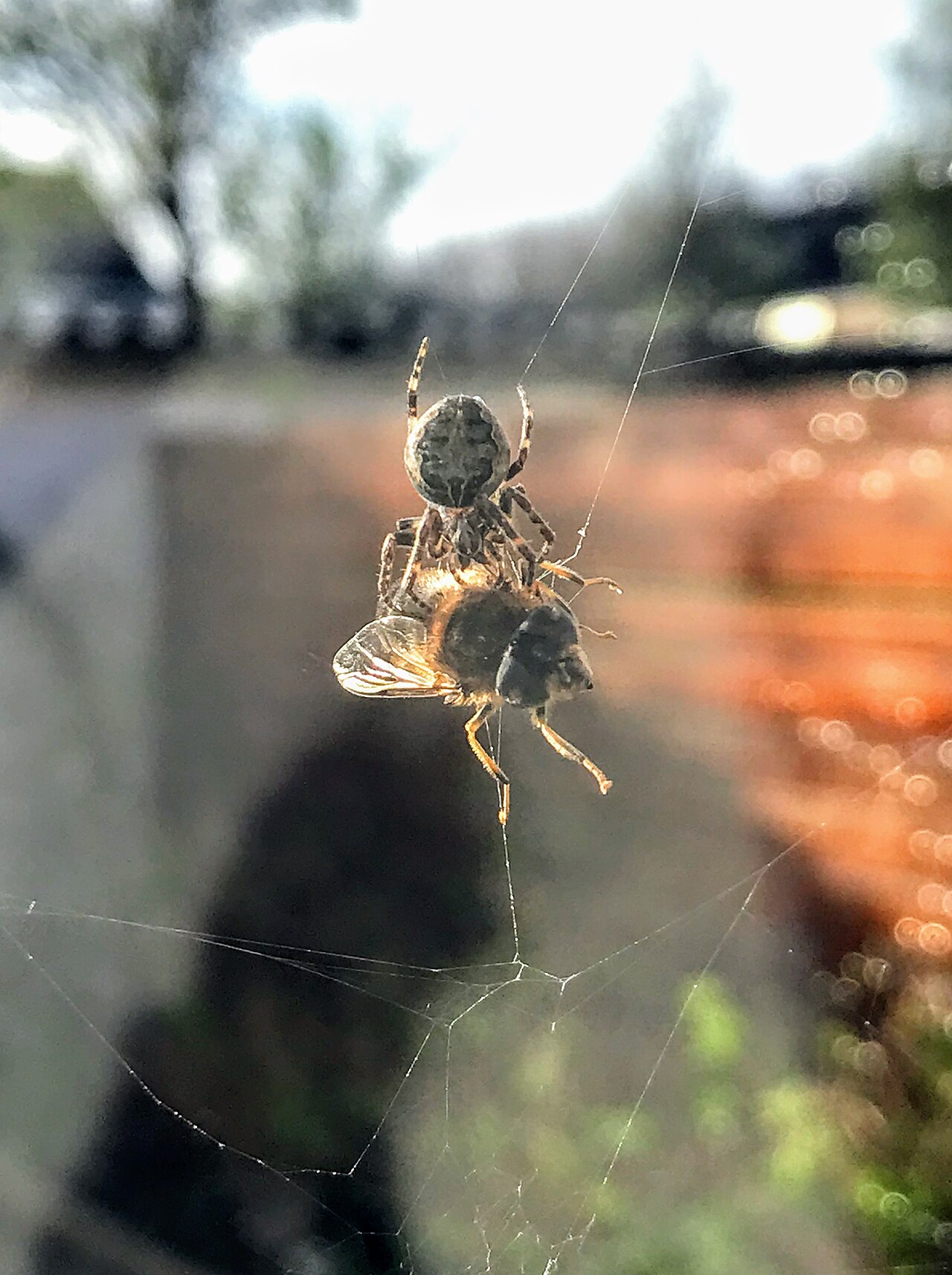
Nearly all spiders are predators. They feed mostly on insects and other spiders, although a few big species take lizards and birds. One estimate says that all the spiders in the world weigh about 25 million tonnes and eat between 400 and 800 million tonnes of prey a year.
A web is the best-known trap. Prey touches the sticky threads and struggles. The spider feels the shaking and runs over. It bites to inject , which stops the prey moving, and often wraps it in silk.
A spider's gut is very narrow, so it can only swallow liquid. After the kill, it pours digestive juices into the prey, or chews it while flooding it with juices. The prey's insides turn to liquid and the spider sucks them up. A hard husk is left behind. Spiders have no jaws for chewing, so they use the bases of their to squash food.
Venom is a spider's main tool. The venom glands lie at the roots of the fangs. A few spiders have lost them and kill prey with silk instead.
Not every spider is a pure hunter. One jumping spider, Bagheera kiplingi, gets more than 90 per cent of its food from plant bodies produced by acacia trees. Young spiders of several families drink flower nectar, which can help them live longer.
Which spiders hunt without a web?
Many spiders never build a trap. Wolf spiders, fishing spiders and jumping spiders run down their prey and rely on good eyes. Crab spiders sit on flowers and ambush visitors. Some even change their colour to match the flower.
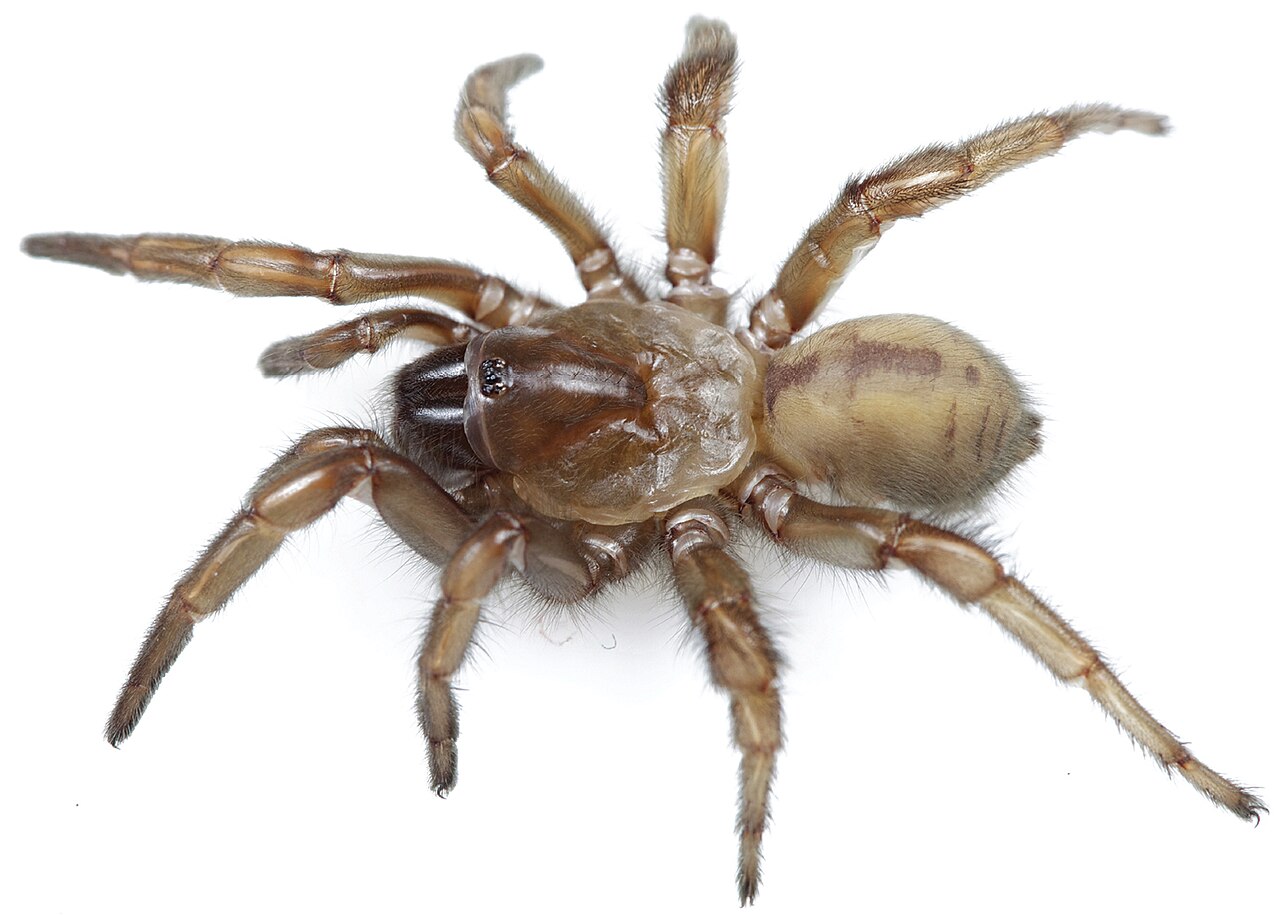
Trapdoor spiders dig a burrow and close it with a lid made of silk and soil. They sit inside the entrance. Silk threads around the entrance warn them when something walks past. Many tarantulas hunt from burrows in the same way.
Some spiders have more unusual tricks. A bolas spider swings a single sticky thread with a blob on the end. It releases scents like those of female moths, which draw male moths close enough to hit. Net-casting spiders hold a small web between their front legs and throw it over prey.
Some spiders copy ants. They wave their front legs like antennae, walk in zig-zags and develop slim waists. The disguise may protect them from birds and lizards that hunt by sight. A few use it to sneak up on ants.
Jumping spiders of the genus Portia hunt other spiders and show surprising cleverness. They try different tactics and learn from mistakes. Their brains are tiny, though, and they think slowly.
How do spiders mate and raise their young?
Female spiders are usually bigger than males. A male that approaches a female risks being eaten, so many species have courtship rituals. Web builders pluck the web in special patterns. Jumping spiders dance and wave their legs. In some species, males mate with a female soon after she has moulted, when she is weak. In the redback spider, a male often does not survive mating, and most males never mate at all.
The female lays her eggs in a silk egg sac. A sac may hold hundreds of eggs, and a female can lay up to 3,000. Some mothers die afterwards. Others guard the sac in a nest, carry it in their jaws or drag it behind them. The babies, called spiderlings, develop inside the sac and hatch looking like tiny adults. A wolf spider's babies cling to the bristles on their mother's back. One jumping spider, Toxeus magnus, even makes a milk-like liquid for her young.
A spider cannot grow inside its skin, so it must moult. Most spiders live only one to two years. Tarantulas can live more than 20 years in captivity, and one Australian trapdoor spider lived 43 years in the wild.
A few species live in groups. Anelosimus eximius builds a communal web that can hold up to 50,000 spiders, who share food and hunt together.
How long have spiders existed?
Spiders are very old. The earliest known land , Palaeotarbus, lived about 420 million years ago. It had eight legs but no silk. Attercopus, from about 386 million years ago, had the earliest known silk-making spigots, though it probably had no true . True spiders appear in rocks about 318 million years old, from the Carboniferous period. They looked much like a small group of living spiders called the Mesothelae. The main groups of modern spiders, the tarantula relatives and the true spiders, appeared more than 200 million years ago, in the Triassic period.
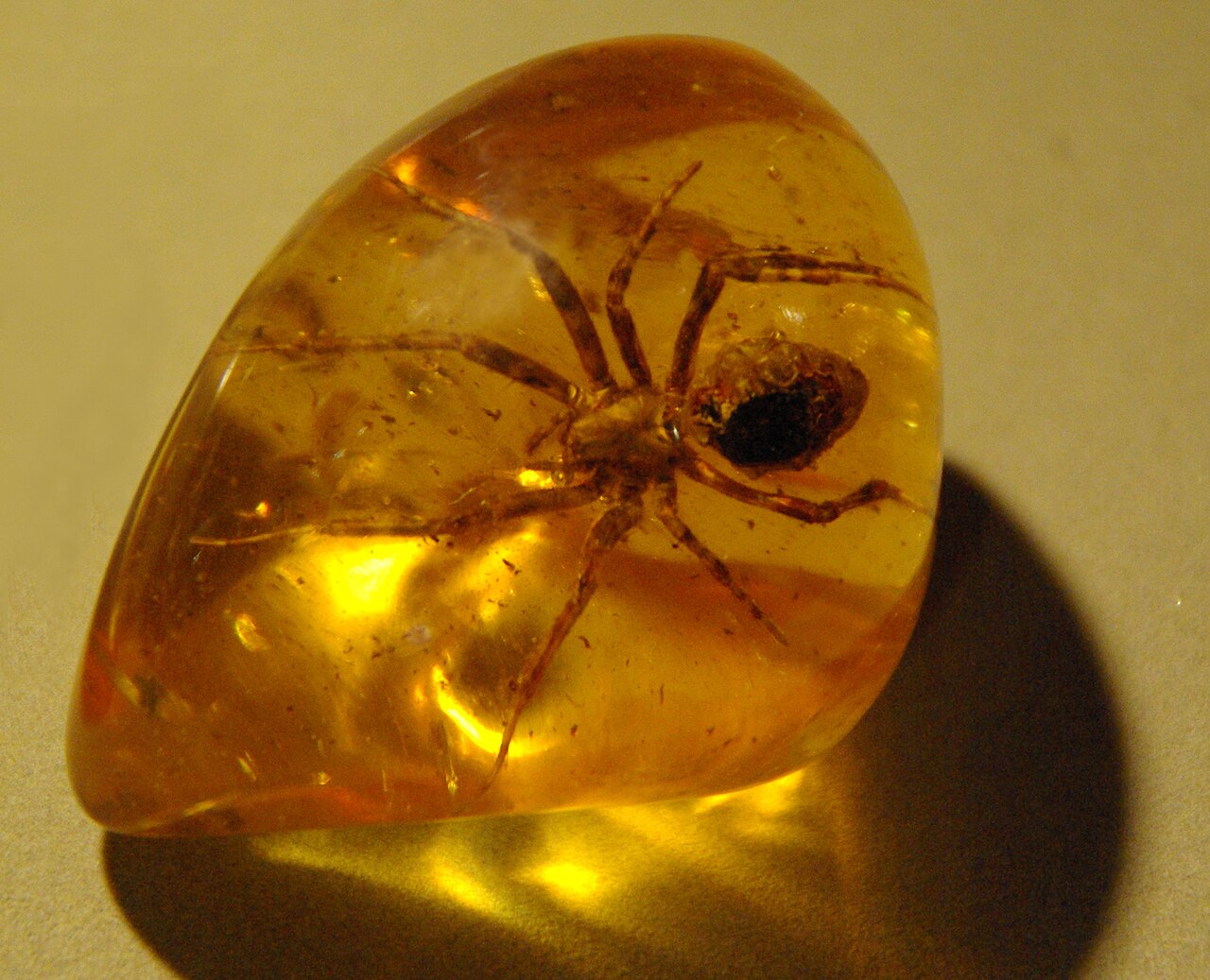
How do we know? Spiders have soft bodies, so they rarely make fossils. Most come from , the hardened resin of ancient trees. Amber can preserve every hair. Almost 1,000 fossil species have been described. The oldest amber that holds any fossil arthropods is about 230 million years old and comes from Italy, though the oldest amber spiders are about 130 million years old. Amber has even captured spiders mating, killing prey and spinning silk. The oldest fossil web found so far is about 140 million years old, from amber found in Sussex, England.
Spiders have also changed little in some ways. may be one of the earliest web forms. The living Mesothelae still show the segmented plates on the that early spiders had.
Are spiders dangerous, and how do they help us?
Almost all spiders are harmless to people. Their fangs are too small, or their is too weak, to matter. A few species, such as the redback and some widow spiders, have venom that can make a person very ill. Doctors can treat most bites. The Sydney funnel-web, Atrax robustus, is a different spider from the harmless funnel weavers, and it is one of the most venomous in the world. Thirteen deaths were recorded in Australia before 1981, when a life-saving antivenom came into use, and none has been recorded since.
Tarantulas have a different defence. Many flick tiny barbed hairs off their at attackers. The hairs cause an itch and irritation but carry no venom.
Spiders do us a great deal of good. By eating insects, they control pests and keep food chains balanced. Scientists are studying spider venom for use as medicine and as pesticides that do not pollute. Spider silk, which is light, strong and stretchy, is a model for new materials.
Spiders also fill our stories. In art and myth they stand for patience, cunning and creativity. A strong fear of spiders is called . It is very common, even though most spiders are completely harmless.
Most spiders will run from us if they can. If you find one in the house, it is most likely hunting flies, and it is doing you a favour.
Explore Next
Your audio story keeps playing while you look around.
Words to Know
- abdomen
- The rear body part of a spider, holding the heart, gut and silk glands.
- amber
- Hardened tree resin that can preserve ancient animals.
- arachnid
- An eight-legged arthropod such as a spider, scorpion or mite.
- arachnophobia
- A strong fear of spiders.
- cephalothorax
- The front body part of a spider, joining head and chest.
- chelicerae
- The pair of mouthparts that end in fangs.
- moulting
- Shedding the old skin so the animal can grow.
- orb web
- A round web with spokes and a sticky spiral.
- pedipalp
- A short limb near the mouth used to handle food and, in males, for mating.
- spinneret
- A small movable organ that spins silk out of the abdomen.
- venom
- Poison that an animal injects with a bite or sting.