Atom
The tiny building blocks that make up everything you can touch, breathe and see.
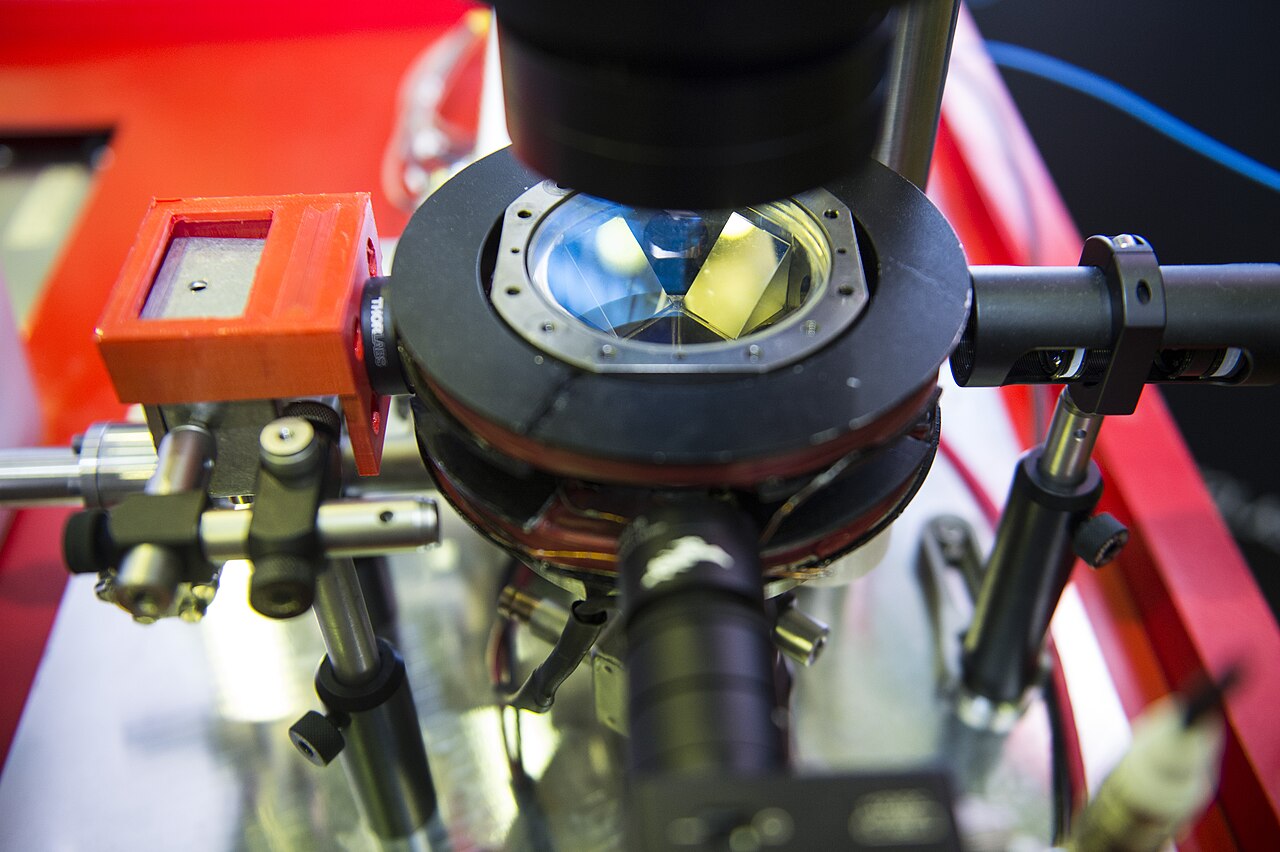
Every object in the universe is built from atoms, from a grain of sand to a giant star. A single atom is so small that a million of them would fit across the width of a human hair. Yet inside each one is a world of its own, with a dense nucleus at the centre and a cloud of electrons around it. The ancient Greeks guessed that atoms exist. Evidence piled up in the 1800s, but proof that atoms are real, and the discovery of what is inside them, came in the 1900s. The story of how we found out explains why atoms decide what everything is made of.
What is an atom made of?
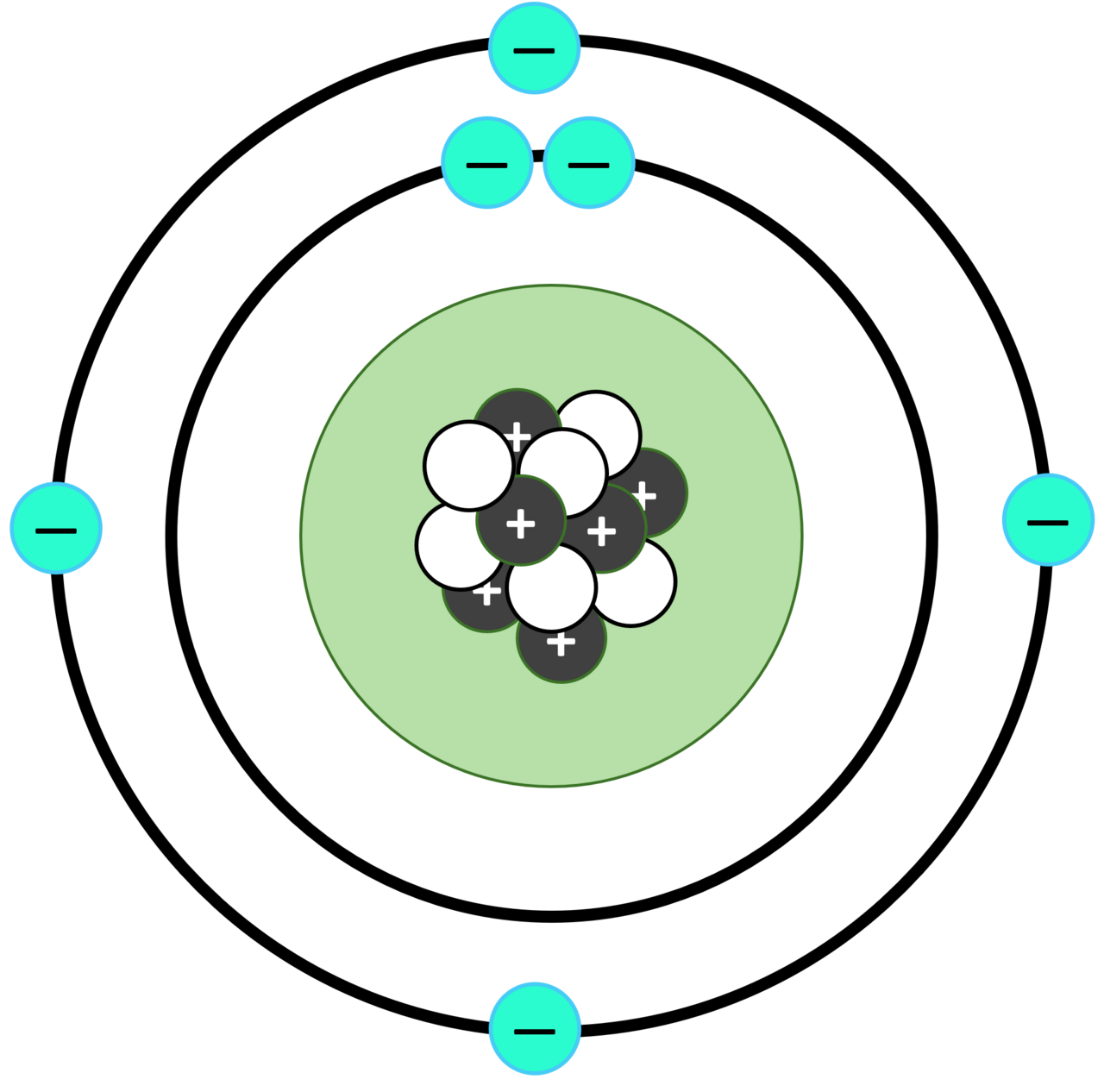
Everything around you is built from . The air, the water in a glass, the page or screen in front of you and your own body are all made of them. An atom is the smallest piece of a chemical element that still behaves like that element. Cut a bar of pure gold into smaller and smaller bits and you will finally reach a single gold atom.
An atom has a tiny core called the . Inside it sit two kinds of particle. carry a positive electric charge. carry no charge at all. Around the nucleus buzz even lighter particles called , which carry a negative charge. Opposite charges attract, and this pull is what keeps the electrons close to the nucleus.
Most atoms have the same number of protons and electrons, so their charges cancel out and the atom is neutral overall. An atom that has gained or lost electrons has an electric charge and is called an .
The nucleus is where nearly all the weight sits. More than 99.94% of an atom's mass is packed into it. Protons and neutrons are both much heavier than electrons. The nucleus is held together by the nuclear force, which pulls protons and neutrons to each other. At very short range it beats the push between the positively charged protons, which would otherwise shove the nucleus apart.
How small is small?
are far smaller than anything you can see. A typical atom is about 100 picometres across. A picometre is one trillionth of a metre. A human hair is about a million carbon atoms wide, so a line of atoms across the width of a hair would be a crowd of a million.
The numbers get stranger when you count them. A single drop of water holds about 2 sextillion oxygen atoms, which is a 2 followed by 21 zeros. It holds twice as many hydrogen atoms as well. Here is another way to picture it. If you could blow an apple up to the size of the Earth, the atoms inside it would be about as big as the original apple.
Visible light is made of waves between 400 and 700 nanometres long. Atoms are thousands of times smaller than that, so no ordinary microscope that uses light can show them.
An atom is also mostly empty space. It is 10,000 to 100,000 times wider than its , yet the nucleus holds almost all the mass. If an atom were blown up to the size of a football stadium, its nucleus would be about the size of a pea in the middle. The are so light and so spread out that they do not fill the gap.
Atoms do not have a hard outer edge like a marble. Their size is measured by how far the electron cloud reaches. The smallest atom is helium with a radius of 32 picometres. One of the biggest is caesium at 225 picometres.
Who first thought of atoms?
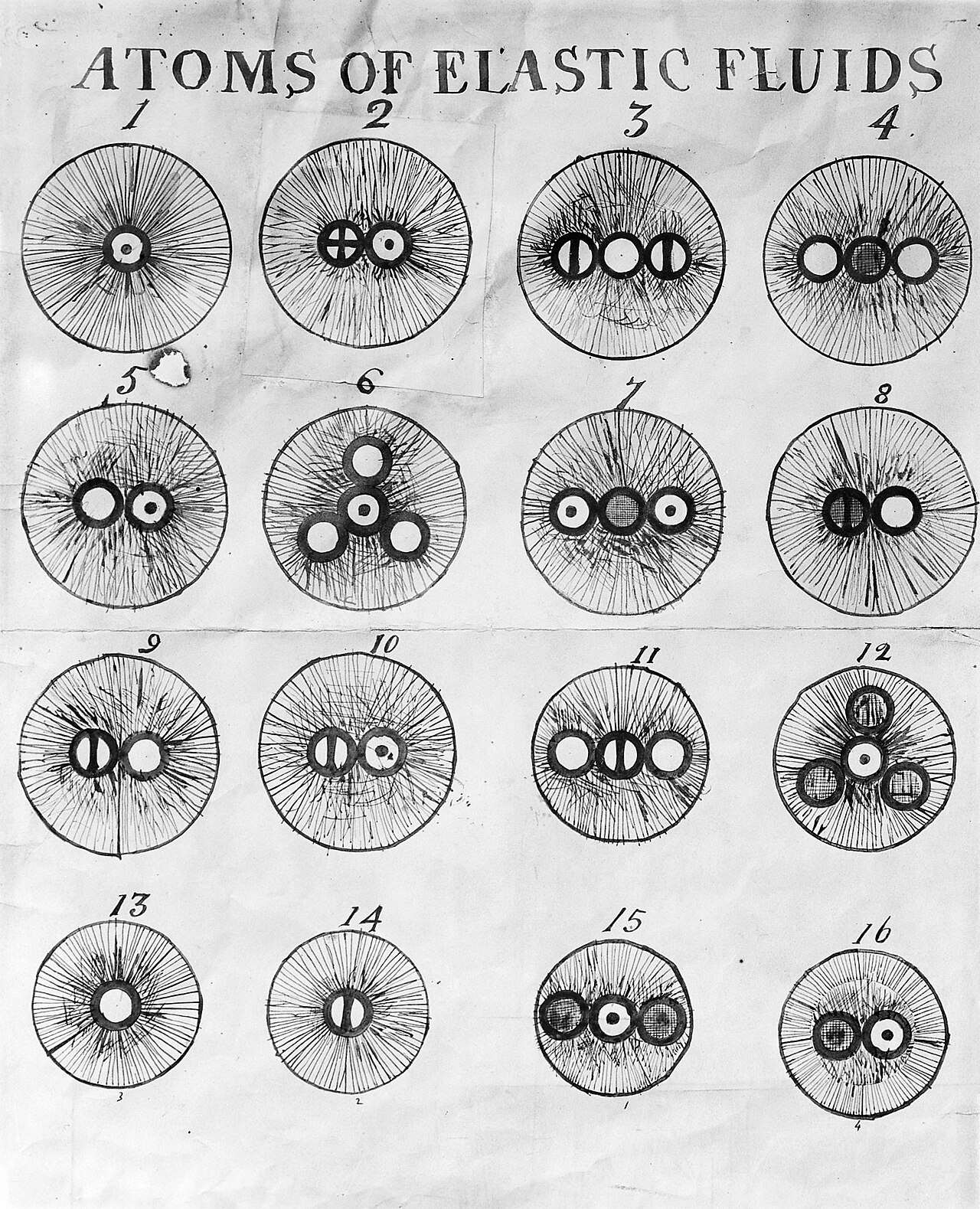
The idea of is very old. Thinkers in several ancient cultures guessed that matter is made of tiny pieces that cannot be divided. The word atom comes from the ancient Greek word atomos, which means uncuttable. Those thinkers had no experiments to back them up. They reached the idea by reasoning, so modern atomic science does not grow from it.
The real evidence arrived in the early 1800s. An English scientist called John Dalton studied how elements combine. He noticed a pattern. Take two elements that join in more than one way. The amounts of one element that combine with a fixed amount of the other differ by small whole-number ratios.
Here is an example from his work. There are two kinds of tin oxide. The grey powder holds about 13.5 g of oxygen for every 100 g of tin. The white powder holds about 27 g. That is exactly double. Iron oxides and the oxides of nitrogen showed the same kind of pattern.
Dalton explained it with a bold idea. Each element is made of its own kind of atom with its own weight, and atoms join in whole numbers. One atom of oxygen joins one atom of tin in the grey powder, and two atoms join one of tin in the white. Dalton was the first to show that chemistry makes sense if atoms are real, with fixed weights. For most of the next century, people still believed atoms could not be split.
Not every scientist was convinced that atoms existed at all. Final proof that atoms exist came only in 1908, when Jean Perrin measured them by watching Brownian motion. Brownian motion is the jittery dance of tiny grains floating in water, caused by water molecules bumping into them. Albert Einstein had worked out the maths of it in 1905, and Perrin's measurements matched.
How did scientists find what is inside an atom?
The first crack in the uncuttable came in 1897. J. J. Thomson studied cathode rays, which are beams that glow inside a glass tube with the air pumped out. He found that electric and magnetic fields bend them. That meant the rays were not light. They were streams of tiny negatively charged particles, about 1,700 times lighter than hydrogen, the lightest atom. We call them . Atoms clearly had parts.
Thomson then pictured the atom as a ball of positive charge with electrons spread through it. This is often called the plum pudding model, though Thomson never used that name.
In 1909 Ernest Rutherford and his colleagues Hans Geiger and Ernest Marsden put it to the test. They fired alpha particles at very thin metal foil. Most flew straight through. A few bounced back at large angles, which should have been impossible if the positive charge were spread out like a pudding.
In 1911 Rutherford published the answer. The positive charge and nearly all the mass must be squeezed into a tiny core at the centre. This was the . In 1919 he knocked hydrogen nuclei out of nitrogen atoms and named the particle the in 1920. Rutherford also guessed there must be heavy particles with no charge. In 1932 James Chadwick found them, and they were called .
Do electrons really orbit like planets?
In 1913 the Danish physicist Niels Bohr offered a new picture. travel around the , but only in certain allowed orbits. An electron can jump from one orbit to another by taking in or giving out a packet of light called a photon. This explained why each element gives off its own particular colours of light. Bohr's model worked for hydrogen, which has one electron, but it failed for with more.
The next step was stranger. In the 1920s scientists found that tiny particles also behave like waves. Erwin Schrödinger wrote an equation that describes an electron as a wave rather than a dot. Werner Heisenberg then showed, in 1927, that you cannot know both the exact position and the exact motion of an electron at the same moment. This is the uncertainty principle.
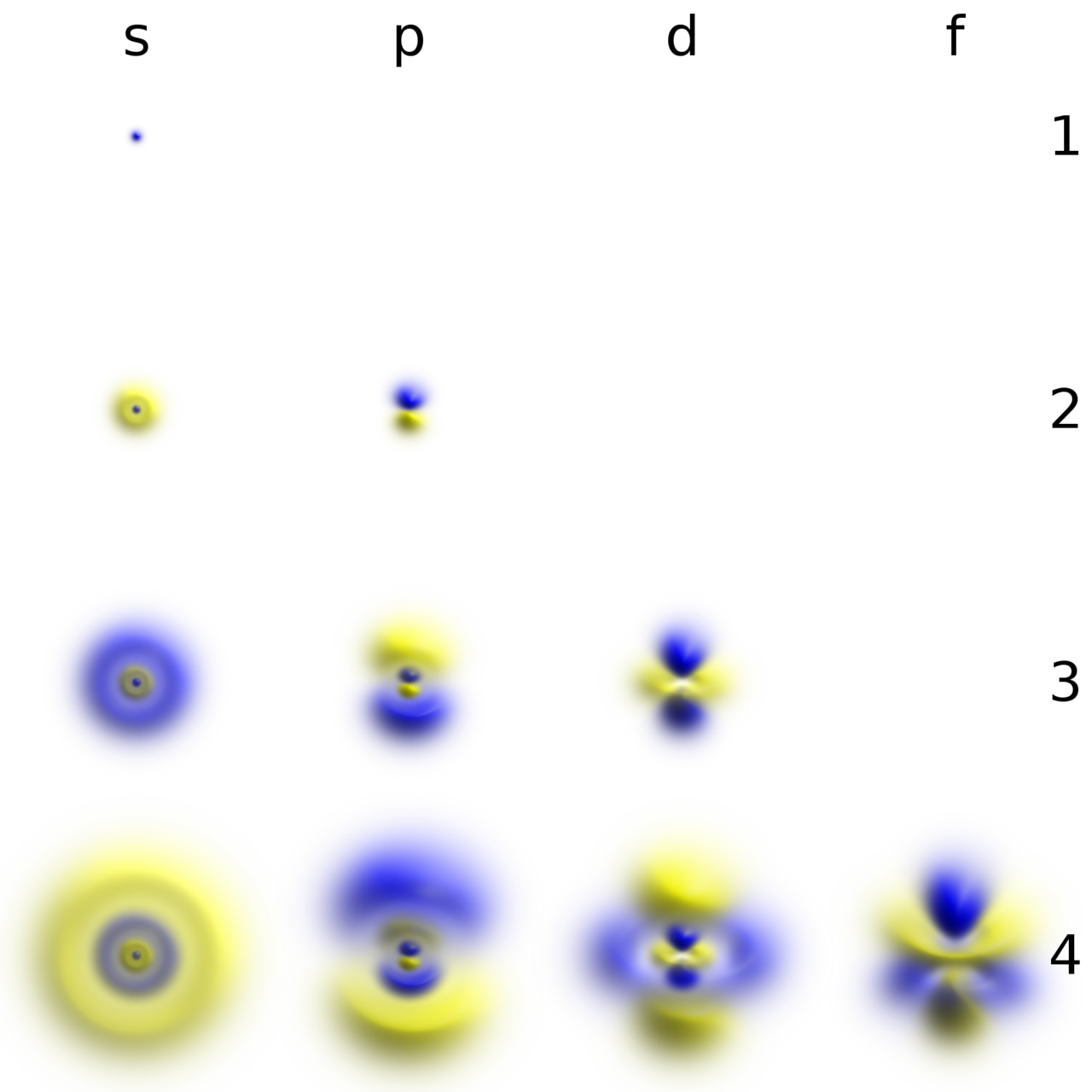
So the planet-like picture was dropped. Today we say an electron lives in an , a zone around the nucleus where it is most likely to be found. Orbitals come in different sizes and shapes, such as balls and dumbbells, and each one matches a particular energy level.
The cloud model explains things the older ones could not, such as the patterns of light from atoms bigger than hydrogen. It is still the model that scientists use.
What makes one element different from another?
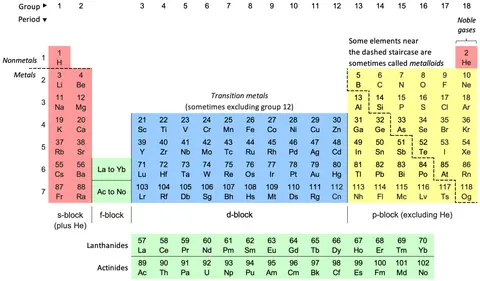
The answer is the number of in the . This is called the . Any with 11 protons is sodium. Any atom with 29 protons is copper. Hydrogen has 1 proton and the heaviest element named so far, oganesson, has 118. The periodic table lists the elements in order of this number.
The number of can change without changing the element. Atoms of the same element with different numbers of neutrons are called . Hydrogen is a good example. Most hydrogen atoms have no neutron at all. Deuterium has one neutron and tritium has two. Carbon-12, with 6 protons and 6 neutrons, is the atom chemists use as their standard for measuring mass.
A nucleus is stable when its protons and neutrons are well balanced. If it is not, it can fall apart in a process called radioactive decay. Scientists describe three common kinds. In alpha decay the nucleus throws out two protons and two neutrons stuck together. In beta decay a neutron turns into a proton or the other way round. In gamma decay the nucleus gives off energy as a ray.
Each radioactive isotope has a . This is the time it takes for half of a sample to decay. After two half-lives a quarter is left. Every element with an atomic number above 82 has only radioactive isotopes.
How do atoms stick together?
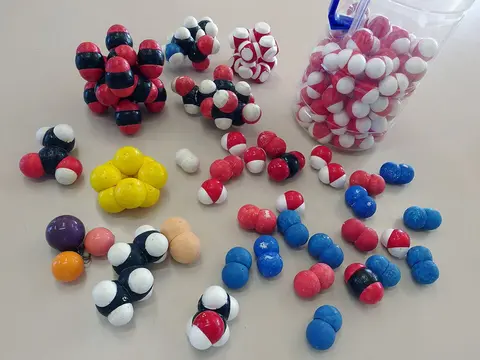
rarely stay alone. They join to make molecules and crystals, and these links are called chemical bonds. Almost every change you see in nature, from rusting to cooking, happens because atoms attach to each other or come apart. The science that studies these changes is chemistry.
The key is the outermost , called valence electrons. Atoms behave as if they want their outer shell to be full. Sodium has one electron more than a full shell and chlorine is one electron short. Sodium hands its electron to chlorine. Both atoms become with opposite charges and they cling together. The result is sodium chloride, which is table salt.
In other cases atoms share electrons instead of passing them on. Carbon is the great sharer. It can form several bonds at once, and this lets it build the long chains and rings that make up living things.
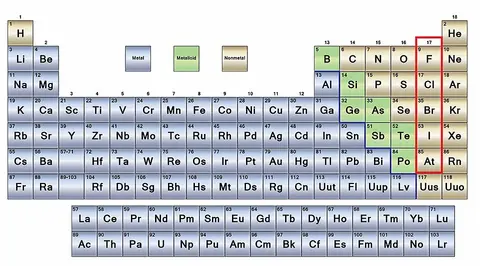
The periodic table is arranged so that elements with the same number of valence electrons sit in the same column. That is why they act alike. At the far right are the noble gases such as helium and neon. Their outer shells are already full, so they hardly react with anything.
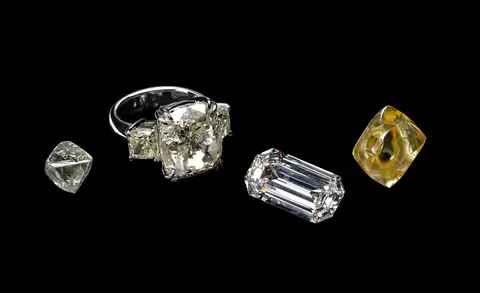
The way atoms pack together also decides whether a material is a solid, a liquid or a gas. Carbon atoms can be arranged in two ways to make soft graphite or hard diamond.
How can we study something we cannot see?
are too small for light microscopes, but scientists have found clever ways to detect them. One is the scanning tunnelling microscope. It drags a needle with a tip ideally just one atom wide across a surface. leak across the tiny gap between the tip and the surface, and the amount that leaks depends strongly on the distance. By keeping that flow steady, the machine can trace the bumps made by single atoms.
Another tool is the mass spectrometer. It removes an electron from an atom, which turns it into an . Then it sends the ion through a magnetic field. The field bends the path of the ion, and a heavier atom bends less than a lighter one. So the machine can sort atoms by mass and show how much of each a sample holds.
Light itself is a clue. When an electron drops from a high energy level to a low one, the atom gives out light of one exact colour. Every element has its own pattern of coloured lines, like a fingerprint. This is called its .
Spectra let us study stars that are far beyond reach. In 1868 astronomers saw an unknown pattern in sunlight. It was a new element, helium. It was found in the Sun 27 years before anyone found it on Earth. In 1895 William Ramsay finally collected it from a uranium mineral.
Where do atoms come from?
have a history that begins with the universe itself. In the first moments after the Big Bang, matter was too hot and dense for atoms to exist. As the universe cooled, the lightest nuclei formed, mainly hydrogen and helium. Almost every other element was made later.
The makers were stars. Deep inside a star, nuclei are squeezed together so hard that they fuse into bigger ones. In the core of the Sun, need a great deal of energy to overcome their push against each other before they fuse. When they do, a little mass disappears and turns into energy, following Einstein's famous formula E = mc2. This is what makes stars shine.
gives out energy for nuclei lighter than iron and nickel. Heavier nuclei take in more energy than they release, so a star cannot keep itself going by fusing them. Heavy elements are made in other violent events, such as exploding stars. The stars then spread their atoms out into space, and new stars and planets form from that enriched gas.
That means the atoms in your body were made inside stars that died long before the Sun was born. Most atoms in space are found in stars, and the gas between them is thin. In our part of the galaxy there are only about 1,000 atoms in a cubic metre.
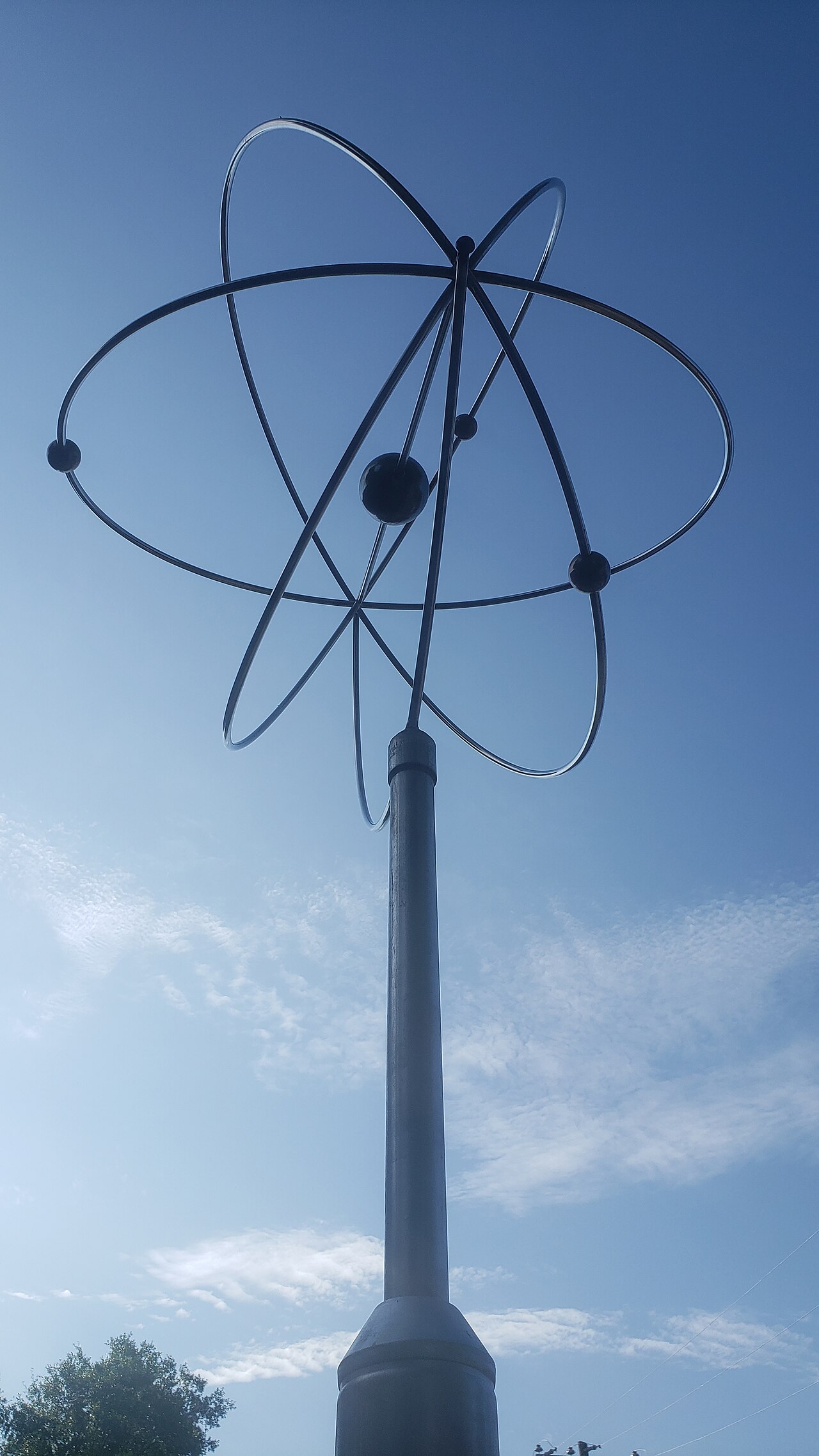
Back on Earth, the atom has become a symbol of science. Sculptures and logos show it as a with rings around it.
Explore Next
Your audio story keeps playing while you look around.
Words to Know
- atom
- The smallest piece of a chemical element.
- atomic number
- The number of protons in an atom, which decides its element.
- electron
- A very light particle with a negative charge that surrounds the nucleus.
- fusion
- The joining of two nuclei to make a heavier one, giving out energy.
- half-life
- The time it takes for half of a radioactive sample to decay.
- ion
- An atom that has gained or lost electrons and so has an electric charge.
- isotope
- One of several forms of an element with different numbers of neutrons.
- neutron
- A particle in the nucleus with no electric charge.
- nucleus
- The dense centre of an atom, made of protons and neutrons.
- orbital
- A zone around the nucleus where an electron is most likely to be found.
- proton
- A particle in the nucleus with a positive electric charge.
- spectrum
- The pattern of colours of light given out or taken in by atoms.