Periodic table
One chart that sorts every known element and shows why each behaves as it does.
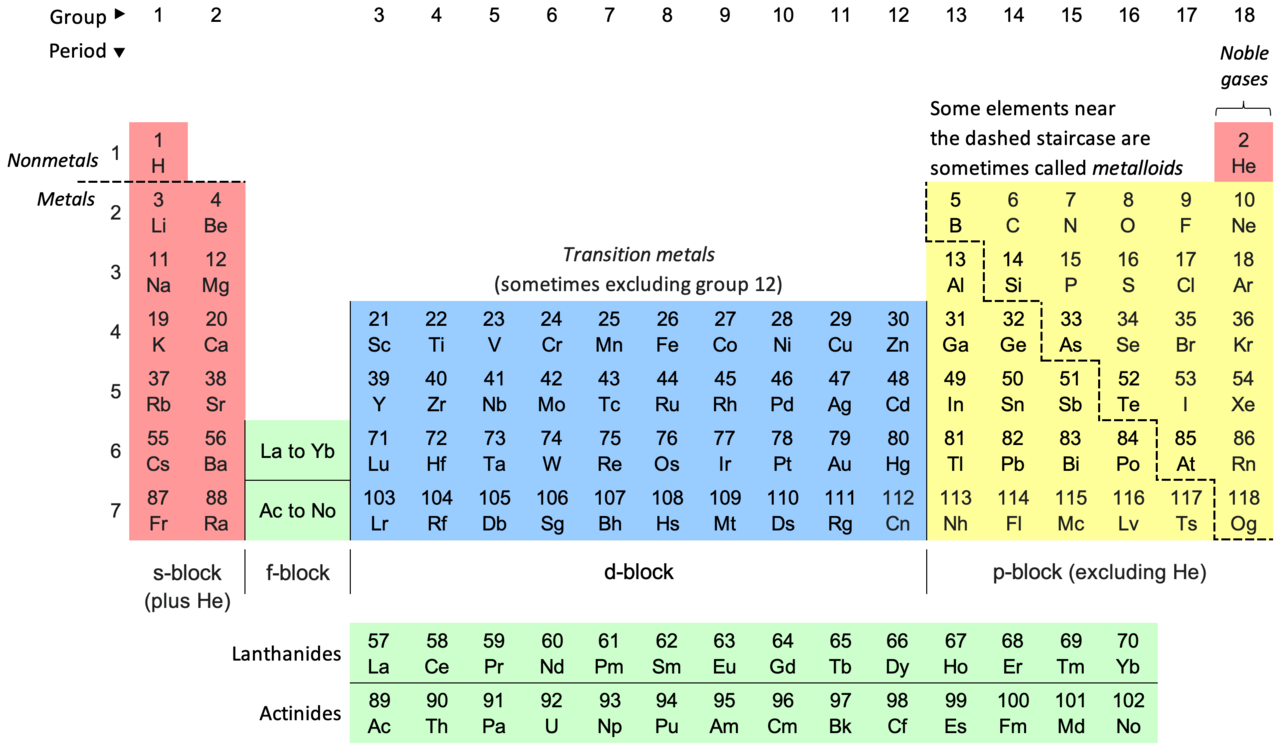
Everything around you, from the water in a glass to the gold in a ring, is built from chemical elements. There are 118 known elements, and the periodic table lays them all out on a single chart. It works like a map. Elements in the same column behave in similar ways, so once you know a few of them, you can make good guesses about the rest. The table was first drawn up in 1869 by the Russian chemist Dmitri Mendeleev, who left gaps for elements nobody had found yet. Later scientists filled those gaps and explained why the pattern exists. It all comes down to the tiny particles inside atoms.
What is the periodic table?
The periodic table is a chart of every chemical . An element is a pure substance made of only one kind of atom. Hydrogen, iron, carbon and gold are all elements. Each one gets a box on the chart with its name, a short symbol such as H for hydrogen or Fe for iron, and a number.
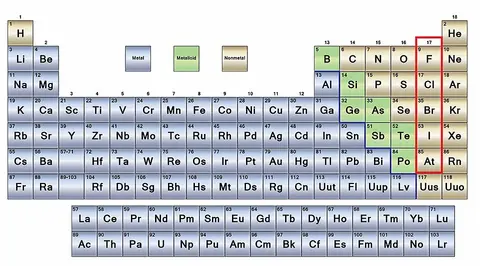
The boxes are arranged in rows and columns. The rows are called and there are 7 of them. The columns are called and, in the usual layout, there are 18. The elements run in order along each row, then the next row begins underneath.
This order is not random. Elements in the same group tend to behave alike. The metals in the first column, such as sodium and potassium, are all soft and very reactive. The gases in the last column are all so unwilling to react that they are called the . The word "periodic" means repeating, because similar properties come back again and again at regular steps along the table.
That is why the chart is so useful. If you know how one element behaves, you can make a good guess about its neighbours above and below. Scientists use the table to predict how substances will react, to choose materials for new technology, and to hunt for elements that have never been seen.
Who looked for a pattern before Mendeleev?
Mendeleev was not the first to notice that come in families. In 1829 the German chemist Johann Döbereiner spotted of three, which he called triads. Calcium, strontium and barium were one. Chlorine, bromine and iodine were another. In each triad, the middle element had an atomic mass close to the average of the other two, and its behaviour sat between theirs too.
In 1865 the English chemist John Newlands lined up the elements by mass. He saw that properties seemed to repeat every eighth element, like the notes of a musical scale, and he called this the law of octaves. Other chemists laughed. At a meeting of the Chemical Society in London, one asked whether he had tried listing the elements in alphabetical order. Newlands' pattern broke down for the heavier elements, but the core idea was right. In 1887 the Royal Society gave him a medal for it.
In Germany, Lothar Meyer was working on the same problem. He drew up tables that showed properties rising and falling in waves, and he published a full version in 1870, a year after Mendeleev. Meyer's work was strong, but Mendeleev's daring predictions won him most of the fame.
Who drew the first periodic table?
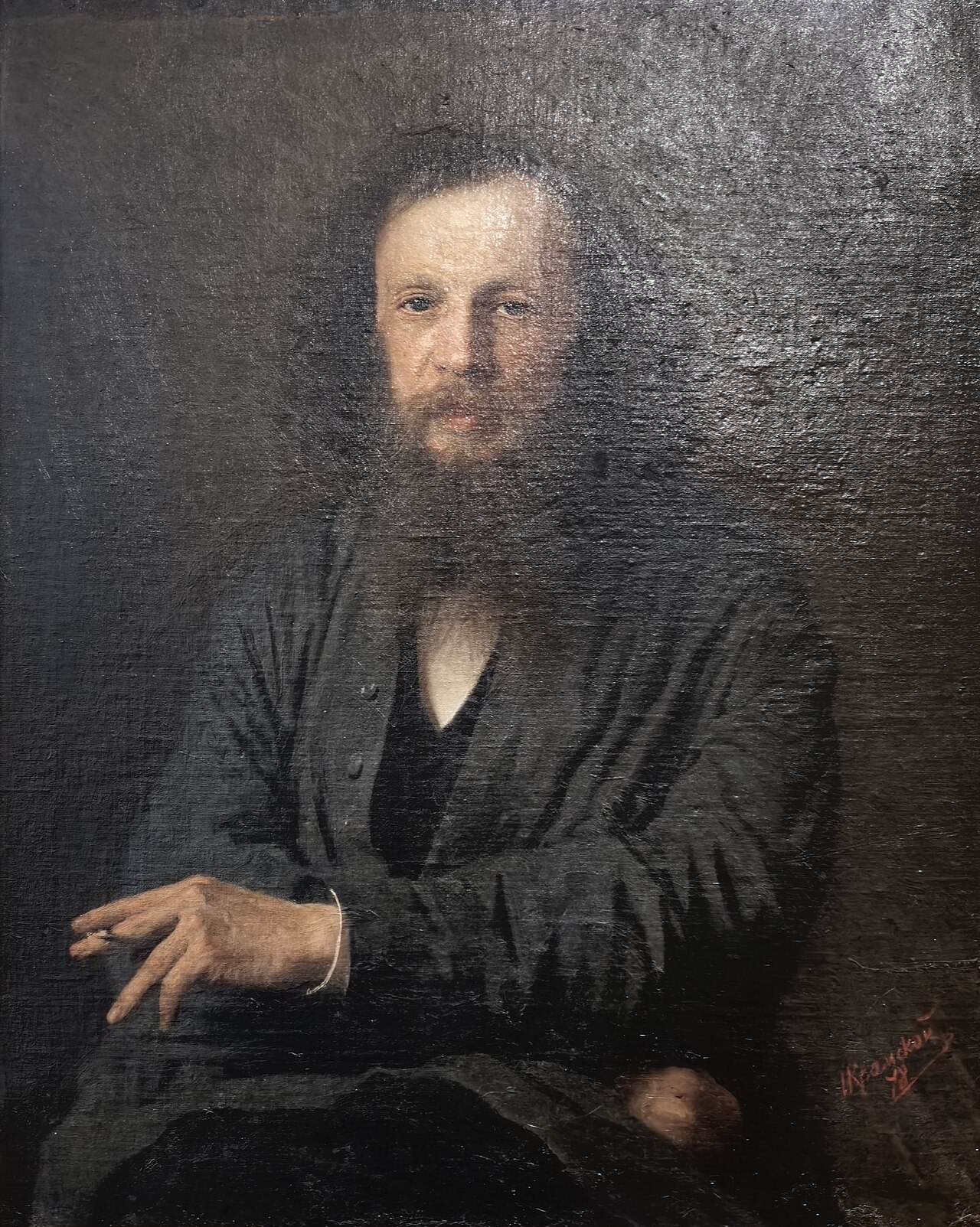
By the 1860s chemists had found more than 60 , and they had noticed that some of them seemed to be related. Lithium, sodium and potassium, for example, were all soft metals that fizzed in water. But nobody had found a rule that tied everything together.
Dmitri Mendeleev, a Russian chemist, tried to find one. In 1869 he listed the elements in order of atomic mass, which is how heavy their atoms are. When he did this, similar elements kept turning up at regular intervals. He started a new row each time the pattern began to repeat, and so similar elements ended up in the same column.
Mendeleev's boldest move was to leave gaps. Some places in his table did not fit any known element. Instead of forcing the pattern, he said that the missing elements must exist and had not been discovered yet. He even predicted some of their properties. When elements such as gallium and germanium were found in the following years, they matched his predictions closely.
That was how scientists knew the table was more than a tidy list. It could predict real things. By the late 1800s the periodic law, the idea that properties repeat in a pattern, was seen as a major discovery. Nobody yet knew why it worked. That answer came in the early 1900s, once scientists began to understand the inside of the atom.
What does an element's number mean?

Every box on the table has a whole number called the . It tells you how many protons are in the nucleus, the tiny centre of the atom. Hydrogen has 1 proton, helium has 2, lithium has 3, and so on. The number of protons decides which an atom is. An atom with 6 protons is always carbon, and an atom with 79 is always gold.
Mendeleev ordered his table by mass, but mass sometimes gave the wrong order. Tellurium atoms are heavier than iodine atoms, yet tellurium behaves like selenium and iodine behaves like bromine. Mendeleev trusted the behaviour and put tellurium first anyway. The reason came in 1913, when the young English physicist Henry Moseley measured the X-rays given off by different elements. Their pattern showed that each element has a whole number of its own, its atomic number, which we now know is the number of protons. Tellurium is 52 and iodine is 53. Moseley was killed in 1915 at Gallipoli, in the First World War, aged 27.
The nucleus also holds particles called neutrons. They add weight but do not change which element the atom is. Atoms of the same element with different numbers of neutrons are called . Carbon is a good example. All carbon atoms have 6 protons, and most have 6 neutrons too. About 1 in every 100 has 7 neutrons, and a very small fraction have 8.
Isotopes share one box on the table. The mass shown in a box is usually an average of the natural isotopes.
Why do elements in a column behave alike?
The answer is electrons. An atom has a cloud of electrons around its nucleus, and they are not scattered at random. They sit in layers called shells. Each shell can hold only a certain number of electrons. The first shell holds 2, the second holds 8, and the third can hold up to 18 although the table fills it in stages.
Electrons settle into the lowest shell with space, so as atoms get bigger they fill one shell and then begin the next. Each time a new shell gets its first electron, a new row starts on the table. That is why the rows are different lengths. The outer shell of an atom is the part that touches other atoms.
Chemical reactions are all about the outermost electrons. These are called . They are the ones an atom can lose, gain or share when it joins with other atoms. in the same column have the same number of valence electrons, so they react in a similar way.
Sodium and potassium each have 1 outer electron, which they lose easily, and so both are very reactive. Neon and argon have full outer shells. They have no reason to give up or take on electrons, so they hardly react at all.
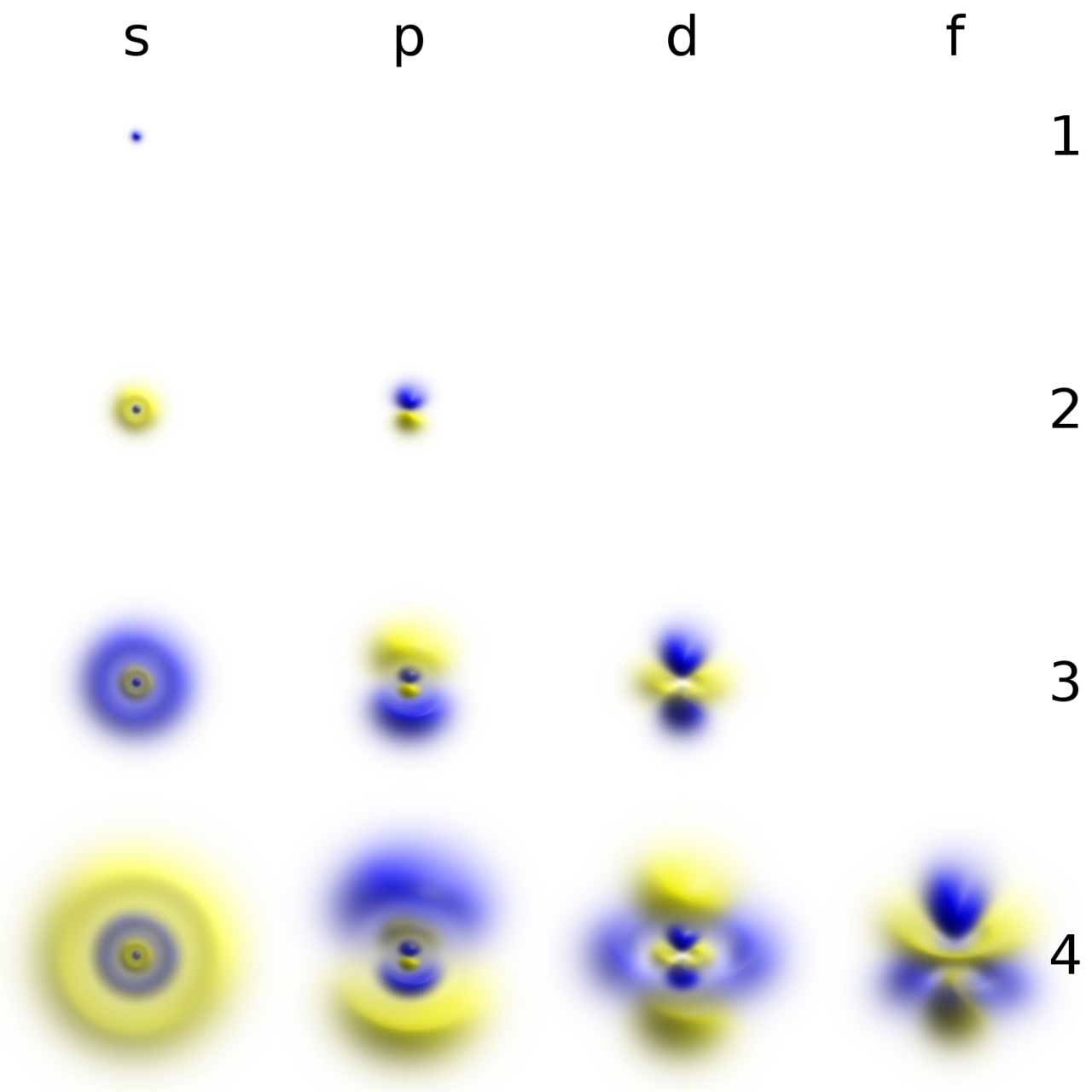
Scientists describe where electrons are likely to be using regions called . These are clouds of probability, because an electron does not follow a neat path like a planet.
What patterns can you read from the table?
Once you know how to read it, the table shows trends at a glance. The most useful one is about metals. Most are metals, and they fill the left and centre of the chart. Metallic character grows as you move down a and from right to left along a row. Non-metals gather in the top right corner, and fluorine, chlorine and the are found there.
Size follows a pattern too. Atoms get larger as you go down a column, because there are more shells. They get smaller across a row from left to right, because the nucleus has more protons and pulls the electrons in tighter.
Reactivity also follows the layout. Metals lose electrons more easily as you go down a group, so the most reactive metals are at the bottom left. The most reactive non-metals are at the top right, next to the noble gases. The noble gases themselves hold their electrons so firmly that they rarely join with anything.
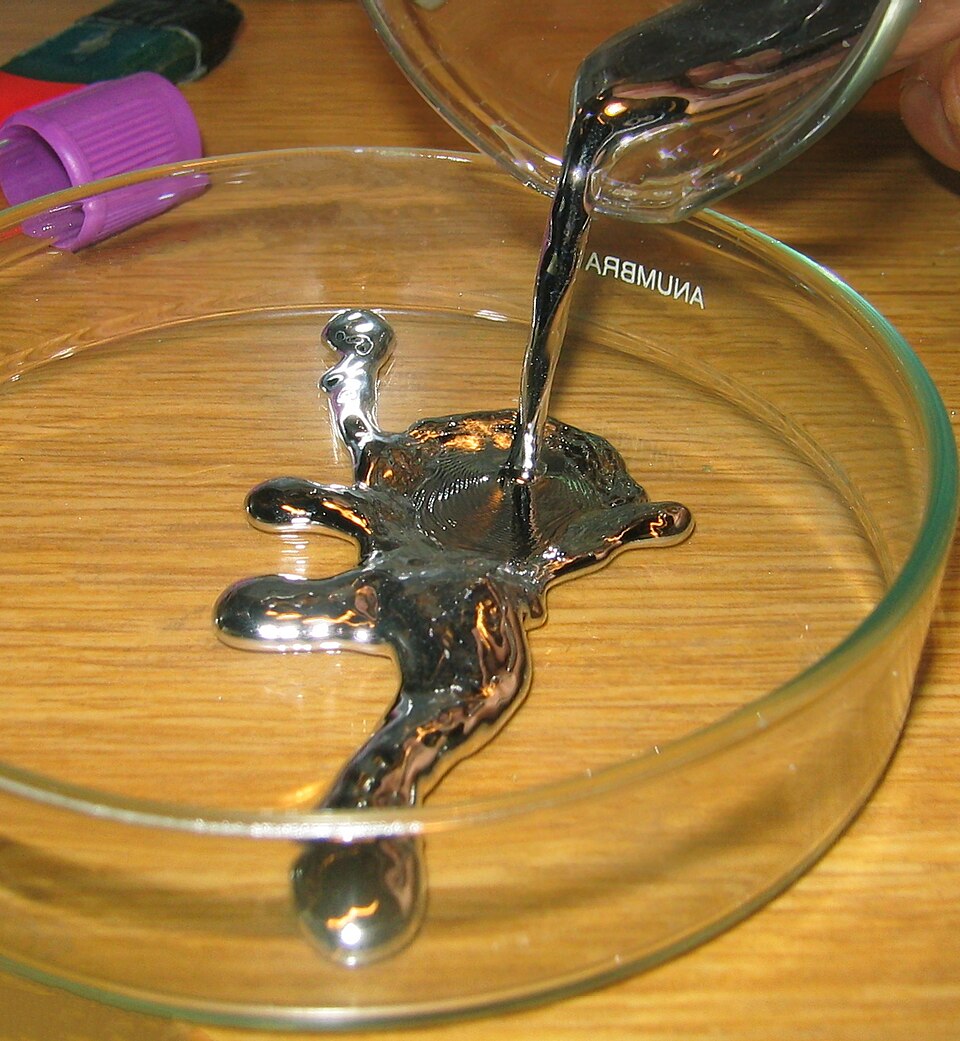
There are surprises, too. Mercury is a metal, yet it is a liquid at room temperature. Gold is yellow while most metals are silver. Scientists explain both by the extreme speed of electrons around very heavy nuclei, where Einstein's theory of relativity begins to matter. So the table gives strong hints, but nature still has a few tricks.
How did the table get its modern shape?
After the discovery of and electron shells, the table was reorganised to match the structure of atoms. The fall into four rectangular areas called blocks, named s, p, d and f after types of . The s-block and p-block hold the main- elements. The d-block holds the transition metals, such as iron and copper. The f-block holds two rows of heavy metals that are usually drawn underneath the main chart to save space.
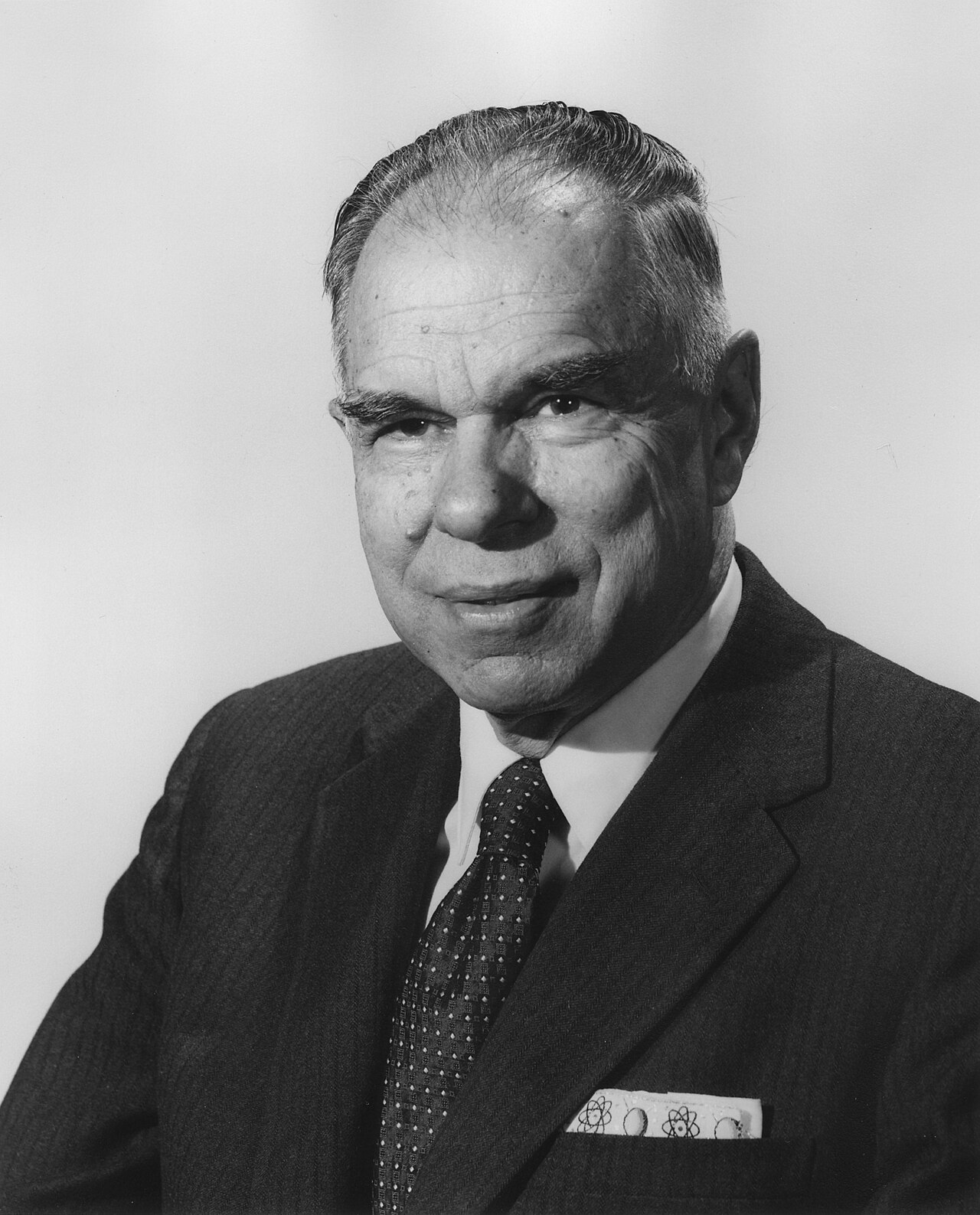
The upper of those two rows is the lanthanides. The lower row is the actinides, which begin with actinium and include uranium. For a long time chemists thought the actinides belonged in the d-block, with the transition metals. The American chemist Glenn Seaborg disagreed. Working on the heavy elements, he argued that they formed a second f-block series, like the lanthanides.
Seaborg's idea, published in 1945, turned out to be right and gave the table the shape we know now. It also guided his search. Because he knew where new elements should sit, he could predict how they would behave and design experiments to find them. Seaborg and his colleagues helped to discover several of them.
The f-block is drawn separately only for convenience. If it were placed in its proper spot, the table would be 32 columns wide, too wide for most pages and posters.
Can people make new elements?

They can, and the table shows how many. Only the first 94 are found in nature, from hydrogen up to plutonium. Of those, some are so rare that they were made in a laboratory before anyone found them in the wild. Technetium, element 43, was the first element to be discovered by making it instead of finding it. That happened in 1937.
Elements beyond uranium are so rare in nature that they had to be made in laboratories before anyone found them. The method is to smash small atoms into big ones at very high speed, in machines called particle accelerators. Sometimes the nuclei join and make a new, heavier element. Neptunium, element 93, was made in 1940. The 24 elements from americium (95) to oganesson (118) are all made in laboratories, and all of them are . That means their nuclei fall apart, some in less than a second.
The heaviest elements are made one atom at a time. The Russian physicist Yuri Oganessian led some of the experiments that produced them, and element 118 is named oganesson in his honour. Oganesson was made in 2002 and tennessine, element 117, in 2010. That completed the seventh row. The last four new elements were given official names in 2016.
Scientists have not found how far the table can go. New elements beyond 118 would start an eighth row, but nobody has made one yet. Teams in Russia, the United States, Japan and China are trying. In May 2026 Oganessian's laboratory at Dubna, in Russia, began an experiment aimed at element 119.
Is the periodic table finished?
The table is complete up to 118, but scientists still argue about parts of it. The first puzzle is hydrogen. It has 1 outer electron like the metals in 1, so it usually sits at the top of that column. But hydrogen is a gas and behaves very differently from sodium or potassium. Some tables place it above group 17 instead, and a few leave it floating by itself.
Helium is the second puzzle. It has 2 electrons, which would put it with beryllium in group 2. But helium is very unreactive and its outer shell is full, so it almost always goes in group 18 with the . In 1988 the international chemistry body, IUPAC, rejected a proposal to move it.
A third argument is about group 3. Some tables put lanthanum and actinium there, while others put lutetium and lawrencium. Chemists who studied the evidence, and a 2021 IUPAC report, support lutetium and lawrencium.
There are also open questions about the heaviest elements. Their atoms are made in tiny amounts and last a very short time, so testing their chemistry is hard. Theory suggests they may not follow the usual patterns, because their electrons move so fast. Many alternative layouts of the table exist, and chemists still debate whether one form is best. The table is not a fixed monument. It is a tool that keeps changing as science learns more.
Explore Next
Your audio story keeps playing while you look around.
Words to Know
- atomic number
- The number of protons in an atom's nucleus, which decides its element.
- element
- A pure substance made of only one kind of atom.
- group
- A vertical column of the periodic table, whose elements behave alike.
- isotope
- An atom of an element with a different number of neutrons.
- noble gas
- One of the very unreactive gases in the last column of the table.
- orbital
- A region around a nucleus where an electron is likely to be found.
- period
- A horizontal row of the periodic table.
- radioactive
- Describes an atom whose nucleus falls apart and gives off energy.
- synthetic element
- An element that people make in a laboratory instead of finding in nature.
- valence electron
- An electron in the outer shell of an atom, which takes part in chemical reactions.