Cosmology
The study of the whole universe: where it came from and where it is heading.
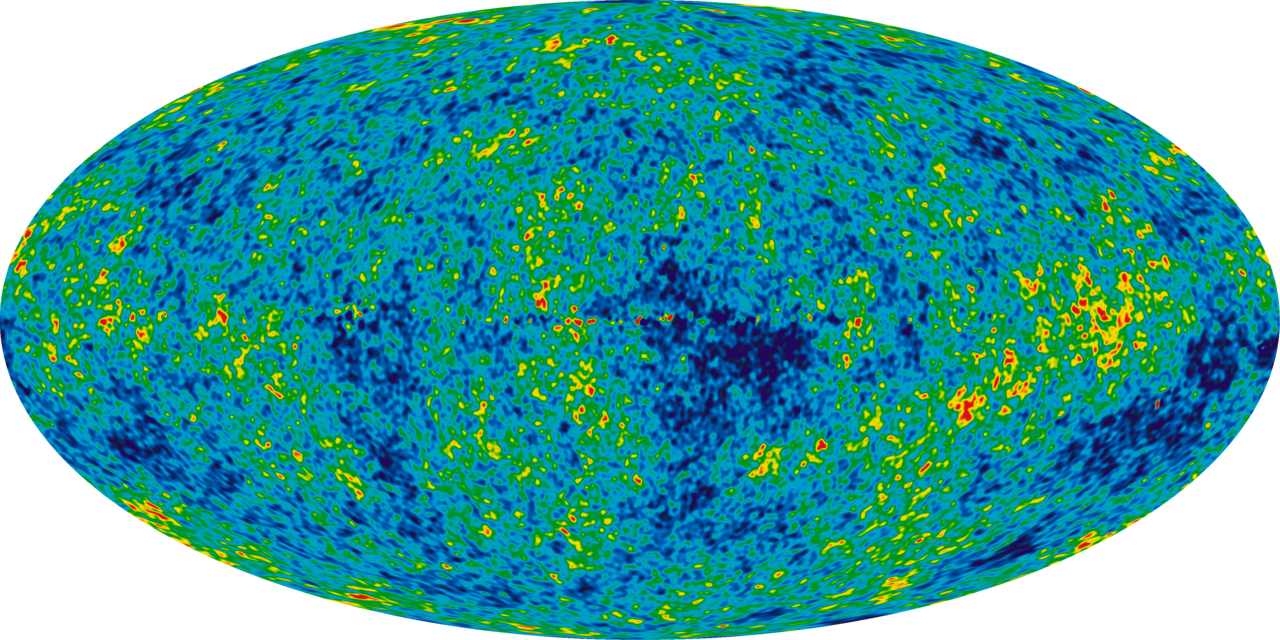
Cosmology is the study of the universe as a whole. It asks the biggest questions there are. How did everything begin? How large is it all? What is it made of? How will it end? The word comes from the Greek for "world order", and people have told cosmic stories for thousands of years. Some of those stories are myths and some are philosophy. Since the 20th century, cosmology has also been a hard science. Telescopes, satellites and mathematics now tell us that the universe is about 13.8 billion years old and still growing. The story runs from ancient creation tales to the maps of the baby universe.
What does cosmology study?
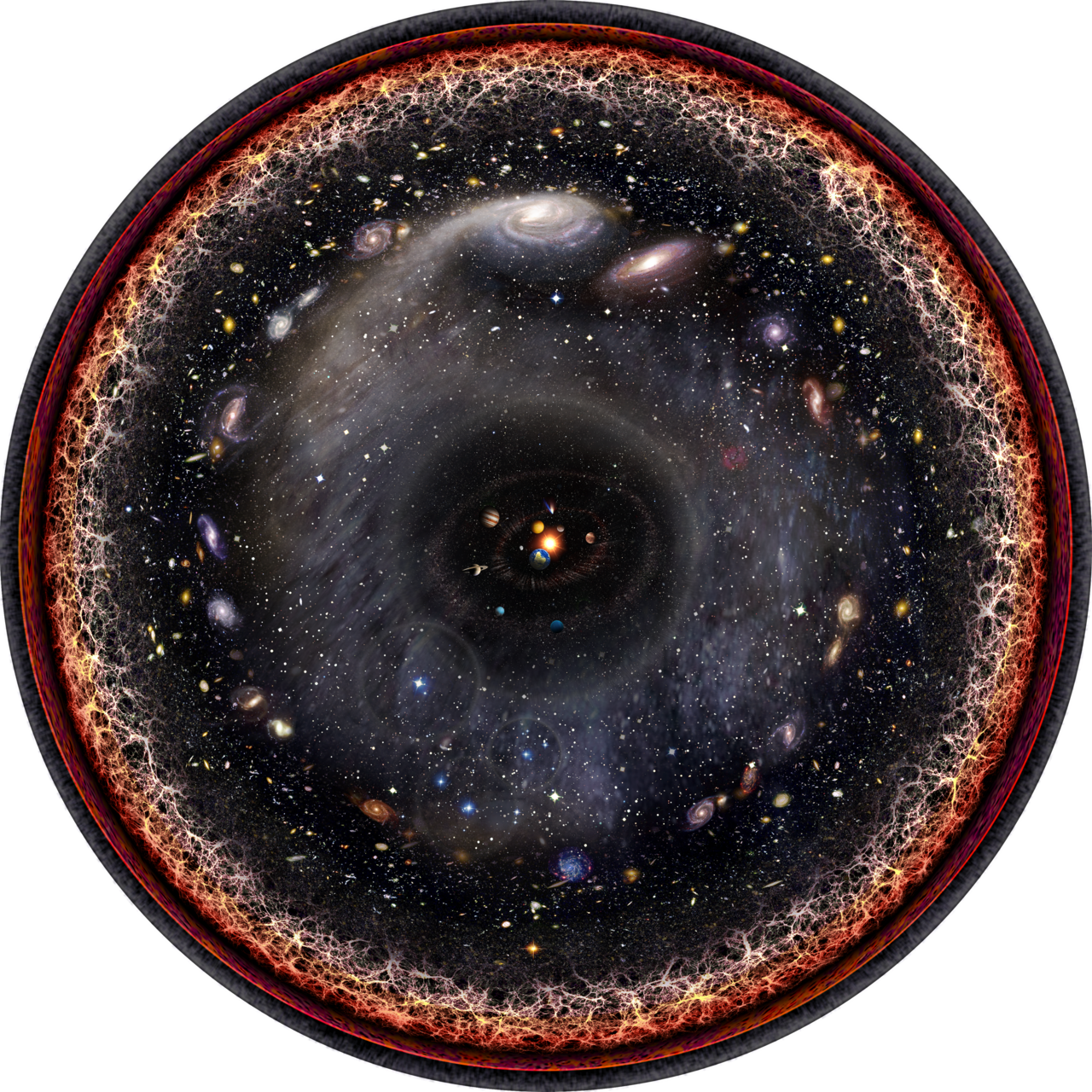
Cosmology tries to understand the as one single thing. Astronomers study single objects such as a star, a planet or a galaxy. Cosmologists step back and ask about everything at once. Where did space and time come from? How are galaxies spread out across the sky? Will the universe go on growing for ever?
The word first appeared in English in 1656, in a book by Thomas Blount, where it meant "a speaking of the world". In 1731 the German philosopher Christian Wolff used a Latin version for the part of philosophy about the physical world as a whole.
Today there are three kinds of cosmology. Religious and mythological cosmology holds the stories that cultures tell about creation and the end of the world. Philosophical cosmology asks questions that science may never test, such as why there is a universe at all. Physical cosmology is the part of physics and astronomy that measures and calculates.
Physical cosmology has a special trick. Light travels at a fixed speed, so light from far away takes a long time to arrive. When we look out into space we are also looking back in time. The astrophysicist David Spergel calls cosmology a "historical science" for this reason. A telescope works like a time machine that only goes backwards.
How did people explain the beginning before science?
Almost every culture has a story about how the world began. Scholars sort creation myths into a few patterns. The sorting follows work by Mircea Eliade and his colleague Charles Long.
In some stories a divine being creates the world from nothing, through a thought, a word or a dream. In earth-diver stories, a bird or frog dives to the bottom of a vast ancient ocean. It brings up mud or sand, which grows into land. In emergence stories, the first beings climb up through earlier worlds until they reach ours. Some myths say the world was made from the body of a giant being. Others say a single whole, such as a cosmic egg, cracked open, or that order was made out of chaos.
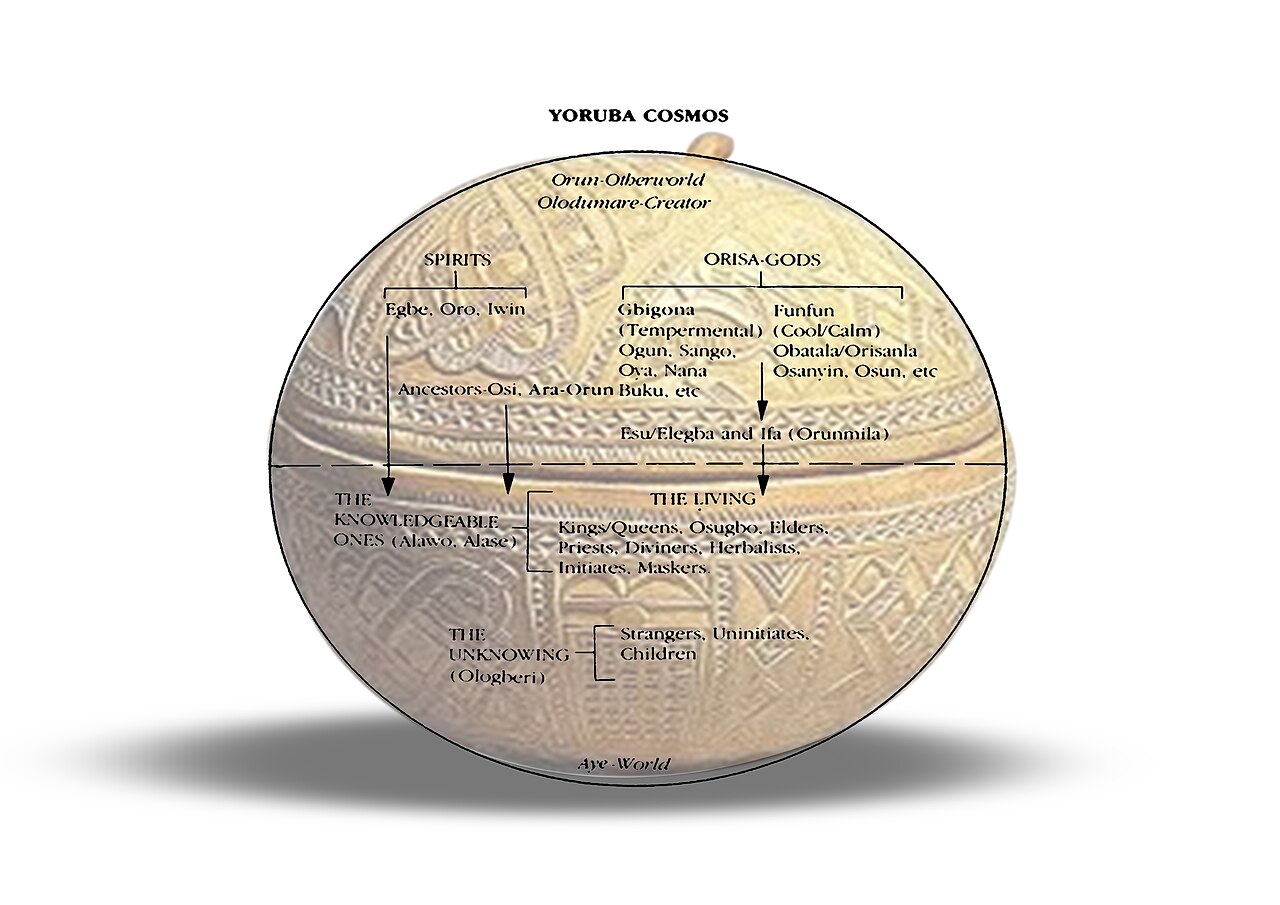
Many traditions also pictured the shape of the . The Yoruba people of West Africa, for example, place a creator and an otherworld above, then spirits and orisa, and then the living world.
These stories are not scientific theories, and they were never meant to be. They are the beliefs and traditions of communities. They speak about meaning and belonging as well as origins. Science gives a different kind of account, one built on measurement and testing.
Why did people once think Earth was the centre?
Look up and the evidence seems clear. The Sun rises in the east, crosses the sky and sets in the west. The stars wheel overhead at night. The ground under your feet feels still. It is natural to think Earth sits at the centre and everything else moves around it.
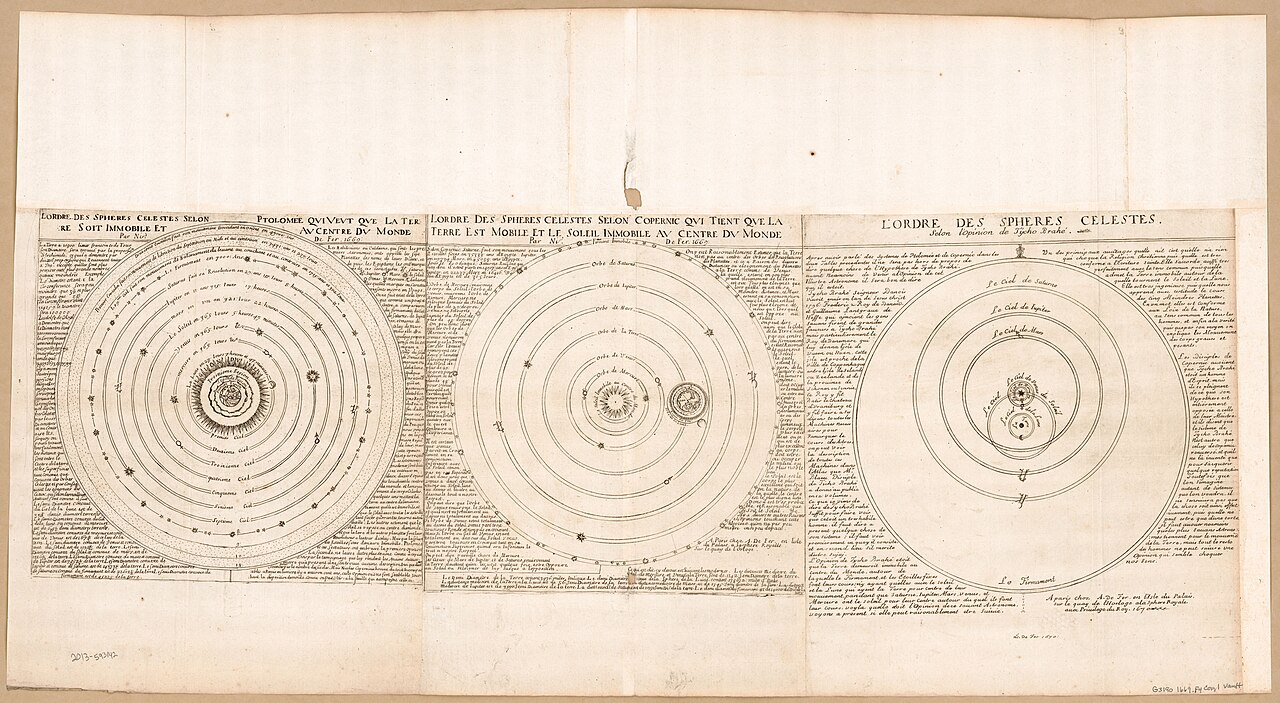
The ancient Greeks built this idea into careful models. Aristotle described a of nested spheres. Ptolemy, working in Roman Egypt, built a system of maths in which planets moved on circles upon circles to match what people saw. Aristarchus of Samos suggested the Sun might be at the centre instead, but few agreed. Ptolemy's Earth-centred system, called , was the main view for well over a thousand years.
Things changed in the 16th century. Nicolaus Copernicus proposed a Sun-centred, or , system. Johannes Kepler then worked out how planets really move around the Sun. Galileo Galilei used a telescope to find evidence for Copernicus. Historians call this one of the great breaks in science, because it changed how people saw their place in the universe.
How did Newton and Einstein change the picture?
Kepler had found rules for how planets move, but nobody knew why. In 1687 Isaac Newton published his Principia Mathematica, which set out the law of universal gravitation. Every object with mass pulls on every other object. The pull that drops an apple also keeps the Moon and planets in orbit. This was a huge step, because it said that the heavens and Earth follow the same laws.
Then came Albert Einstein. His general theory of relativity describes gravity as the bending of space and time by mass. In 1917 he published a paper applying it to the whole . Many historians mark that paper as the start of modern scientific cosmology.
Most scientists then assumed the universe was static, meaning it did not grow or shrink. Einstein's equations did not seem to allow that. So he added an extra term, the cosmological constant, to hold things steady.
Other scientists followed the maths further. Willem de Sitter, Karl Schwarzschild and Arthur Eddington explored what relativity meant for space. In 1922 the Russian mathematician Alexander Friedmann showed that the equations allowed an expanding universe full of moving matter. That idea would soon be tested.
Are there other galaxies beyond our own?
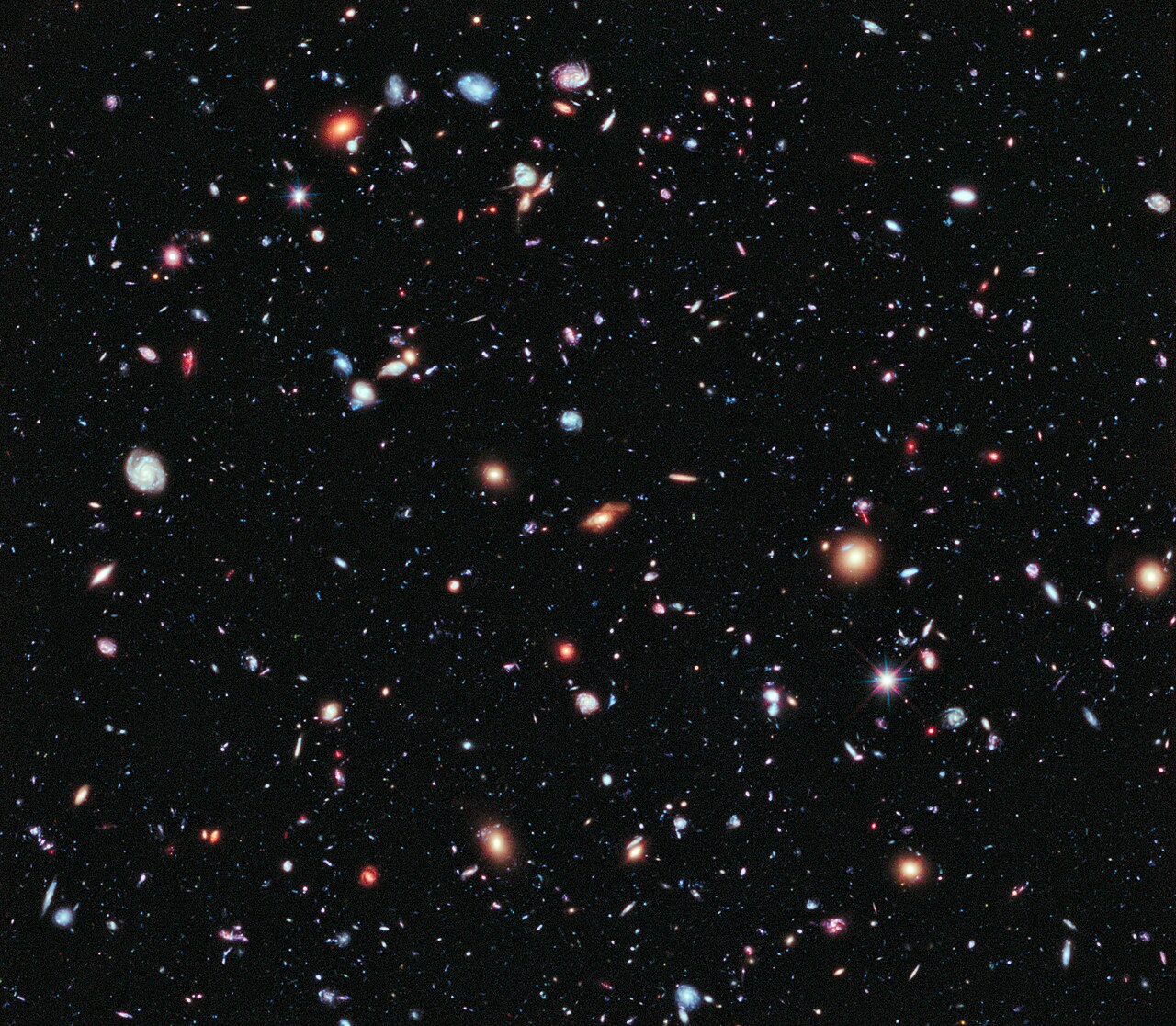
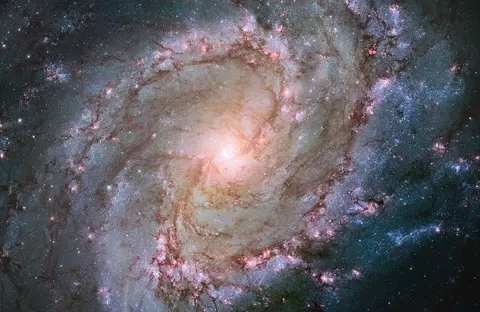
In the early 1900s telescopes showed many faint, fuzzy patches in the sky. Astronomers called them nebulae, from the Latin for clouds. Some were glowing gas inside our own Milky Way. The spiral ones were a puzzle. Were they small clouds near us, or whole star systems far away?
This question led to the Great Debate. Harlow Shapley, working at the Mount Wilson Observatory, argued that the whole was the Milky Way and nothing more. Heber Curtis argued that spiral nebulae were "island universes", separate star systems of their own. The two men met to discuss it in Washington, D.C., on 26 April 1920, at the National Academy of Sciences.
The argument was settled by measurement. Edwin Hubble found a type of star called a Cepheid variable in the Andromeda Galaxy in 1923 and 1924. Cepheids brighten and fade in a steady rhythm. The length of that rhythm reveals how bright the star really is. Compare that with how dim it looks and you know the distance. Andromeda was far outside the Milky Way.
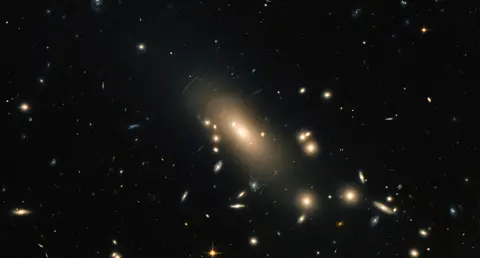
So our galaxy was one of many. Today astronomers estimate that the observable universe holds hundreds of billions of galaxies, perhaps up to 2 trillion.
How did the Big Bang idea begin?
If space is expanding, then in the past everything must have been closer together. That thought leads to the . In 1927 a Belgian priest and physicist, Georges Lemaître, showed that the could be expanding. In 1931 he went further and proposed that it began as a tiny, dense "primeval atom".
The first big test came in 1929. Edwin Hubble measured the light from distant galaxies and found it was stretched towards the red end of the spectrum. This is called . Light waves stretch when their source moves away, much as a siren drops in pitch as an ambulance drives off. The farther the galaxy, the bigger the redshift. So farther galaxies are rushing away faster. An expanding universe predicts exactly this.
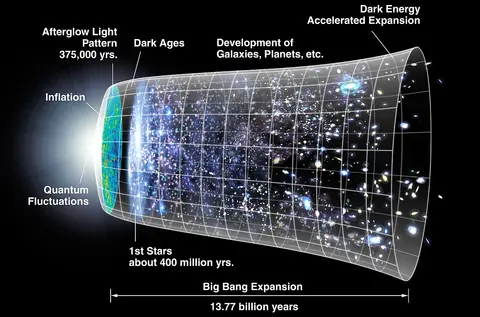
The Big Bang was not an explosion in one place, with matter flying out into empty space. It was the beginning of space itself, which has been stretching ever since. Scientists think a very brief, very rapid growth called followed almost at once.
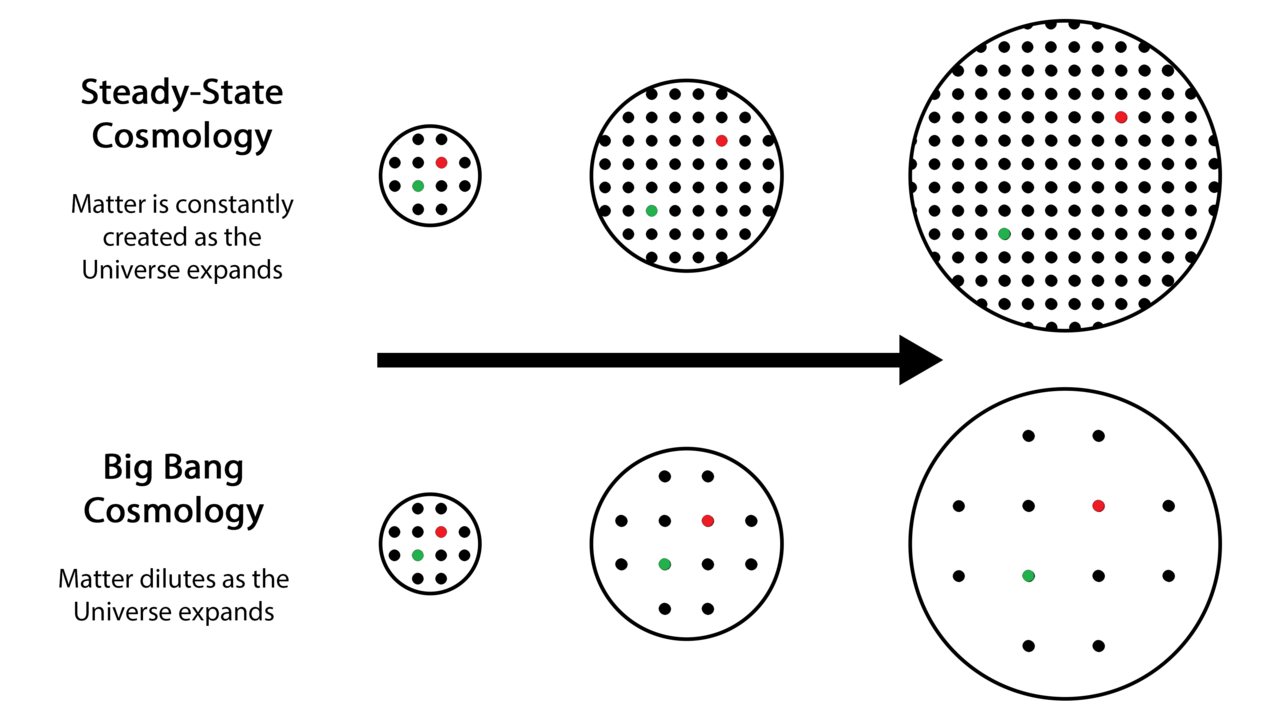
Not everyone liked the idea at first. A rival, the steady-state theory, said the universe has always looked the same, with new matter appearing as space grows. Later evidence made it very hard to defend. Almost all cosmologists now favour the Big Bang.
How do we know the universe had a hot beginning?
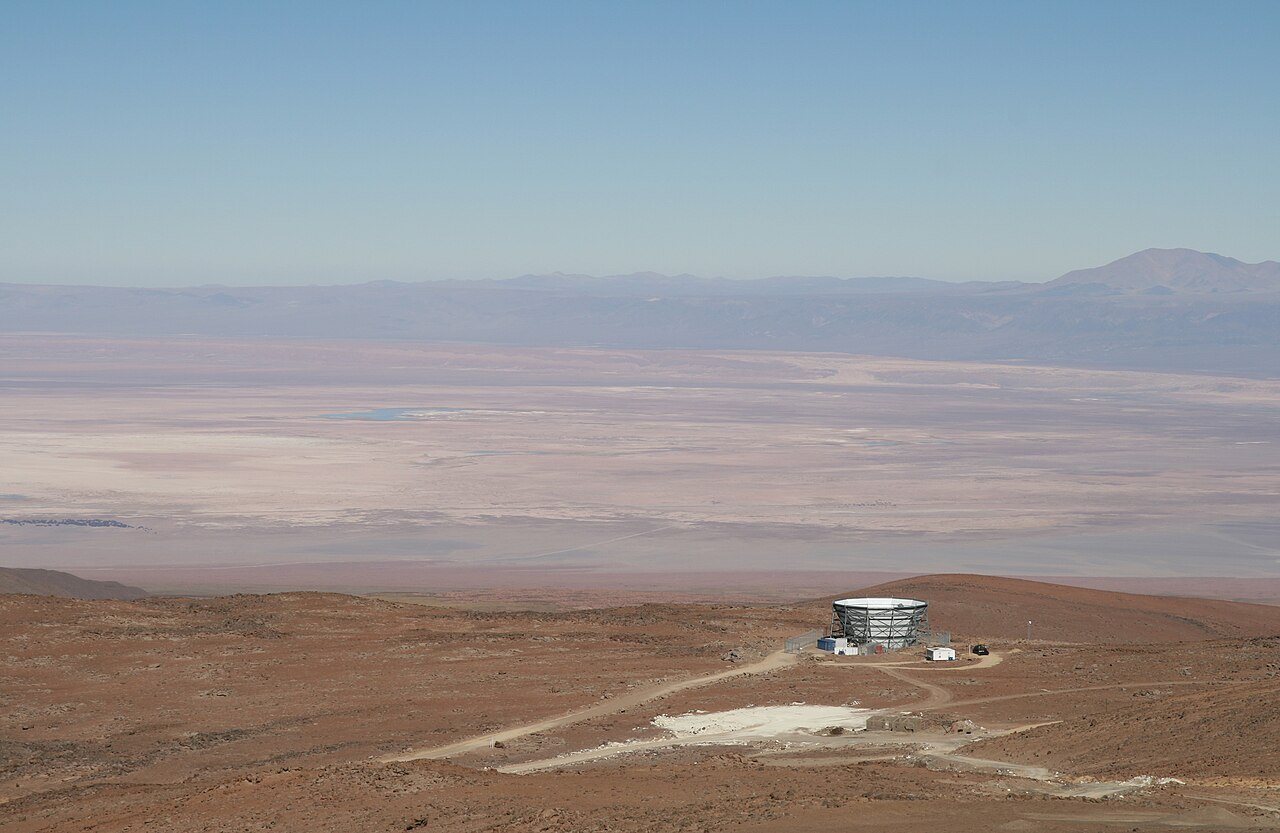
In 1964 two radio scientists, Arno Penzias and Robert Wilson, were trying to remove a stubborn hiss from a sensitive antenna. They cleaned it and checked it, but the noise stayed. It came from every direction in the sky. They had found the , a faint glow left over from the early . It is the oldest light we can see, and it shows the universe was once hot and dense.
This find helped to rule out rival ideas, including the steady-state theory. The predicted such an afterglow, and now it had been measured.
Later, satellites mapped it in more detail. The COBE, WMAP and Planck missions measured tiny differences in its temperature. The average is only about 2.7 degrees above absolute zero, the coldest temperature possible. The differences are tinier still. They mark places where matter was slightly denser. Over time gravity pulled that matter together to form galaxies.
Other tools add to the case. Large surveys such as the Sloan Digital Sky Survey record the positions and of huge numbers of galaxies. Distant exploding stars, called supernovae, and light bent by gravity, called gravitational lensing, fit the same story.
What is the universe made of?
One of the most surprising results of modern cosmology is that we do not know what most of the is. In 2014, astronomers reported Planck satellite results at a meeting in Ferrara, Italy. They put the age of the universe at 13.8 billion years. They also gave its recipe. About 5% is ordinary matter, the atoms that make up stars, planets and people. About 27% is , and about 68% is .
Dark matter is something that pulls with gravity but gives out no light. Dark energy is the name for whatever is making the expansion of space speed up. Nobody has yet worked out what either one really is.
The standard model that fits all this is called Lambda-CDM. Lambda is the letter for Einstein's cosmological constant, and CDM means cold dark matter. With inflation added, it matches the observations very closely. Since about 1990 cosmology has changed from a mostly speculative science into one that makes precise predictions and tests them. Many people call this a "golden age of cosmology".
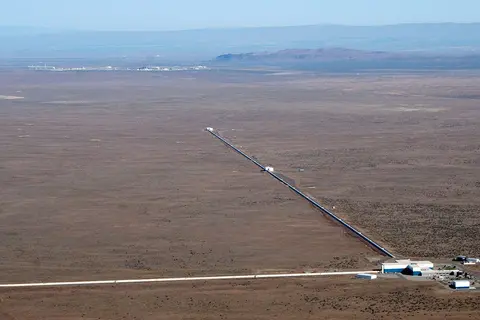
Science also corrects itself. In 2014 a team called BICEP2 announced a signal that looked like gravitational waves from inflation. Later work showed that interstellar dust had made it. The claim was dropped, which is how science should work.
How will the universe end?
decides the future. The expansion of space is speeding up, so most cosmologists expect an ending called the Big Freeze. Galaxies drift ever farther apart, stars use up their gas and fade, and the grows cold and dark over trillions of years.
Two other endings are possible if dark energy changes. In the Big Crunch, the expansion would slow, stop and reverse, so that everything falls back together. Current measurements do not favour this. In the Big Rip, dark energy would grow stronger and stronger, and it would tear apart galaxies, then stars and planets, and finally atoms. This also looks unlikely, but nobody can rule it out until we know what dark energy really is.
None of this is close. The Sun has billions of years left, and the universe has far longer than that. Cosmologists keep measuring the expansion more and more precisely, because the answer to the biggest question of all depends on the nature of dark energy.
Explore Next
Your audio story keeps playing while you look around.
Words to Know
- Big Bang
- The theory that the universe began in a hot, dense state and has been expanding ever since.
- cosmic inflation
- A very short burst of rapid expansion thought to have happened soon after the Big Bang.
- cosmic microwave background
- The faint glow left over from the early, hot universe.
- cosmos
- Another word for the universe seen as an ordered whole.
- dark energy
- The unknown cause of the speeding up of the expansion of space.
- dark matter
- Unseen matter that pulls with gravity but gives out no light.
- general relativity
- Einstein's theory that gravity is the bending of space and time by mass.
- geocentric
- Having Earth at the centre.
- heliocentric
- Having the Sun at the centre.
- redshift
- The stretching of light to longer, redder waves when its source moves away.
- universe
- All of space, time, matter and energy.