Hubble Space Telescope
A school-bus-sized telescope that has looked at the universe from orbit since 1990.
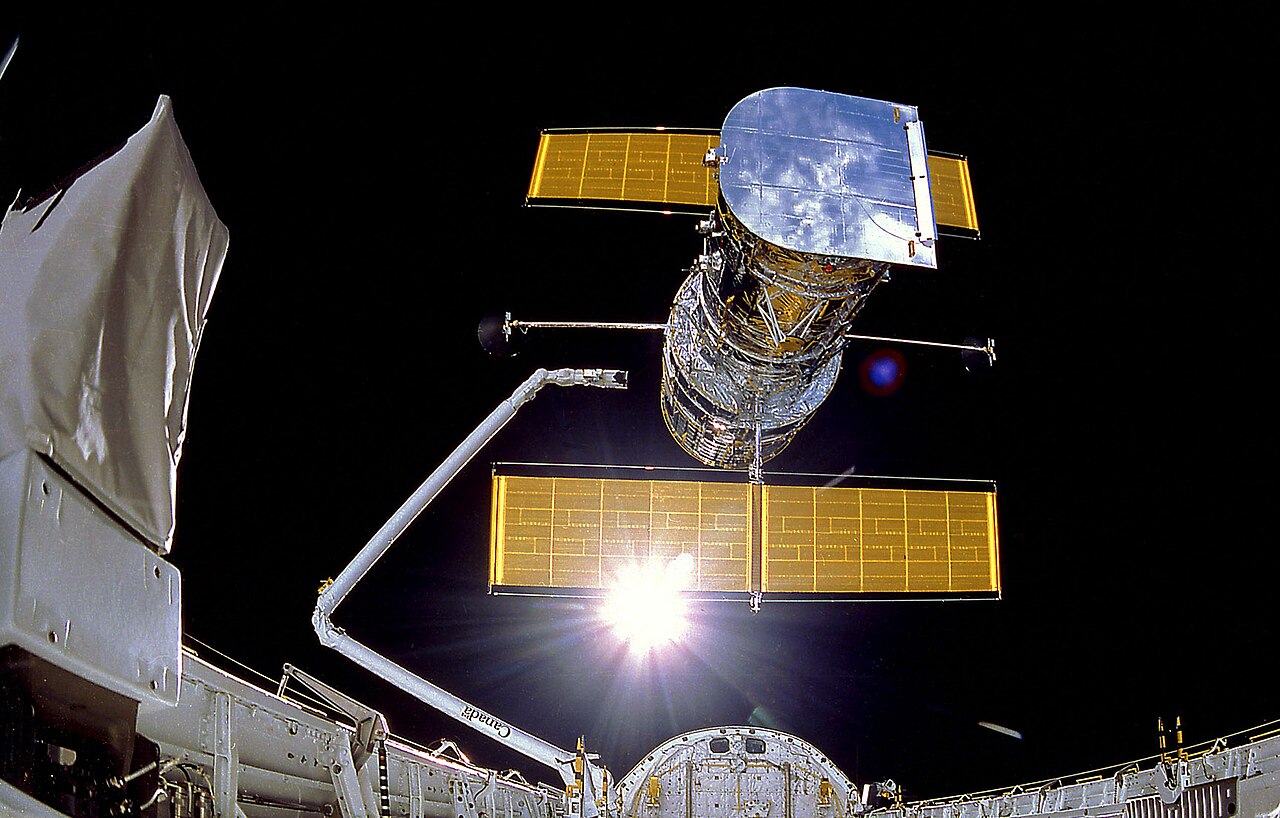
The Hubble Space Telescope circles Earth about 540 kilometres up, high above the air that blurs the view from the ground. Since its launch in 1990 it has photographed planets, glowing clouds of gas and galaxies so far away that their light left them billions of years ago. Hubble began life with a badly shaped mirror, and astronauts had to fit it with a kind of space spectacles. It was then upgraded four more times by spacewalking crews. The result is one of the most productive science instruments ever built. Its pictures have changed how we understand the age, size and growth of the universe.
Why put a telescope in space?
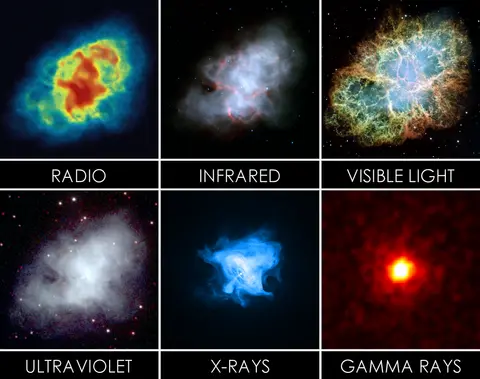
Stars twinkle because their light has to pass through Earth's air. The air is always moving, and it bends the light a little differently from moment to moment. That wobble is pretty to look at, but it blurs the fine detail astronomers want to see. Air also soaks up much of the and light from space. Those colours never reach the ground.
An astronomer named Lyman Spitzer pointed this out in a paper in 1946. A telescope above the air, he said, could see sharper detail and could use light that the blocks. He spent much of his career pushing for one to be built.
In 1962 a report from the US National Academy of Sciences backed the idea. Early satellites such as the Orbiting Astronomical Observatories, launched from 1966, showed that telescopes in orbit really did work. Another person was equally important. Nancy Grace Roman gave public talks about the telescope's value before it was an official NASA project. When it was approved she became its program scientist, and people later called her the Mother of Hubble.
So the plan was simple to state and very hard to carry out. Build a big telescope, lift it above the atmosphere and keep it working for years.
How did Hubble get built?
A telescope this big cost far more than any on the ground, and getting the money was a fight. In 1974 Congress removed all the funding. Three years later, a NASA official cut the project from the budget again, hoping it would shock astronomers into action. It did. Scientists visited politicians and wrote thousands of letters, and the money came back, though only half of what had been planned.
The cuts shrank the mirror from 3 metres to 2.4 metres. The European Space Agency joined in. It supplied one instrument, the solar panels and staff. In return, European astronomers were promised at least 15 percent of the observing time. In 1983 the telescope was named after Edwin Hubble, who showed that the universe is expanding.
The work was shared out. Marshall Space Flight Center managed the building. Goddard Space Flight Center looked after the instruments and the ground control. The company Perkin-Elmer made the mirrors, and Lockheed built the spacecraft around them.
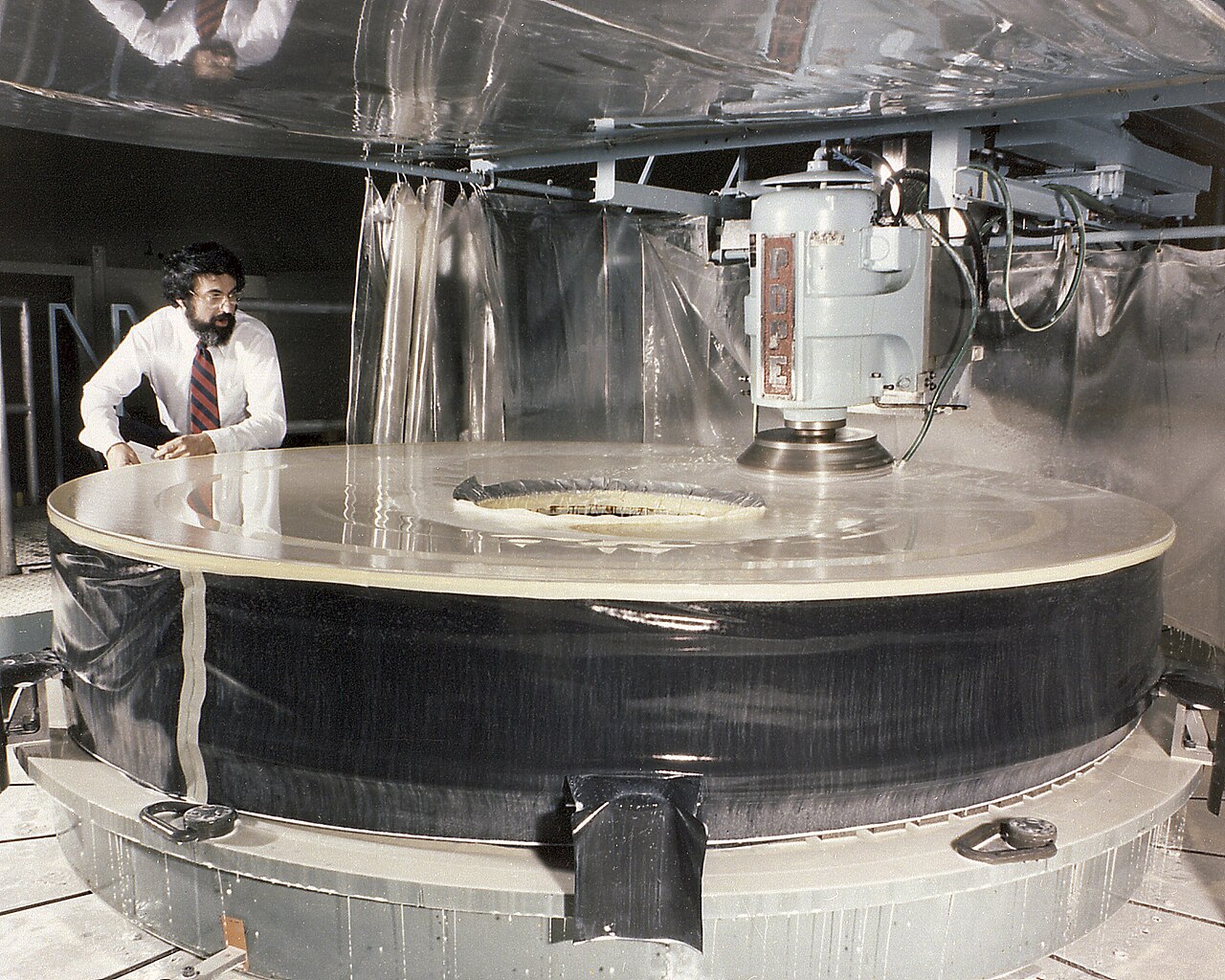
The mirror was made from glass that hardly changes size when the temperature changes. It was ground and polished from 1979 until 1981, so smooth that its surface was accurate to about 10 nanometres. A nanometre is a millionth of a millimetre. To save weight, the glass was built as two thin plates with a honeycomb of glass between them.
What delayed the launch?
Hubble was meant to fly in 1983. Instead the date slid back again and again. Perkin-Elmer fell behind on the optics, and the costs kept rising. By 1986 the project budget had grown to about 1.2 billion dollars, and a launch that October looked possible.
Then, in January 1986, the space shuttle Challenger broke apart soon after take-off. The whole shuttle fleet was grounded for years, and Hubble had no other way into orbit. Engineers kept the telescope in a clean room, powered up and filled with nitrogen gas. This cost about 6 million dollars a month.
The long wait did have one benefit. Engineers ran more tests, swapped a battery that might have failed and made other improvements. The software needed to control Hubble was not ready in 1986, and it was barely ready by 1990.
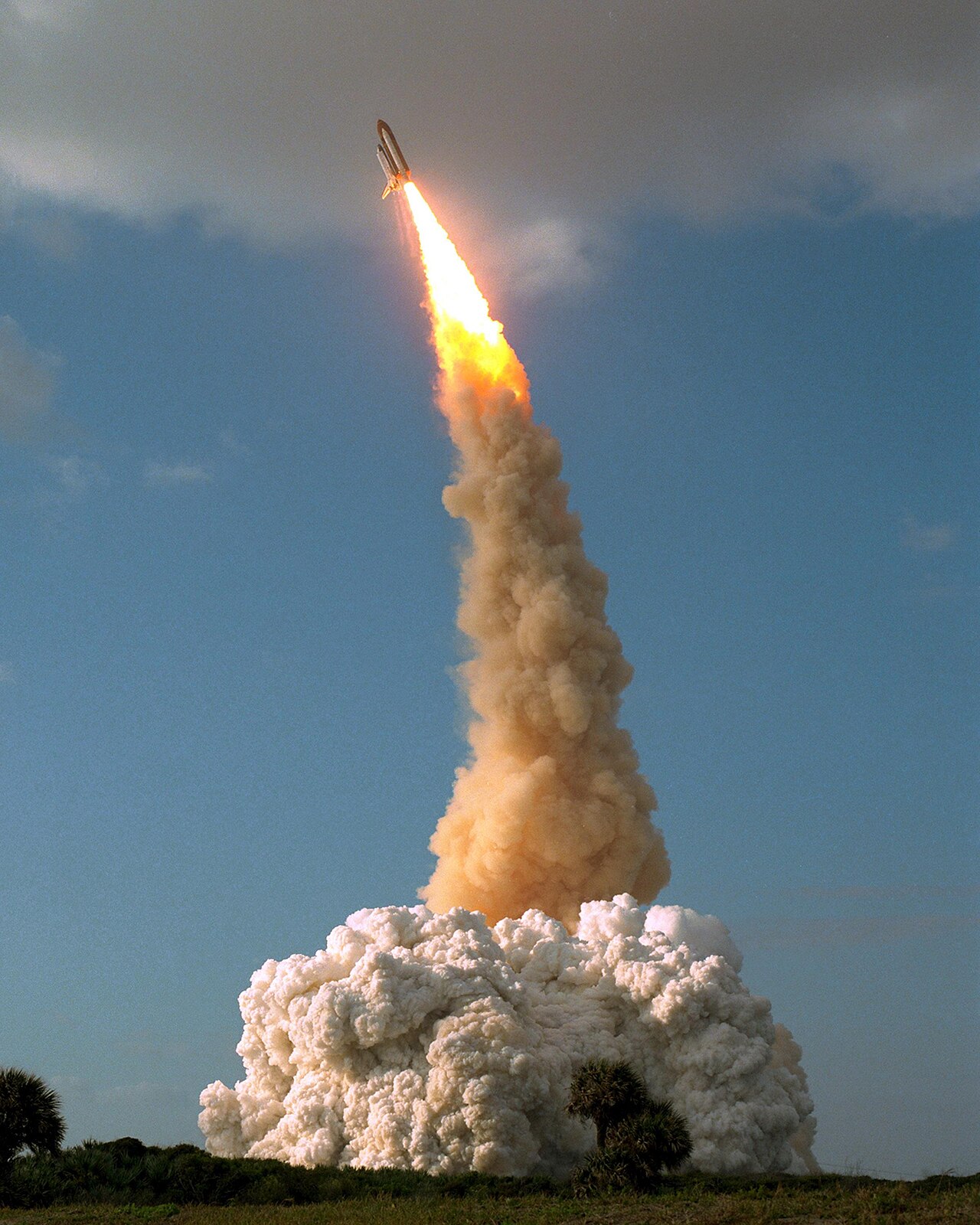
On 24 April 1990 the shuttle Discovery lifted off on mission STS-31 with Hubble in its cargo bay. The next day the crew used the shuttle's robotic arm to lift the telescope out and let it go. Its solar panels unfolded and it began circling Earth.
By then NASA had spent about 4.7 billion dollars in 2010 money. With all later repairs added, Hubble is thought to be the most expensive science mission NASA has ever flown.
How does Hubble see the universe?
Hubble is a . Light from a faraway object enters the open end of the tube and lands on the large main mirror. This mirror reflects the light onto a smaller mirror. The small mirror sends it back through a hole in the middle of the big one. From there the light reaches the instruments.
The instruments work like cameras and colour analysers. Some take pictures. Others are , which spread light out into its colours. From those colours astronomers can tell what a star or cloud is made of, and how hot it is. Hubble has room for five main science instruments at a time, and it sees , visible and near- light. Its mirror is kept warm, so it is not good at the longer infrared waves.
Hubble also has three Fine Guidance Sensors. They lock onto stars to keep the telescope pointing steadily, and they can also measure the positions of stars very precisely.
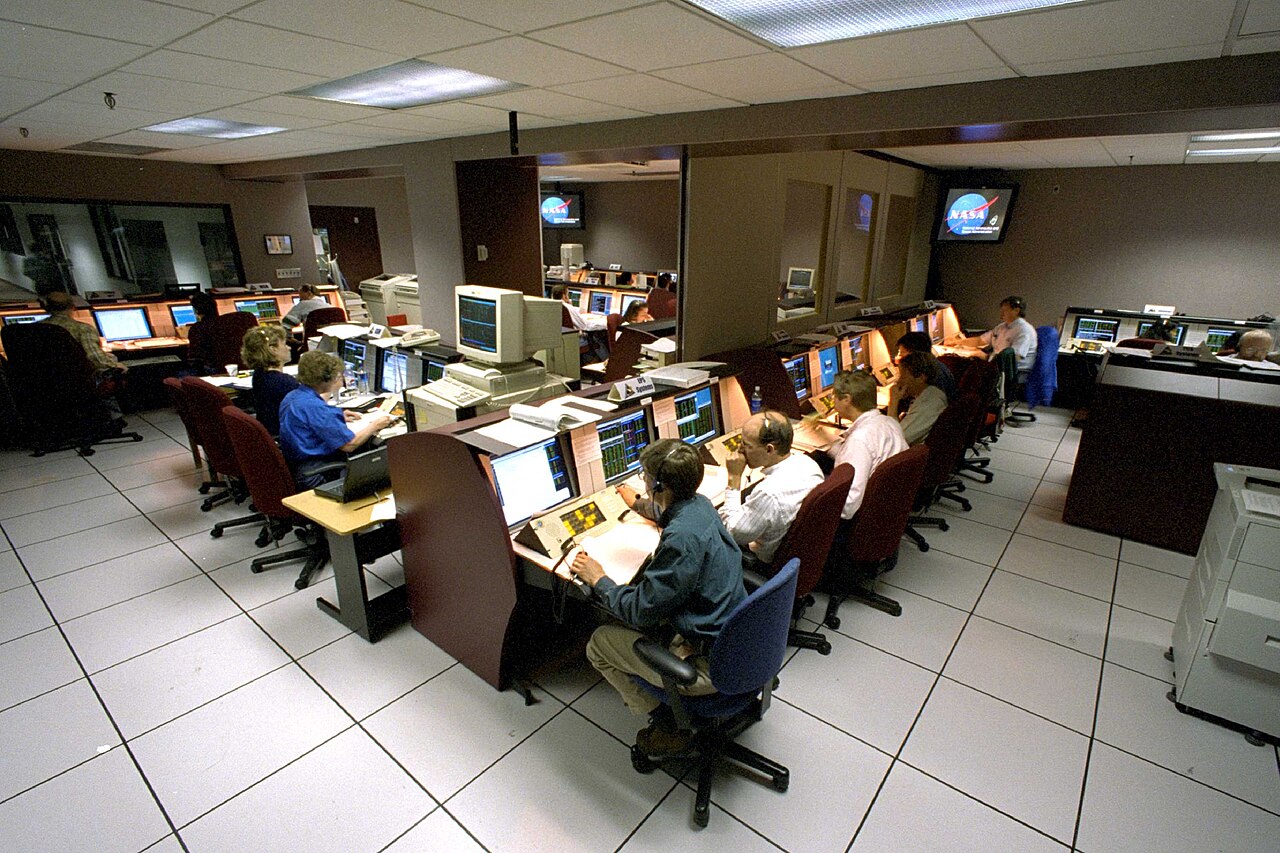
Hubble travels at about 7.5 kilometres every second and goes round Earth in about 95 minutes. For slightly less than half of each orbit, Earth blocks a target from view. Astronomers at the Space Telescope Science Institute in Baltimore plan the schedule. Teams at Goddard in Maryland watch the telescope's health day and night.
What went wrong with the mirror?
Within weeks of launch, Hubble's pictures showed a serious fault. The images were sharper than most from the ground, but stars would not come into a tight, clear point. Instead each one was surrounded by a hazy halo.
The cause was the main mirror. It had been polished to the wrong shape. Its outer edge was too flat by about 2,200 nanometres, which is much less than the width of a human hair. For a telescope built to work to 10 nanometres, that was a disaster. The flaw is called . Light reflecting off the edge of the mirror came to a different focus from light reflecting off the middle.
A review panel found the reason. A testing device called a null corrector had been put together wrongly, with one lens slightly out of place. The company used it for the last stage of polishing. So the mirror was shaped with great care, but to the wrong shape. Other tests had hinted at the problem, but the team trusted the special device more and ignored them. The panel blamed Perkin-Elmer mainly, but it also said NASA should have noticed that checks relied on one instrument.
Politicians questioned NASA's competence, and comedians made jokes about the telescope. Even so, Hubble made many useful observations of brighter targets. Astronomers cleaned up its blurry pictures with computer processing.
How did astronauts fix Hubble in space?
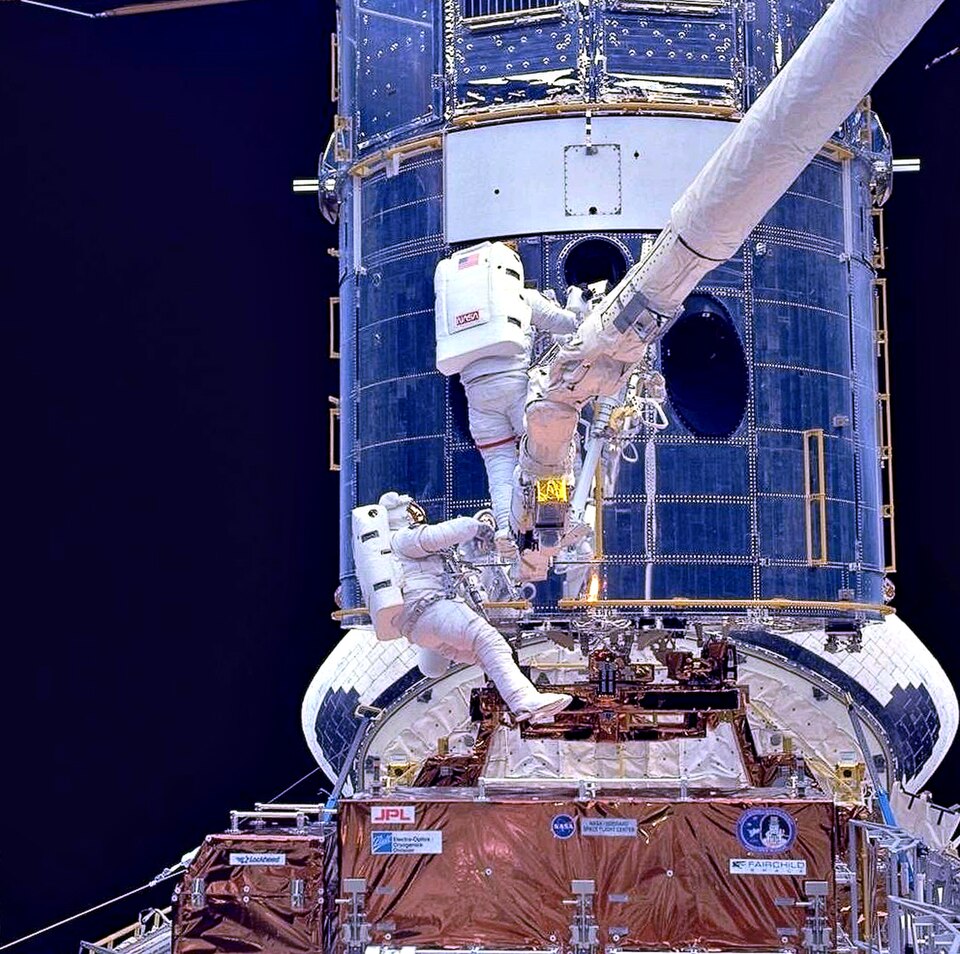
Many people feared Hubble would be abandoned. Bringing it home would have cost too much, and swapping the mirror in orbit was impossible. But Hubble had been designed to be visited, and that saved it.
The answer came from the way the mirror had been made. It was wrong, but it was wrong in a precise and measurable way. Engineers could build new optics with exactly the opposite error. The two would cancel out, like spectacles for a short-sighted eye. The new camera, called Wide Field and Planetary Camera 2, had the correction built into its own small mirrors. The older instruments needed an add-on box named COSTAR, which slid in where the High Speed Photometer had been.
1 flew in December 1993 aboard the shuttle Endeavour. The crew included experienced astronauts such as Story Musgrave. They trained for a long time on about a hundred special tools. Over five long spacewalks they fitted the new camera and COSTAR. They also replaced the solar panels and , and boosted Hubble to a higher orbit.
On 13 January 1994 NASA announced that the mission was a complete success and showed the first sharp images. By 2002 every instrument that needed COSTAR had been replaced by one with its own correction. COSTAR came out in 2009.
Why did astronauts keep visiting Hubble?
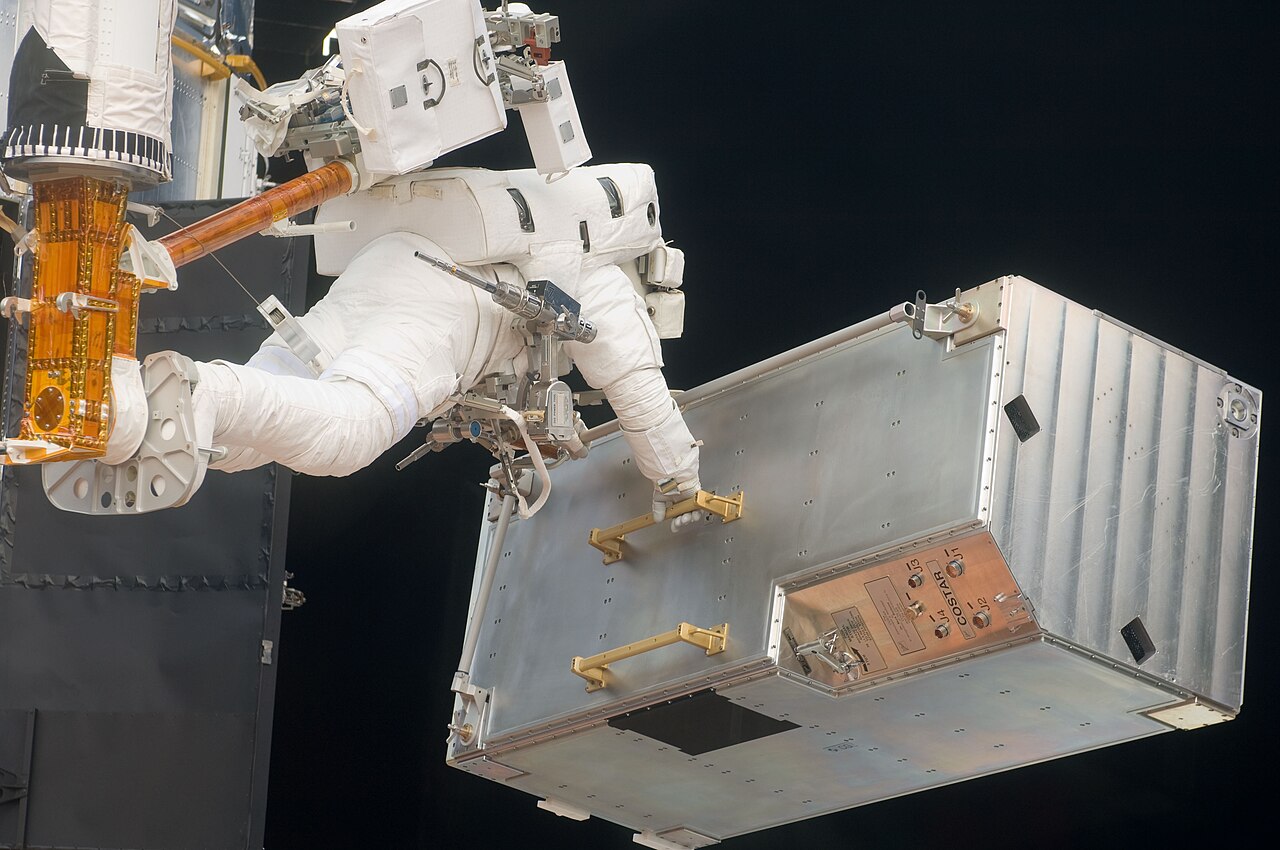
Hubble is the only telescope designed to be looked after in space by astronauts. Five shuttle missions visited it. After the first in 1993, there were visits in 1997, 1999, 2002 and 2009.
Each one followed a similar plan. The shuttle caught Hubble with its robotic arm and held it in the cargo bay. Astronauts then spent four or five days on tethered spacewalks, swapping parts and adding new instruments. Finally they boosted Hubble back to a higher orbit. The thin air that still exists at that height slowly drags it downwards.
The missions replaced all five of the main instruments. Some jobs were urgent. Before 3A in 1999, that keep Hubble pointing had failed, and the telescope could no longer observe. The crew replaced all six. In 2002 the new Advanced Camera for Surveys took over. The solar panels were replaced for a second time, giving 30 percent more power.
The last mission nearly never happened. After the shuttle Columbia broke apart in 2003, NASA cancelled it as too risky. Astronomers and the public protested, and thousands of letters came from children. A new NASA leader, Michael Griffin, approved the flight in 2006. Atlantis carried it out in May 2009. The crew installed the Wide Field Camera 3 and the Cosmic Origins . They also fitted a new fixture. A future spacecraft can use it to capture Hubble safely at the end of its life.
What has Hubble discovered?
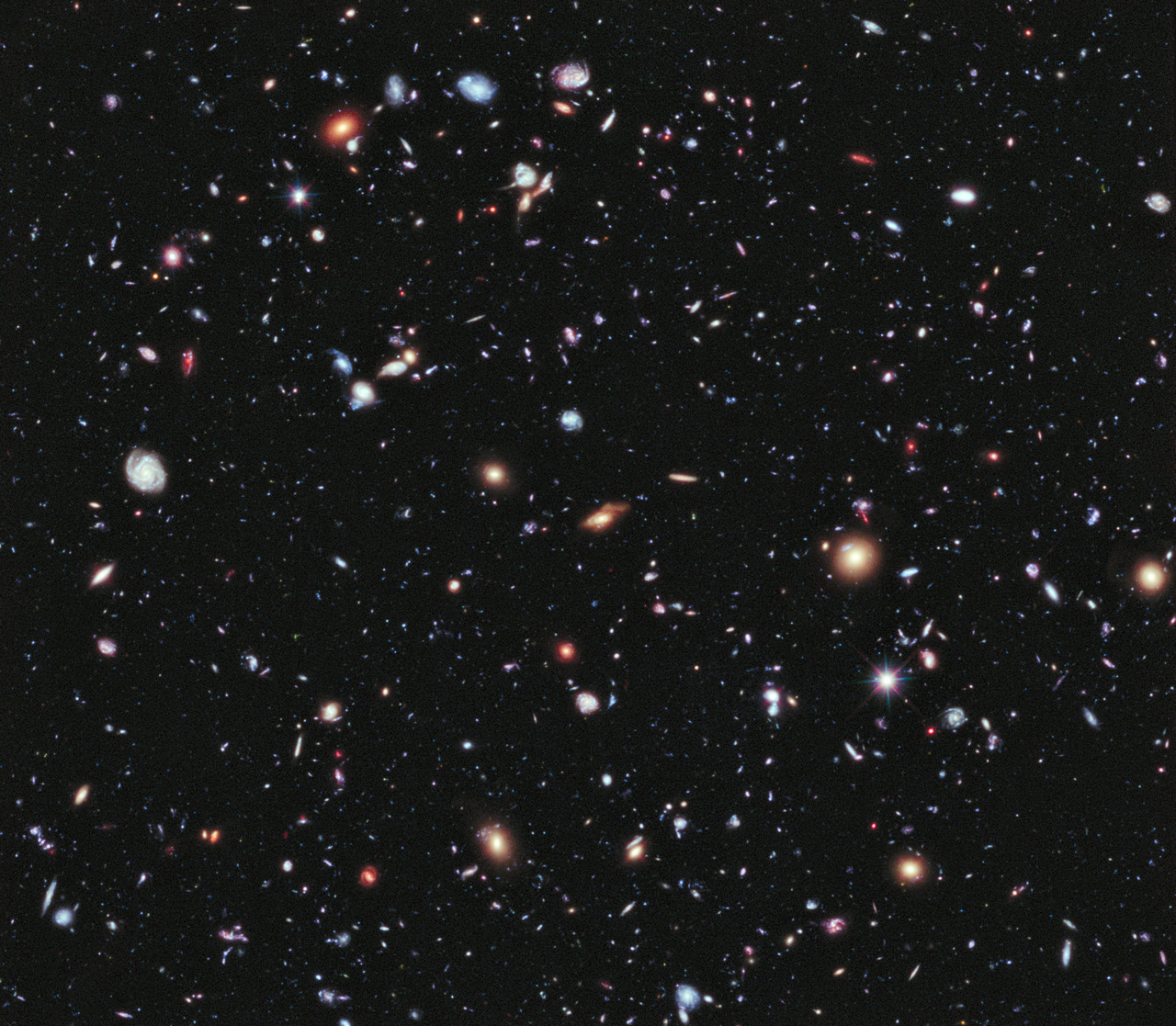
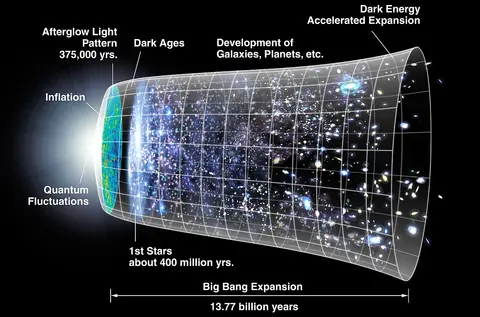
Hubble's most famous result concerns the size and age of the universe. Edwin Hubble found that distant galaxies are moving away from us, which means space is expanding. The telescope that carries his name measured how fast, by finding the distances to galaxies using certain pulsing stars. That gave a much better estimate of the universe's age, which is now thought to be about 13.8 billion years.
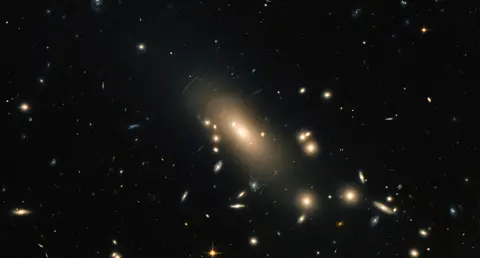
In the 1990s and later, Hubble was used to take very long exposures of tiny patches of sky that look empty. The Hubble Deep Field showed thousands of galaxies in a space that seems to hold nothing. The Extreme Deep Field, finished in 2012, shows galaxies as they were less than a billion years after the Big Bang. The huge CANDELS survey also studied how early galaxies grew.
Hubble also found that the expansion of the universe is speeding up. Astronomers call the unknown cause . The telescope has helped to show that big black holes sit in the centres of galaxies. It has also studied the of planets that circle other stars.
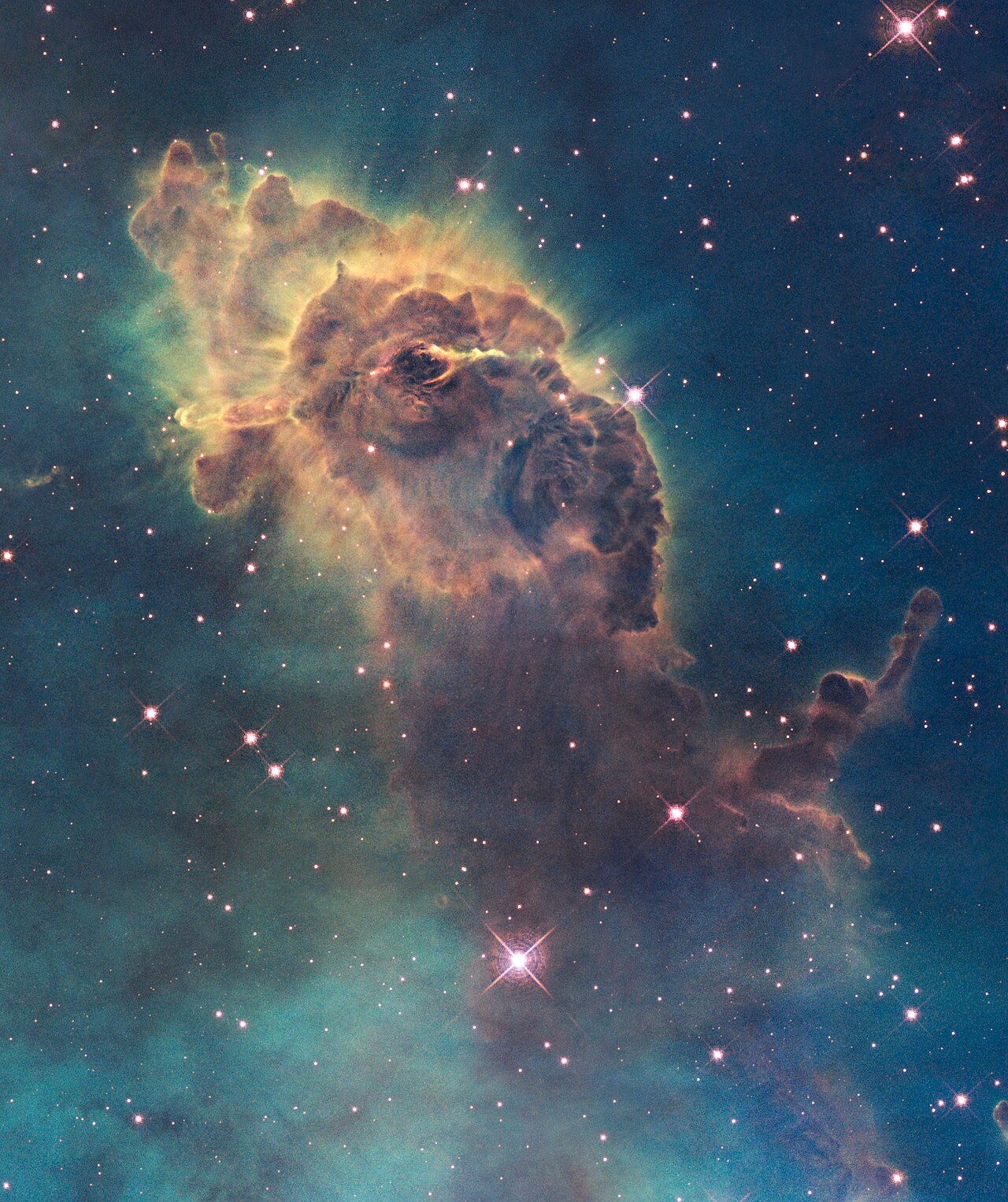
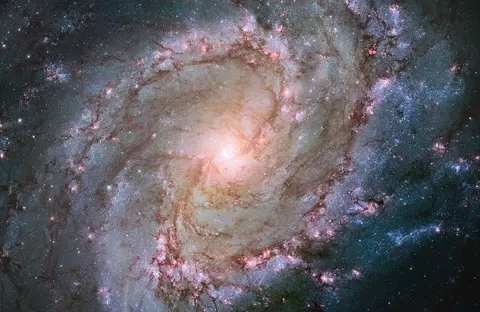
Closer to home, Hubble has watched the outer planets for years, and its photographs of nebulae are famous. In 2001 NASA asked the public what Hubble should look at, and people overwhelmingly chose the Horsehead Nebula.
How long will Hubble last, and what comes next?
Hubble finished 30 years of work in April 2020. NASA expects it to keep going until somewhere between 2030 and 2040. No astronaut has serviced it since 2009, and parts such as slowly wear out. The shuttles have also retired.
Other telescopes now share the work. Hubble is the visible-light member of NASA's four Great Observatories. The others were the Compton Gamma Ray Observatory, the Chandra X-ray Observatory and the Spitzer Space Telescope, which looked at light. Only Hubble and Chandra still work. Each one covers a different part of the spectrum, which is the full range of light.
The next big step is the James Webb Space Telescope, launched on 25 December 2021. It is built mainly to see infrared light and to look even further back in time. It sits far beyond the Moon, so unlike Hubble nobody can easily visit it. Webb and Hubble are meant to work together, each seeing things the other cannot. The Nancy Grace Roman Space Telescope, named after Hubble's champion, launched on 30 August 2026 and is now being tested in space. Its first images are expected in early 2027.
When Hubble is finally finished, the fixture added in 2009 should let a future spacecraft grab it. Then it can be brought down safely. Until then it keeps circling, sending back a steady stream of images and data for scientists around the world.
Explore Next
Your audio story keeps playing while you look around.
Words to Know
- atmosphere
- The layer of gases that surrounds a planet.
- dark energy
- The unknown cause that seems to be making the expansion of the universe speed up.
- galaxy
- A huge group of stars, gas and dust held together by gravity.
- gyroscope
- A spinning device that helps a spacecraft sense and hold its direction.
- infrared
- Light with a longer wavelength than red, which we feel as heat.
- reflecting telescope
- A telescope that gathers light with a curved mirror instead of a lens.
- servicing mission
- A shuttle flight in which astronauts repaired or upgraded Hubble in orbit.
- spectrograph
- An instrument that spreads light into its colours to show what an object is made of.
- spherical aberration
- A flaw in which light from the edge of a mirror focuses at a different point from light from the middle.
- ultraviolet
- Light with a shorter wavelength than violet, which our eyes cannot see.