Observatory
Places built to watch the sky, the sea, the ground and the weather.
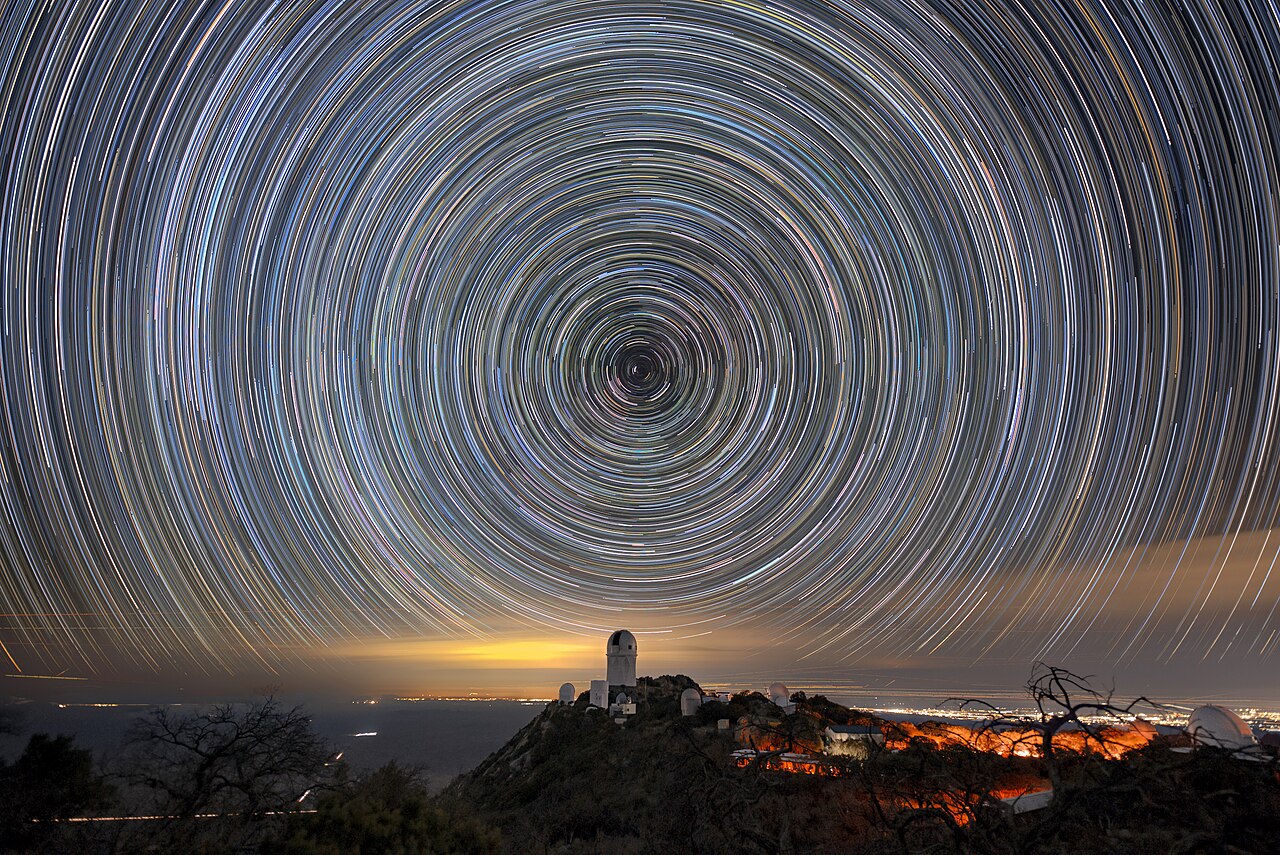
An observatory is a place built for careful watching. Most people think of a domed building on a mountain with a huge telescope inside, and that is one kind. But observatories also sit on the sea floor, deep in Antarctic ice, inside aeroplanes and far out in space. Some watch stars. Others watch volcanoes, storms, tides or the magnetic field of the Earth. What they share is patience. Instruments collect measurements night after night, sometimes for decades. Scientists then turn the numbers into discoveries. How did people go from stone circles to telescopes in orbit and detectors that catch ghostly particles?
What is an observatory?
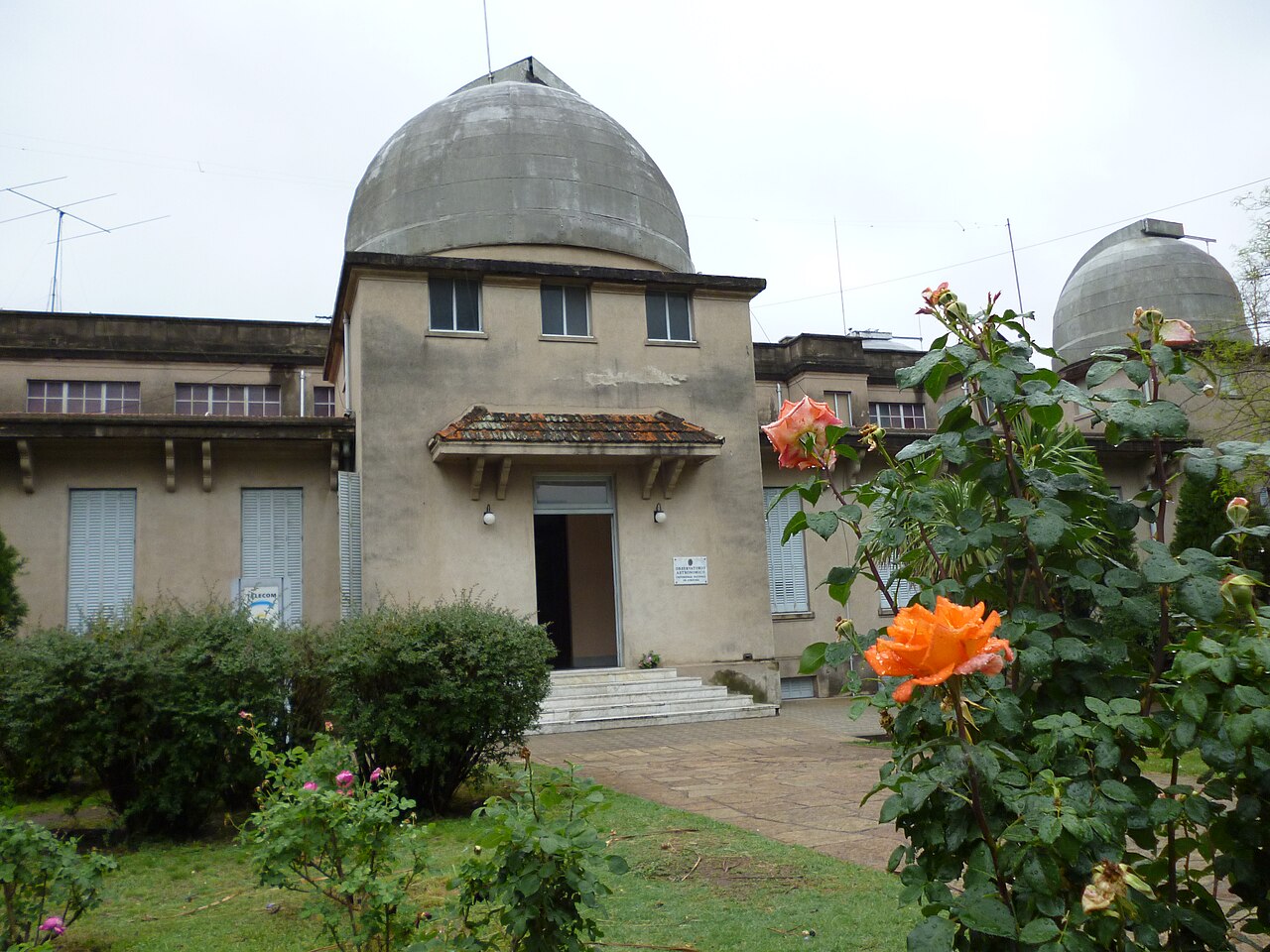
An is any place set up to watch events in nature. The word is most often linked with astronomy, but the idea is much wider. Scientists who study weather, earthquakes, volcanoes, oceans and the magnetism of the Earth build observatories too.
What makes a place an observatory, and not only a room with a window, is the kit and the routine. It holds special instruments that measure things accurately, and it uses them again and again. One photograph of a storm is interesting. Fifty years of daily weather readings from the same spot can show how a climate is changing.
Some observatories belong to universities, some to governments and some to private groups. Many welcome visitors. Others are far from anyone, because people, cars and cities get in the way of delicate measurements.
The word has even spread beyond science. In French, an observatoire can mean any group that gathers facts on one subject, such as public health.
Astronomical observatories are sorted by where they are. Some are in space and some are on aircraft. Some are on the ground, and some are underground, underwater or under ice. Each place suits a different kind of question.
Who watched the sky first?
People have tracked the heavens for thousands of years, long before telescopes existed. Scientists call the earliest sites proto-observatories. These are places where stones, mounds or buildings line up with the Sun or Moon at special moments of the year. Stonehenge in England is the most famous. Others include Newgrange in Ireland, Chankillo in Peru and the Goseck circle in Germany.
Why build such things? Knowing when the seasons turn told farmers when to plant and told communities when to hold festivals. A stone that points at the midwinter sunrise works like a giant calendar.
True observatories came later. These were institutions where people worked full time on astronomy. One of the earliest on record is the Al-Shammisiyyah in Baghdad, from 825. Others followed at Maragheh in the 1250s, at Samarqand under Ulugh Beg in 1420 and in Beijing in 1442.
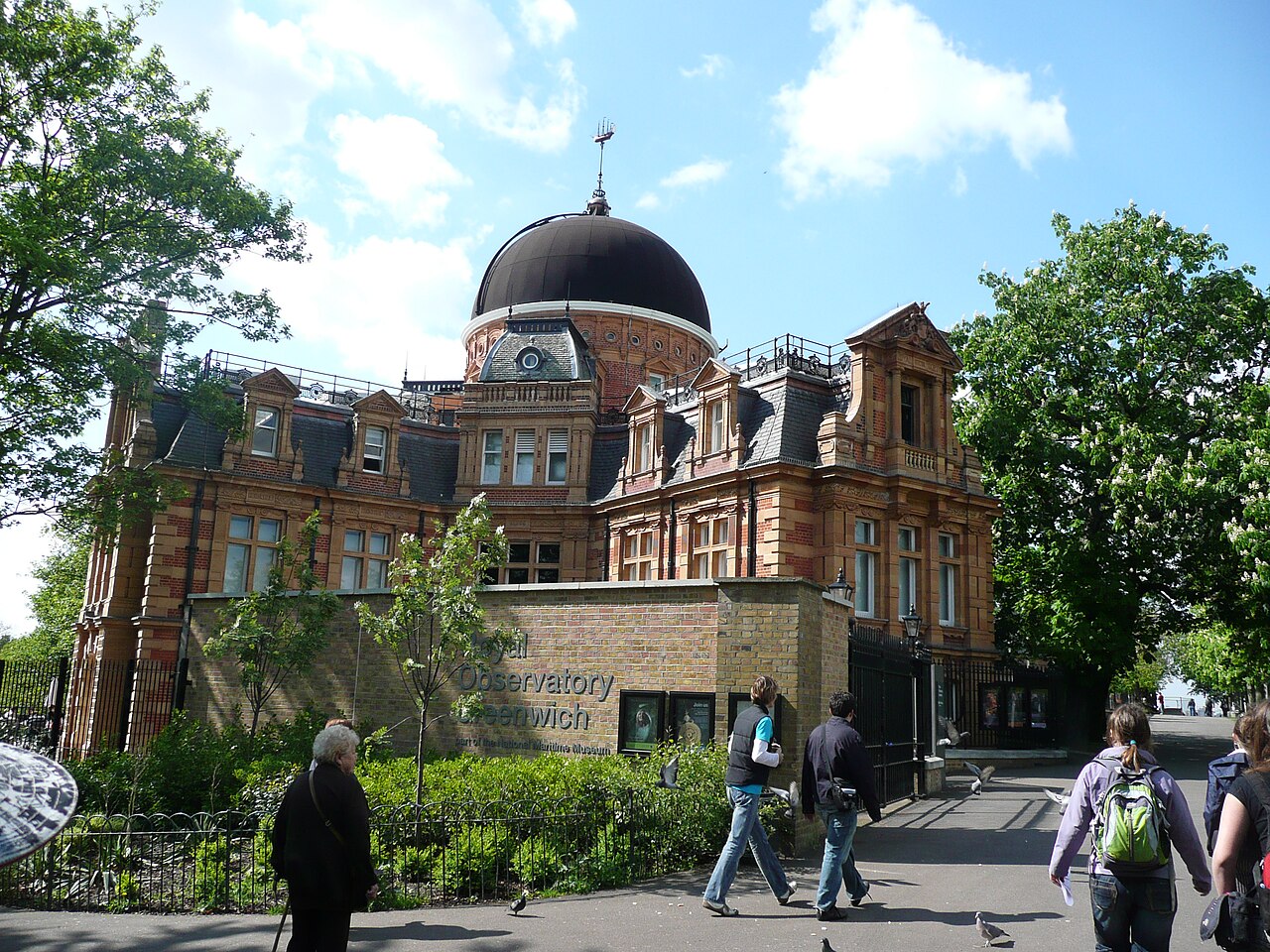
In Europe, observatories multiplied from the 1500s. Uraniborg in Denmark started in 1580. Leiden in the Netherlands followed in 1633, then Paris in 1667 and Greenwich in London in 1675. The Royal Observatory at Greenwich was built partly to help sailors find their position at sea. It later gave the world its zero line of longitude.
Why are telescopes built on mountains?
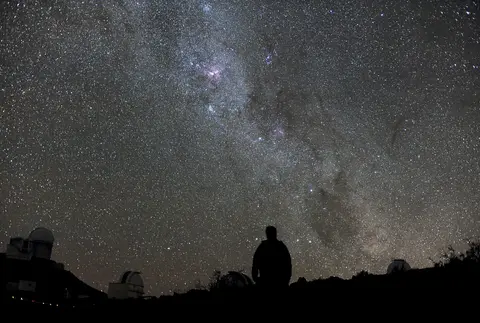
Look at a map of the great optical observatories and a pattern appears. Mauna Kea in Hawaii, Kitt Peak in Arizona, Roque de los Muchachos in the Canary Islands, Paranal in Chile. They are far from big cities and high above sea level. Each of these choices solves a problem.
The first problem is . Street lamps and buildings glow into the night sky and wash out faint stars. Putting a telescope far from towns keeps the sky dark.
The second is the air. Our is a layer of moving gas, and it makes starlight shimmer. Astronomers call the blurriness caused by this turbulence poor . On a high mountain there is less air overhead, so the picture is steadier. Dry air and plenty of clear nights matter too, because water vapour and clouds block the view.
The best places are the southwestern United States, Hawaii, the Canary Islands, the Andes and high Mexican peaks. A study in 2009 suggested the very best spot on Earth is Ridge A, high on the Antarctic plateau. New giants are on the way. The Vera C. Rubin in Chile released its first images in 2025 and will photograph the whole southern sky again and again. Nearby, the Extremely Large Telescope is under construction on Cerro Armazones. Its main mirror will be 39 metres wide, and its first light is planned for around 2029.
Most optical telescopes sit inside a dome with a slit in the roof. The slit opens at night and shuts by day to protect the mirrors. The dome turns, so the slit can face any part of the sky.
Can a telescope cancel out the twinkle?
Choosing a good mountain is only the start. Even at the best sites, some turbulence remains, and it blurs the sharpest images. Modern observatories fight back with clever technology.
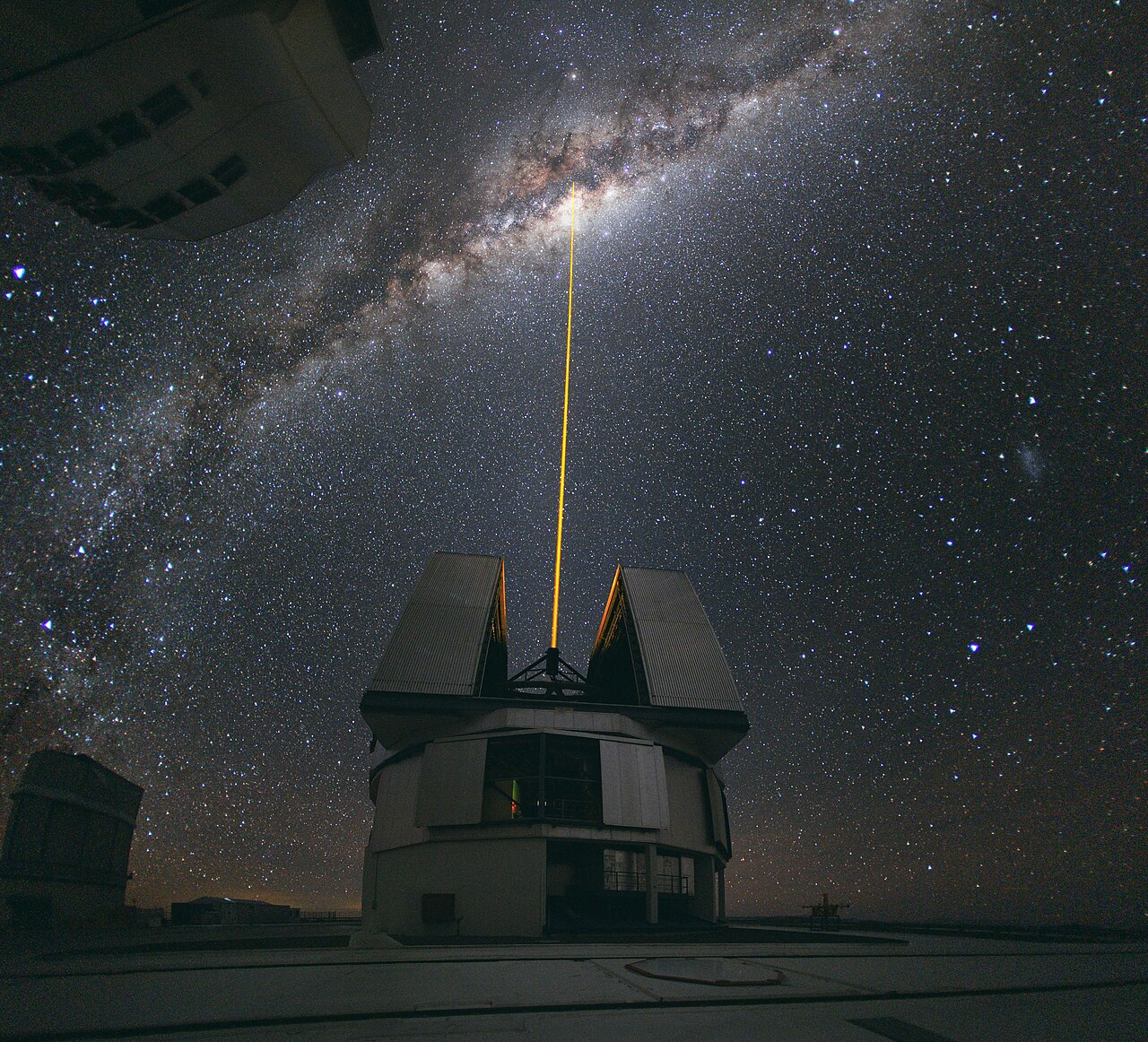
One method is called . The telescope measures how the air is bending light at that very moment. Then it bends its own flexible mirror, hundreds of times each second, to cancel the blur. To measure the air, the telescope needs a bright star near the target. Often there is none, so astronomers make one. A powerful laser is fired up into the sky and makes a small glowing spot high in the . This is called a laser guide star. The telescope watches how the spot wobbles and corrects for it.
At the Paranal in Chile, one of the four big telescopes of the Very Large Telescope fires a laser toward the centre of the Milky Way. The Milky Way is the galaxy that contains our Solar System.
Why go to this trouble when you could use a space telescope? Cost is the answer. Ground telescopes can be much larger and are far cheaper to build, and they can be repaired and upgraded with ordinary workshops and engineers. Adaptive optics lets them close much of the gap in sharpness.
How do radio observatories work?
Stars and galaxies give out more than visible light. They also send radio waves, and huge metal dishes can pick these up. The first were built from 1933. The science of using them is called radio astronomy. A group of dishes, with control rooms, data centres and workshops, is called a radio .
Radio observatories do not use domes. Their dishes stand in the open and swivel to point at the sky. Radio waves also pass through clouds, so these telescopes can work by day as well as by night.
Radio sites, like optical sites, are far from towns. The enemy here is not street lamps. It is electromagnetic interference, which means unwanted radio noise. Radios, televisions, radar and phones all make signals that can drown the faint whispers from space. Unlike optical telescopes, radio telescopes can sit in a valley, because hills help block the noise.
Major radio observatories include the Very Large Array in New Mexico and Jodrell Bank in England. Others are Parkes in Australia and Chajnantor in Chile. Arecibo in Puerto Rico was one too, until its giant dish collapsed in 2020.
Astronomers can also link dishes that are thousands of kilometres apart and combine their signals. This method is called very-long-baseline . It makes the whole group act like one telescope as wide as the distance between the dishes.
Why put an observatory in space?
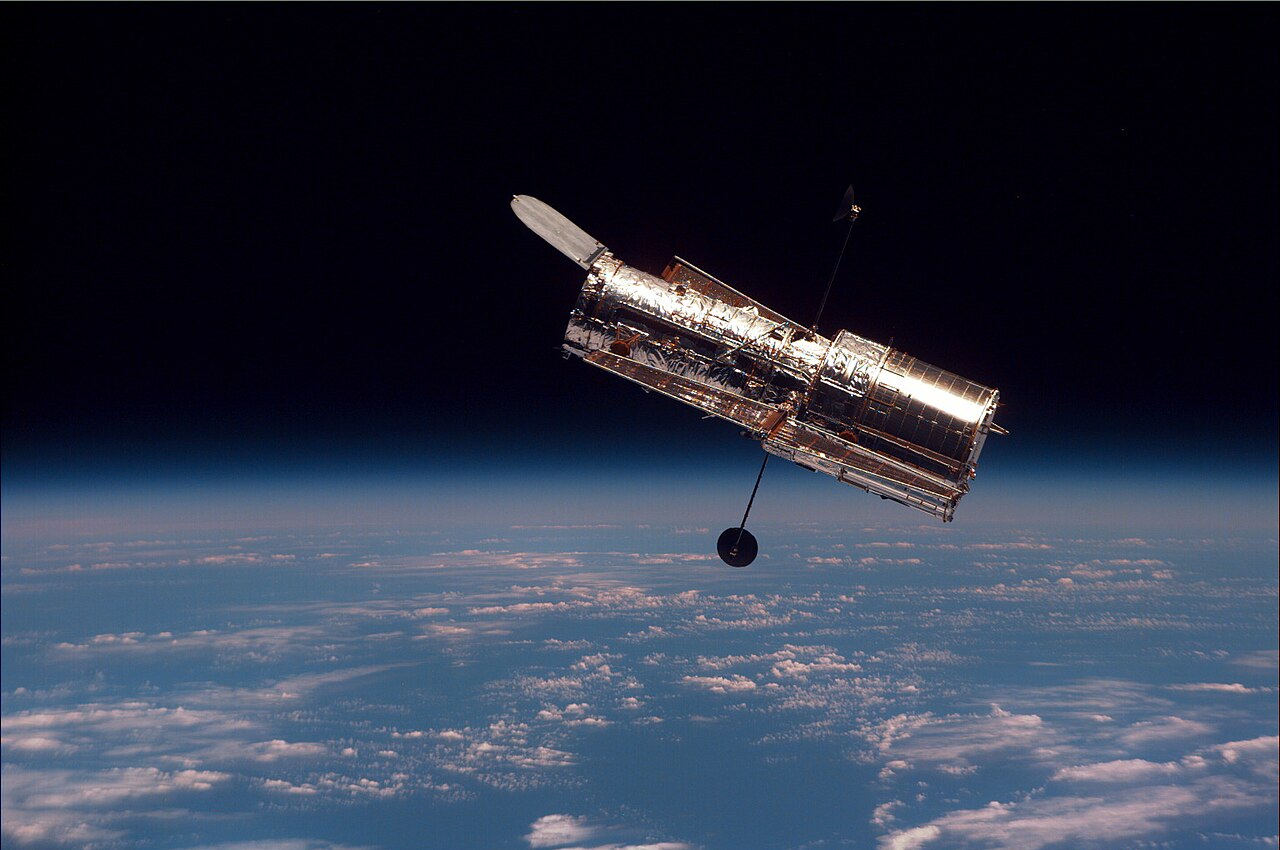
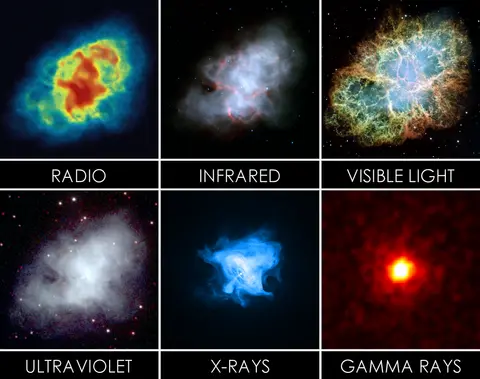
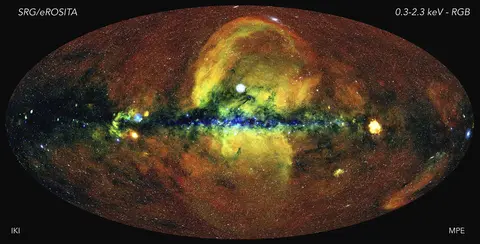
The air that blurs starlight is also a shield. The blocks light, X-rays and gamma rays, and it absorbs some . That is good news for life on the ground, but bad news for astronomers who want to study those kinds of light. The answer is to go above the air.
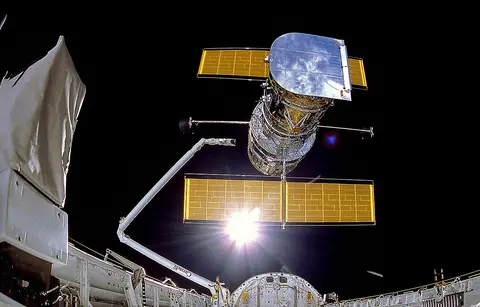
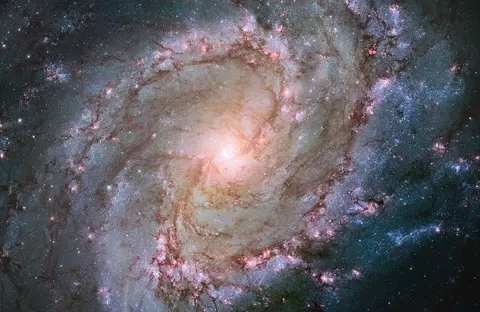
A space is a telescope or other instrument that sits in space, usually in orbit around the Earth. It sees the whole range of light, and its pictures are free from the shimmer of the atmosphere. This is why the Hubble Space Telescope has a mirror only 2.4 metres wide, yet its images can beat much larger telescopes on the ground.
There are costs. Space telescopes are much more expensive to build and launch. They are also very hard to mend. Hubble was lucky, because astronauts could reach it in the Space Shuttle and fit new instruments and parts. Most space telescopes cannot be visited at all, so everything has to work perfectly first time and keep working for years.
Space observatories also watch our own star. NASA's Solar Dynamics Observatory has studied the Sun in ultraviolet light since 2010. Because the atmosphere blocks that light, the pictures could not be taken from the ground.
Can an aeroplane be an observatory?
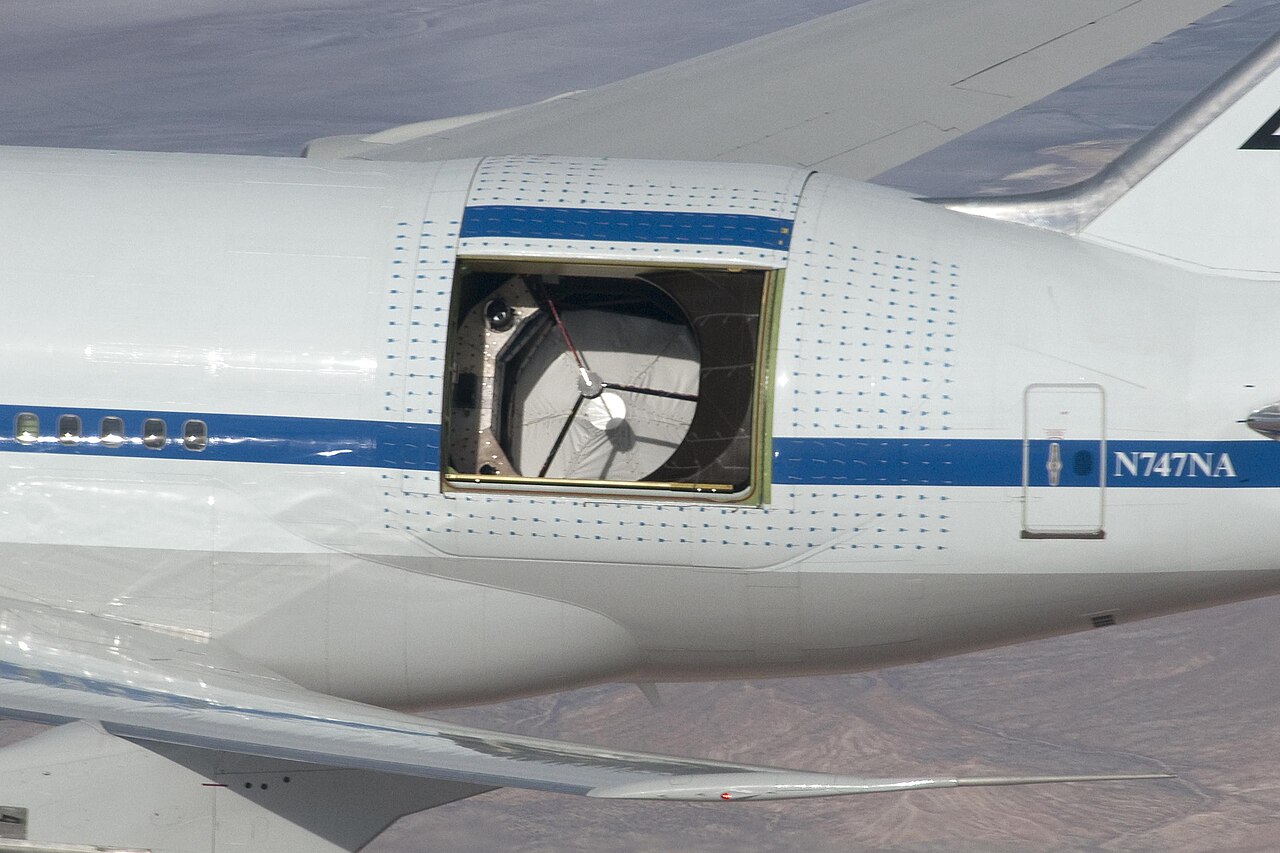
Between mountain tops and space there is a middle option. Airborne observatories fly high in the sky and so rise above most of the . They put a telescope where much of the water vapour has been left below.
Water vapour matters because it absorbs light. Infrared is the heat radiation given out by cool objects such as dust clouds where new stars are forming. A telescope on a mountain still has some water vapour above it. One in a high-flying aeroplane has far less.
Two famous examples are the Kuiper Airborne and the Stratospheric Observatory for Infrared Astronomy, known as SOFIA. SOFIA was a big telescope carried inside a modified Boeing 747SP jet. A door in the side of the aircraft slid open in flight, and the telescope looked out at the sky while the plane cruised.
Airborne telescopes have a big advantage over satellites. They land. Engineers can fix a fault, add a new instrument or test a better idea between flights. This is quick, and it costs much less than a mission to orbit.
Balloons also carry instruments high into the air. High-altitude balloons have been used in several countries for X-ray astronomy, since X-rays are blocked lower down.
How do you build an observatory underground or under ice?
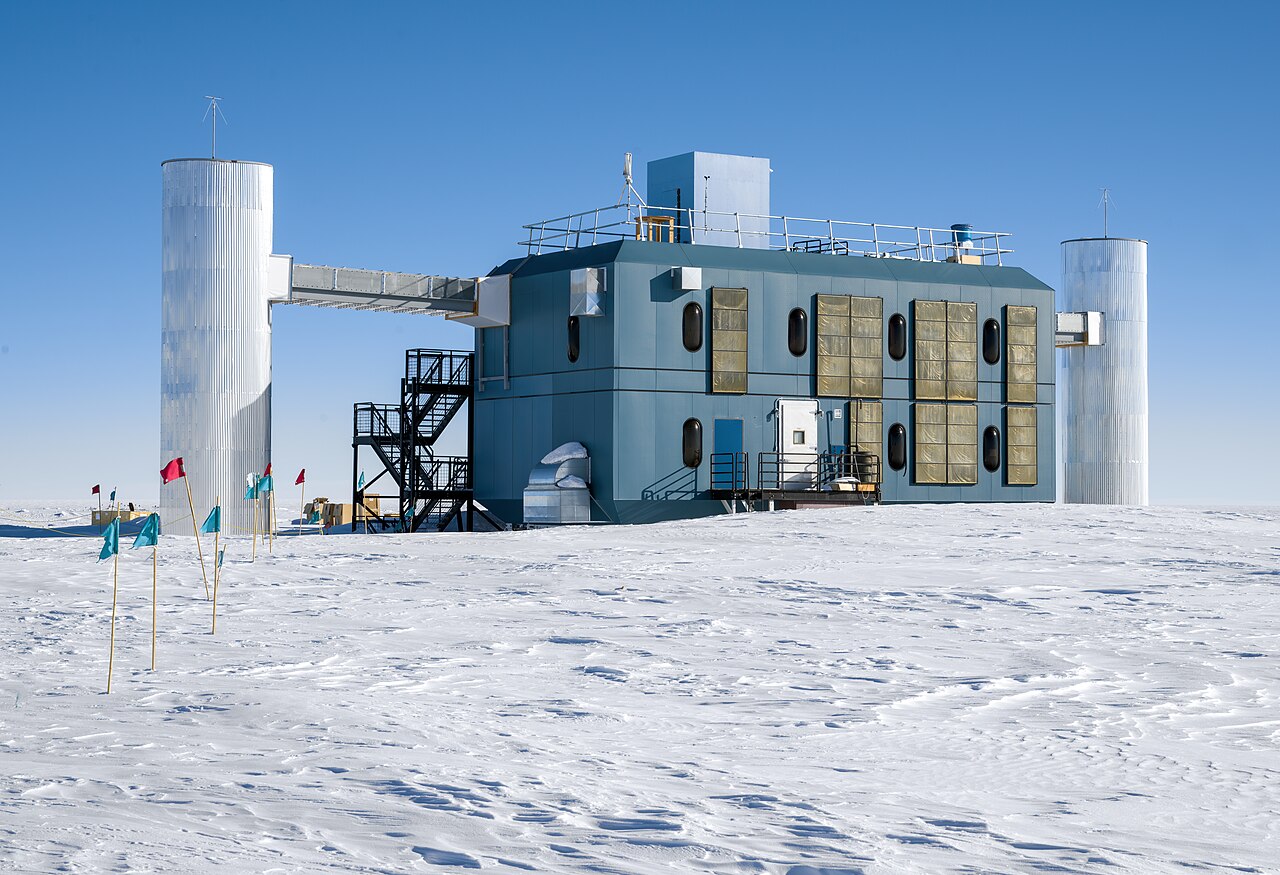
Some of the strangest observatories do not collect light at all. are tiny particles made in the Sun, in exploding stars and in other violent events. Trillions pass through your body every second without any effect. They hardly ever hit anything, so they are very hard to catch.
To catch even a few, scientists build huge detectors and bury them. Rock, deep water or thick ice shields the detector from other particles. Only neutrinos get through. Examples include the Sudbury Neutrino in Canada and the Baikal telescope in a Siberian lake. Another is IceCube at the South Pole. It has strings of sensors set deep in Antarctic ice. They spot a faint flash when a neutrino hits an atom.
Why bother? Neutrinos travel straight from their sources and nothing blocks them on the way. So they can tell us about places that light cannot escape from, such as the centre of the Sun.
Another kind of observatory listens for . These are tiny ripples in space and time. LIGO in the United States and the European Gravitational Observatory in Italy are examples. They can measure changes far smaller than an atom.
What do observatories on Earth watch?
Not every points at the stars. Many point at our own planet, and they matter as much.
Weather observatories record the weather. Some are very old. Kremsmünster in Austria began in 1762. The Hong Kong Observatory began in 1883. Mauna Loa Observatory in Hawaii opened in 1956. It is known for measuring the gases in the air for decades, including carbon dioxide.
Marine observatories help ships. They measure tides, weather and magnetism. Many keep exact time and prepare maps and sea calendars. The United States Naval Observatory dates from 1830.
Magnetic observatories measure the strength and direction of the magnetic field of the Earth. They are built far from towns, because cars and electric machines would upset the readings. The readings are taken at one fixed spot for decades. Data centres such as INTERMAGNET then share them.
Seismic observatories record earthquakes. Volcano observatories watch volcanoes. Well-known ones are the Hawaiian Volcano Observatory and the Vesuvius Observatory. Their scientists study the dangers and forecast what a volcano might do. They also work with local people so that everyone can prepare for an eruption. Some teams can travel to a threatened volcano when asked.
All these observatories use the same trick. Careful, repeated measuring shows patterns that no single glance could.
Explore Next
Your audio story keeps playing while you look around.
Words to Know
- adaptive optics
- A system that bends a mirror to cancel the blur made by air.
- atmosphere
- The layer of gases that surrounds the Earth.
- gravitational wave
- A ripple in space and time made by massive objects moving.
- infrared
- Light we cannot see, felt by us as heat.
- interferometry
- Combining signals from several dishes to act like one huge telescope.
- light pollution
- Glow from street lamps and buildings that hides faint stars.
- neutrino
- A tiny particle that passes through almost everything.
- observatory
- A place with instruments set up to watch and measure events in nature.
- radio telescope
- A dish that collects radio waves from space.
- seeing
- How steady and sharp the sky looks through a telescope.
- ultraviolet
- Light with more energy than violet, which we cannot see.