Planet
Worlds that circle a star, from scorched rock to storms bigger than Earth.
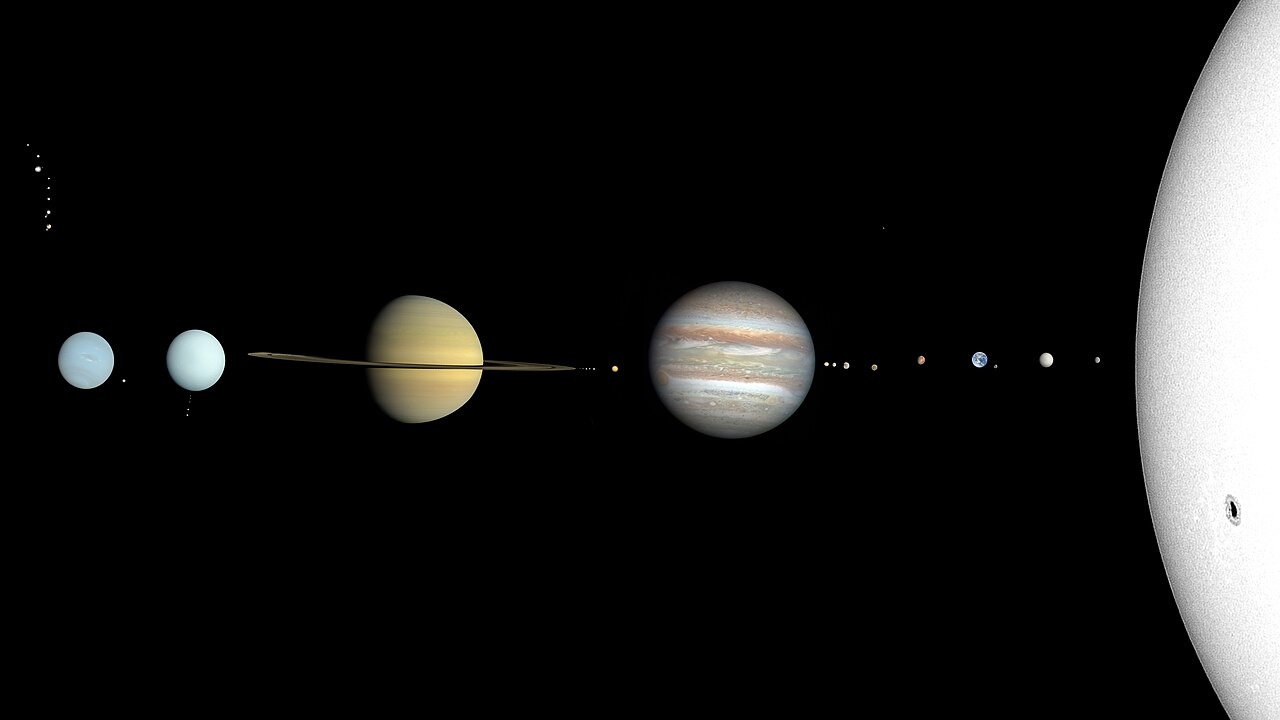
A planet is a large, round world that travels around a star. Our Solar System has 8 of them, from small, scorched Mercury to the icy, windswept blue of Neptune. Some are made of rock, some mostly of gas, and one of them, Earth, is the only world we know that has life. Yet "planet" is a surprisingly hard word to define. Ancient sky-watchers used it for lights that wandered across the stars. Astronomers added new worlds every time telescopes improved, and in 2006 a vote took Pluto off the list. Today astronomers have found more than 6,000 planets around other stars, and the count keeps growing.
What makes a planet a planet?
Astronomers agree on the big idea, but the exact rules have changed over time. In 2006 the International Astronomical Union, the group that names and sorts objects in space, wrote a definition for our Solar System. A planet must the Sun. It must be massive enough for its own gravity to pull it into a round shape. And it must have cleared its neighbourhood, which means it has gathered up or flung away most other objects that share its path.
The round-shape rule comes from gravity. A small lump of rock can stay lumpy, because the strength of the rock holds it together. Beyond a certain mass, gravity wins. It pulls everything towards the centre until the object settles into a ball. That is why small asteroids are often shaped like potatoes and planets are not.
The third rule decides the difficult cases. Earth moves through space almost alone, because over billions of years it has swept up or scattered nearly everything near its path. Pluto shares its region with thousands of other icy bodies, so it fails the test. Objects that are round and orbit the Sun but have not cleared their path are called .
By this definition the Solar System has 8 planets. In order from the Sun they are Mercury, Venus, Earth, Mars, Jupiter, Saturn, Uranus and Neptune. Many planetary scientists still use the word more widely, and would include dwarf planets and large moons as well.
How are planets born?
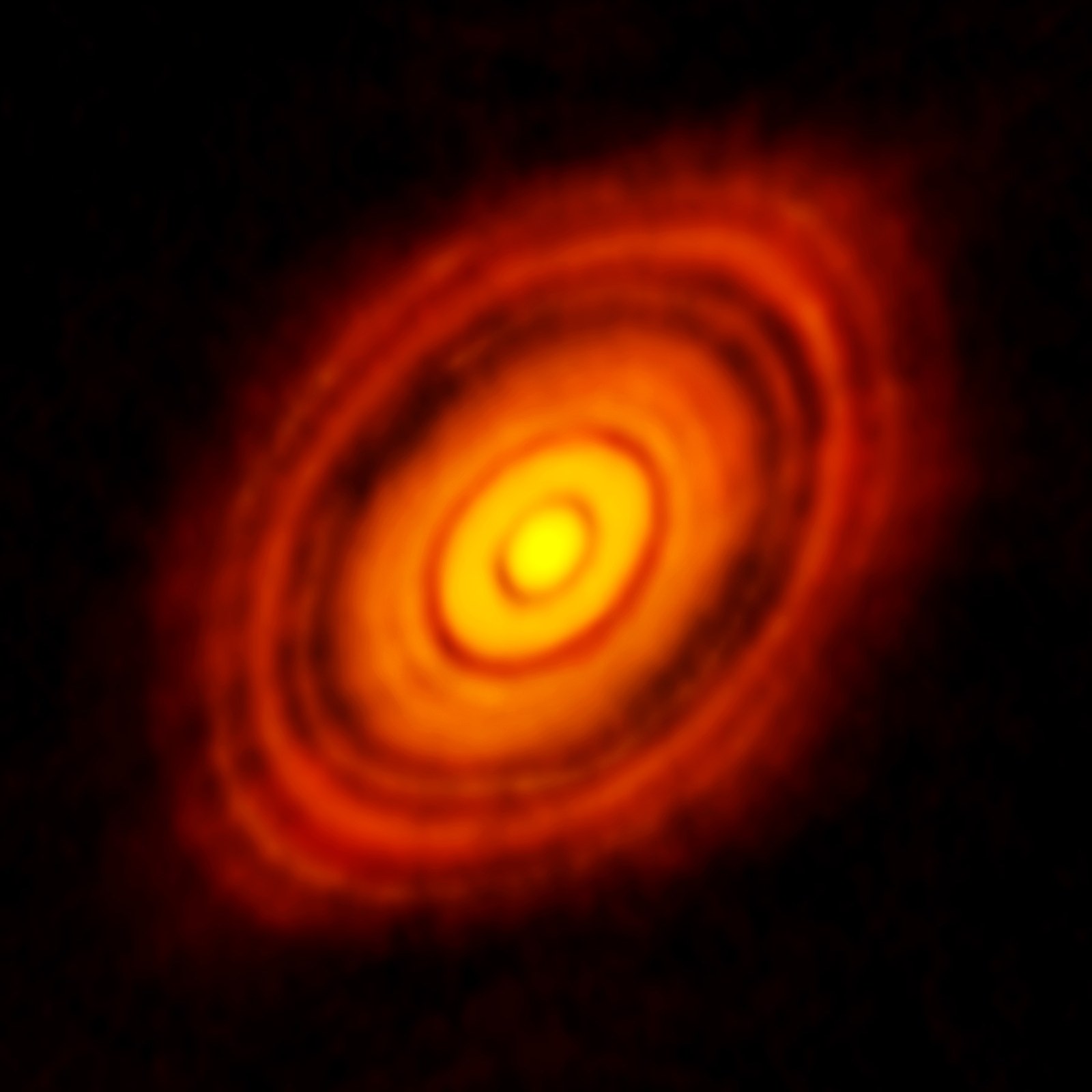
Planets begin inside huge clouds of gas and dust drifting between the stars. Such a cloud is called a nebula. When part of a nebula collapses under its own gravity, it flattens into a spinning disk. At the centre a young star, a protostar, starts to form. The leftover material in the disk is what planets are built from. This account is called the nebular hypothesis, and it is the best theory we have.
Building a planet starts with dust grains bumping and sticking together. This process is called . Clumps grow into bodies named , and once a planetesimal is large enough, its gravity pulls in more material, so it grows faster. The biggest ones become protoplanets. When a protoplanet grows a little heavier than Mars, it can hold a wide blanket of gas, and that blanket helps it catch even more material. Depending on how much rock, ice and gas a young planet collected, it may become a rocky planet, an or a .
Growing planets were hot. Crashes heated them, and so did radioactive decay, so they partly melted. Heavy materials such as iron sank towards the middle, and lighter ones rose nearer the surface. This sorting by density is called differentiation.
When the star finally ignites, its light and wind clear away the leftover gas from the inside outwards. Protoplanets that remain collide and merge, or get captured as moons. Astronomers are not certain of every step. Each new planetary system they find gives them a way to test the theory and sometimes to change it.
What are the four rocky planets like?

Mercury, Venus, Earth and Mars are called the , from the Latin word for Earth. They are made mostly of rock and metal and they have solid surfaces. Earth is the largest of the four. They are small beside the giants, but each one is a very different place.
Mercury is the closest planet to the Sun and the smallest, with only about 5% of Earth's mass. It circles the Sun in just 88 days. Its gravity is too weak to hold a substantial atmosphere, so it has almost none.
Venus is nearly Earth's size, but its air is mostly carbon dioxide and the pressure at the surface is about 92 times Earth's. The gas traps heat in a runaway greenhouse effect, which makes Venus the hottest planet, even hotter than Mercury. High in its clouds, about 50 to 55 kilometres up, temperature and pressure are close to Earth's. That is the only place beyond Earth in the Solar System where this is true.
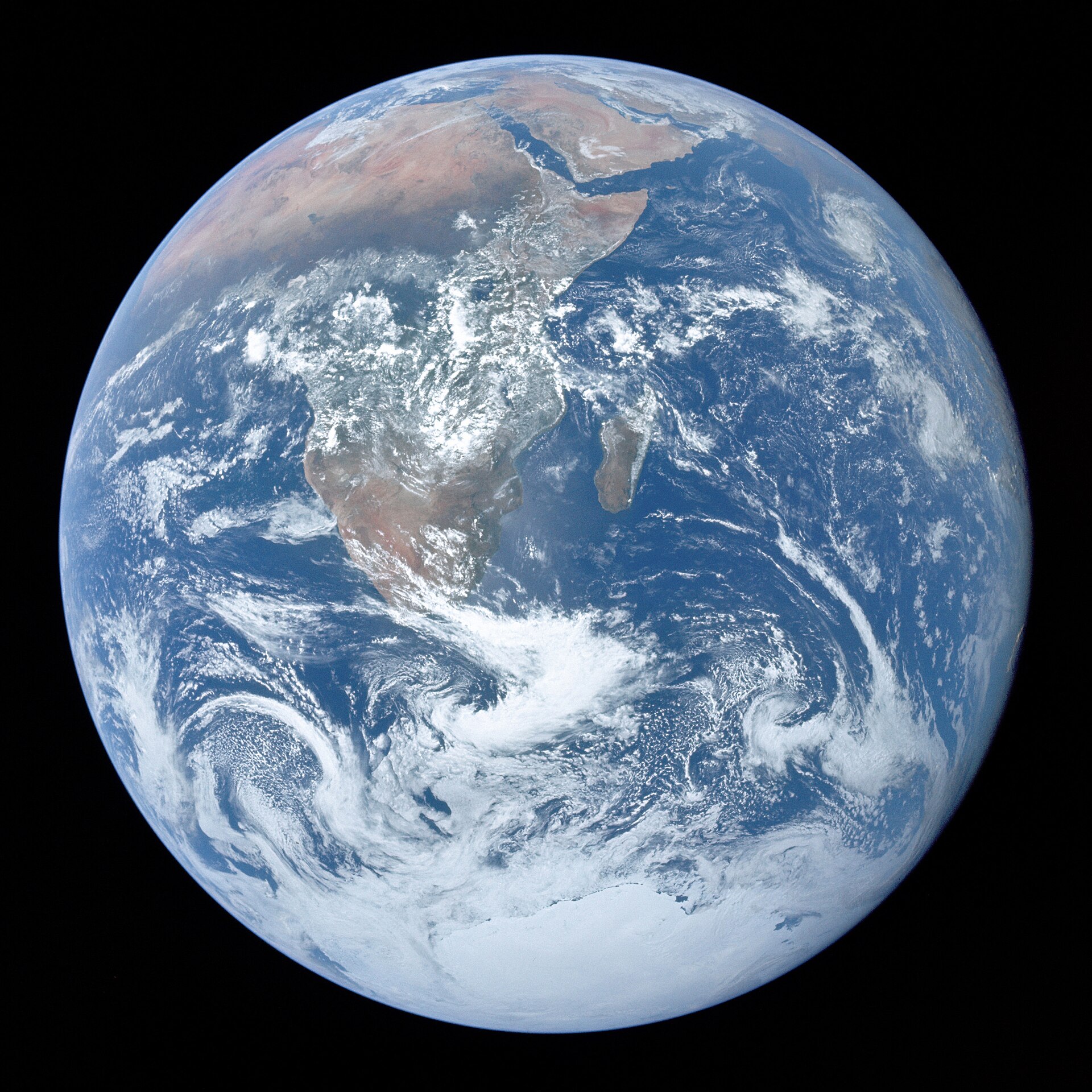
Earth has liquid water on its surface, and its oxygen-rich air was made by living things. Mars also has carbon dioxide air, but it is very thin. The pressure at the surface is less than 1% of Earth's, too low for liquid water to last. Mars still has weather, including dust storms that cover the whole planet. Earth and Mars have moons, one and two, but Mercury and Venus have none.
Why are the giant planets so different?
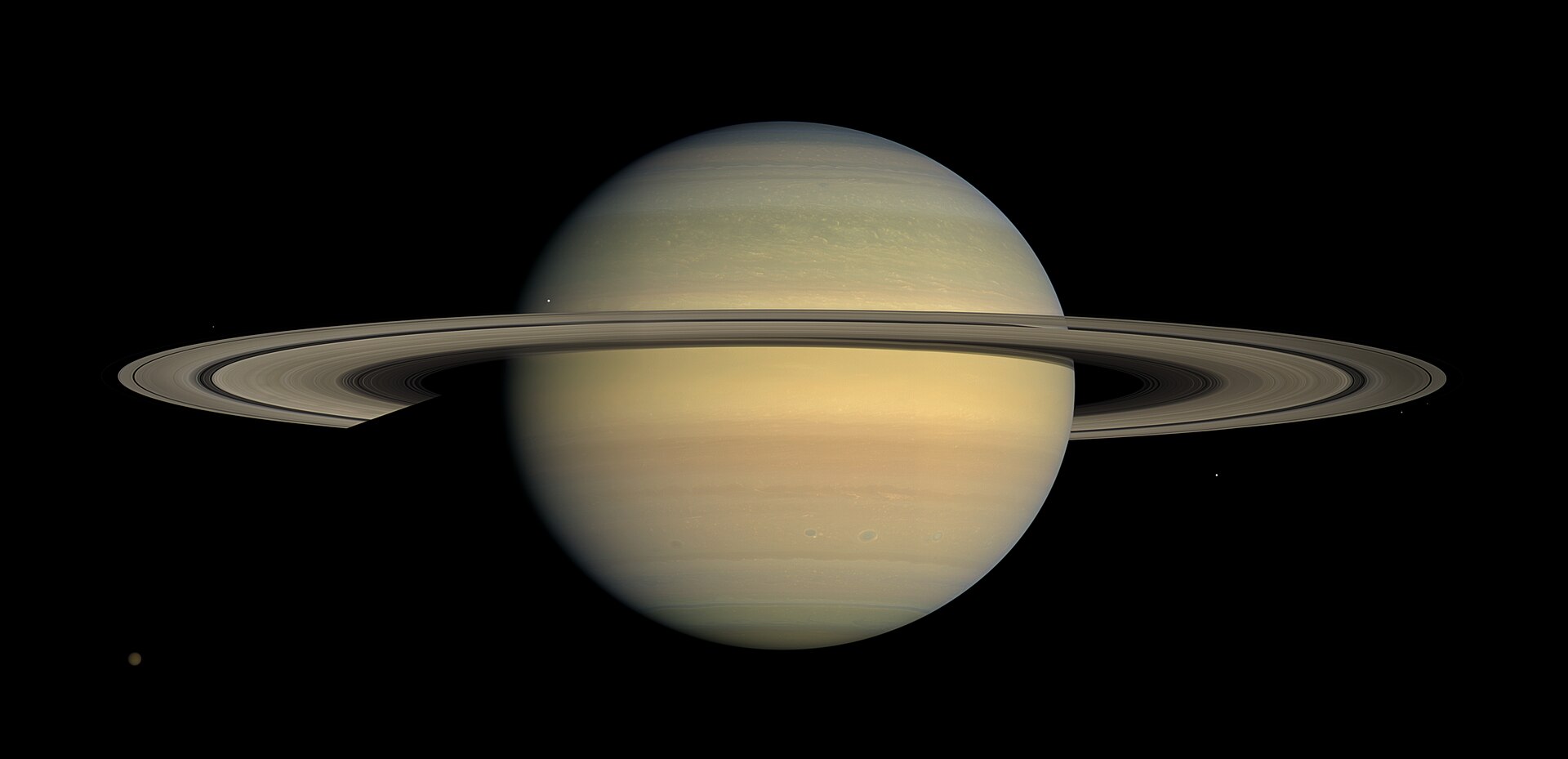
Beyond Mars the planets change completely. Jupiter, Saturn, Uranus and Neptune are called the giant planets, and they are far heavier than the rocky ones. Jupiter has about 318 times the mass of Earth. Saturn has 95 times. Neptune has 17 times and Uranus 14 times.
The giants come in two kinds. Jupiter and Saturn are , made mostly of hydrogen and helium, the two lightest gases. Uranus and Neptune are . They are built mainly of water, methane and ammonia, which freeze or turn to liquid at fairly low temperatures, wrapped in thick air of hydrogen and helium. Giants can keep these light gases because their gravity is strong. Smaller planets lose them into space.
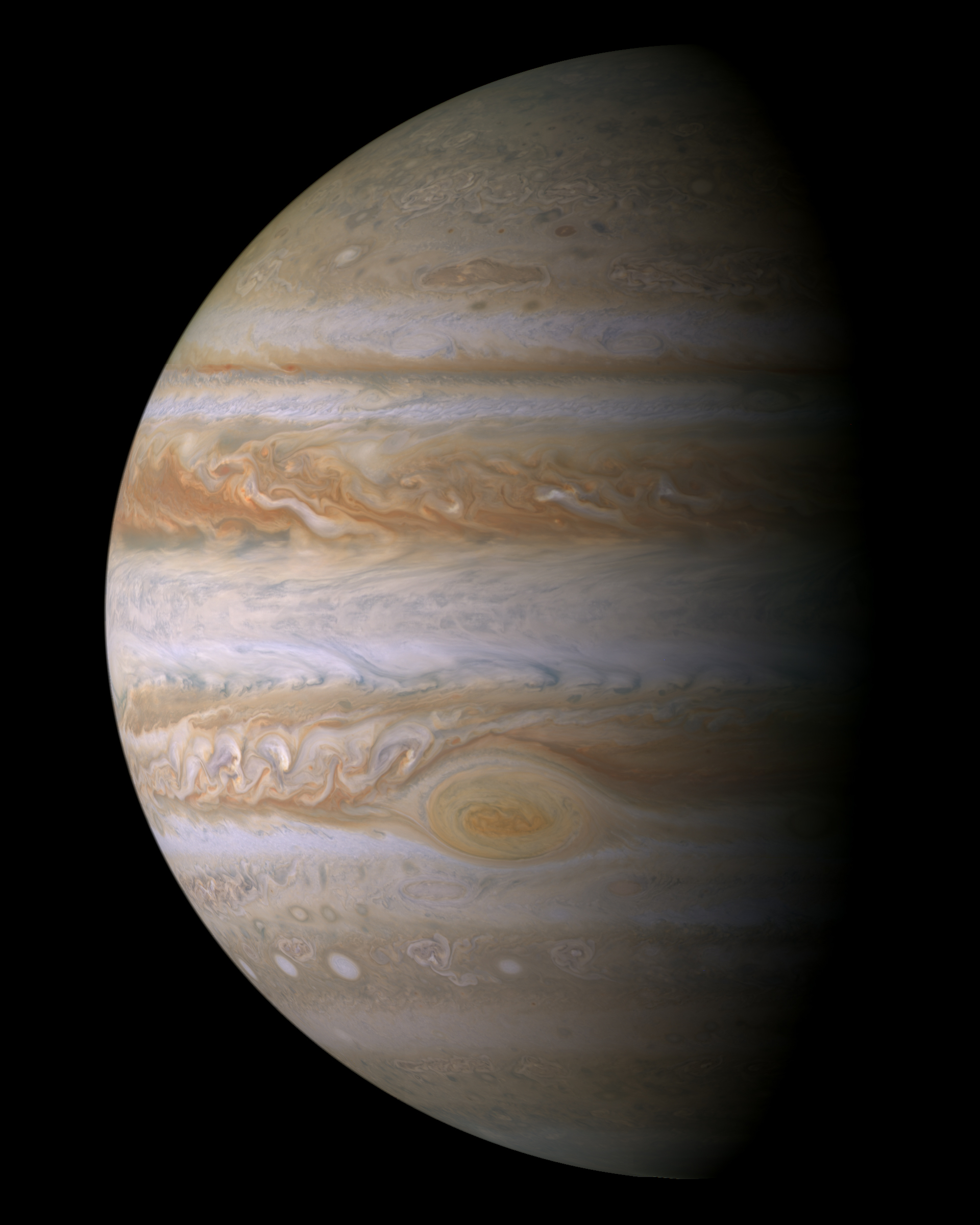
None of the giants has a solid surface to stand on. Their upper layers are clouds, and the deeper layers blend gradually into hotter, denser fluid. The clouds hold giant storms. Jupiter's Great Red Spot is a whirling storm bigger than Earth, and Neptune has shown dark spots in its atmosphere.
All four giants have rings, made mostly of dust and small pieces of material. Saturn's are the largest and most complex. Scientists think rings come from moons that strayed too close to their planet and were torn apart by its gravity. The giants also have many moons, so each one is like a small solar system of its own. Some of these moons, especially Europa and Enceladus, are studied as possible homes for life.
What is inside a planet, and what shields it?
Every planet began as a hot, partly melted ball, and heavy material sank towards the centre. The result is layers. Each planet has a dense core, a mantle around it that is or once was fluid, and a surface or cloud layer on top. The rocky planets have cores of iron and nickel and mantles of rock called silicates, sealed under a hard crust. Jupiter and Saturn are thought to have cores of rock and metal, surrounded by hydrogen squeezed so hard that it behaves like a metal. Uranus and Neptune have rocky cores wrapped in mantles of water, ammonia and methane.
Moving fluid inside a planet can make a magnetic field. This is called a geodynamo. The field reaches far into space and forms a bubble called a , which the solar wind, a stream of charged particles from the Sun, cannot easily enter. Mercury's field is the weakest of the magnetised planets, and Jupiter's is the strongest in the Solar System. The fields of Uranus and Neptune are tilted and off-centre. Only Venus and Mars have no such field. A magnetic field is a sign that a planet is still active inside.
Gravity and spin also shape a planet. Gravity makes planets round. Spin makes them bulge. Earth is slightly flattened at the poles, so its width across the equator is a little larger than the distance from pole to pole.
Why do planets have years, days and seasons?
All 8 planets travel around the Sun in the same direction, the same way the Sun spins. One full trip is a planet's year. The farther a planet is from the Sun, the longer the path it has to travel and the more weakly the Sun's gravity pulls it, so it moves slower. Mercury, at about 0.4 , finishes its in 88 days. An astronomical unit is the distance from Earth to the Sun. Neptune, at 30 of them, takes 165 years.
No orbit is a perfect circle. Each is a slightly stretched oval called an ellipse, so a planet's distance from the Sun changes during its year. It speeds up when it falls closer and slows down as it moves away, just as a ball thrown upwards slows near the top.
Seasons exist because planets spin tilted. The tilt means each half of a planet leans towards its star for part of the year and away for the rest. Earth, Mars, Saturn and Neptune have moderate tilts. Jupiter's is tiny, so it has almost no seasons. Uranus is tipped almost onto its side, so around its solstices one pole has continual sunlight and the other continual darkness.
Spin sets the length of a day. The giant planets turn in a few hours. Venus takes 243 Earth days to turn once, and it spins backwards compared with most planets. Mercury turns exactly three times for every two orbits, a pattern called a 3:2 resonance.
Is Pluto still a planet?
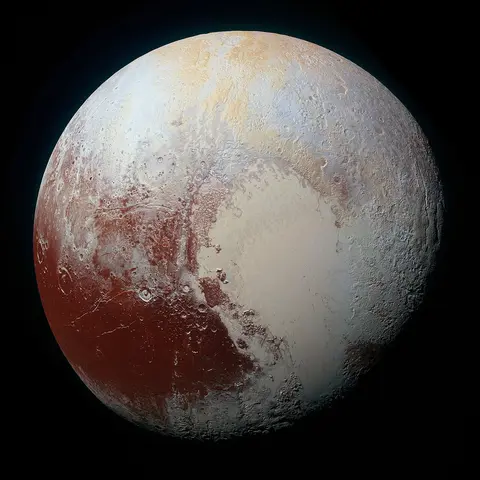
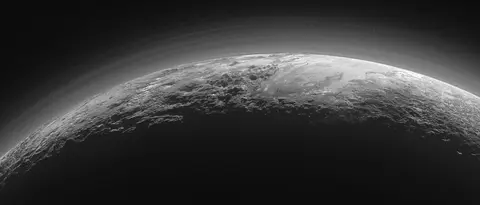
Pluto was discovered in 1930 and was soon accepted as the ninth planet. Early estimates said it was larger than Earth. Then measurements kept shrinking it. In 1978 the discovery of its large moon Charon showed that Pluto has only about 0.2% of Earth's mass.
Meanwhile astronomers found that Pluto was not alone. It belongs to the Kuiper belt, a wide ring of icy bodies beyond Neptune, and during the 1990s and early 2000s many more were found. In 2005 came Eris, which is 27% more massive than Pluto. If Pluto was a planet, Eris had to be one too, and more discoveries were likely. Astronomers could not even name Eris properly without deciding what a planet was.
So in August 2006 the International Astronomical Union voted on its definition. Pluto and Eris did not qualify, because neither has cleared its . They became . Ceres, the largest object in the asteroid belt between Mars and Jupiter, is one too. Most astronomers agree on 9 dwarf planets, and all are smaller than Mercury. Pluto is the largest. Eris is the most massive.
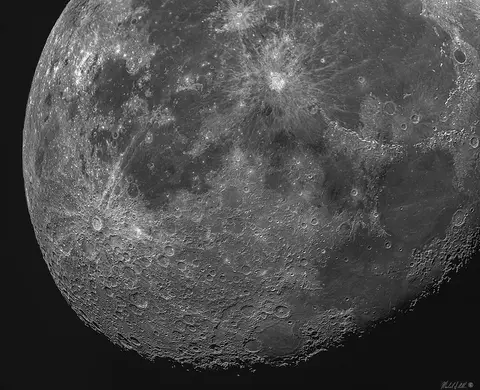
Moons are another grey area. At least 19 moons are massive enough to be round, including Earth's Moon, Jupiter's Ganymede and Saturn's Titan. Ganymede and Titan are wider than Mercury, though much less massive. Many scientists call these worlds planets in the broad sense, but by the 2006 rules they are not, because they orbit planets instead of the Sun.
How did people discover the planets?

Five planets can be seen without a telescope: Mercury, Venus, Mars, Jupiter and Saturn. Unlike the stars, they drift across the sky from night to night. The ancient Greeks called them wanderers, and that is where our word planet comes from. Almost every early culture linked them with gods. The Babylonians kept careful records, such as a clay tablet that lists the movements of Venus, and their methods fed into later Greek and Western astronomy.
Most ancient thinkers believed that Earth sat still at the centre and everything circled it. This seemed obvious, because the Sun and stars appeared to move across the sky each day. Aristarchus of Samos suggested in the 3rd century BC that the planets circled the Sun, but his idea did not win. Instead, Ptolemy's Earth-centred model, written down in the 2nd century CE, stayed the standard in the West for about 13 centuries. In 499 CE the Indian astronomer Aryabhata argued that Earth rotates, and astronomers of the medieval Islamic world checked and improved Ptolemy's work.
In the 1500s and 1600s Copernicus, Galileo and Kepler placed the Sun at the centre. Earth became a planet. Galileo found 4 moons orbiting Jupiter. In 1781 William Herschel found Uranus, the first planet discovered with a telescope. Neptune was found in 1846, after its pull on Uranus showed where to look. Since the 1960s, spacecraft have visited all 8 planets, though the only other world humans have walked on is the Moon.
Are there planets around other stars?
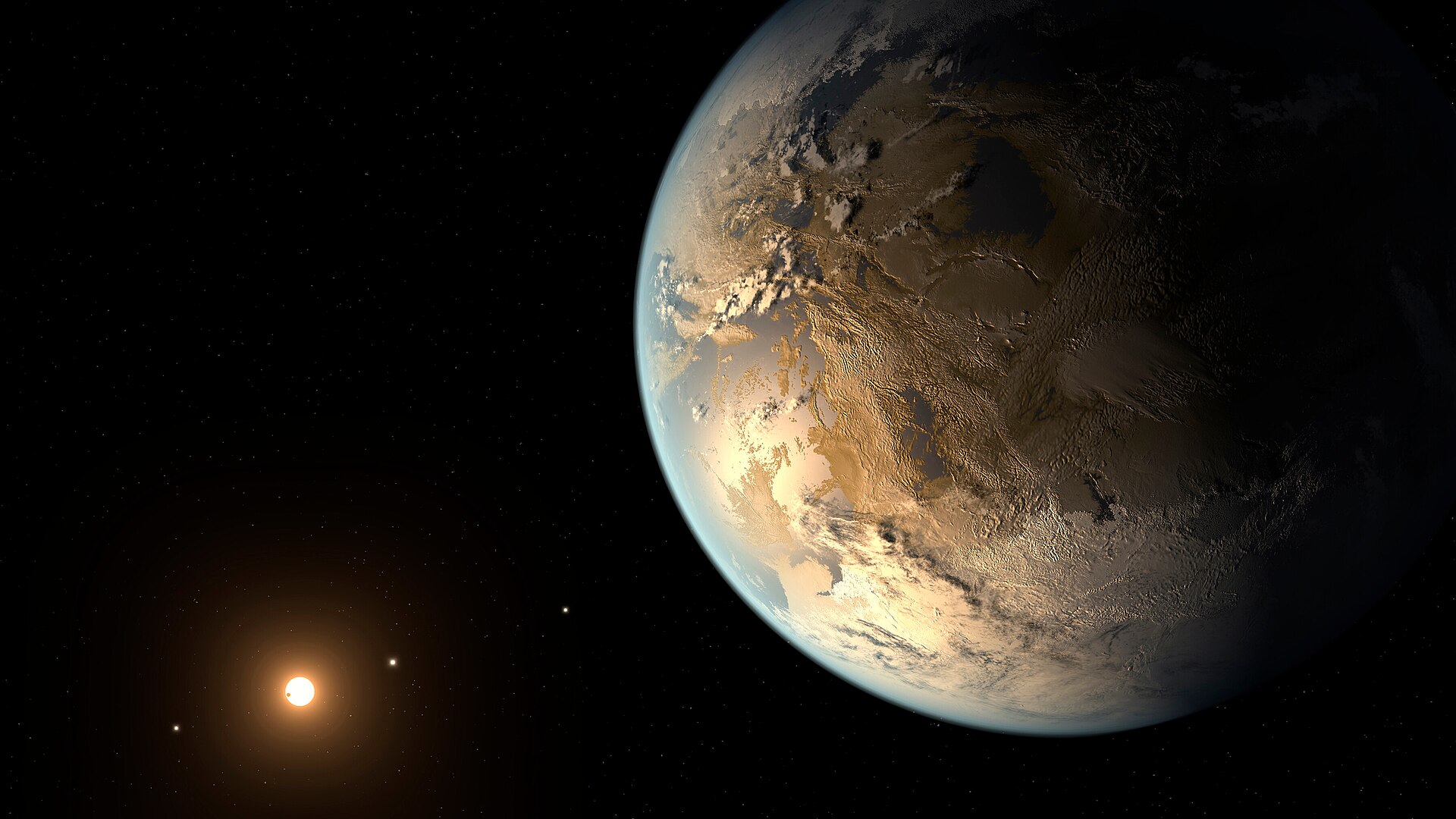
Yes, and there are a great many. A planet outside our Solar System is called an . More than 6,000 are known. A study of how starlight is bent by gravity suggests our galaxy has at least 1.6 planets for every star, so the real number runs into the hundreds of billions.
The first sure discovery came in 1992, when astronomers Aleksander Wolszczan and Dale Frail found two planets around a pulsar, the spinning remains of an exploded star. On 6 October 1995, Michel Mayor and Didier Queloz found 51 Pegasi b, the first planet around an ordinary Sun-like star. It was a hot Jupiter, a giant planet circling very close to its star. Giants were found first because they are the easiest to detect. Later the Kepler space telescope found many smaller planets. In 2011 it found Kepler-20e and Kepler-20f, the first Earth-sized planets around a Sun-like star.
Exoplanets include kinds we do not have. Super-Earths and mini-Neptunes lie between Earth and Neptune in mass. Some planets in less than a day. The Kepler-11 star has five planets that circle closer than Mercury does. At the other extreme, COCONUTS-2b is thousands of from its star and takes over a million years for one orbit.
Astronomers look especially for planets in the , where liquid water could exist on the surface. More than 100 Earth-sized planets are known, and 20 lie in a habitable zone. Still, Earth remains the only planet known to support life.
Explore Next
Your audio story keeps playing while you look around.
Words to Know
- accretion
- The slow sticking together of dust and rock that builds up planets.
- astronomical unit
- The average distance from Earth to the Sun, used to measure distances inside the Solar System.
- axial tilt
- The angle at which a planet's spin axis leans compared with its orbit, which causes seasons.
- dwarf planet
- A round object that orbits the Sun but has not cleared its orbit of other bodies.
- exoplanet
- A planet that orbits a star other than the Sun.
- gas giant
- A huge planet made mostly of hydrogen and helium, like Jupiter.
- habitable zone
- The range of distances from a star where a planet could have liquid water on its surface.
- ice giant
- A giant planet made mainly of water, methane and ammonia, like Neptune.
- magnetosphere
- The region around a planet controlled by its magnetic field, which blocks much of the solar wind.
- orbit
- The curved path one object takes around another, such as a planet around a star.
- planetesimal
- A small body in a young planetary system, the building block of planets.
- terrestrial planet
- A rocky planet with a solid surface, such as Earth or Mars.