Star
Giant balls of glowing gas that light the night and make the atoms in your body.
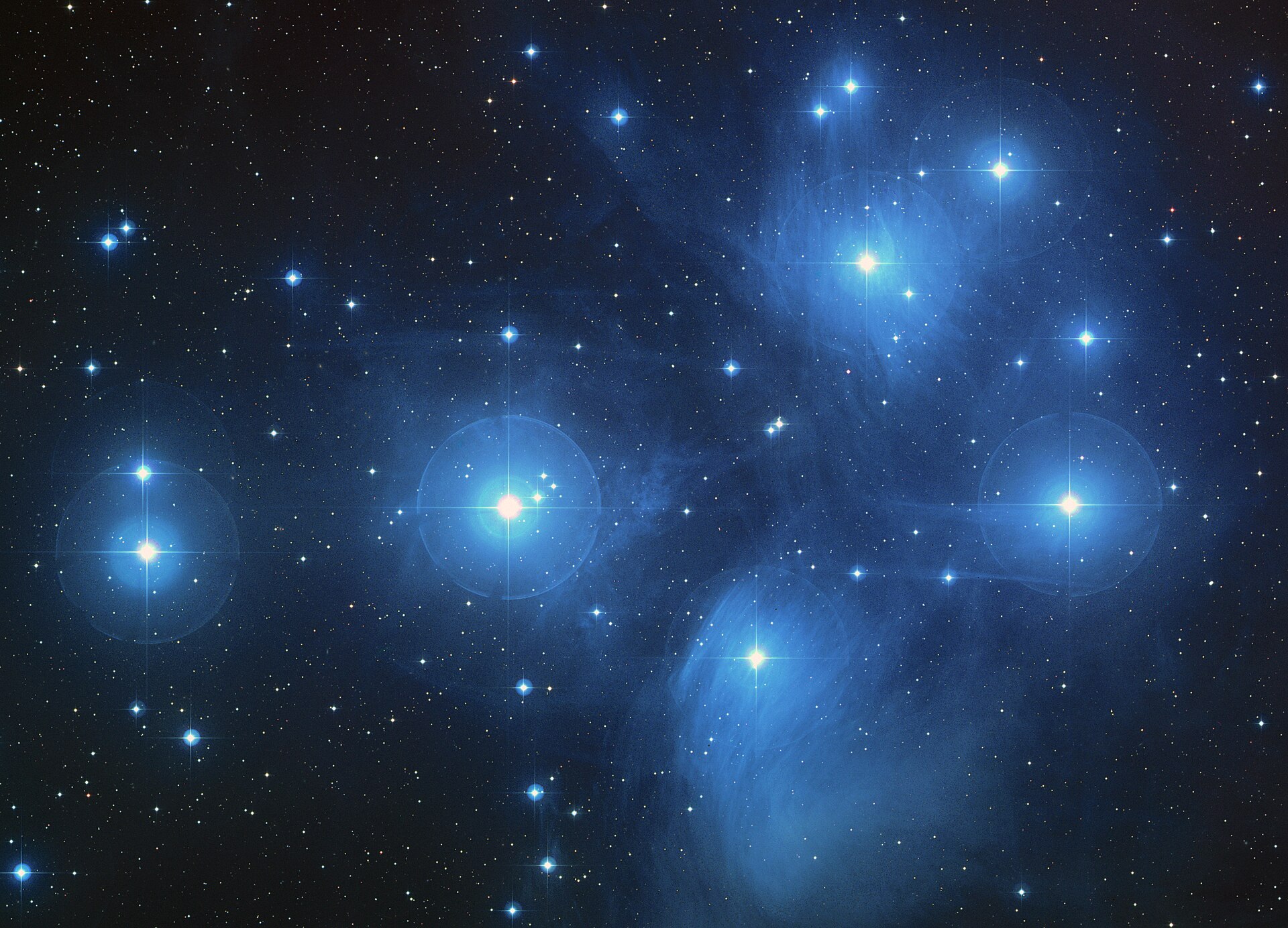
A star is a huge ball of hot gas that makes its own light. The nearest one to Earth is the Sun, which is why we have daytime. All the others are so far away that they look like tiny points of light. On a dark night you can see about 4,000 of them with your eyes alone. Every star is born inside a cloud of gas and dust, shines for millions or billions of years by squeezing atoms together, and then dies. Some end as a quiet glowing cinder. Others explode. Stars matter for another reason too. Almost every element heavier than lithium was made inside them, including the carbon, oxygen and iron in your own body.
What is a star, and why does it shine?
A star is a giant ball of very hot gas. The gas is mostly hydrogen and helium, the two lightest elements. Gravity holds the ball together, pulling every part of it towards the centre. Deep inside, that pull squeezes the gas so hard that it reaches several million degrees.
At that heat something remarkable happens. Hydrogen atoms smash together and join to make helium. This is called . Each time atoms join, a little energy is let go. Billions upon billions of these joinings every second make the star shine. The energy slowly works its way out through the star and escapes into space as light and heat.
A star is a balancing act. Gravity pulls inwards and tries to crush it. The energy from fusion pushes outwards. For most of a star's life the two forces are equal, so the star stays the same size. When the fuel runs low, the balance breaks, and that is when a star changes and eventually dies.
Stars come in many sizes and colours, but one fact controls almost everything about them. It is their mass, which means how much material they hold. Mass decides how bright a star is, how big it grows, how long it lives and how it ends. The Sun is the only star close enough for us to see as a disc and to feel its warmth. All the others look like twinkling dots. They twinkle because their light wobbles as it passes through Earth's moving air.
How have people watched the stars?
People have looked up at the stars for as long as there have been people. They used them to find their way across the sea and the desert. They used them to tell when the seasons would change, which told farmers when to plant. They built calendars from them, and they wove them into stories and religions.
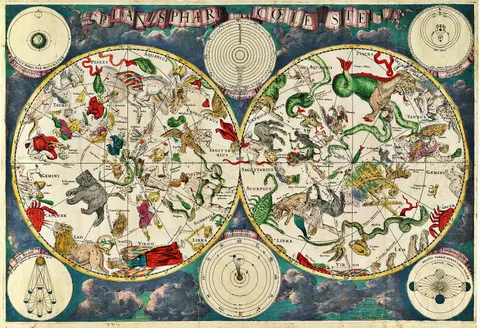
Early sky-watchers noticed that most stars stay fixed in the same patterns night after night. A few bright lights did not. They wandered slowly against the background. The Greeks called these lights planets, from a word meaning "wanderer". Ancient peoples joined the fixed stars into pictures called . The Babylonians knew of them long ago, and many of the constellations we use now come from the Greeks.
Star charts and catalogues are very old. The oldest accurately dated star chart comes from ancient Egypt, in 1534 BC. The Greek astronomer Hipparchus made a catalogue of 1,020 stars in the 2nd century BC. In 964 the Persian astronomer Abd al-Rahman al-Sufi wrote the Book of Fixed Stars. Medieval Islamic astronomers gave Arabic names to many stars, and those names are still in use today.
Many of the brightest stars have proper names, and the International Astronomical Union is the group that makes them official. Companies that sell star names to the public are not recognised by astronomers. Bright stars are also named by constellation, so a star might be called Alpha of a constellation, a system the German astronomer Johann Bayer began around 1600.
How can we learn about stars so far away?
We cannot visit a star, so astronomers read the light that reaches us. Light holds a surprising amount of information. A star's brightness gives clues about its power and its distance. Its colour shows how hot it is, since blue stars are hotter than red ones.
The most useful tool is the , which is a star's light spread out into a rainbow. Dark lines cut across the rainbow. Each line is a fingerprint left by one chemical in the star's outer layers. In 1925 Cecilia Payne-Gaposchkin used spectra to show that stars are made mostly of hydrogen and helium. People had expected stars to be like Earth. She showed they were not.
Distance is harder. In 1838 Friedrich Bessel made the first direct measurement of the distance to a star, called 61 Cygni. He used . Hold a finger at arm's length and look at it with one eye, then the other. It seems to jump against the background. As Earth travels round the Sun, a nearby star shifts a tiny bit against far-off stars in the same way. The size of the shift gives the distance. Bessel found 61 Cygni was about 11.4 away, a vast gap that proved how far apart stars are.
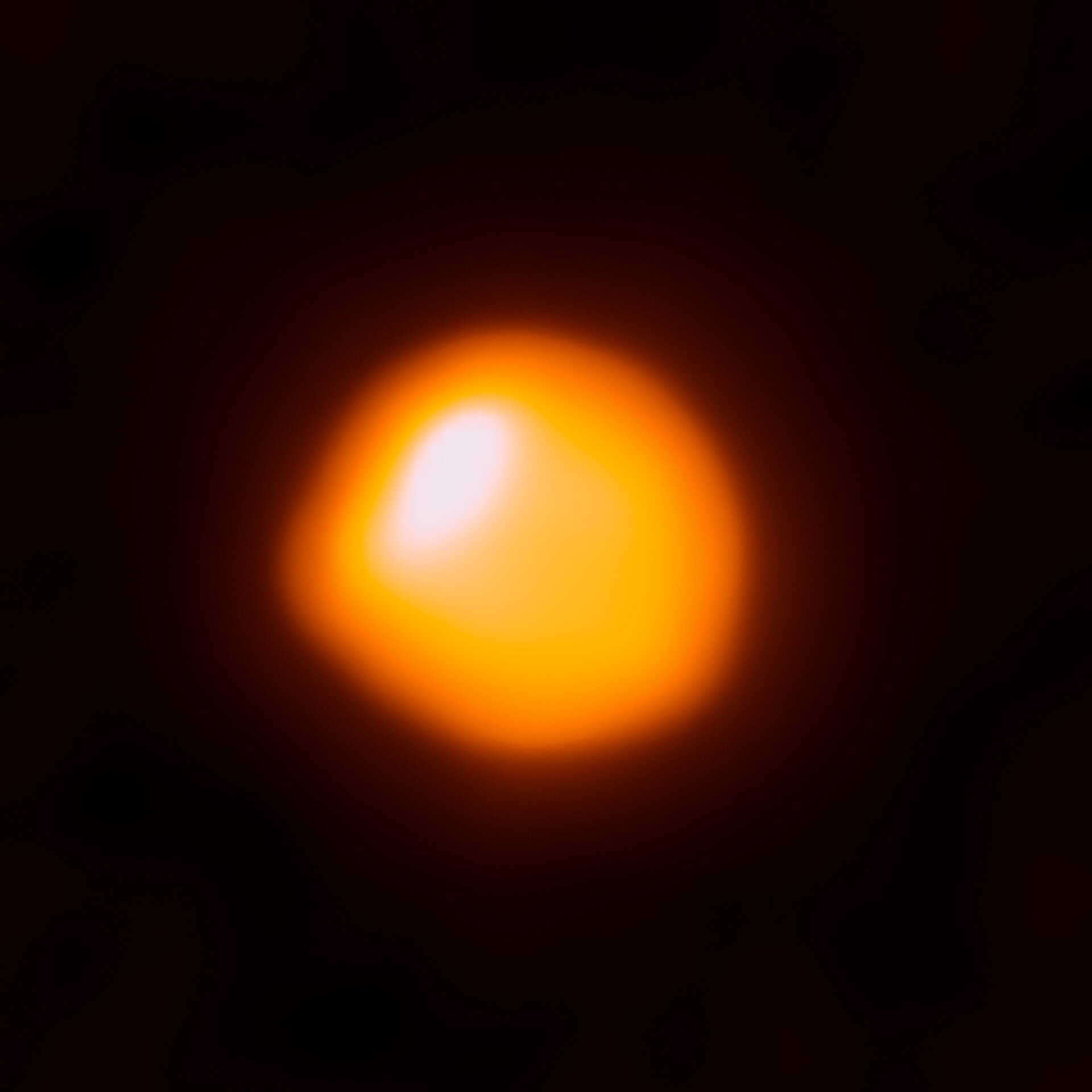
Even the largest stars look like points through most telescopes. To see a star's disc, astronomers join telescopes together in a technique called interferometry. A radio array in Chile has captured the disc of Betelgeuse. Astronomers can also time how a star's light fades as the Moon passes in front of it, which lets them work out its size.
How is a star born?
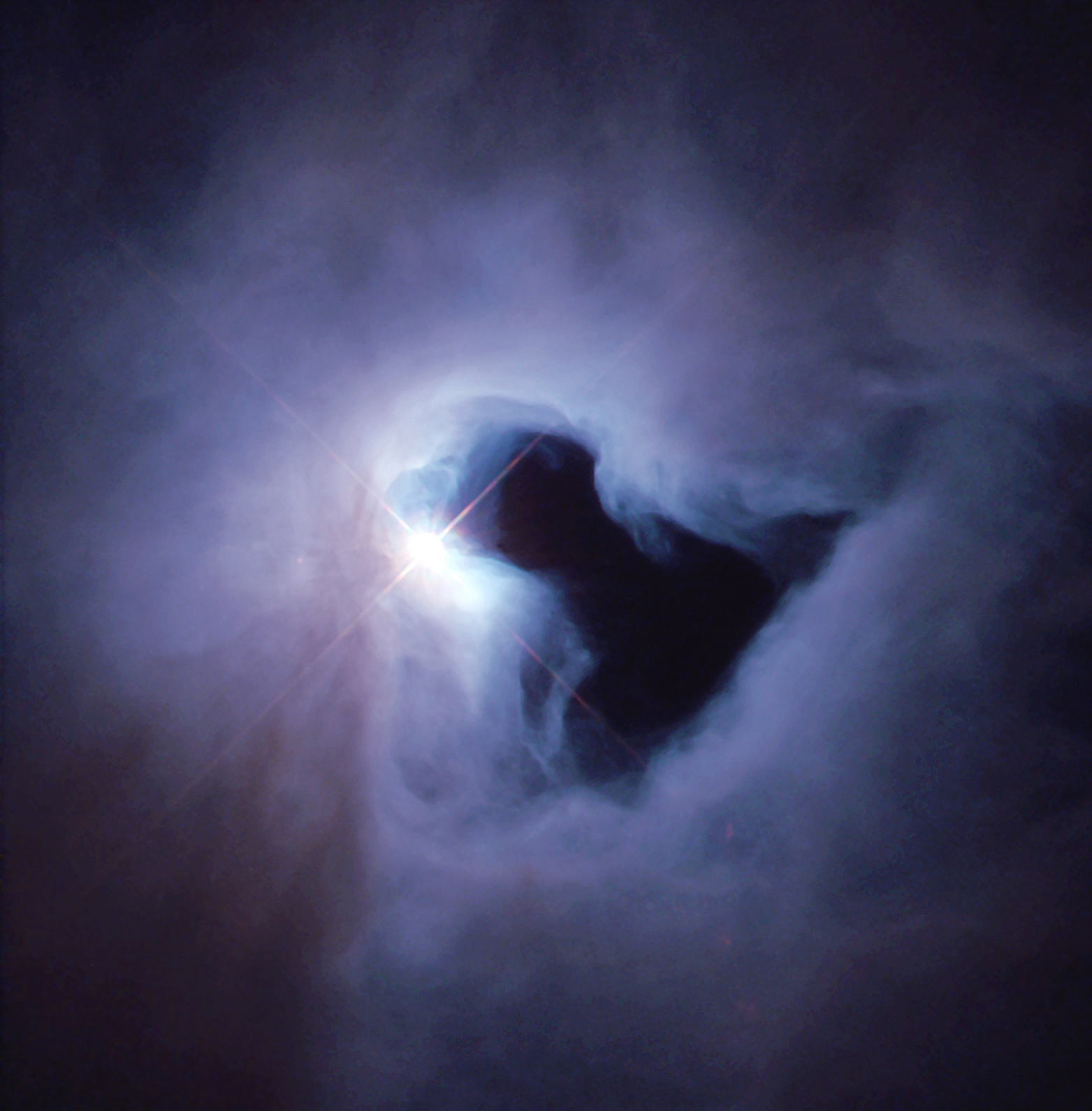
Stars begin in giant clouds of gas and dust called molecular clouds. These are mostly hydrogen, with a good helping of helium and a few percent of heavier elements. The clouds are thin, even thinner than the best vacuum we can make in a laboratory. Yet they are enormous, and they hold enough material to build many stars. The Orion is one star-forming cloud you can see with the naked eye, in the Sword of Orion.
Something has to disturb a cloud to start the process. It might be squeezed by light from nearby massive stars, by a bubble of gas blown by a dying star, or by a collision with another cloud. A dense clump then begins to fall inwards under its own gravity. As it shrinks, it gets hotter, because falling material turns its energy into heat.
At the centre a hot, dense ball called a protostar forms. A flat disc of dust and gas often spins around it, and planets can later grow from this disc. Young stars also shoot out fast jets of gas. For a star like the Sun, this shrinking stage lasts about 10 million years. For a small red dwarf it can take up to 100 million years.
The star is truly born when its centre becomes hot enough for hydrogen fusion to start. Then it shines in its own right. Most stars are born in groups of dozens to hundreds of thousands. Light and winds from the heaviest stars in the group often blow the leftover cloud away. Stars in such a group formed from the same cloud, so they share the same age and makeup.
Why do some stars live fast and die young?
Stars spend about 90% of their lives on what astronomers call the . This is the long, steady stage when they fuse hydrogen into helium in their cores. The Sun is in this stage now. It reached it about 4.6 billion years ago and is expected to stay there for about 10 billion years in all.
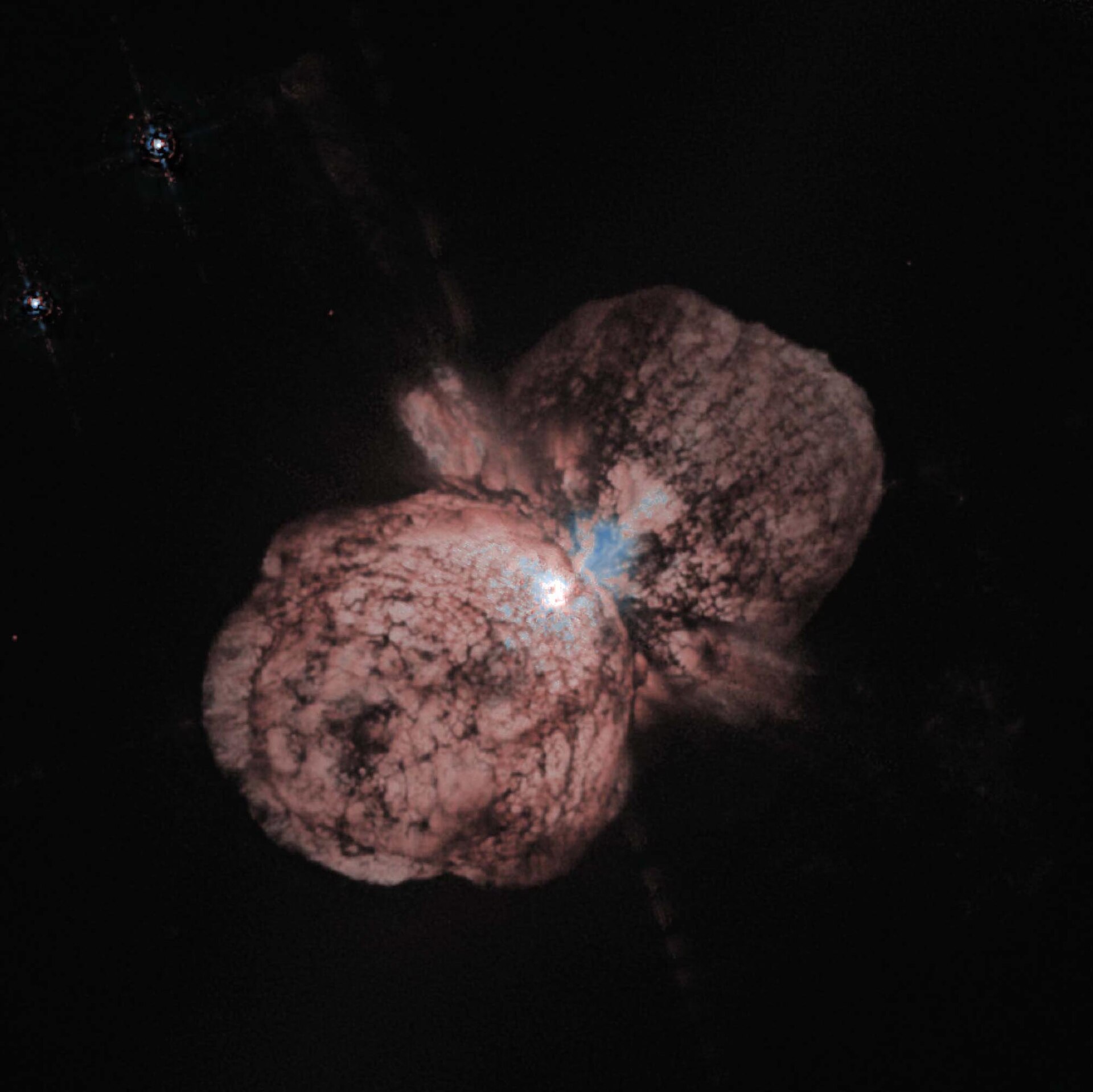
A star's mass decides how long it lasts. This seems backwards at first. A heavy star has far more fuel, so you might expect it to live longer. But the great weight pressing on its core makes fusion run much faster. It burns through its fuel in a short time. The most massive stars last only a few million years. Eta Carinae, with 100 to 150 times the mass of the Sun, will live only a few million years.
Small stars are the opposite. Red dwarfs are stingy with their fuel and can fuse almost all their hydrogen. They can shine for about a trillion years, which is far longer than the universe has existed. The universe is about 13.8 billion years old. So no red dwarf has yet died of old age.
Red dwarfs are also the most common stars. About three-quarters of all stars are red dwarfs, but none is bright enough to see without a telescope. Stars also lose some mass during this stage. Each one sends out a stream of particles called the stellar wind. The Sun loses very little this way. Very massive stars can blow off enormous amounts, and some lose over half their mass while still on the main sequence.
How do stars die?
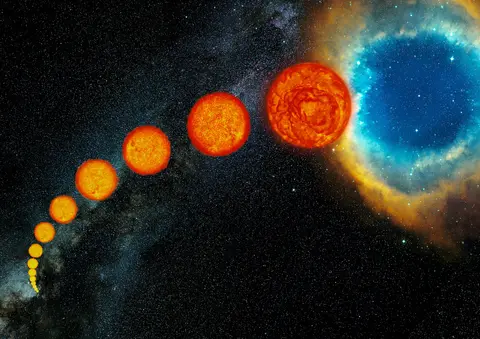
What happens at the end depends on the star's mass. When a star like the Sun runs out of hydrogen in its core, fusion moves to a shell around the core. The star swells and cools into a . In about 5 billion years the Sun will do this. It will grow to about 250 times wider than it is today and lose about 30% of its mass.
Eventually the star puffs its outer layers into space as a glowing shell called a planetary . The name is misleading, because it has nothing to do with planets. What is left behind is the hot core, about the size of Earth. It is called a . It no longer makes new energy. It cools and fades over a very long time.
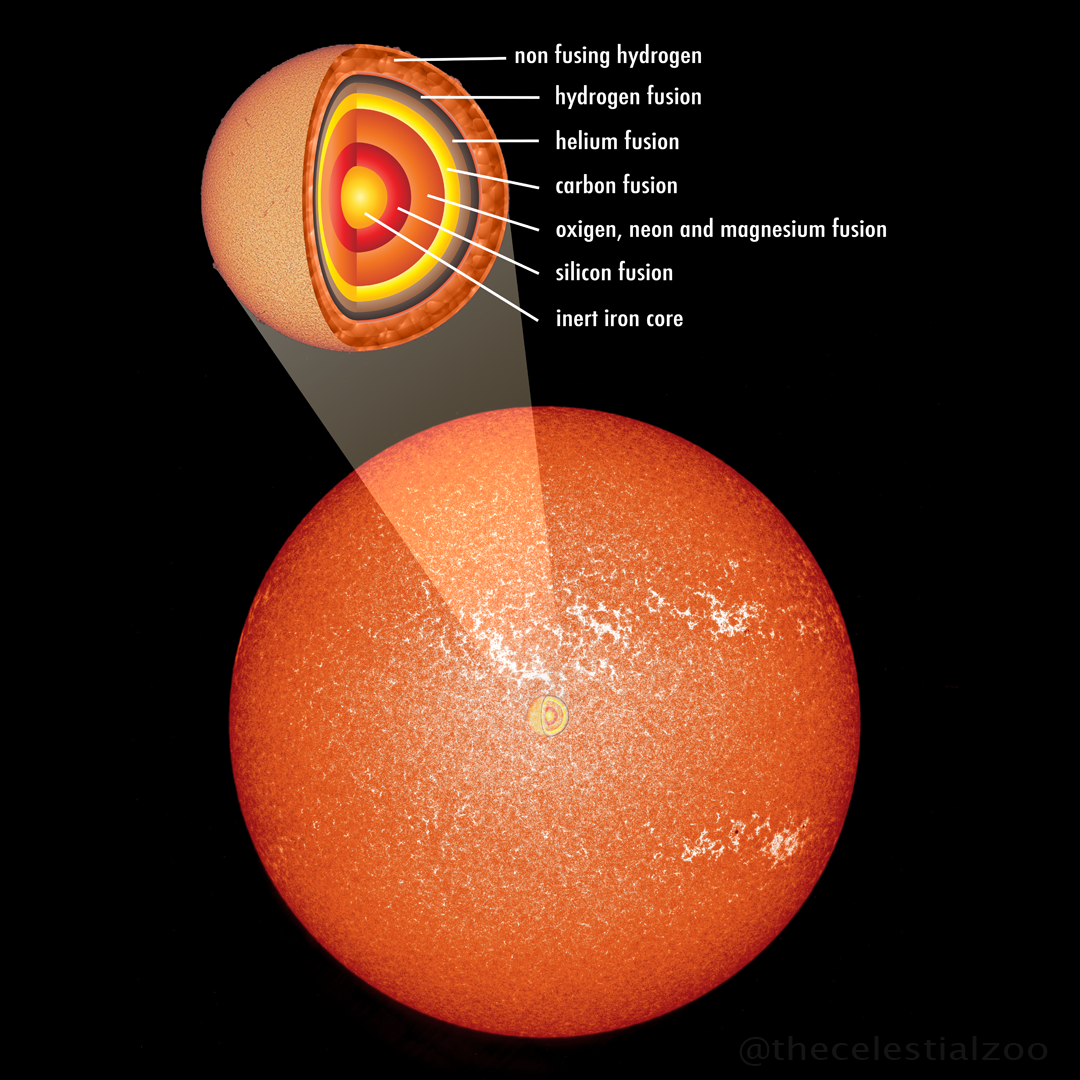
Massive stars have a more violent end. They swell into supergiants and keep fusing heavier and heavier elements, in layers like an onion. At last the core turns to iron. Fusing iron does not release energy, so the core has nothing to hold it up. It collapses in a fraction of a second and the rest of the star blasts outwards. This is a . For a short time it can outshine its whole home galaxy.
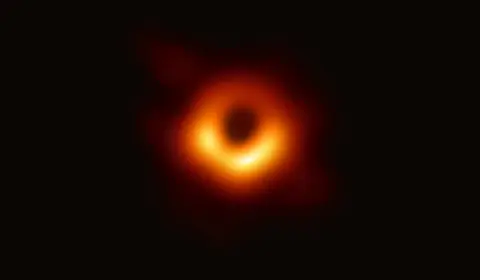
A supernova leaves a remnant behind. The Crab Nebula is the remains of one that Chinese and Islamic astronomers saw in 1054. The core becomes a , a ball only about 20 kilometres wide that is packed so tightly that a teaspoon of it would weigh billions of tonnes. The heaviest stars leave a black hole. Supernovae also scatter new elements. This gas later forms new stars, planets and, in at least one case, people.
Do stars come alone or in families?
Our Sun is on its own, but many stars are not. A is a pair of stars that circle each other, held together by gravity. Some systems have three or more. A large part of Sun-like stars have a partner, and the heavier a star is, the more likely it is to have one. About 80% of the hottest, brightest O and B stars belong to a multiple system. A 2017 study of a gas cloud in Perseus suggested that most young stars start out in pairs.
William Herschel was the first to show that some stars that seem close together really are partners. Binaries are very useful. By timing how fast two stars orbit, astronomers can use gravity to work out how heavy each one is. That is one of the best ways we have to weigh a star.
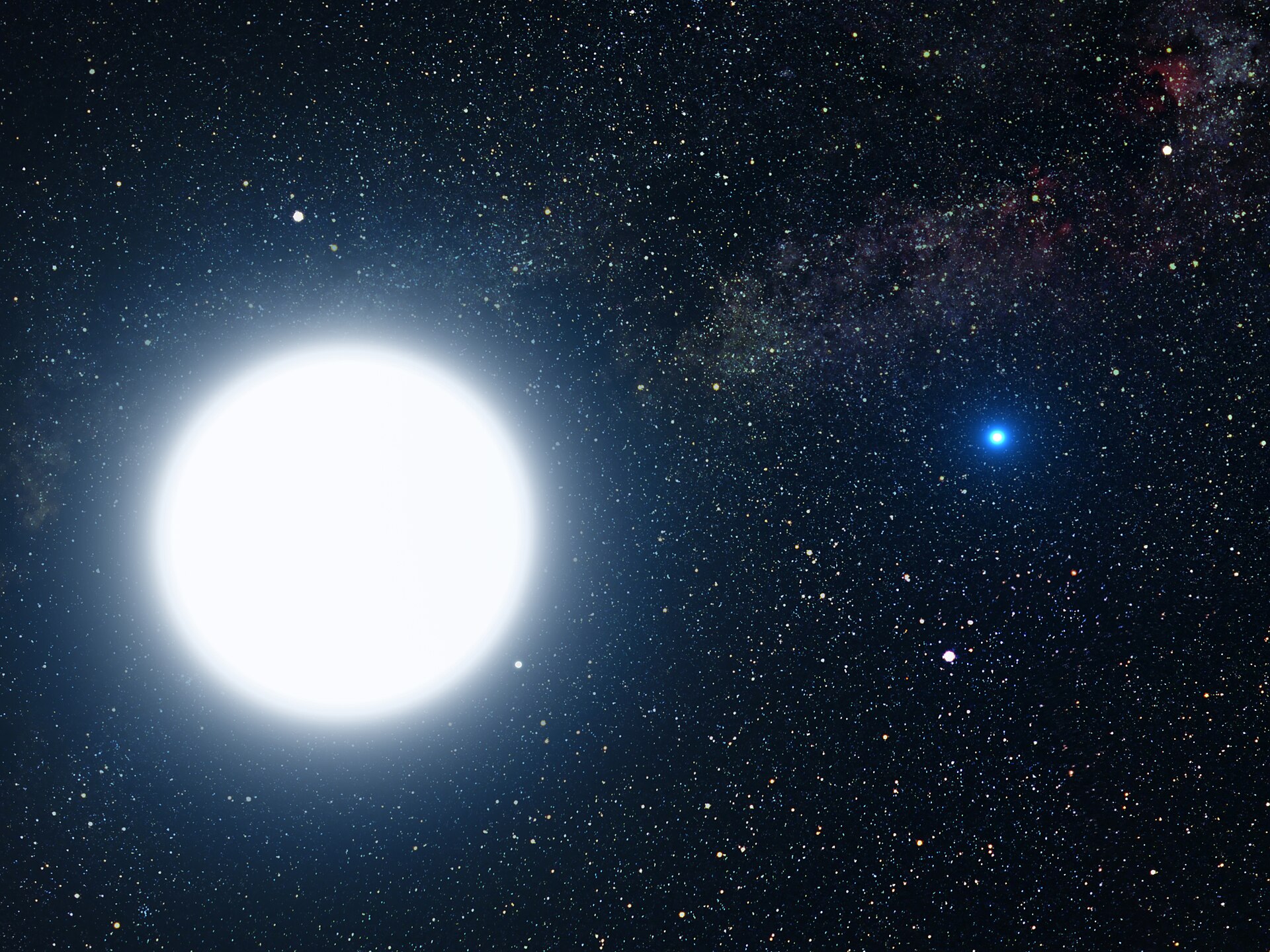
Sirius, the brightest star in our night sky, is a good example. In 1834 Friedrich Bessel noticed that Sirius wobbled as it moved. He worked out that an unseen companion must be tugging on it. We now know that this companion, Sirius B, is a , a tiny hot cinder of a star.
Close pairs can change each other's lives. When one star swells into a , some of its gas can spill onto the other. This can make a star look younger than it should, cause repeated flare-ups, or lead to a different kind of . Because so many stars are in pairs, astronomers think this is a big part of how stars grow up.
Where are all the stars?
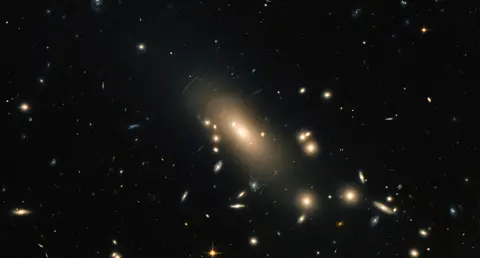
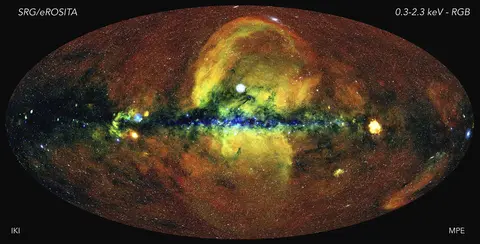
Stars are not scattered evenly through space. They gather in galaxies, which are huge islands of stars, gas and dust. Our galaxy, the Milky Way, holds hundreds of billions of stars. Astronomers think there are hundreds of billions of galaxies, and perhaps up to 2 trillion. That means there are probably more stars in the universe than grains of sand on all of Earth's beaches. All 4,000 stars we can see with our eyes belong to the Milky Way.
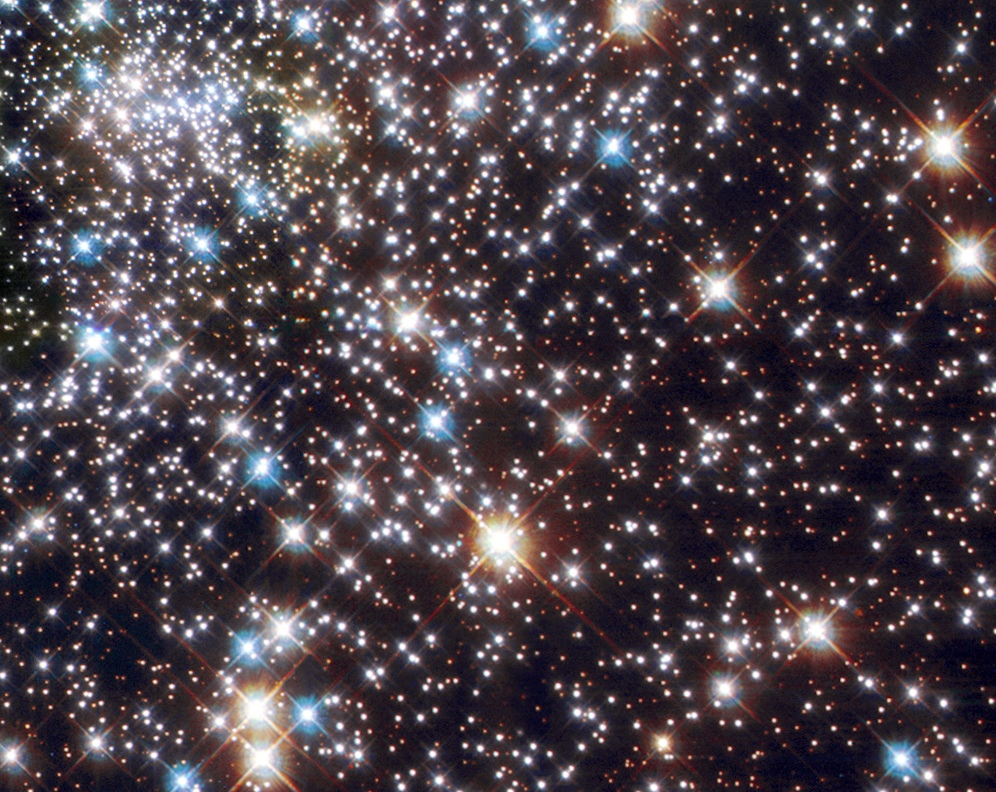
Inside galaxies, stars form groups called clusters. An open cluster holds dozens to thousands of stars. The Pleiades is a famous one. A globular cluster is much bigger, a ball of hundreds of thousands of stars packed together and circling the galaxy. Because the members of a cluster were born from the same cloud, they are about the same age. This makes clusters a perfect lab for studying how stars change.
Even so, stars are very far apart. The nearest star after the Sun is Proxima Centauri. If you could travel at the speed of the Space Shuttle, it would take about 150,000 years to get there. Because the gaps are so huge, stars almost never crash into each other.
In the crowded middle of a globular cluster, though, collisions can happen. They can create odd stars called blue stragglers. These shine bluer and hotter than they should for their age. The cluster NGC 6397 contains several.
How big and how hot can a star be?
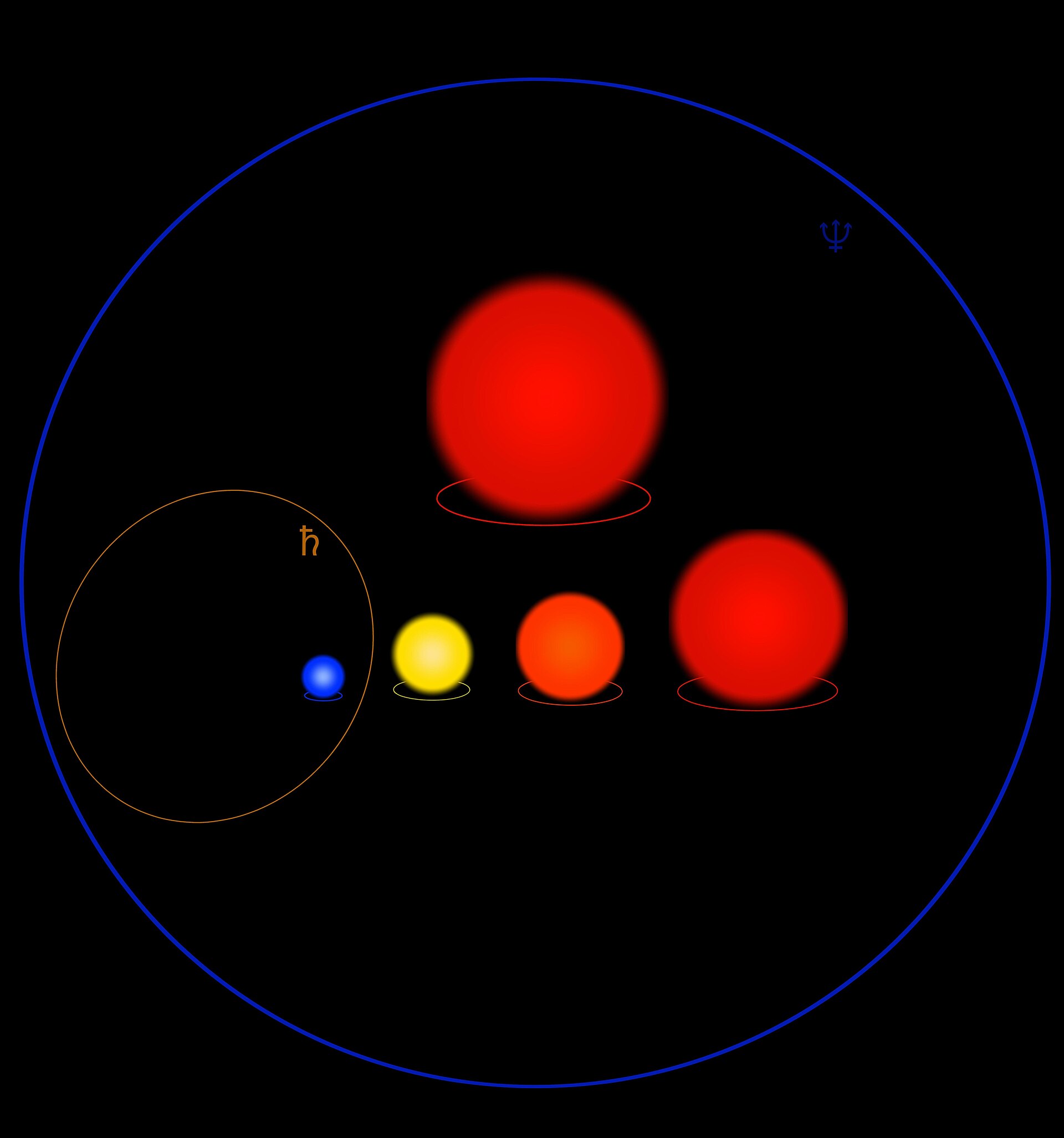
Stars come in an astonishing range of sizes. At the small end are , which are only 20 kilometres or so across. At the other end are supergiants. Betelgeuse, in the Orion, is about 640 times as wide as the Sun. If it sat where the Sun is, its surface would reach beyond the orbit of Mars. Even so, it is thin. Its gas is much less dense than the Sun's.
Mass has limits too. Some of the heaviest known stars weigh over 100 times as much as the Sun. Below a certain mass, a ball of gas cannot start fusion at its core. The smallest known star that does fuse hydrogen, a dim red dwarf known only by a catalogue number, is about 80 times the mass of Jupiter. Smaller objects are called brown dwarfs, which sit in a grey area between stars and giant planets.
Stars can also be very hot or fairly cool. The biggest main-sequence stars have surface temperatures up to 50,000 K, which is hot enough to glow blue-white. Stars like the Sun are cooler, at a few thousand K, and glow yellow. are cooler still, at about 3,600 K. Yet they shine brightly because their surface is so large.
Stars can spin and ripple too. The Sun turns once every 25 to 35 days. Achernar spins so fast that it bulges at its equator. The pulsar in the Crab spins 30 times each second. Stars also have magnetic fields, which create dark starspots and bursts of energy called flares.
Explore Next
Your audio story keeps playing while you look around.
Words to Know
- binary star
- Two stars that orbit each other.
- constellation
- A pattern of stars that people have named and made into a picture.
- light-year
- The distance light travels in one year, about 9.5 trillion kilometres.
- main sequence
- The long, steady stage when a star fuses hydrogen into helium.
- nebula
- A cloud of gas and dust in space.
- neutron star
- A tiny, very dense star left behind by some supernovae.
- nuclear fusion
- The joining of small atoms into bigger ones, which releases energy.
- parallax
- The small shift in a star's position as we view it from different places in Earth's orbit.
- red giant
- A swollen, cooler star that has used up the hydrogen in its core.
- spectrum
- Light spread out into its colours, which shows what a star is made of.
- supernova
- The huge explosion of a massive star at the end of its life.
- white dwarf
- The small, hot core left behind when a star like the Sun dies.